

B2B Pet Nail Clipper Sourcing: What Distributors and Retail Buyers Should Check
Pet nail clippers are small products, but they can carry a large responsibility in a grooming assortment. For distributors, pet retailers, grooming salons and e-commerce sellers, the right clipper must feel safe in the hand, cut cleanly, fit the target customer and arrive consistently across repeat orders. A low-cost tool that pulls, slips or feels flimsy can quickly create complaints. A well-selected tool, however, can become a dependable repeat-sale item for home pet care and professional grooming supply channels.
This guide focuses on practical B2B sourcing decisions for a pet nail clipper, including product features, buyer checklists, customization considerations, bulk price structure and supplier communication. It is written for business buyers comparing grooming accessories rather than consumers shopping for a single clipper.
Start With the Use Case: Retail, Salon or Distributor Catalog
Before comparing unit prices, define where the nail clipper will be sold and who will use it. A pet salon may care most about hand comfort during repeated daily use. A retail chain may focus on packaging, shelf appeal and clear instructions. An online seller may need consistent product photos, compact shipping size and low return risk. A distributor may need one design that can work across multiple accounts without being too specialized.
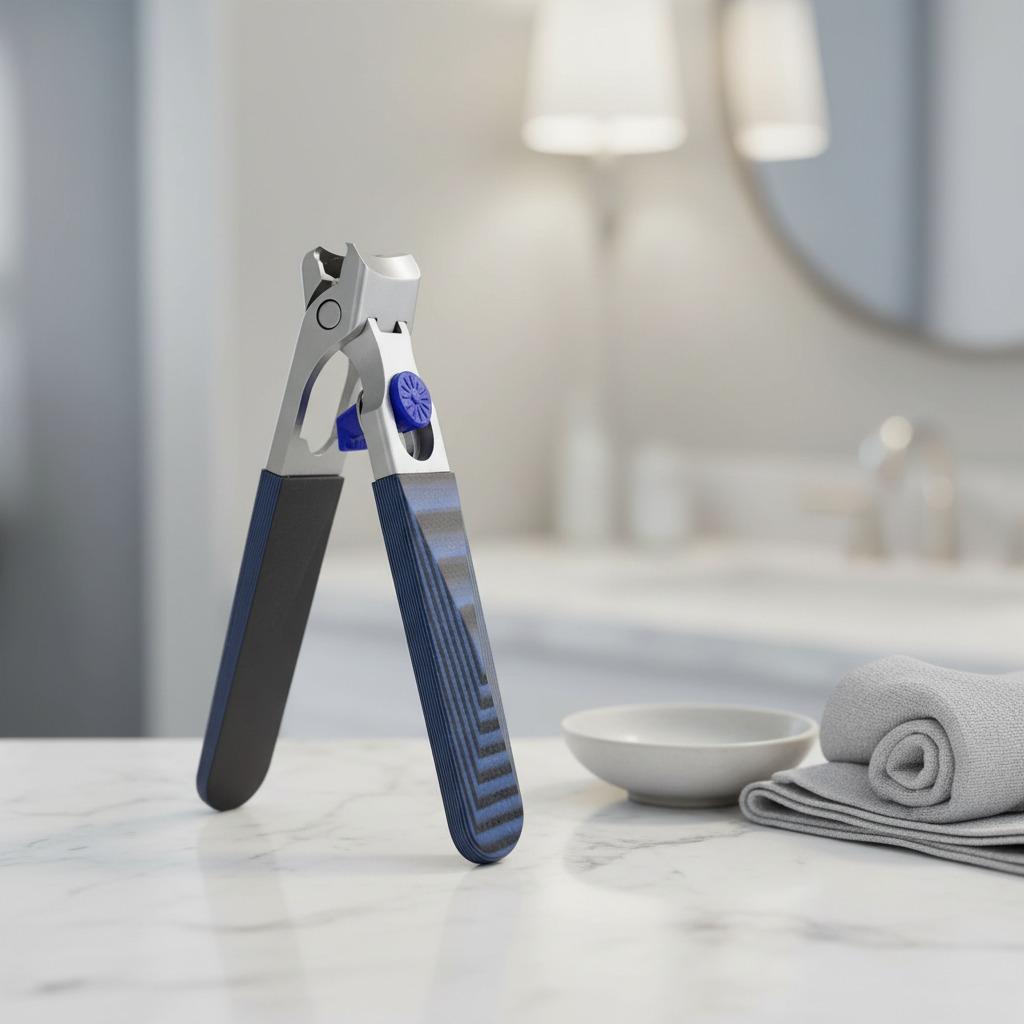
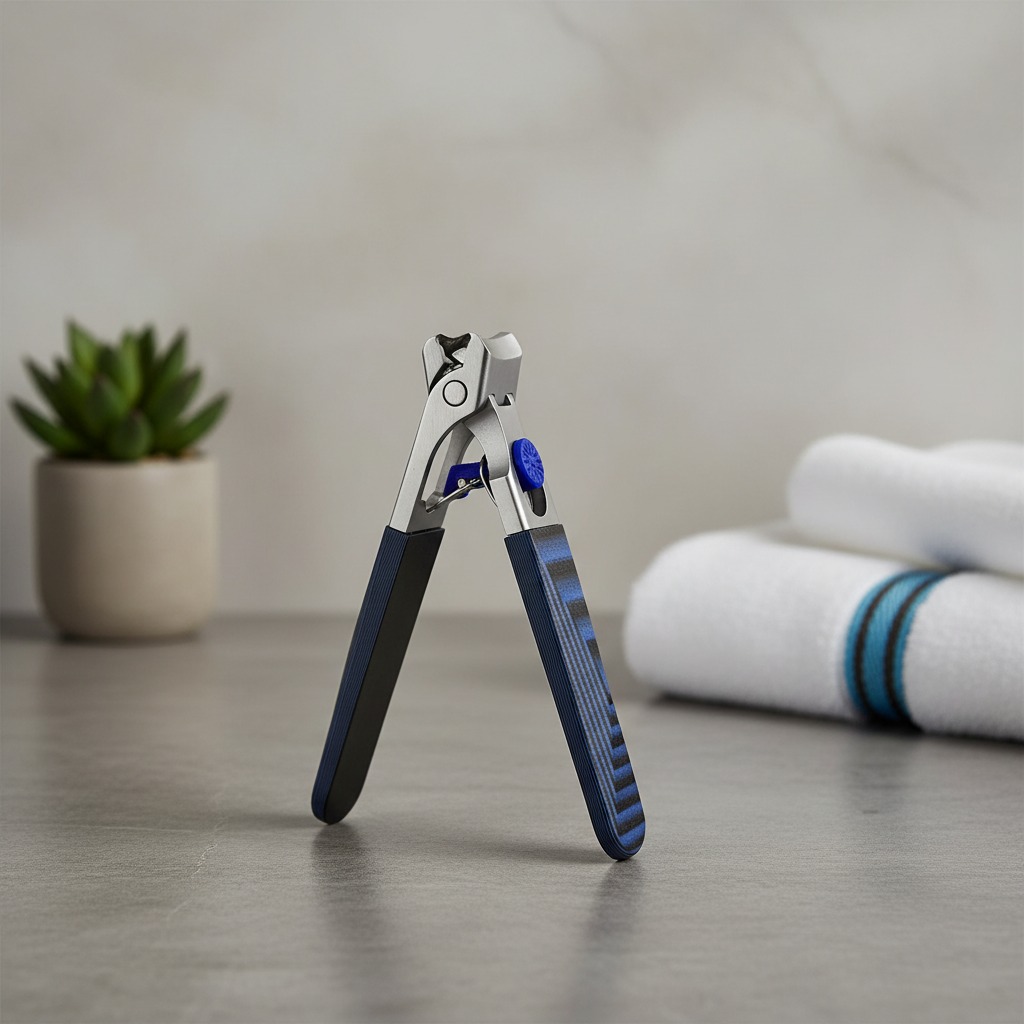
The product shown in the supplied material is a compact pet nail clipper with stainless steel blades, ergonomic handles, a blue and black geometric pattern, a locking mechanism, a length of 86 mm and a weight of 28 grams. These explicit details suggest a lightweight grooming tool suited to small-format retail, sample kits, travel grooming sets or compact pet care assortments. For B2B buyers, the key question is not only whether the clipper looks attractive, but whether its size and handling match the animal type and user skill level your channel serves.
When building a purchase brief, identify the intended customer first. A professional groomer, a first-time pet owner and a promotional gift buyer may all want different things from the same product category. Clear positioning helps prevent overbuying a design that looks good on paper but does not match your sales channel.
Product Features That Matter in Bulk Nail Clipper Buying
In B2B sourcing, small feature differences can affect customer satisfaction, return rates and repeat orders. Pet nail clippers should be evaluated as functional grooming tools, not only as low-priced accessories. The most important checks usually involve the blade, grip, closure and overall build consistency.
- Blade material and edge quality: The supplied article identifies stainless steel blades. Buyers should check that the cutting edge is clean, aligned and free from burrs across samples.
- Handle comfort: Ergonomic handles can reduce slipping and improve control. The blue and black geometric pattern may also support visual differentiation in a crowded grooming category.
- Locking mechanism: A lock helps keep the tool closed during storage, shipping and retail handling. Test whether it opens and closes smoothly without feeling loose.
- Size and weight: At 86 mm and 28 grams, the clipper is compact. Confirm whether this size is suitable for the pet sizes your customers typically serve.
- Cutting feel: Samples should be assessed for clean cutting action, resistance, handle stability and user confidence.
If your company is developing a broader grooming assortment, compare this item with related beauty tool products to decide whether it should be sold alone, bundled with other grooming tools or positioned as part of a pet care accessory line.
How to Evaluate Samples Before a Bulk Order
Sample evaluation should be structured. A quick visual check is useful, but it is not enough for a grooming tool that depends on cutting performance and hand control. Create a simple internal scoring sheet so purchasing, sales and quality teams review the same points. This makes supplier comparison more objective and prevents decisions from being based only on appearance or initial price.
- Inspect the first impression: Check surface finish, handle color consistency, blade alignment, logo area if customization is planned and any visible defects.
- Test the locking function: Open and close the clipper repeatedly to confirm the lock holds securely but does not require excessive force.
- Assess grip and control: Hold the clipper with dry and slightly damp hands to understand whether the handle design supports steady use.
- Check cutting consistency: Use an appropriate test method for the intended application and compare several pieces, not just one sample.
- Review packaging fit: Confirm that the closed clipper sits securely in its packaging and that sharp edges are protected during transport.
- Record questions for production: Note any tolerance, color, logo, packaging or carton questions before requesting a formal quotation.
This process is especially important for distributors because your downstream customers may not test the product before adding it to their own catalogs. A disciplined sample review reduces the chance of inconsistent feedback after launch.
Customization Decisions for Business Buyers
Custom nail clippers can support brand recognition, private-label programs and promotional grooming kits. However, customization should be chosen carefully. Adding a logo to a weak product will not create a strong line. First confirm that the base product meets your functional expectations, then decide how much branding is appropriate for the channel.
Common customization questions include where a logo can be placed, whether the handle color can remain consistent between batches, which packaging format best suits retail or online sales and whether instructions or barcode areas are required. If the product will be sold through multiple countries or channels, packaging text and warnings should also be reviewed by the buyer’s compliance or merchandising team.
For a compact clipper with a distinctive blue and black handle pattern, buyers should consider whether the existing appearance already fits the intended brand position. In some cases, simple branded packaging may be more practical than altering the tool itself. In other cases, a discreet logo on the handle or packaging insert may help identify the product without increasing complexity too much.
Understanding Bulk Nail Clipper Price Structures
Bulk price comparisons should include more than the unit cost. A lower unit price can become less attractive if packaging, defect handling, freight, customization, labeling or inspection needs are not clear. Buyers should request quotations in a format that allows true comparison between suppliers.
| Price factor | Why it matters | Buyer check |
|---|---|---|
| Base product cost | Sets the starting margin for resale | Compare against sample quality, not price alone |
| Customization | Logo, color or packaging changes may affect cost and lead time | Confirm what is included in the quoted price |
| Packaging | Retail packaging can influence shelf appeal and shipping protection | Check material, dimensions, labeling and barcode needs |
| Inspection and quality control | Consistent cutting performance is critical for grooming tools | Define acceptable appearance and functional criteria |
| Freight and delivery terms | Transport costs can change the landed cost significantly | Compare quotations using the same delivery assumptions |
Distributors should also consider how the product fits into account-level pricing. A pet nail clipper may be sold as a standalone SKU, a checkout add-on, part of a grooming bundle or a private-label accessory. Each route has different margin expectations and packaging requirements.
Supplier Questions That Help Avoid Procurement Problems
A good supplier conversation should clarify product consistency, communication flow and order documentation. Instead of asking only for the lowest price, prepare a focused list of questions that supports your sourcing decision. This is especially useful when comparing a custom nail clipper for business resale across multiple vendors.
- What product details will be confirmed before production, including dimensions, weight, blade material, handle design and locking function?
- What packaging options are available for retail, online sales or distributor cartons?
- How are visual defects, blade alignment and lock performance checked before shipment?
- What artwork files are needed for logo or packaging customization?
- How are approved samples, production samples and shipment samples identified?
- What information is needed to quote accurately for different order quantities and delivery terms?
Clear documentation protects both sides. It also helps your sales team present the clipper accurately to retailers, salons or online resellers. If you are preparing a private-label grooming line or comparing options for distributor supply, you can send an inquiry with your target quantity, packaging direction and customization needs.
Building a Reliable Nail Clipper Program for Distribution
For distributors, success often depends on repeatability. A pet nail clipper program should be easy to reorder, easy to explain and consistent enough for downstream customers to trust. Keep records of approved samples, artwork versions, packaging layouts and inspection expectations. If the first order performs well, these records make reorders smoother and reduce the risk of unintended changes.
It is also wise to review how the clipper fits within your broader assortment. A compact 86 mm pet nail clipper may work well beside combs, grooming scissors, brushes or travel pet care items, depending on your customer base. Browse Olimor product collections when planning how a single tool can support a more complete merchandising strategy.
The best B2B nail clipper sourcing decisions balance function, appearance, cost and supplier reliability. By starting with the user, testing samples carefully and clarifying customization and packaging before bulk production, buyers can reduce risk and build a grooming tool offering that serves both retail customers and professional channels.
Tag: