

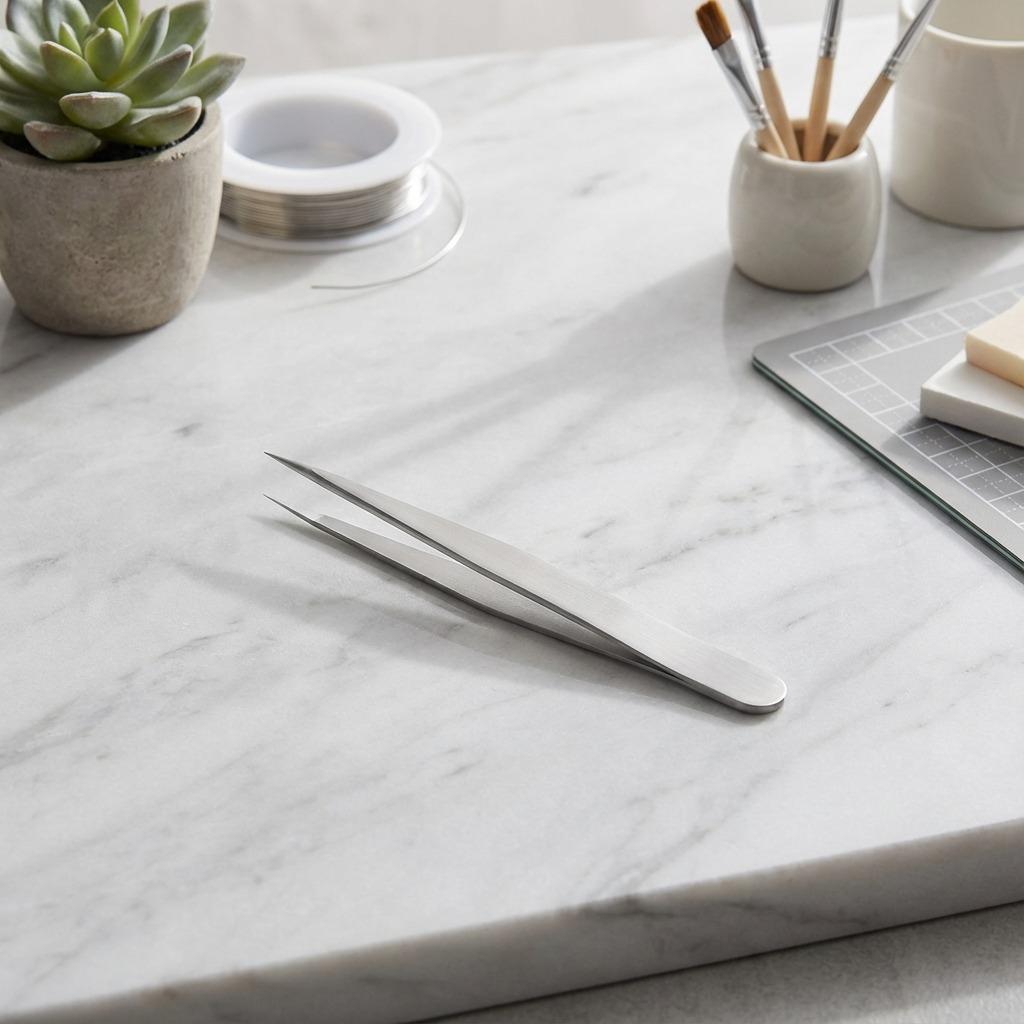
OEM Custom Tweezers: How to Specify Precision Tools for Beauty Work
OEM custom tweezers are small tools, but the sourcing decisions behind them have a direct effect on comfort, accuracy, repeat purchase potential and brand presentation. For beauty retailers, salon suppliers, brow specialists and private-label buyers, a tweezer is not simply a metal accessory. It is a precision hand tool that must feel balanced, close cleanly and hold up to repeated use.
Custom development gives buyers control over practical details such as overall length, tip style, finish, grip area, engraving and packaging. The goal is not to add decoration for its own sake, but to match the tool to a clear use case: brow shaping, lash application, fine hair removal, professional salon work or a compact retail beauty kit. Olimor Beauty supports OEM custom tweezers with attention to manufacturing steps and quality checks, helping buyers turn a product idea into a usable tool that can sit confidently within a broader beauty-tool line.
Start With the Exact Tweezer Use Case
The best specification begins with the user. A tweezer designed for professional brow shaping may need a different closing feel from one intended for a general retail grooming set. A lash technician may prefer a form that supports controlled placement, while a consumer beauty kit may prioritize safe handling, easy cleaning and attractive presentation.
Before discussing color or branding, define the tasks the tool must perform. This prevents the custom project from becoming only a cosmetic exercise. Consider whether the tweezer will be used for short, fine hairs, general grooming, lash placement, nail art support or delicate beauty applications. The answer influences the tip profile, tension, edge alignment and handle feel.
- Retail beauty kits: choose a versatile shape that is easy for non-professional users to control.
- Brow-focused products: prioritize accurate tip closure and a comfortable grip for repeated plucking.
- Salon or technician use: focus on consistent tension, balance and durability during frequent handling.
- Gift or promotional sets: combine practical function with clean personalization and packaging.
If you are building a complete line, compare tweezers with other beauty tool products so the finish, packaging language and quality level feel consistent across the range.
Choosing Tip Shape, Length and Grip Feel
The tip is the most important working area of any tweezer. Even a visually attractive product will disappoint if the tips do not meet evenly or if the angle does not suit the intended task. Common beauty tweezer preferences often include slanted tips for brow grooming, pointed tips for very fine work and flat or broader tips for specific handling needs. The right choice depends on the market position of the product and the skill level of the target user.
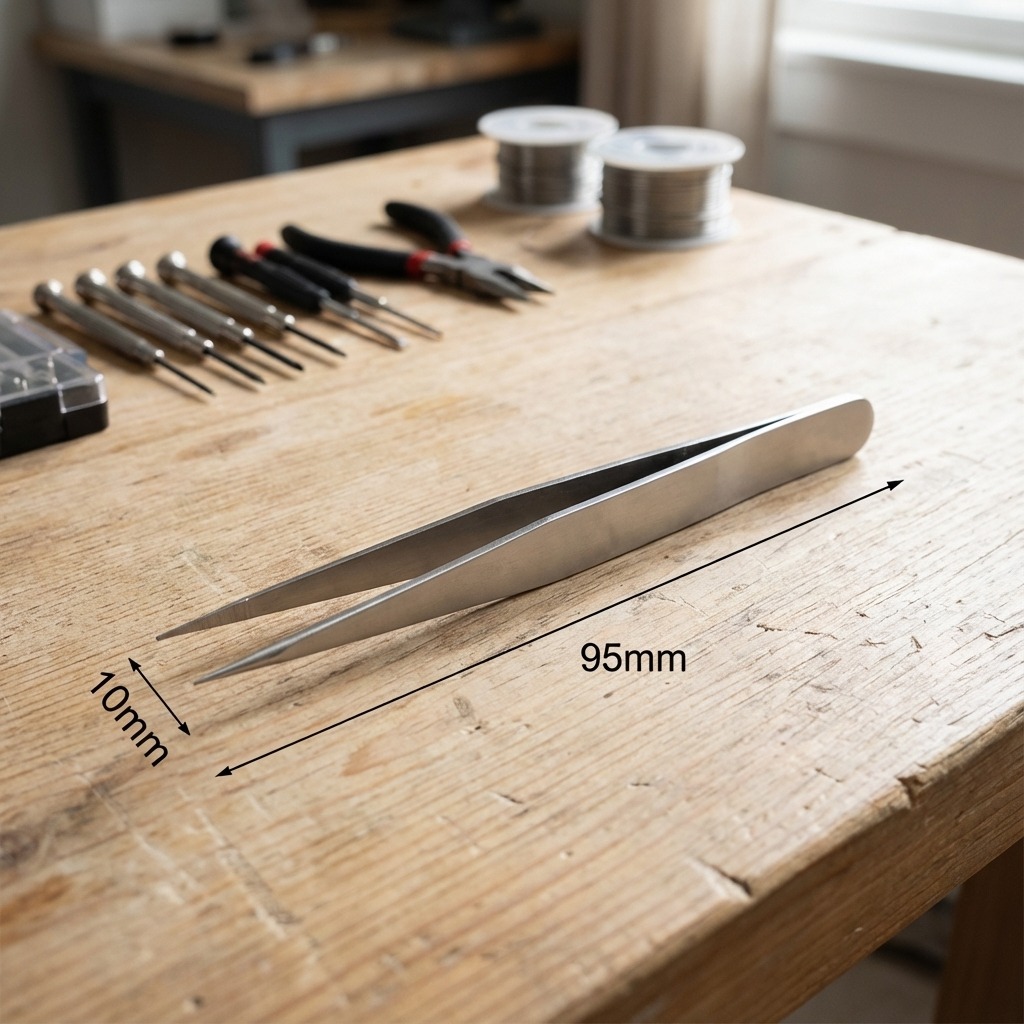
Length and width also affect control. The supplied specification example of a 95 mm length with a 10 mm width shows how a compact, fine-control format may be considered for precision handling. However, the most suitable dimensions should be assessed against the user’s hand feel, packaging format and intended task. A tool that is too short may feel unstable for professional work, while a tool that is too long may feel less convenient in a travel kit.
Grip feel is another practical detail. A smooth surface can look clean and premium, but it must not become slippery in real use. Textured zones, shaped sides or a carefully selected coating can support control. For buyers planning personalized tweezers with engraving or color accents, the design should not interfere with the pressure area where fingers naturally rest.
Material and Finish Considerations for OEM Tweezers
The original product information identifies high-quality stainless steel as the material direction. Stainless steel is widely valued in beauty tools because it supports durability, clean appearance and routine hygiene practices. For sourcing, the important question is not only the material name but how the finished tweezer performs: does it close evenly, resist deformation during normal use and maintain a clean surface after handling?
Finishes should be selected with both branding and function in mind. A bright polished surface may suit a classic beauty line, while a matte or colored finish may support a more contemporary presentation. If color accents are used, the buyer should evaluate whether the finish is consistent, whether edges remain smooth and whether the grip area still feels comfortable.
| Design decision | Why it matters | What to check in samples |
|---|---|---|
| Tip alignment | Determines whether fine hairs or small items can be held accurately | Tips meet evenly without visible gaps or twisting |
| Closing tension | Affects hand comfort and control during repeated use | Pressure feels stable, not too stiff or too loose |
| Surface finish | Supports appearance, cleaning and perceived quality | Finish is uniform, smooth and free from rough edges |
| Personalization area | Impacts logo visibility and brand recognition | Engraving or decoration is placed away from key grip points when needed |
Personalization That Supports the Brand Without Hurting Function
Designing your own tweezers can include logo engraving, color accents, surface finish choices and packaging presentation. These details help create a recognizable product, especially for private-label beauty brands, salon chains, subscription boxes and gift sets. The challenge is to keep personalization tasteful and functional.
Engraving should be readable at the actual product size. A logo that looks clear on a computer screen may become too fine on a narrow tweezer body. Color accents should also be reviewed under normal retail lighting and in hand, not only in digital artwork. If the tweezer is part of a set, the visual style should match companion items such as scissors, nail tools, lash tools or grooming accessories from related product collections.
Packaging is part of personalization as well. A simple sleeve, pouch, carded pack or boxed presentation changes the perceived value and the way the tool is stored after purchase. For professional users, protective storage may matter because tip damage can reduce accuracy. For retail buyers, packaging must communicate the intended use quickly and clearly.
Quality Checks Buyers Should Build Into the Process
Olimor Beauty emphasizes inspections from raw materials through final packaging. For buyers, it is useful to translate that quality focus into sample review criteria before production begins. A good custom tweezer sample should be judged by how it performs in hand, not only by appearance.
- Check the tip meeting point. Hold the tweezer against a light background and confirm that the tips align cleanly.
- Test the closing pressure. Open and close the tool repeatedly to feel whether the spring tension remains comfortable.
- Inspect all edges. The sides, inner edges and tips should feel smooth enough for beauty use.
- Review logo placement. Confirm that branding is straight, appropriately sized and positioned for visibility.
- Assess packaging fit. The tweezer should be held securely so the tips are protected during shipping and storage.
These checks are especially important when a buyer is comparing several versions of personalized tweezers. A small change in finish, coating or tip geometry can alter the user experience. Keeping written notes during sample evaluation makes it easier to approve a final specification and avoid confusion later.
Maintenance Guidance to Include With Custom Tweezers
Clear care guidance can reduce customer complaints and extend the useful life of the tool. Buyers preparing retail packaging or product pages should include simple maintenance instructions that match the beauty-use context. After use, tweezers should be wiped clean and dried before storage. The tips should be protected from drops or hard impact because alignment is essential to precision.
If the product is sold for professional environments, care instructions should be aligned with the user’s normal hygiene practices. Avoid vague promises and instead provide practical handling advice: keep the tips covered when not in use, do not use the tweezer as a prying tool, and store it in a dry place. These points are simple, but they help protect the working edge and preserve the product’s performance.
How to Prepare an OEM Custom Tweezer Brief
A well-prepared brief speeds up development and reduces unnecessary sample revisions. Include the target user, intended application, preferred tip style, approximate size direction, finish, personalization requirements and packaging expectations. If you already have a reference sample, identify what you like and what should be improved, such as lighter tension, a different finish or clearer logo placement.
For buyers who are still exploring options, Olimor Beauty can review practical customization directions without requiring the buyer to invent every detail at the start. The most productive discussions usually focus on use case first and visual branding second. To begin a project, you can send an inquiry with your requirements, or contact Olimor to discuss how OEM custom tweezers may fit into your beauty-tool assortment.
When specified carefully, custom tweezers become more than a small add-on item. They can strengthen a beauty brand’s quality impression, support professional precision and create a more coherent product line. The key is to balance personalization with the fundamentals: accurate tips, comfortable tension, durable stainless steel construction, clean finishing and packaging that protects the tool until it reaches the user.
Tag: