

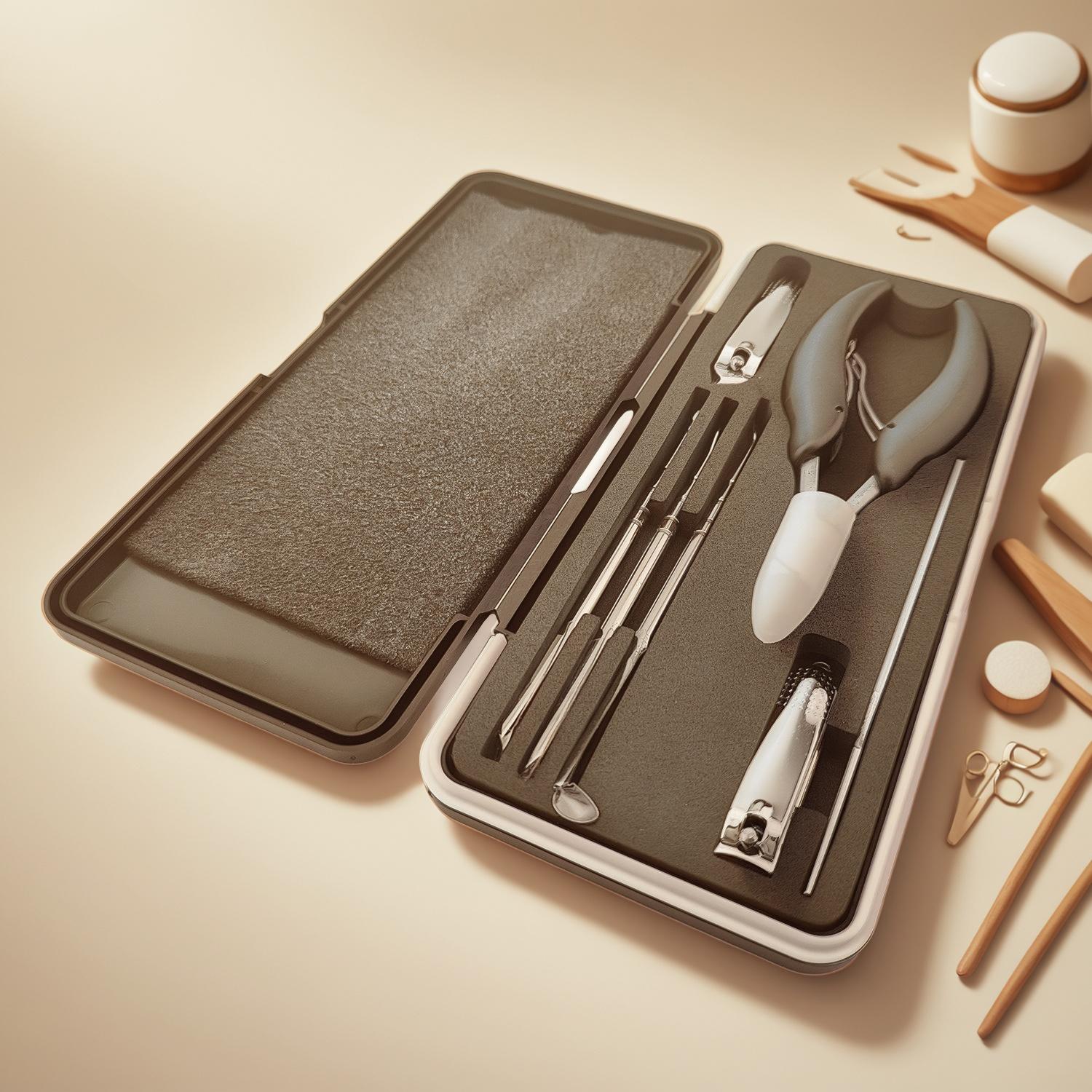
How to Choose Manicure and Pedicure Tools for Salon and Wholesale Use
Manicure and pedicure services depend on skill, hygiene, and reliable tools. A nail technician can have excellent technique, but dull clippers, uncomfortable handles, poorly aligned tips, or inconsistent finishing can slow the service and affect the client experience. For salon owners, spa product wholesalers, salon wholesale distributors, and buyers building an at-home grooming set, choosing the right manicure and pedicure tools is a practical business decision as well as a care decision.
The goal is not simply to buy a kit with many pieces. A useful set should support accurate trimming, controlled shaping, safe cuticle care, and easy cleaning between uses. Olimor Beauty offers beauty tool products designed for professional environments and personal grooming needs, including pedicure kits such as the Silver Elegance Pedicure Kit. When evaluating any manicure or pedicure tool set, buyers should look beyond appearance and consider construction, usability, maintenance, and supplier reliability.
What Manicure and Pedicure Tools Need to Do Well
Manicure and pedicure tools are used for tasks that require control. Nails vary in thickness, shape, and condition, and the surrounding skin can be sensitive. A good tool helps the user work carefully without forcing the movement. In a salon or spa, tools also need to perform consistently across multiple appointments, while wholesale buyers need repeatable quality from batch to batch.
Common manicure and pedicure tasks include nail trimming, edge refinement, cuticle care, callus or dead-skin management where appropriate, and cleaning under or around the nail. Each task benefits from a tool designed for that purpose. For example, a clipper should cut cleanly rather than crush the nail. A file should refine edges without leaving ragged layers. A cuticle tool should offer control and visibility so the user can work with care.
For buyers comparing beauty tool products, the most useful question is: does each tool improve precision, comfort, hygiene, or durability? If a piece does not support one of those goals, it may add little value to the set.
Key Selection Criteria for Professional Buyers
Professional beauty tools suppliers should be evaluated on more than catalog photos. The best purchasing decisions come from checking how tools feel in the hand, how the cutting edges meet, how easily tools can be cleaned, and how the supplier controls quality. Olimor Beauty describes its products as carefully crafted for ergonomic use, with precise production steps and quality checks for professional and home use. Those are the kinds of supplier commitments buyers should look for when comparing options.
Use the checklist below when reviewing manicure tools wholesale or spa tools wholesale:
- Cutting accuracy: Clippers, nippers, and scissors should close evenly and cut without requiring excessive pressure.
- Edge finishing: Edges should feel smooth where the hand grips the tool, with no rough burrs or sharp unintended corners.
- Ergonomic handling: The tool should be easy to position and control, especially during repeated salon use.
- Material suitability: Stainless steel is commonly preferred for many nail tools because it can support durability and cleaning when properly maintained.
- Tool purpose: Every piece in a kit should have a clear use rather than serving as filler.
- Inspection consistency: Wholesale buyers should review whether products are inspected before shipment and whether finishing appears consistent.
- Packaging practicality: Kits should keep tools organized and protected during storage, display, or transport.
For distributors and salons, consistency matters as much as the first impression. A sample that feels good is useful, but a repeat order must meet the same expectations. This is why supplier communication, documented requirements, and pre-shipment review are important parts of sourcing.
Why Tool Quality Affects Nail Health and Service Results
Quality pedicure tools can improve the grooming process by making each step more controlled. Clean cuts reduce the need for repeated trimming. Smooth edges help prevent snagging. A well-balanced tool lets the user apply gentle pressure instead of forcing the motion. These details matter in both professional and home environments.
Low-quality tools can create avoidable problems. Dull clippers may split or crush the nail edge. Poorly finished handles can be uncomfortable during longer services. Misaligned tips can make detailed work difficult. A set that looks attractive but does not perform well can lead to slower appointments, inconsistent results, and higher replacement costs.
The Silver Elegance Pedicure Kit referenced by Olimor Beauty is described as including durable, precision-engineered stainless steel tools designed for comfort and efficiency. When evaluating a kit like this, buyers should focus on whether the tools support repeatable grooming steps: trimming, shaping, cleaning, and finishing. A strong kit should make the service feel organized rather than improvised.
Choosing Between Individual Tools and Complete Kits
Some buyers prefer individual tools because they can select each piece separately. Others prefer complete manicure and pedicure kits because they are easier to stock, package, present, and sell. The right choice depends on the buyer’s business model.
| Buyer type | Best option | What to prioritize |
|---|---|---|
| Salon or spa | Individual tools or professional kits | Comfort, cleaning, durability, and repeated-use performance |
| Wholesale distributor | Coordinated kits | Consistent finishing, packaging, clear product positioning, and stable supply |
| Retail buyer | Compact kits | Ease of use, storage case quality, and a practical mix of tools |
| Home grooming user | Basic manicure and pedicure kit | Safe handling, simple maintenance, and tools with clear functions |
A kit should not be judged only by the number of pieces. A smaller, well-planned kit may be more useful than a larger kit with repeated or rarely used tools. For product range planning, buyers can also review Olimor product collections to compare how different beauty tools may fit various retail or salon needs.
Maintenance and Hygiene Considerations
Even a well-made manicure or pedicure tool needs proper care. Maintenance protects performance and supports hygiene. In professional settings, cleaning procedures should follow local salon or spa requirements. At home, users should still clean and dry tools after use and store them in a clean case or dry location.
Basic maintenance habits include removing visible debris after each use, drying tools fully before storage, checking cutting edges for dullness, and keeping paired tools together in the correct case. If a tool becomes loose, damaged, misaligned, or difficult to clean, it should be replaced rather than forced back into service.
Buyers should also consider the storage design of a kit. Tools that move loosely inside a case can become scratched or dulled during transport. A practical kit keeps each piece separated enough to protect edges and make selection easy. For wholesale and retail, packaging should also help the customer understand what the tools are for without overstating performance claims.
Questions to Resolve Before Placing a Wholesale Order
Before purchasing manicure tools wholesale, define the intended use and quality level. A spa buyer may need tools that can handle frequent use and cleaning routines. A retail distributor may need attractive packaging and clear consumer instructions. A promotional buyer may need a simpler tool mix, but should still avoid poor finishing or unreliable cutting performance.
- Define the user: Is the set intended for salon professionals, spa guests, retail customers, travel use, or personal home grooming?
- Confirm the tool list: Make sure each included tool has a clear grooming purpose and matches the target audience.
- Review handling: Check grip comfort, pressure needed to cut, and whether the tool is easy to control.
- Check finish quality: Look for clean edges, smooth surfaces, proper alignment, and consistent appearance.
- Plan maintenance instructions: Decide how cleaning, drying, storage, and replacement guidance will be communicated.
- Clarify packaging needs: Consider whether the kit will be used in a salon drawer, sold in retail packaging, or shipped through distribution channels.
When specifications are not fixed yet, it is useful to prepare a short buyer brief. Include the target market, preferred kit size, tool functions, packaging expectations, and any compliance or labeling requirements relevant to your sales region. This gives the supplier a clearer basis for recommending suitable options.
How Olimor Beauty Supports Tool Buyers
Olimor Beauty focuses on beauty tools for professional and personal grooming applications. The original product information highlights ergonomic design, stainless steel tools in the pedicure kit, precise production steps, inspections, and reliability for salon-quality grooming. For buyers, these points translate into practical sourcing priorities: tools should feel controlled in the hand, perform their function efficiently, and arrive with consistent quality.
If you are comparing spa product wholesalers, salon wholesale distributors, or professional beauty tools suppliers, look for a partner that can discuss tool function, finishing expectations, packaging, and quality checks in concrete terms. A good supplier relationship helps reduce uncertainty before ordering and makes it easier to build a manicure and pedicure tool range that suits your customers.
To discuss manicure and pedicure tools for your business, you can contact Olimor or send an inquiry with your intended application, target users, and preferred tool mix. Clear requirements lead to better product selection, whether you are sourcing for a salon, spa, wholesale channel, or personal grooming retail line.
Tag: