

Choosing Professional Manicure and Pedicure Tools for Salon-Quality Service
Manicure and pedicure services depend on trust. Clients may notice polish color first, but the tools used during shaping, cuticle care and finishing strongly influence comfort, hygiene perception and the final result. For salons, spas, nail studios and wholesale buyers, sourcing better tools is not only a purchasing decision. It affects technician performance, service consistency, cleaning routines and the way clients judge the professionalism of the business.
As expectations rise across the beauty industry, many buyers are moving away from low-quality disposable-feeling instruments and looking for durable, professional beauty tools that can support repeated salon use. The goal is not simply to buy the sharpest nipper or the lowest-priced kit. The smarter approach is to evaluate materials, ergonomics, edge quality, spring action, finishing, packaging suitability and supplier reliability together.
This guide explains what to look for when selecting manicure pedicure tools for professional use, with special attention to cuticle nippers such as the SleekEdge Precision Cuticle Nipper from Olimor Beauty.
Why Tool Quality Matters in Manicure and Pedicure Services
Professional nail care requires small, controlled movements. A technician may trim a tiny piece of cuticle, refine a nail edge, remove excess skin around a toe or prepare the nail surface for a clean finish. If the tool feels unstable, dull, rough or poorly balanced, the service becomes slower and less comfortable for both the technician and the client.
For business owners and spa product wholesalers, tool quality also has a commercial impact. Instruments that feel solid and well finished can reinforce a premium service environment. Durable tools may also reduce the frequency of replacement when compared with lower-grade alternatives, although actual service life depends on use, cleaning and storage practices.
Quality manicure and pedicure tools can support:
- Cleaner service execution: precise edges help technicians work with better control.
- Improved technician comfort: ergonomic shaping can reduce hand strain during repetitive work.
- Consistent client experience: tools that perform predictably help standardize services across a team.
- Professional hygiene presentation: well-maintained stainless steel tools communicate seriousness about sanitation.
- Better purchasing value: durable tools can be more cost-effective than repeatedly replacing poor-quality items.
Selection Criteria for Professional Manicure Pedicure Tools
When comparing tools for a salon, spa or distribution program, it is useful to move beyond general claims such as “premium” or “professional.” Buyers should inspect the details that affect daily use. This is especially important for tools that come into close contact with cuticles and skin, where precision and control matter.
| Selection point | What to evaluate | Why it matters |
|---|---|---|
| Material | Look for durable metal construction such as stainless steel when specified. | Supports repeated professional handling and a clean appearance. |
| Edge finish | Check whether cutting edges meet evenly and feel sharp without visible gaps. | Helps avoid pulling, tearing or repeated passes over the same area. |
| Ergonomics | Assess grip shape, hand fit and comfort during opening and closing. | Technicians often use tools for long service periods. |
| Spring mechanism | Test whether the tool reopens smoothly and predictably. | Improves rhythm, control and user confidence. |
| Surface finishing | Check for rough spots, burrs or uneven polishing. | Affects comfort, cleaning and professional presentation. |
| Packaging suitability | Consider whether packaging protects the tool during transit and storage. | Important for wholesalers, salons and retail-ready programs. |
For buyers reviewing multiple items, a simple sample evaluation process can prevent costly sourcing mistakes. Test each tool in realistic hand positions, check consistency across several samples and confirm that the tool feels comfortable for different technicians, not just one evaluator.
Cuticle Nippers: A Small Tool With High Service Impact
Among manicure and pedicure instruments, the cuticle nipper is one of the most sensitive tools to source. It must feel controlled, sharp and stable. A poorly made nipper can make detailed work difficult, while a well-designed one helps a technician trim with precision and confidence.
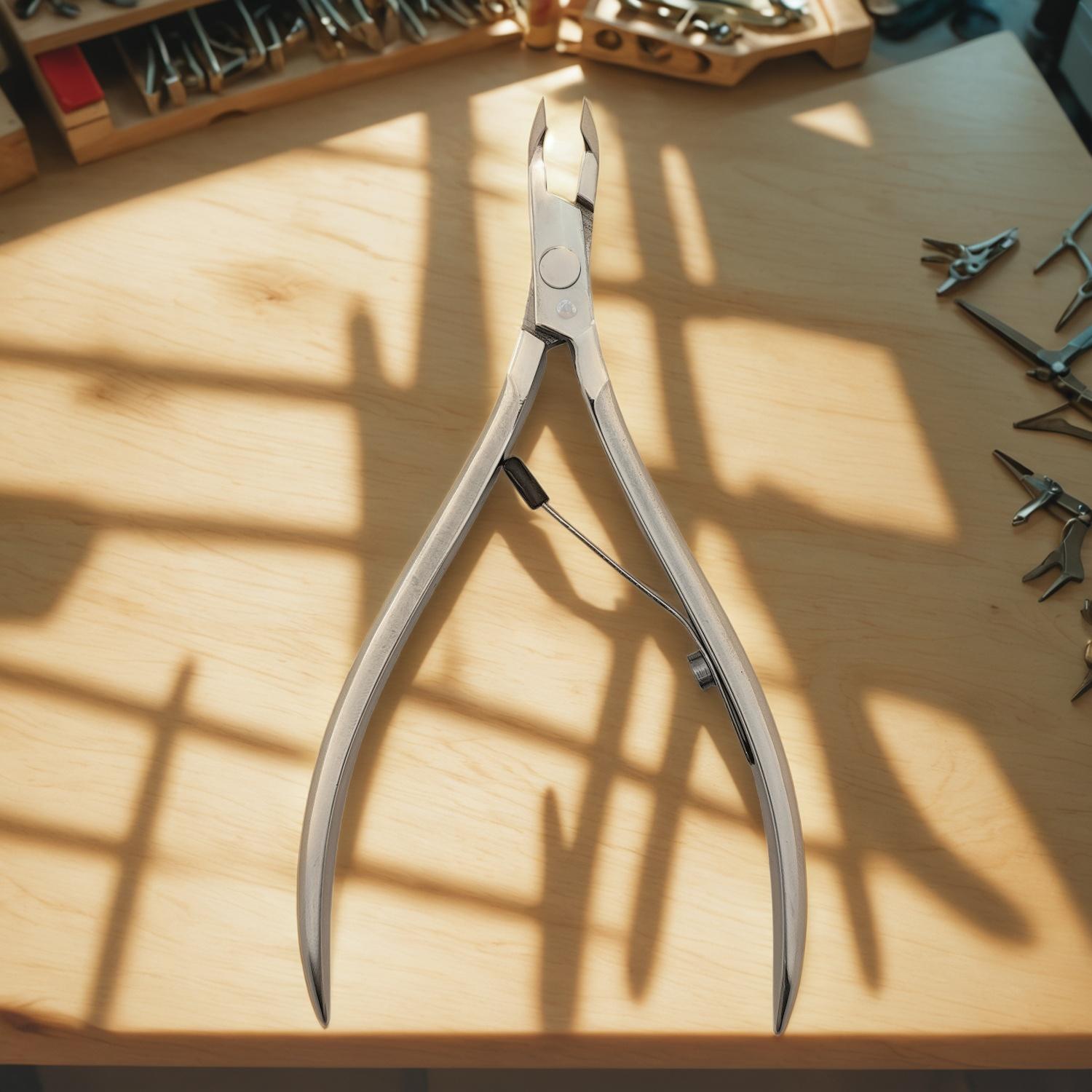
The SleekEdge Precision Cuticle Nipper reflects the current demand for better professional grooming tools. It is crafted from high-quality stainless steel for durability and features an ultra-sharp edge for precision. Its ergonomic design and dual-spring mechanism are intended to provide comfort and control during use. These are the types of details professional buyers should examine when choosing nippers for salon or spa environments.
When evaluating a cuticle nipper, consider the following practical checks:
- Open and close the tool several times. The movement should feel smooth and controlled, without stiffness or wobble.
- Inspect the tips and cutting edge. The two sides should align cleanly when closed.
- Hold it in a working position. The grip should not force the wrist or fingers into an awkward angle.
- Check the spring response. A dual-spring mechanism should help the tool reopen consistently without excessive effort.
- Review finish quality. Edges, handles and joints should feel refined and suitable for professional presentation.
What Spa Wholesalers and Salon Distributors Should Prioritize
For spa product wholesalers and salon wholesale distributors, the challenge is not only to find one good tool. The bigger priority is supply consistency. A distributor needs tools that can be confidently offered to different customers, from independent nail studios to larger spa operations. Inconsistent finishing, packaging variation or unreliable replacement options can create service problems for buyers downstream.
Distributors should build their evaluation around repeatability. Request or review samples from the same production approach that would be used for future orders. Compare several pieces, not just a single display sample. Look for consistency in edge alignment, handle comfort, spring tension and finishing. If a tool is intended for a kit, check how it pairs with other manicure pedicure instruments in size, appearance and function.
Brand positioning also matters. Some salons want a practical professional tool for back-bar use, while others may need items suitable for retail sale or branded salon kits. Packaging, instructions, protective covers and product labeling requirements should be considered early in the sourcing process. Buyers can explore Olimor Beauty’s broader range of beauty tool products to compare categories and identify tools that fit different manicure and pedicure service formats.
Hygiene, Care and Maintenance Considerations
Even a high-quality manicure tool can perform poorly if it is not cleaned, dried and stored correctly. Salons should follow applicable local hygiene regulations and their own sanitation protocols for every tool used in service. The purchasing team should also consider how easy each instrument is to clean and inspect.
Stainless steel tools are widely preferred in professional beauty environments because they offer a durable, clean appearance and can support routine maintenance when handled properly. However, the exact cleaning method should match the tool type, salon procedures and local requirements. After cleaning, tools should be dried thoroughly and stored in a way that protects tips and edges from impact.
Good maintenance habits include:
- Removing visible residue promptly after service according to salon procedure.
- Keeping cutting edges protected during storage and transport.
- Avoiding loose storage where nippers, pushers and files can collide.
- Inspecting tools regularly for dullness, misalignment or damaged tips.
- Replacing tools that no longer perform cleanly or cannot be maintained safely.
For pedicure use, extra attention to cleaning workflow is important because tools may be exposed to more moisture and skin residue. A clear tool rotation system can help technicians separate used, cleaned and ready-to-use instruments.
Building a Better Sourcing Process
A practical sourcing process helps salons and wholesalers avoid decisions based only on catalog photos or price. Start by defining the exact use case: daily salon service, spa treatment rooms, retail kits, training programs or wholesale distribution. Each scenario may require a different balance of durability, packaging, tool assortment and cost control.
Next, compare samples against a written checklist. Include input from working technicians because they will quickly notice whether a handle is comfortable, whether the spring feels responsive and whether the tool provides enough control for detailed work. For larger programs, document the approved sample so later shipments can be compared against the accepted standard.
Useful sourcing questions include:
- Is the tool suitable for the manicure or pedicure service step it will be used for?
- Does the material and finish match the professional positioning of the salon or distributor?
- Are the cutting edges, tips or working surfaces consistent across samples?
- Can the tool be cleaned, dried and stored within the buyer’s normal workflow?
- Does the packaging protect the tool and support the intended sales channel?
- Are replacement, reorder and assortment planning needs clear before purchase?
Olimor Beauty works with buyers who need professional manicure and pedicure tools for salons, spas and distribution channels. To review category options, visit the product collections. For sourcing discussions or product fit questions, buyers can send an inquiry with their intended application, target tool type and packaging needs.
Final Buying Takeaway
High-quality manicure pedicure tools are part of the service experience. They influence how technicians work, how clients perceive hygiene and professionalism, and how efficiently a salon or spa maintains consistent results. Instead of choosing tools only by price, buyers should evaluate material, edge quality, ergonomic comfort, spring action, finish consistency and maintenance requirements.
For cuticle work, the SleekEdge Precision Cuticle Nipper demonstrates the kind of details worth prioritizing: high-quality stainless steel, an ultra-sharp edge, ergonomic design and a dual-spring mechanism for comfort and control. When these practical features are supported by a thoughtful sourcing process, salons and wholesalers can build manicure and pedicure offerings that feel professional from the first touch to the final finish.
Tag: