

How to Choose Professional Manicure Pedicure Tools for Salon and Spa Use
A consistent manicure pedicure service depends on more than technique. The tools in the technician’s hand affect precision, hygiene, comfort, service time and the client’s overall confidence. For salons, spas, nail studios and distributors, choosing professional beauty tools is a purchasing decision that influences daily workflow as well as long-term reputation.
Olimor Beauty serves buyers who need dependable manicure and pedicure implements for professional settings. Whether you are comparing wholesale manicure kits for spas, reviewing spa product wholesalers or building a smaller treatment kit for a new location, the goal should be the same: tools that are practical to use, easy to maintain and consistent from one order to the next.
The role of tool quality in a manicure pedicure service
Manicure and pedicure results are often judged by details: a clean cuticle line, an even nail edge, a smooth finish and a comfortable service experience. When tools are dull, poorly aligned or uncomfortable to hold, the technician has to compensate with extra pressure or repeated movements. That can slow down the service and increase the chance of uneven results.
For professional buyers, quality should be evaluated in terms of function rather than appearance alone. A polished tool may look attractive, but the important questions are whether the cutting edge performs cleanly, whether the handle gives enough control, and whether the implement can withstand regular salon use. Tools used for nail care also need to support appropriate hygiene practices because they come into close contact with hands, feet and surrounding skin.
This is why many salons and spas source through dedicated beauty tool suppliers rather than treating implements as occasional accessories. A professional kit should help technicians deliver repeatable work, not make every service depend on workarounds.
What to look for when comparing spa product wholesalers
The market includes many spa product wholesalers and salon wholesale distributors, but the best fit is not always the supplier with the longest catalogue. A better approach is to compare how well a supplier supports the specific service environment you operate in. High-volume nail salons, hotel spas, training schools and retail beauty businesses may all need manicure pedicure tools, but they may prioritize different buying criteria.
- Product consistency: Repeat orders should match the expected shape, finish and handling as closely as possible so technicians do not have to adjust to unexpected variations.
- Functional design: Handles, tips, blades and working surfaces should support controlled movement, especially for detailed cuticle and nail-edge work.
- Durability: Tools used throughout the day should be selected with wear resistance and long service life in mind.
- Hygiene compatibility: Nail implements should be simple to clean according to the procedures used in the salon or spa.
- Packaging suitability: Wholesale buyers may need packaging that protects the tool during storage and shipping while remaining practical for staff use.
- Range planning: A supplier should make it easier to build a balanced kit rather than forcing buyers to source every item from a different place.
If you are reviewing options for a new service menu or replacing mixed tools from several sources, start with the core implements used in every manicure and pedicure. Olimor’s beauty tool products can be reviewed as part of a broader sourcing plan for professional nail care and spa services.
Cuticle nippers: a small tool with a large impact
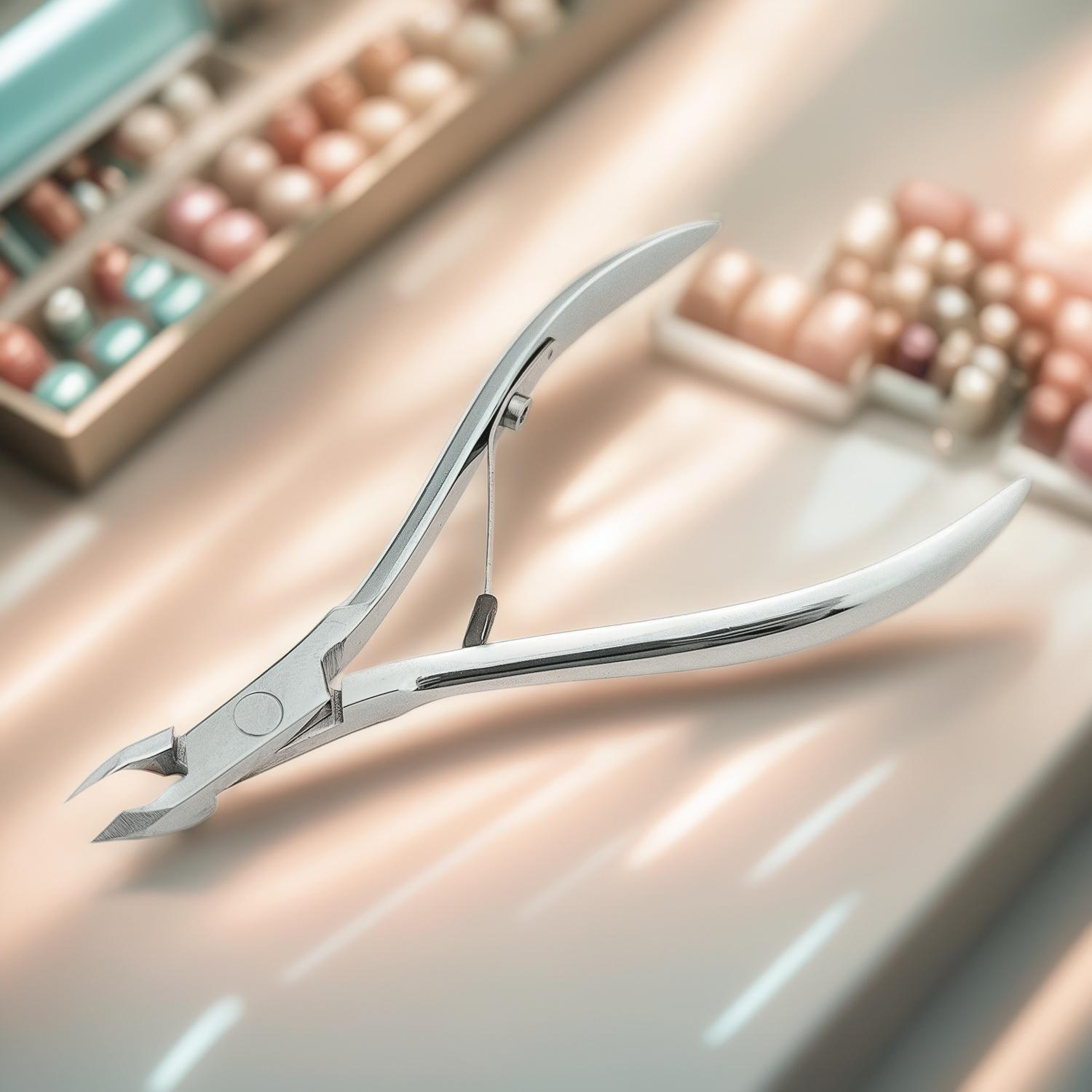
Cuticle nippers are among the most detail-sensitive tools in a professional manicure pedicure kit. The original Olimor Beauty article highlights a Stainless Steel Cuticle Nipper designed with dual blades and an ergonomic form. Those details matter because trimming around the cuticle area requires a tool that can be controlled precisely without forcing the technician to strain the hand.
Stainless steel is commonly selected for professional nail tools because it supports durability and hygiene-focused handling. In a salon environment, the nipper must feel stable, close evenly and allow the technician to see the working area clearly. A sharp, well-aligned cutting edge helps reduce tugging and supports cleaner trimming when used by trained professionals.
When evaluating a cuticle nipper for professional sourcing, buyers should pay attention to practical handling rather than relying only on catalogue photography. Consider whether the grip suits different hand sizes, whether the spring action feels smooth, and whether the blades meet cleanly at the tip. A nipper that feels acceptable for one use may not be comfortable after a full day of appointments, so ergonomics are not a minor feature; they affect staff comfort and consistency.
Building a balanced professional nail care kit
A manicure pedicure kit should be planned around the service steps your team performs most often. Buying a large kit is not automatically better if several tools are rarely used, while buying too narrowly can create delays during appointments. For spas and salons, a practical kit normally includes tools for nail shaping, cuticle care, smoothing, finishing and basic service preparation.
| Tool category | Why it matters | Buyer focus |
|---|---|---|
| Cuticle tools | Support neat work around the nail plate and surrounding skin | Blade alignment, grip comfort, controlled cutting |
| Files and shaping tools | Create the nail length and edge shape requested by the client | Appropriate grit, comfortable handling, consistent surface |
| Pedicure implements | Help manage thicker nails and foot-care preparation | Strength, stability and ease of cleaning |
| Finishing tools | Refine the surface and prepare for polish or final presentation | Even performance and compatibility with service steps |
| Storage or protective packaging | Keeps tools organized between services and during transport | Protection, staff workflow and inventory control |
For buyers comparing product groups, it can help to review product collections rather than single items only. Collections make it easier to identify gaps in a kit and to align tools with different service levels, from essential manicure setups to more complete spa pedicure stations.
Hygiene, maintenance and staff workflow
Professional nail tools must fit into a salon’s hygiene and maintenance routine. Even high-quality implements can perform poorly if they are stored loosely, cleaned inconsistently or used for tasks they were not designed to handle. Good sourcing decisions should therefore include how the tool will be maintained after purchase.
Create a simple tool-care process that staff can follow during busy service days. Tools should be cleaned according to the salon’s established hygiene procedures, dried properly when applicable, and stored in a way that protects working edges. Cutting tools should not be tossed into drawers where blades can be damaged by contact with other metal implements.
- Inspect tools before placing them into service, checking blade alignment, surface finish and opening action.
- Assign tools to the correct service step so nippers, files and pedicure implements are not misused.
- Clean and store tools according to internal salon hygiene procedures and local requirements.
- Remove tools from service when they become dull, misaligned, damaged or uncomfortable to use.
- Track replacement needs so purchasing is planned rather than rushed during peak booking periods.
Maintenance also affects cost control. A slightly cheaper tool that needs frequent replacement can be less efficient than a more durable option that supports steady professional use. For wholesale buyers, the true cost includes staff time, client confidence and consistency across multiple stations.
Questions to answer before placing a wholesale order
Before purchasing spa tools wholesale, define the service environment clearly. The best tool selection for a boutique nail studio may differ from the best selection for a hotel spa, beauty academy or distributor serving many types of accounts. Clear requirements make it easier to compare suppliers and avoid buying tools based only on general descriptions.
Use these questions as a sourcing checklist:
- Which manicure and pedicure services are performed most frequently?
- How many technicians or service stations need complete tool sets?
- Which tools are single-purpose and which are used across multiple treatments?
- What hygiene and storage procedures must the tools support?
- Do technicians need lighter tools, stronger cutting tools or more ergonomic handle shapes?
- How will damaged, dull or missing tools be identified and replaced?
- Is the purchase for salon use, retail resale, distributor inventory or training purposes?
For custom sourcing discussions or bulk purchasing questions, buyers can send an inquiry with their intended use, preferred tool categories and order planning needs. If you need help narrowing the right direction before selecting items, you can also contact Olimor for product-related communication.
Choosing tools that support better daily service
Manicure pedicure tools should help professionals work with confidence, accuracy and comfort. A well-made stainless steel cuticle nipper, a balanced file selection and properly planned pedicure implements all contribute to smoother service delivery. For salon owners and wholesale buyers, the strongest purchasing decisions come from looking beyond appearance and asking how each tool will behave through repeated professional use.
Olimor Beauty focuses on professional beauty tools for businesses that need practical performance and consistent quality. By selecting implements with attention to ergonomics, durability, hygiene handling and real service requirements, buyers can build manicure and pedicure kits that support both technicians and clients every day.
Tag: