


Eyelash Extension Tweezers and B2B Supply Buying Guide
Eyelash extensions depend on small, controlled movements. A lash artist may isolate, pick up, place and adjust hundreds of fine fibers in one appointment, so the tweezer is not a minor accessory; it is one of the most important working tools on the station. For salons, training academies, distributors and beauty retailers, choosing reliable eyelash extension tools is also a sourcing decision. The right supply can support cleaner application, steadier workflow and a more consistent client experience.
This guide focuses on how to evaluate eyelash extension tweezers and related B2B beauty supplies for professional use. It is written for buyers who need practical selection criteria rather than vague product claims: what to look for in the tip, finish, hand feel, inspection process, maintenance routine and bulk purchasing plan.
Why the Tweezer Matters in Eyelash Extension Work
In lash extension services, the tweezer is the point of contact between the artist and the lash material. A well-made tool helps the artist pick up lashes without crushing them, hold a fan or single extension securely, and place the extension with controlled pressure. A poorly matched tweezer can lead to inconsistent pickup, extra tension in the hand, slower service time and more wasted product.
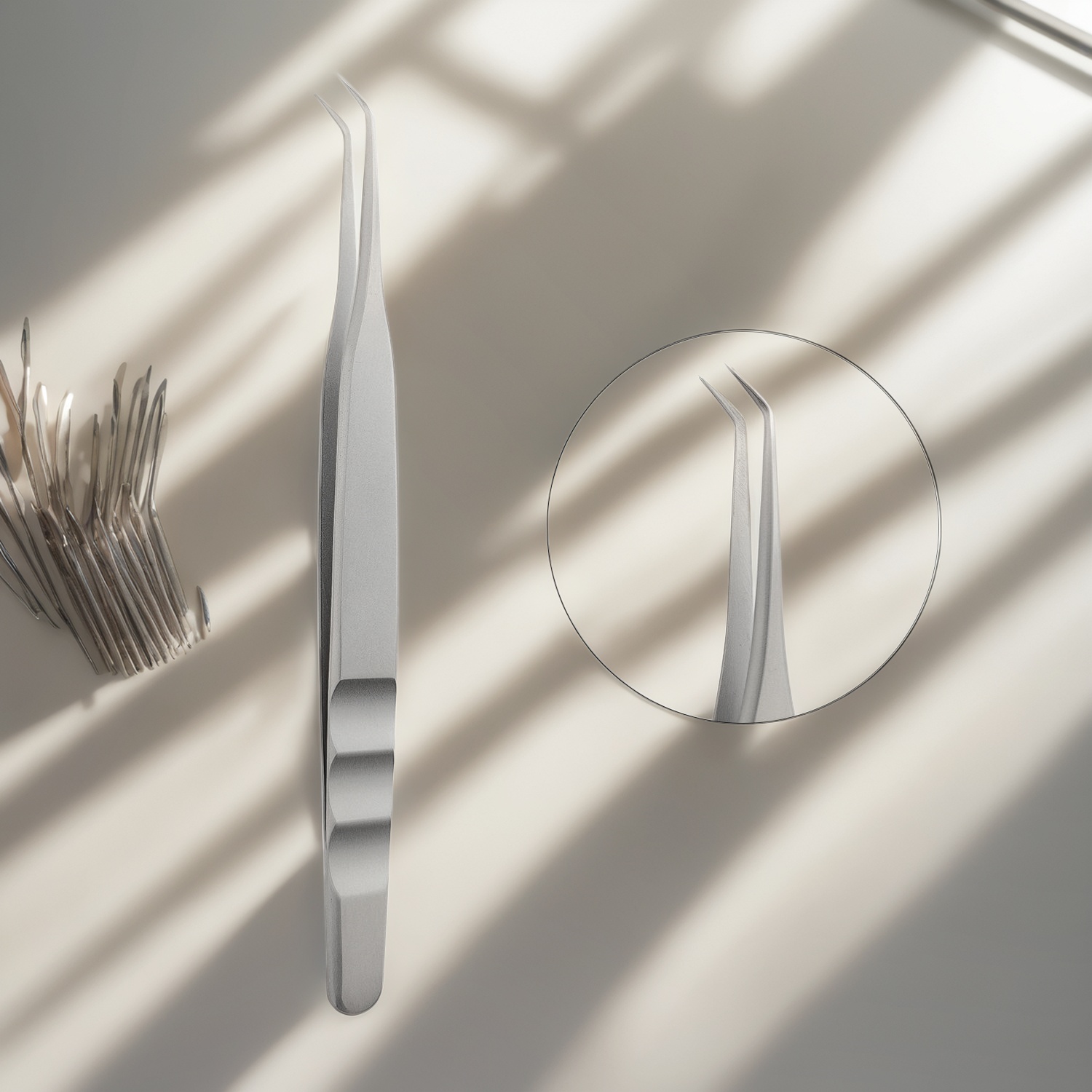
Olimor Beauty’s featured angled tweezer is described as being crafted from surgical-grade stainless steel, with a slanted tip designed for precise grip. Those details matter because lash work requires both accuracy and repeatability. A slanted tip can help artists approach the lash line from a comfortable angle, while stainless steel is commonly favored for professional beauty tools because it is durable and suitable for routine cleaning when handled properly.
For business buyers, the question is not only whether one tweezer feels good during a quick test. The more important question is whether the tool can perform reliably across many appointments, users and replenishment cycles. Salons buying for multiple artists should consider how the tweezer supports training consistency, storage, sanitation workflow and long-term replacement planning.
Selection Criteria for Professional Lash Tweezers
When evaluating eyelash extension tweezers for salon or wholesale use, focus on the details that affect daily work. Product photography can show the general shape, but performance depends on the relationship between tip alignment, tension, finish and ergonomics.
- Tip shape: A slanted or angled tip can help with controlled gripping and placement. The best choice depends on the artist’s technique and whether the tool is used for isolation, pickup or application.
- Tip contact: The gripping area should meet cleanly. Uneven contact can make fine lashes slip, forcing the artist to squeeze harder than necessary.
- Material: Surgical-grade stainless steel is a useful feature when durability and professional cleaning routines are priorities.
- Surface finish: A sleek matte finish, as described for the featured tool, can help provide a controlled hand feel and reduce distracting glare under strong salon lighting.
- Hand comfort: Ergonomic design is important for long sessions. A tweezer that requires excessive force can contribute to hand fatigue over a full working day.
- Consistency across batches: For B2B purchasing, the buyer needs repeatable quality, not just one good sample.
Because lash artists often develop personal preferences, a practical purchasing approach is to test the tool with the actual service methods used in the salon. Evaluate pickup on the lash types you normally use, then test isolation and placement under realistic lighting and timing. This provides better information than judging the tool only by weight or appearance.
How Bulk Beauty Supplies Support Salon Operations
Hair salon supplies in bulk can help businesses reduce interruptions, organize inventory and maintain a more professional service flow. For eyelash extension services, bulk planning is especially useful because tools and consumables must be clean, accessible and ready before each appointment. Even when the main focus is tweezers, the buyer should think about the full station setup: storage, cleaning rotation, replacement timing and backup tools.
Bulk purchasing does not mean buying the largest possible quantity without a plan. It means matching the purchase to actual usage. A single-location lash studio, a salon chain, a beauty school and a distributor may all need different ordering patterns. The goal is to prevent stockouts while avoiding unmanaged inventory that sits unused.
| Buyer type | What to prioritize | Useful purchasing question |
|---|---|---|
| Lash studio | Comfort, reliable grip and easy daily rotation | How many clean tools are needed per artist per day? |
| Training academy | Consistent feel across student kits | Will each student practice with the same tweezer style? |
| Salon group | Repeatable quality and organized replenishment | Can the tool be standardized across locations? |
| Distributor or retailer | Clear product positioning and durable packaging | Does the product meet the needs of professional buyers? |
Olimor Beauty offers beauty tool products for professional and business customers. Buyers comparing lash tools with other categories can review beauty tool products and broader product collections to build a more complete sourcing plan.
Quality Checks to Consider Before Ordering
The original product information notes that Olimor Beauty carries out internal inspections from raw materials to packaging. For buyers, that type of process is important because defects in small beauty tools are often found in details: a rough edge, poor alignment, uneven tension or finish inconsistency. These issues can affect service quality and customer perception even when the tool looks acceptable at first glance.
Before committing to a larger order, build a clear inspection checklist. It does not need to be complicated, but it should be specific enough that your purchasing, warehouse or salon team can make consistent decisions.
- Inspect the tip under good light. Look for clean alignment, smooth edges and reliable contact at the grip point.
- Test pickup repeatedly. Use the same lash materials your artists use in real appointments and check whether the grip remains consistent.
- Check hand tension. Open and close the tweezer many times to see whether it feels controlled without requiring excessive pressure.
- Review the finish. The surface should feel smooth and comfortable in the hand, with no distracting roughness.
- Assess packaging. Packaging should protect the tip during transport and storage so tools arrive ready for professional handling.
- Document results. Keep notes from sample testing so future reorders can be compared against the same criteria.
This approach helps prevent sourcing decisions from being based only on price. In lash extension work, the hidden cost of a weak tool can show up as slower service, wasted lashes, artist frustration and uneven results.
Care, Storage and Replacement Planning
Even a durable eyelash extension tweezer needs careful handling. The fine tip is the working surface, and it should be protected from drops, pressure and contact with hard objects. A salon that invests in good tools should also create simple rules for storage and cleaning so the tools remain useful for as long as possible.
After each service, tools should be handled according to the salon’s hygiene procedures and local professional requirements. They should be cleaned and stored dry, away from loose items that could damage the tip. If a tweezer is dropped, it should be inspected before returning to the station. Even a small change in alignment can affect pickup.
Replacement planning is also part of professional sourcing. Do not wait until every tool is worn or damaged before reordering. Instead, maintain a small reserve so artists can swap out a tweezer immediately if the grip changes. For multi-artist salons, labeling or assigning tools can also help track wear patterns and identify which styles work best for different techniques.
Choosing Olimor Beauty for B2B Lash Tool Sourcing
Olimor Beauty focuses on beauty tools for professional use, including the angled tweezer described for eyelash extension application. The combination of a slanted tip, surgical-grade stainless steel, matte finish, ergonomic design and internal inspections makes the product relevant for lash artists and business buyers who need controlled, dependable tools.
For B2B buyers, a good supplier relationship should support more than a single purchase. It should make it easier to compare product options, prepare salon kits, plan replenishment and maintain quality expectations. If you are sourcing for a salon, training program or distribution channel, define your required use case first: isolation work, extension pickup, student practice, retail resale or full professional kits. Then compare tools against that use case rather than relying on broad descriptions.
To discuss product suitability, packaging needs or purchasing plans, you can contact Olimor or send an inquiry. Clear details about your business type, expected application and preferred tool style will help align the selection with your actual workflow.
A Practical Final Checklist for Buyers
Before adding eyelash extension tweezers to your professional supply list, confirm that the tool fits both the artist’s hand and the business model. A salon needs comfort and consistency; a distributor needs dependable presentation and repeatability; a training academy needs tools that help students learn proper control. The best choice is the one that performs well in the real environment where it will be used.
Use this short checklist before placing a B2B order: confirm tip style, test grip with your lash materials, review comfort during repeated use, inspect finish and packaging, plan cleaning and storage, and set a reorder schedule. With those basics in place, eyelash extension tweezers become more than a small tool purchase. They become part of a stable professional service system that supports better application work and smoother salon operations.
Tag: