

Eyelash Extension Tweezers: A Practical Guide for Salon Buyers
Eyelash extension tweezers are small tools with a large impact. In lash work, the technician isolates one natural lash, picks up a fine extension, and places it with control near the lash line. A good tweezer supports those steps without adding slip, strain or guesswork. For salons, beauty schools and B2B buyers, the best purchase is not the most decorative one; it is the tool that stays precise in daily use and fits the way the team actually works.
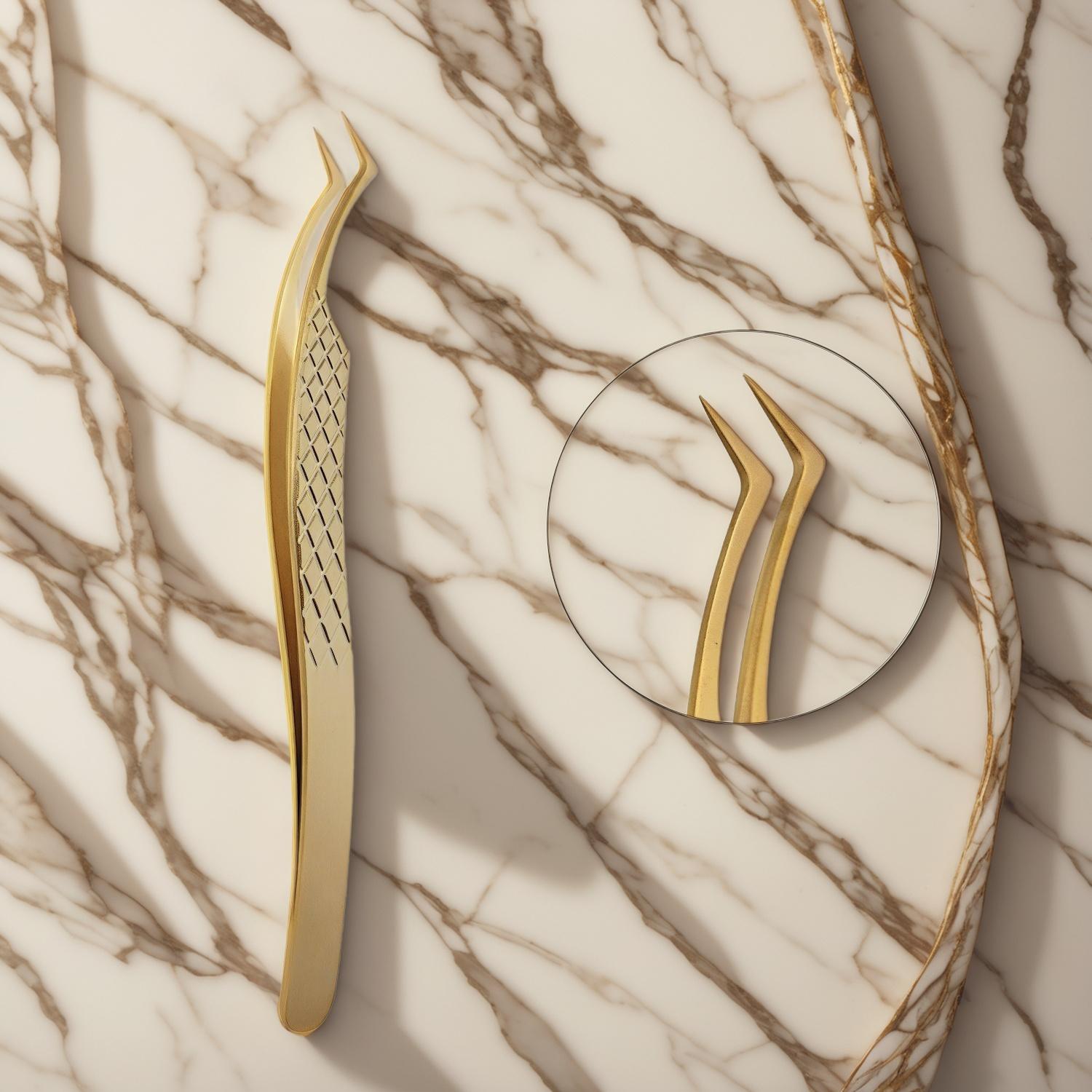
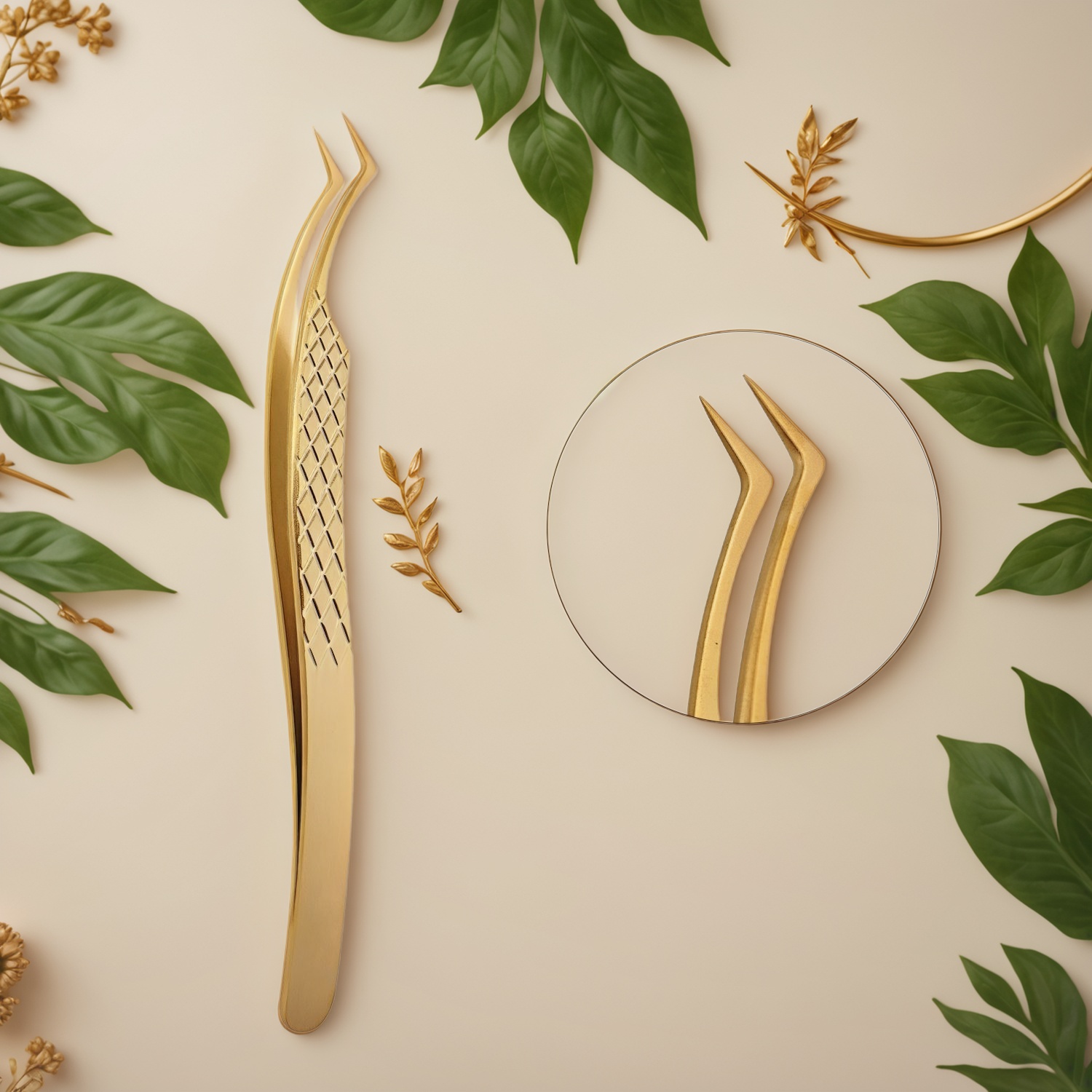
Olimor Beauty offers the Luxé Precision Gold Tweezers for eyelash extension work. The product is described with premium stainless steel, a gold finish, a non-slip grip and curved tips. Those are the kinds of details a buyer should look for when comparing professional beauty tools for a salon kit, training setup or retail assortment.
What Eyelash Extension Tweezers Need to Do
Professional lash tweezers perform three jobs: isolation, pickup and placement. Isolation means separating a single natural lash without disturbing the others. Pickup means grasping the extension cleanly so it does not bend, slip or deform before it reaches the eye. Placement means bringing the extension into position at a controlled angle and holding it steady long enough for the adhesive step.
These steps sound simple, but they rely on fine hand control. If the tips do not meet properly, if the handle is slippery, or if the spring tension feels awkward, the technician has to compensate with extra force. That can slow the service, increase fatigue and reduce consistency across multiple clients. A well-chosen tweezer should make good technique easier, not harder.
For that reason, salon buyers should think of tweezers as workflow tools. They affect timing, training, comfort and the overall quality of the lash application. They also influence how quickly new technicians gain confidence, because a tool with predictable behavior is easier to learn from than one that feels inconsistent from one appointment to the next.
Features That Affect Control, Comfort and Consistency
When comparing lash tweezers, focus on the functional details that affect daily handling rather than the surface finish alone. The product may look refined, but the real test is whether it helps the technician work precisely for a full schedule.
Tip alignment and closure
The tips should meet evenly and close with accuracy. Uneven closure can make it difficult to pick up fine lash fibers and may cause the technician to press harder than necessary. A precise tip helps support cleaner pickup and a steadier release.
Grip and finish
A non-slip grip matters when hands are gloved, when the room is warm, or when the appointment runs long. A gold finish can give the tool a polished professional appearance, but the finish should never replace a practical grip check. In use, stability matters more than style.
Material and sanitation fit
Stainless steel is commonly preferred for professional beauty tools because it is durable and compatible with routine salon sanitation when handled correctly. Buyers should still confirm that the tool fits the cleaning process used in their own workplace and that it can be dried and stored without damage to the tips.
Shape and visibility
Curved tips can help technicians work around the eye contour and maintain visibility during placement. They are often useful when the hand position needs to stay low and the working angle must remain controlled. For many lash artists, that extra visibility is one of the most practical reasons to choose a curved design.
Curved, Straight or Specialized: Matching the Tweezer to the Task
Not every tweezers shape serves the same purpose. A buyer who understands the task first can choose tools more confidently and reduce unnecessary spending on shapes that do not fit the service menu.
- Isolation work: Prioritize fine control, clear tip contact and a comfortable grip that allows delicate separation.
- Pickup work: Look for dependable closure and a tip shape that grips extensions without crushing them.
- Placement work: Favor visibility, stable handling and a shape that helps the technician approach the lash line cleanly.
- Training use: Choose tools that are predictable and forgiving enough for repeated practice without causing avoidable hand strain.
Olimor Beauty’s Luxé Precision Gold Tweezers are positioned as a curved-tip tool for controlled placement. That makes them relevant for lash artists who need a working angle that supports visibility and smooth movement around the eye area. Buyers comparing options in a lash tool collection should separate this placement-focused use from general-purpose beauty tweezers, which may not offer the same precision.
How to Inspect a New Batch Before It Reaches Clients
Whether you are stocking a salon, supporting a training academy or planning a resale order, inspect tweezers before they enter regular rotation. A simple arrival check can prevent problems that would otherwise show up during appointments.
Start with the basics: open and close the tweezers several times, check for smooth movement and examine the tip contact under bright light. If possible, test the tool on a practice strip or other non-client training surface to see how it behaves when picking up fine fibers. The goal is not to overcomplicate the process. It is to confirm that the tool feels reliable in hand before it is used on a client.
| Inspection point | What to look for | Why it matters | Buyer action |
|---|---|---|---|
| Tip contact | Tips meet evenly with no visible gap | Supports secure pickup and clean release | Reject or set aside any tool with poor alignment |
| Spring feel | Opens and closes smoothly without excess force | Helps reduce hand fatigue during long services | Compare across the batch, not just one sample |
| Grip security | Surface feels stable in the hand | Reduces slipping when gloves or product residue are present | Test in the same conditions as daily use |
| Tip condition | No burrs, bends or visible damage | Protects precision and client comfort | Inspect each tool before first use |
| Use fit | Matches isolation, pickup or placement needs | Prevents buying a shape that does not match the workflow | Assign each tweezers style to a defined task |
This type of check is especially useful for B2B buyers who cannot rely on appearance alone. A polished finish can look convincing in photos, but only practical handling tells you whether the tool belongs in professional service.
Cleaning, Storage and Maintenance That Protect Precision
Lash tweezers should be treated as precision instruments. Their tips are fine enough to be affected by drops, pressure, and careless storage. Even a small bend can change how the tool closes and how well it grips a lash extension.
After each service, follow the sanitation procedure used in your salon and any applicable local hygiene rules. Remove visible residue, clean the tool properly and dry it fully before storage. Do not leave tweezers loose in a drawer with other metal tools, because contact with hard surfaces can damage the tips. A dedicated holder, tray or sleeve is a better way to preserve alignment.
It also helps to keep lash tweezers for lash work only. Using them to open packaging, scrape surfaces or handle unrelated materials can dull the tips and reduce accuracy. In a busy studio, a clear tool-use policy saves money by extending the life of the working tool.
For teams with multiple technicians, standardize the storage routine. Give each sanitized tweezers a known location, label the working set if needed, and make visual tip checks part of the opening checklist. These small habits make maintenance easier and reduce the chance of accidental damage.
Buying for Salons, Schools and Distributors
The right purchase decision depends on who will use the tool and how often. A salon owner may care most about comfort, repeatability and the ability to keep a reliable stock on hand. A beauty school may need tools that support basic skill development. A distributor may need a product that is easy to present, explain and reorder within a broader beauty assortment.
When comparing cost factors, look beyond the unit itself. Material choice, finish quality, tip accuracy, packaging, customization requests and shipping terms all affect the total value of the order. A tool that looks inexpensive but causes frequent replacement or training problems is rarely the better buy.
It is also reasonable to ask suppliers about documentation. Many buyers request quality-system information aligned with recognized practices such as ISO 9001, or ask how products fit local public health guidance for reusable tools. Verify the current documents directly with the supplier and check that any stated procedures still match your own compliance needs.
If you are evaluating the full tool range for a salon pack, try to separate must-have features from nice-to-have ones. For example, a gold finish may help with presentation, but the decisive factors remain tip alignment, grip and task fit. For a sourcing review, you can send an inquiry with the intended use, preferred shape and packaging needs so the discussion stays focused on workflow rather than guesswork.
What to Ask Before You Place a Repeat Order
Repeat orders are easier when the first order is evaluated carefully. Ask the supplier how the product is packaged, whether samples can be reviewed, what customization options exist, and what quality checks are performed before shipment. If your business has multiple technicians, ask whether the same design will remain consistent across reorders so the team does not have to relearn the feel of the tool each time.
For larger buyers, it is also useful to ask about batch consistency, outer packaging, and whether the tool can be presented in retail-friendly or kit-friendly form. A distributor may care about display readiness, while a salon may care more about clean storage and easy staff identification. These are not minor details; they are part of the buying decision.
If the supplier can explain the material, finish, grip and tip design clearly, that is a good sign. If the answers stay vague, ask for clearer product documentation before making a broader commitment. A good sourcing conversation should help you judge whether the tweezers will support daily use, not just whether they look attractive on a page.
FAQ
Can I request a sample before placing a larger order?
In many B2B purchasing flows, yes. Sample evaluation is useful because it lets you test tip alignment, grip and handling before you commit to a larger quantity. Ask the supplier how samples are handled and what information they need from you.
Is there a minimum order quantity?
Minimum order expectations can vary by product, packaging and customization request. The best approach is to ask the supplier directly so you can compare the order plan with your salon, school or resale needs.
Can the tweezers be customized?
Customization often depends on the order structure and the supplier’s production setup. Buyers commonly ask about packaging, branding or presentation options. Confirm what is available before building a procurement plan around it.
What should I check for quality before accepting an order?
Check tip alignment, spring feel, grip stability, finish condition and overall consistency across the batch. If your team will use the tweezers for client services, it is also wise to test them in the same handling conditions they will see in daily work.
How should I think about lead time?
Lead time depends on order size, customization, stock status and shipping method. Ask for current scheduling information and confirm any documents that matter to your internal purchasing process before you place the order.
For salons, schools and distributors that want a dependable lash tool rather than a decorative accessory, the buying process should stay centered on precision, comfort, task fit and maintainability. If you want help matching a tweezer style to your workflow, explore the product range or contact the team to discuss your professional needs.
Tag: