

Custom Tweezers for OEM Beauty Tool Sourcing
Custom tweezers may look like a small item in a beauty tool range, but they influence how a customer feels about precision, comfort and brand quality every time they pick them up. For lash application, brow grooming, nail art, skincare work or retail beauty kits, the right tweezer is not only about appearance. Tip alignment, tension, handle texture, balance and packaging all affect whether the tool performs cleanly and feels reliable in daily use.
For brands, salons, distributors and beauty tool buyers, custom tweezers are also a practical product for building a consistent assortment. They can be designed to match a visual identity, support professional use cases and fit into sets with other beauty tool products. Olimor Beauty works in the beauty tools field as a China tweezers exporter and OEM custom tweezers supplier, helping buyers consider function, finish and sourcing details before placing an order.
What Makes a Custom Tweezer Worth Sourcing?
A good custom tweezer starts with the task it needs to perform. A lash artist may need a curved tweezer that gives visibility and control near the lash line. A nail technician may prefer a fine, stable tip for placing decals, gems or small decorative parts. A retail grooming tweezer may need a comfortable grip and a versatile tip shape that is easy for everyday users to handle. When the use case is clear, customization becomes more than adding a color or logo.
Buyers should look at three functional areas first: the tips, the handle and the spring tension. The tips should meet evenly and feel consistent when closed. If the tips are too thick, they may struggle with delicate lash or nail work. If they are too sharp or fragile, they may not be appropriate for general retail users. The handle should provide enough control without making the tool heavy or awkward. The tension should be firm enough for accuracy but not so stiff that it causes fatigue during repeated use.
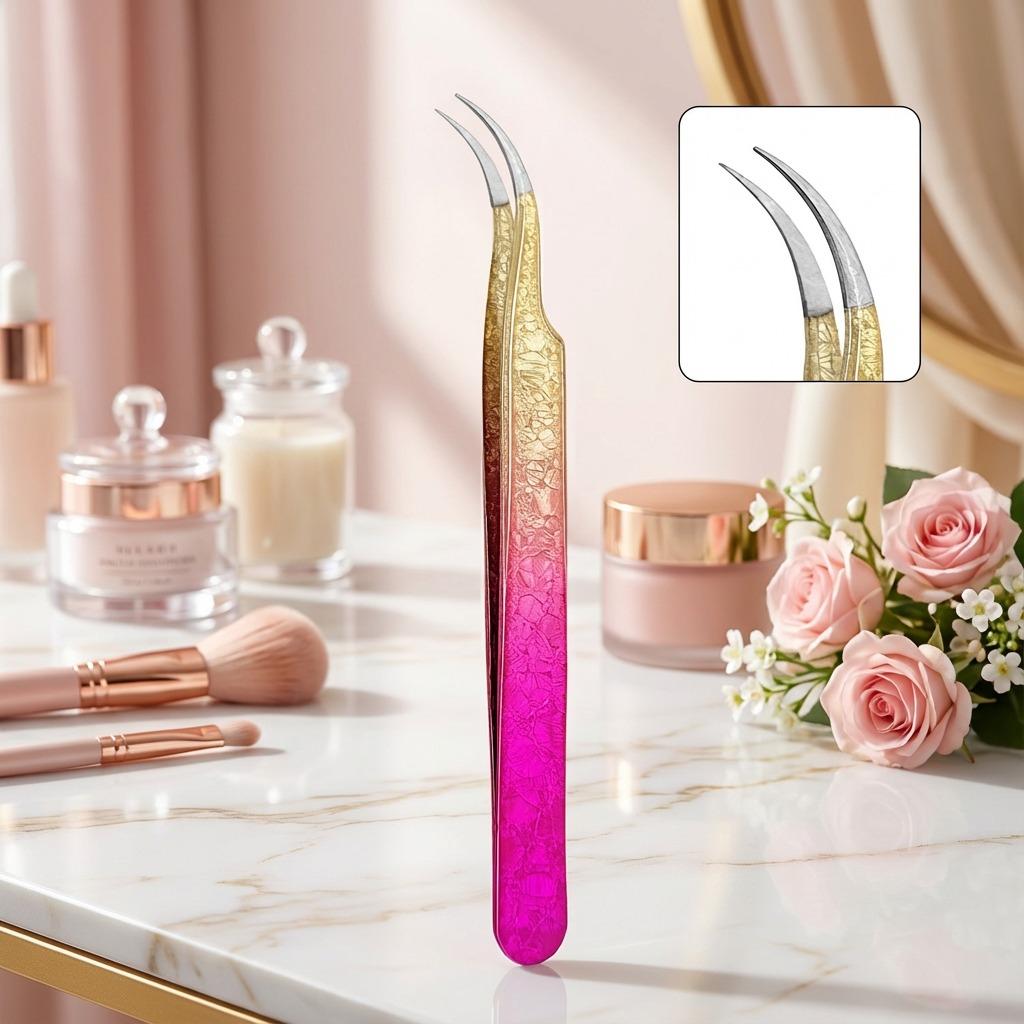
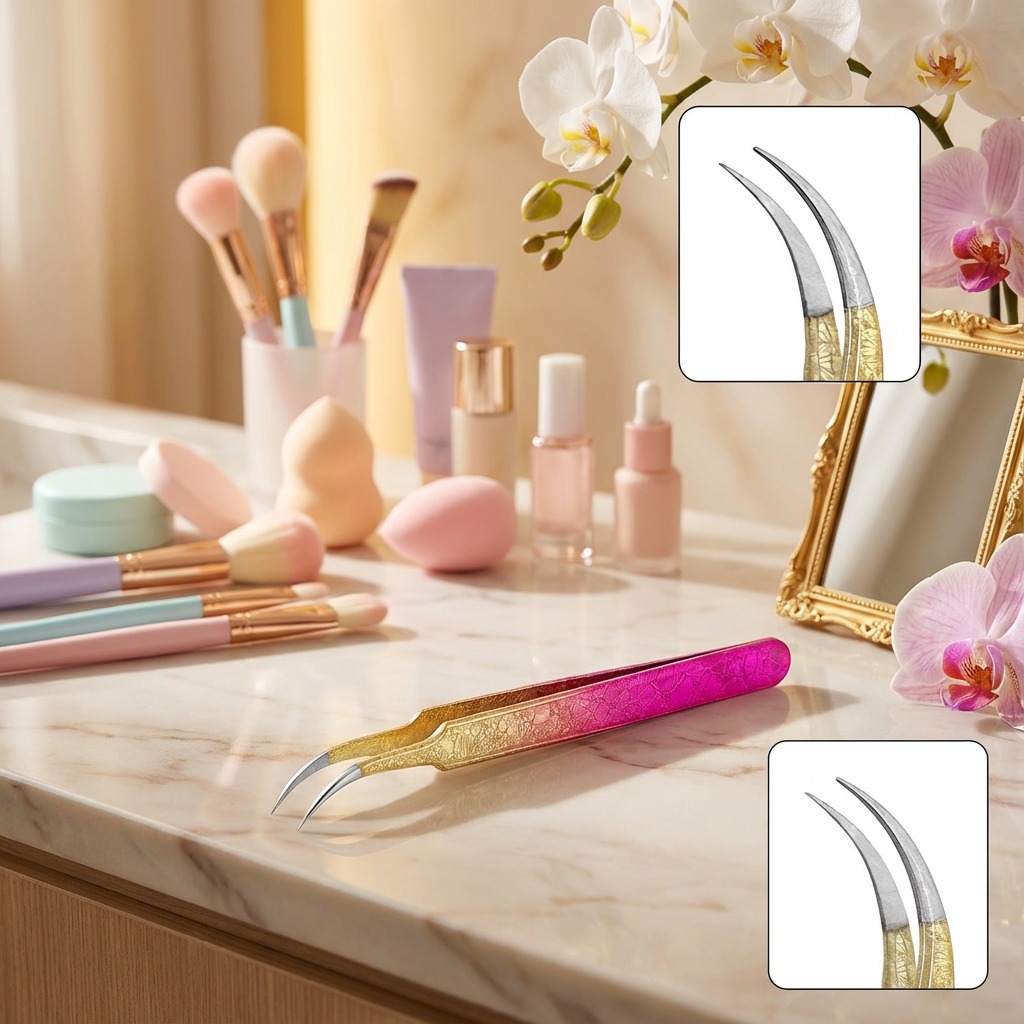
Visual customization still matters, especially for beauty retail. A distinctive finish can help a tweezer stand out in a kit or display. The Precision Curved Tweezer described by Olimor Beauty uses a gradient from gold to pink, creating a warm visual effect while keeping a curved working shape for detailed beauty tasks. The non-slip prismatic handle is also relevant because texture can improve handling, especially when hands are working with lash adhesive, nail products or skincare accessories nearby.
Choosing Tip Shape for Lash, Brow and Nail Work
The tip shape is one of the most important sourcing decisions. Even when two tweezers appear similar in product photos, the angle and closing point can make them suitable for very different tasks. OEM custom tweezers should be selected based on who will use them and what level of precision they require.
- Curved tips: Useful for false lash application, nail art placement and work that benefits from visibility around the contact point. The curve can help the user approach small items without blocking the view.
- Straight fine tips: Suitable for detailed placement tasks where the user needs a direct grip. They can be helpful for separating or picking up small beauty accessories.
- Slanted tips: Often associated with brow grooming because the angled edge can contact hair more easily than a very fine point.
- Pointed tips: Best reserved for trained or careful users who need high precision, as the narrow point can feel less forgiving for general consumers.
- Rounded or softened tips: Appropriate when comfort and safety are priorities, though they may not grip very fine items as securely.
For a product range, one tweezer style rarely covers every customer. A beauty brand may choose a curved precision tweezer for lash and nail categories, while keeping a slanted tweezer for brow kits. A distributor may want several options across different price points and finishes. Before finalizing a custom order, it is useful to test whether the tip can pick up the actual items your customers use, such as lash clusters, strip lashes, nail gems, brow hairs or small skincare accessories.
Ergonomics, Grip and Finish Details Buyers Should Compare
Comfort becomes important when a tweezer is used repeatedly. A professional may open and close the tool many times in one appointment, while a retail customer may judge quality from the first few seconds of handling. The tweezer should feel stable in the hand and allow the user to make small movements without squeezing too hard.
The Precision Curved Tweezer referenced by Olimor Beauty highlights several useful design ideas: a curved profile, precision tips and a non-slip prismatic handle. A prismatic or textured surface can help reduce slipping compared with a completely smooth handle. This does not replace good tip alignment, but it supports control. For OEM sourcing, the grip texture should be checked along with coating quality, edge finishing and how the tool feels during actual use.
Color and surface finish should also be chosen with the market in mind. A gold-to-pink gradient can suit a beauty retail audience that values visual appeal, while a more neutral finish may fit professional kits or minimalist branding. The finish should not interfere with the closing accuracy of the tweezer or create rough edges. If a logo is added, it should be positioned where it remains visible but does not make the handle uncomfortable.
OEM Custom Tweezers: Practical Specification Checklist
OEM custom tweezers give beauty brands and creators more control over the final product. However, the best results come from clear specifications. Instead of asking only for a stylish tweezer, buyers should define the application, target user and expected retail format. A clear brief helps avoid mismatched samples and makes comparison easier.
| Specification Area | What to Review | Why It Matters |
|---|---|---|
| Use case | Lash application, brow grooming, nail art, skincare or multi-use kit | Determines the best tip shape and tension |
| Tip alignment | How evenly the tips meet when closed | Affects grip on fine items and user confidence |
| Handle grip | Smooth, textured, prismatic or other surface designs | Influences control during repeated use |
| Finish | Color, gradient, polish, coating feel and logo placement | Connects the tool to brand identity and retail appeal |
| Packaging | Single tool, kit component, protective sleeve or retail card | Impacts presentation, storage and shipping protection |
| Quality review | Tip closure, surface defects, handle feel and consistency across samples | Helps prevent performance issues before bulk production |
This checklist is especially useful when comparing samples from a China tweezers exporter. For example, two curved tweezers may share the same general silhouette, but one may have smoother tension and better contact at the tip. A buyer sourcing for a lash-focused brand should test the tool with the intended lash products rather than judging only by appearance.
Maintenance Guidance for End Users
A custom tweezer should be designed well, but customer education also improves satisfaction. Simple care instructions can reduce damage, keep the tips aligned and help the product last longer in a beauty kit. This is particularly important for fine or curved tips, which can be affected by drops or pressure during storage.
- Clean after use: Wipe the tweezer after contact with lash adhesive, cosmetic residue, skincare products or nail art materials.
- Dry before storage: Moisture can affect the appearance and cleanliness of beauty tools, especially when stored in closed pouches.
- Protect the tips: Use a sleeve, cap or secure packaging so the tips do not bend against other tools.
- Avoid using as a prying tool: Tweezers are designed for gripping and placement, not opening containers or lifting hard parts.
- Check alignment regularly: If the tips no longer meet properly, precision tasks such as lash placement will become more difficult.
For retail brands, adding short care instructions to packaging or product pages can reduce misuse. For professional buyers, maintenance guidance can be included with tool sets or training materials. This is a simple way to support better product reviews and repeat purchases.
How to Source Custom Tweezers with Confidence
When sourcing OEM custom tweezers, the goal is to balance performance, appearance and consistency. Start by identifying the user: professional lash technician, nail artist, brow specialist, retail beauty shopper or gift set customer. Then define the core task. A curved tweezer for false lashes and nail art should be evaluated differently from a slanted grooming tweezer for brows.
Next, compare samples against real usage scenarios. Test whether the tweezer picks up the smallest item in your product range, whether the handle remains comfortable after repeated opening and closing, and whether the finish suits your brand position. Look for visible issues such as uneven coating, rough edges, poor logo placement or inconsistent tip closure. A visually attractive tweezer still needs dependable working performance.
Olimor Beauty can support buyers exploring OEM custom tweezers, including designs such as the Precision Curved Tweezer with a gold-to-pink gradient and non-slip prismatic handle. Buyers developing a full beauty tool line can also review related product collections to plan coordinated assortments. If you are preparing a custom tweezer project, you can send an inquiry with your intended use case, finish preference, packaging direction and sample review requirements, or contact Olimor for sourcing communication.
Final Buying Notes
Custom tweezers are most successful when they are designed around real beauty tasks rather than decoration alone. Tip shape, tension, grip texture, finish and packaging all contribute to how the tool performs and how customers perceive the brand. For OEM buyers, a clear specification and careful sample testing are the most reliable ways to avoid generic products and build a tweezer that fits the intended audience.
Whether the product is intended for lash application, nail art, grooming kits or retail beauty assortments, a well-chosen custom tweezer can become a small but memorable part of the user’s routine. Focus on precision where it matters, comfort where the hand meets the tool, and customization that supports the brand without compromising function.
Tag: