

Custom Logo Tweezers for Beauty Brands: Practical B2B Sourcing Guide
Custom logo tweezers are small beauty tools, but they carry real brand responsibility. They are used close to the face, handled repeatedly and often kept in a makeup bag, salon drawer, lash kit or retail grooming set for a long time. For a beauty brand, salon group, spa buyer, wholesaler or promotional distributor, the goal is not simply to place a logo on metal. The goal is to source a tweezer that feels controlled in the hand, grips fine hairs or lash pieces reliably, looks consistent with the brand and can be reviewed through practical quality checks before production.
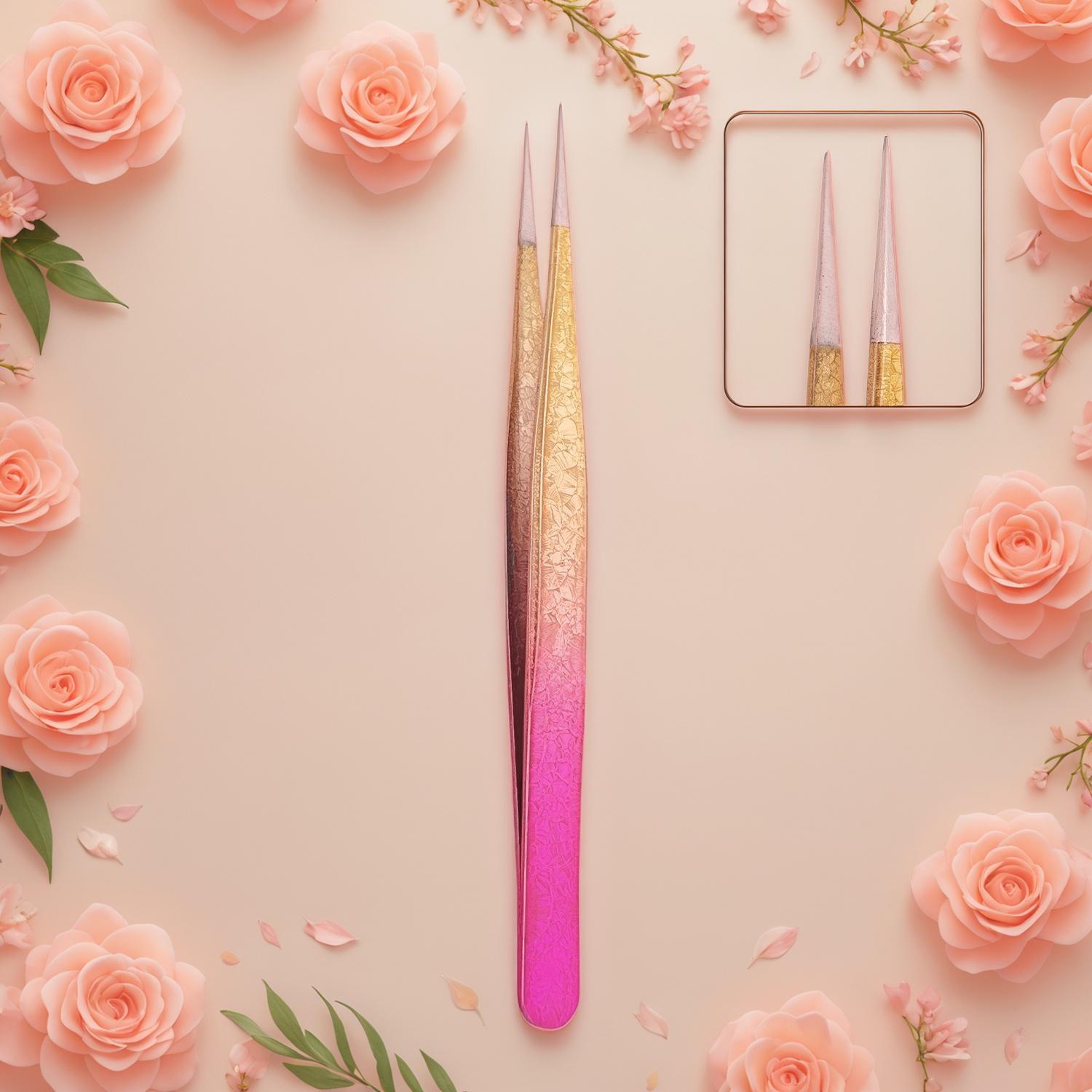
Olimor Beauty supplies beauty tools for buyers who need brand-ready product options, including custom logo tweezers. Available product information highlights stainless steel construction, ergonomic handles, embossed or textured grip details, decorative gradient finishes such as gold-to-pink styling and finely pointed tips for precision tasks such as eyebrow shaping and eyelash application. These features are useful starting points, but buyers should still evaluate samples carefully because real tweezer performance depends on tip alignment, spring tension, finish consistency and how the tool behaves during actual use.
This guide explains how to select custom logo tweezers for retail, salon, lash, travel, gift and distributor programs. It focuses on the sourcing questions that matter most: use case, tip shape, grip comfort, material and finish, logo readability, packaging, inspection criteria and supplier communication.
Start With the Use Case Before Choosing the Logo
The best custom logo tweezer brief starts with one question: what will the end user do with the tool most often? A tweezer for brow shaping has different priorities from a tweezer included in a lash application kit, a travel pouch, a subscription box or a salon workstation. If buyers choose only by surface color or logo position, they may overlook the working end of the tool, where customer satisfaction is decided.
Common B2B uses for branded tweezers include eyebrow grooming kits, lash and brow service tools, beauty retail accessories, travel beauty pouches, spa or salon supplies, gift-with-purchase sets, subscription box items and distributor catalog assortments. Each use case changes the specification. A brow kit may need precision and clean presentation. A lash kit may prioritize delicate control at the tip. A salon tool may need a comfortable grip for repeated handling. A promotional item may need strong visual appeal, but it should still perform well enough to protect the brand reputation.
Before requesting samples, write a short use case profile. Include the intended user, the main grooming task, whether the item is for professional or personal use, the desired retail positioning, expected packaging format and whether the tweezer should match other tools in the same range. Buyers building a broader assortment can review Olimor beauty tool products to consider how tweezers may sit beside lash tools, scissors, mirrors or other accessories.
Tip Shape Is the Core Performance Decision
The logo may attract attention, but the tips determine whether the tweezer works. A good tweezer should close evenly, grip fine hairs or lash fibers without excessive pressure and feel clean at the edges. A tweezer can photograph beautifully and still disappoint if the tips do not meet properly.
Different tip styles support different tasks. The supplied product details emphasize finely pointed tips for precise work such as brow shaping and eyelash application. Pointed tips can be useful where accuracy matters, but they require careful handling and protective packaging because the working edges are more delicate than broader profiles. Other styles may suit different retail or professional audiences.
| Tip style | Best-fit use | What B2B buyers should check |
|---|---|---|
| Slant tip | Eyebrow shaping and everyday grooming | Even angled edge contact, clean hair grip, comfortable spring tension and no visible gap when closed. |
| Pointed tip | Fine detail work, precise brow cleanup and lash handling | Symmetrical points, smooth closure, tip protection in packaging and careful user instructions for beginners. |
| Flat tip | General gripping tasks or broader beauty kits | Parallel closure, no rough edges and enough gripping surface for the intended use. |
| Angled or specialty tip | Lash application or professional detail work | Comfortable working angle, visibility at the tip and repeatable control during actual application tests. |
For a brow-focused line, test whether the tweezer captures fine hairs on the first attempt. Repeated attempts can irritate skin and make the product feel less professional. For lash use, test whether the tips can hold a strip lash, cluster or small lash section without crushing or twisting it. For general grooming kits, consider whether a pointed tip is too specialized for beginners and whether a slant or safety-focused option may be more suitable.
Material, Finish and Grip: What Affects Daily Use
Stainless steel is a practical material for beauty tweezers because the tool needs a stable structure, fine working edges and suitability for repeated handling and cleaning. Material selection is only part of the specification, however. Surface finish, coating quality, edge finishing, grip texture and handle shape all influence how the tweezer feels and how long it maintains its appearance in normal use.
Olimor product information notes ergonomic handles with embossed patterns for a more secure non-slip grip, along with multi-gradient finishes moving from gold to pink. These details are relevant for beauty buyers because tweezers are often used under close visual attention, near mirrors, in salon lighting or around skincare and cosmetic products. A decorative finish can support retail appeal, while an embossed or textured grip can help improve control during precision work.
Key grip and finish checks
- Tip contact: The two tips should meet evenly without a visible gap. Poor contact can cause the tool to slide off fine hairs.
- Spring tension: The tweezer should open and close smoothly. Too much tension can tire the hand; too little can reduce control.
- Grip texture: Embossed or engraved handle patterns should improve hold without feeling sharp or uncomfortable.
- Finish consistency: Metallic, matte, glossy or gradient finishes should look consistent across representative samples.
- Logo contrast: The mark should remain readable over the actual finish, especially on reflective, textured or ombre surfaces.
- Tip protection: Packaging should help protect fine points from bending, dulling or scratching during transport and storage.
A gold-to-pink gradient can work well for beauty retail, gifting and cosmetic-inspired collections because it is more distinctive than plain metal. For professional salon environments, the key question is whether the attractive finish is paired with reliable geometry, comfortable handling and repeatable quality. Buyers should not approve a finish based only on photos; a sample should be held, used and compared across multiple pieces.
Logo Placement and Branding Choices
Custom logo tweezers have limited branding space, so the logo must be simplified and placed carefully. A large logo may look crowded, a complex icon may lose clarity and a mark placed on a high-contact area may wear faster or be hidden by fingers during use. For tweezers with embossed handles or gradient color, logo placement needs even more attention because texture and color transition can affect readability.
Prepare artwork before discussing production. A useful brand file package includes vector logo files, preferred logo color, orientation, minimum clear space requirements and any restrictions on how the mark may be simplified. If the tool has an ombre finish, check the logo against both lighter and deeper color areas. A dark logo may be clear on gold but weaker on pink; a light logo may have the opposite issue.
Branding questions to answer before sampling
- Should the logo appear on one arm, both arms, the cap, the pouch or the outer packaging?
- Is the logo readable at actual tweezer size rather than only on a digital mockup?
- Will the logo be placed away from the main finger pressure area?
- Does the finish require a stronger contrast for ecommerce photography?
- Should the product carry a discreet professional mark while the packaging carries fuller brand information?
Retail brands may want a polished logo presentation that photographs well. Salons and professional buyers may prefer a cleaner, subtler mark that does not distract from the tool. Promotional buyers may prioritize visibility, but performance should not be treated as optional. A low-performing tweezer can weaken the impact of a branded campaign.
Build a Clear Sourcing Brief for Factory Communication
Factory-direct sourcing works best when the buyer translates expectations into reviewable details. Avoid vague terms such as premium, luxury or good quality unless they are supported by specific requirements. A better sourcing brief defines the use case, tip style, finish, grip texture, logo method, packaging format and inspection priorities.
| Decision area | What to define | Why it matters |
|---|---|---|
| Use case | Retail brow kit, salon tool, lash set, travel item, gift set or distributor range | Determines performance priorities, finish style and packaging expectations. |
| Tip profile | Pointed, slant, flat or specialty shape | Controls the main user experience and should match the grooming task. |
| Material and finish | Stainless steel construction, metallic finish, matte coating, glossy surface, gradient or textured handle | Affects durability, appearance, grip and brand presentation. |
| Logo plan | Artwork file, placement, size, color and method to be discussed with the supplier | Prevents unreadable marks, poor contrast and branding placed in unsuitable areas. |
| Packaging | Cap, pouch, retail card, box or kit packing | Protects tips, supports shelf presentation and influences customer instructions. |
| Quality checks | Tip alignment, tension, surface finish, logo clarity, packaging condition and batch consistency | Creates a practical basis for sample approval and shipment review. |
When comparing private label beauty tool options, buyers can browse Olimor product collections and consider whether the same finish, logo style or packaging direction should be carried across a full tool range. Consistency helps a branded tweezer look intentional rather than like an unrelated accessory added at the end of product development.
Sampling and Inspection: What to Check Before Ordering
Samples should be tested through actual use, not only reviewed under office lighting. Ask for representative samples when the order involves a new finish, new logo method, new packaging or a tip style that your team has not previously approved. Check several pieces rather than relying on a single display sample because tweezer performance depends on consistent alignment and finishing.
Practical sample review checklist
- Inspect the closed tips. Hold the tweezer against a light background and check whether the tips meet evenly.
- Test grip on fine material. Use a realistic hair or lash-handling test that reflects the intended customer task.
- Open and close repeatedly. Notice whether the spring tension feels smooth or tiring.
- Hold the tool at the real working angle. Test the grip with dry hands and in conditions similar to beauty or salon use.
- Review edge feel. The tips should feel precise, not rough or uneven.
- Check finish and logo consistency. Compare multiple samples for color transition, coating appearance and logo readability.
- Assess packaging protection. Fine pointed tips should be protected so they do not arrive bent or damaged.
For buyers selling into regulated markets, it is sensible to confirm what material, coating, labeling or packaging documentation is required for the destination country. Public frameworks such as EU REACH for chemical substances or ISO 9001 for quality management systems may be relevant in supplier evaluation, depending on the buyer, market and product scope. Buyers should verify the currently applicable version, request supplier documentation where needed and avoid assuming that any supplier holds a certification unless it is specifically documented.
Cost Factors Without Guessing Prices
The cost of custom logo tweezers depends on specification choices rather than one universal price. Buyers should not compare quotes without confirming whether the products are truly equivalent. A plain finish, a decorative gradient, a textured handle, a fine pointed tip, a custom logo process and retail-ready packaging can all influence production complexity and quotation structure.
Common cost factors include material selection, tip shape, finish type, logo method, artwork complexity, packaging style, sampling requirements, inspection expectations and order quantity. Freight, destination market documentation and any buyer-specific packaging rules may also affect the total landed cost. Instead of asking only for the lowest unit price, ask suppliers to quote against the same written brief. This makes it easier to compare custom logo tweezers by value, not just by surface appearance.
If you are narrowing a project for launch, prepare one preferred specification and one acceptable alternative. For example, a brand may compare a decorative gradient finish with a simpler metallic finish, or a custom box with a more compact pouch. This helps the buyer understand which choices drive cost while keeping the core performance requirements intact.
How to Evaluate a Custom Tweezer Supplier
A reliable supplier discussion should go beyond color cards and logo mockups. For B2B beauty buyers, the most important questions are whether the supplier understands the intended use, can discuss tip performance, can provide realistic sampling support and can align production with agreed inspection points. Communication quality matters because small metal tools depend on precise details that are easy to overlook.
- Can the supplier explain which tip style suits brow, lash or general grooming use?
- Can samples be reviewed for tip alignment, tension, grip and finish consistency?
- Can the supplier discuss logo placement on textured or gradient surfaces?
- Can packaging protect pointed tips during storage and transport?
- Can the supplier confirm what buyer-provided artwork and packaging files are needed?
- Can inspection expectations be agreed before production rather than after a problem appears?
Olimor Beauty supports buyers looking for practical branded beauty tools. If you are preparing a custom tweezer brief, you can share your use case, artwork direction and packaging expectations through the Olimor custom product inquiry page or contact the team directly through Olimor contact options.
FAQ: Custom Logo Tweezers for Beauty Brands
Can I request samples before placing a custom logo tweezer order?
Samples are recommended, especially for a new tip style, new finish, custom logo placement or retail packaging format. Use samples to check tip alignment, grip, tension, finish consistency and logo readability during real grooming or lash-handling tasks.
What information should I provide for customization?
Provide the intended use case, preferred tip style, finish direction, logo artwork in vector format if available, logo placement preference, packaging concept and any market or company requirements your team must follow. Clear information helps the supplier review feasibility and avoid vague specifications.
Is there a fixed MOQ or lead time for custom logo tweezers?
MOQ and lead time depend on the specification, customization method, packaging and production schedule. Buyers should confirm these details directly with Olimor during the inquiry stage rather than assuming a standard number for every project.
What quality checks matter most before shipment?
Important checks include tip alignment, smooth opening and closing, comfortable tension, edge finish, grip texture, surface consistency, logo clarity and packaging condition. For pointed tweezers, tip protection is especially important.
Can custom logo tweezers match other beauty tools in a product line?
Yes, buyers can plan tweezers as part of a coordinated beauty tool range by aligning color, finish, logo treatment and packaging style. The key is to keep the tweezer functional first, then match the branding to the wider assortment.
Tag: