

Choosing Eyelash Extension Tweezers for Professional Salon Work
Eyelash extensions depend on small, controlled movements. A lash artist may isolate one natural lash, pick up a fine extension, control adhesive placement and position the extension in a fraction of a millimeter. For salons, training and technique matter, but the tool in the hand matters as well. The right eyelash extension tweezers help professionals work with steadier control, reduce unnecessary hand strain and maintain consistent service quality during a busy appointment schedule.
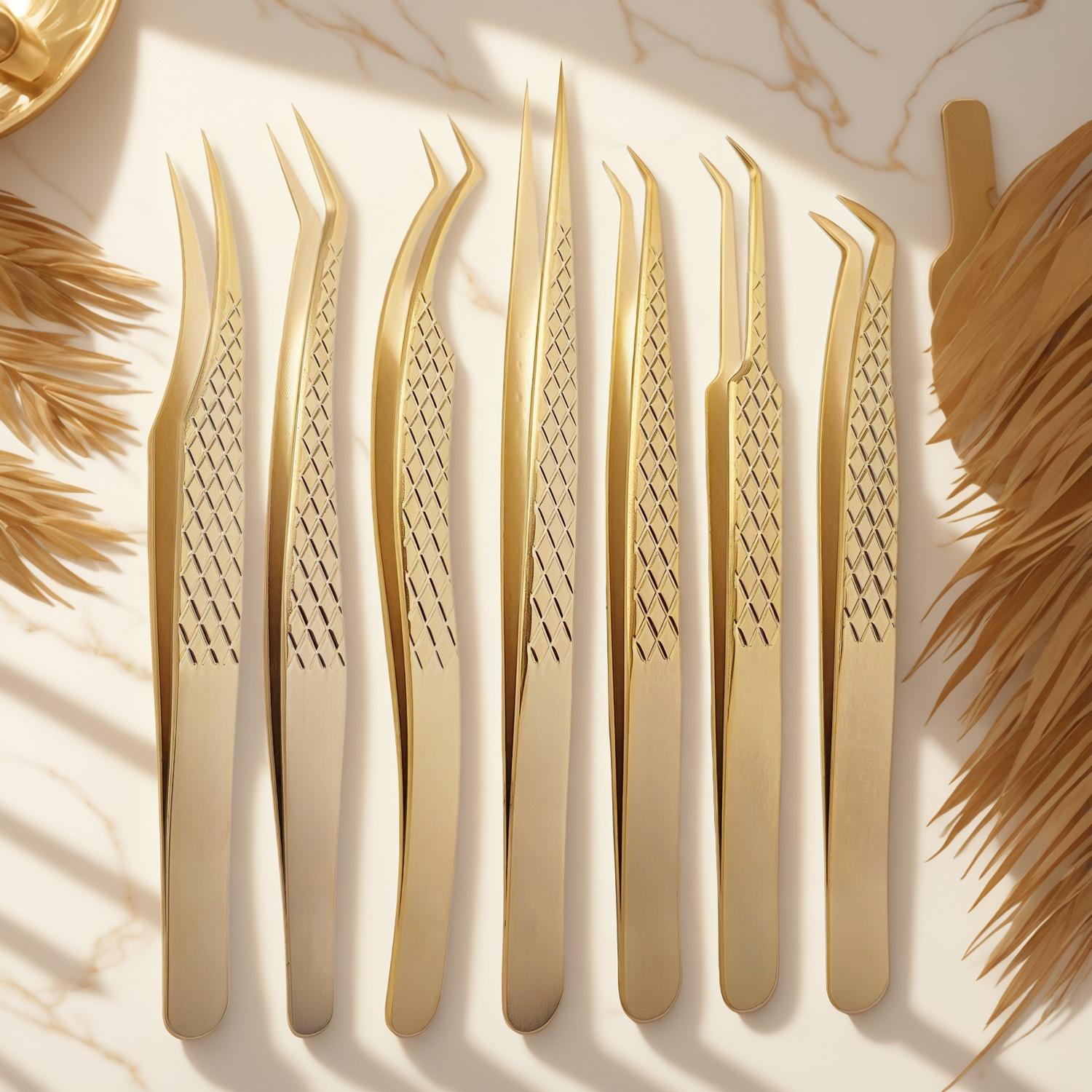
For beauty businesses buying B2B beauty supplies, tweezers should not be treated as an afterthought. They are daily-use precision tools that affect application speed, comfort and the client experience. Olimor Beauty supplies beauty tools for professional buyers, including gold-plated precision tweezers crafted from durable stainless steel. When selecting tools for salon teams, the goal is not simply to choose the most attractive finish, but to match the tweezer design with the work being performed and the expectations of a professional environment.
Why Tweezers Are Central to Eyelash Extension Services
Unlike general grooming tweezers, eyelash extension tweezers must support repetitive, detailed application. They are used for isolation, pick-up, placement and sometimes fan creation, depending on the artist’s method. A tweezer that feels acceptable for a short task may become uncomfortable after several appointments. Small design differences, such as the contact point, tension and handle shape, can influence how accurately the artist works over time.
For a salon owner or purchasing manager, this makes tool selection a business decision. Poorly matched tweezers may slow down appointments, increase the need for replacements or cause artists to compensate with awkward hand pressure. A thoughtful purchasing process helps salons standardize tools, train new staff more easily and reduce inconsistency between workstations.
Key Selection Criteria for Professional Lash Tweezers
When comparing eyelash extension tools for a salon, look beyond the surface appearance. A polished or gold-plated finish can support a professional presentation, but performance should be judged by practical handling factors. The following points are useful when evaluating tweezers for individual artists or bulk purchasing.
- Tip alignment: The tips should meet cleanly and consistently. Misaligned tips make it harder to isolate natural lashes or pick up delicate extensions.
- Grip and contact area: A well-designed grip helps the artist hold the tweezer steadily without squeezing too hard. Intricate grips, when well placed, can improve control during detailed work.
- Tension: Tweezers should close with enough control for precision but not so much resistance that the hand becomes tired during long sessions.
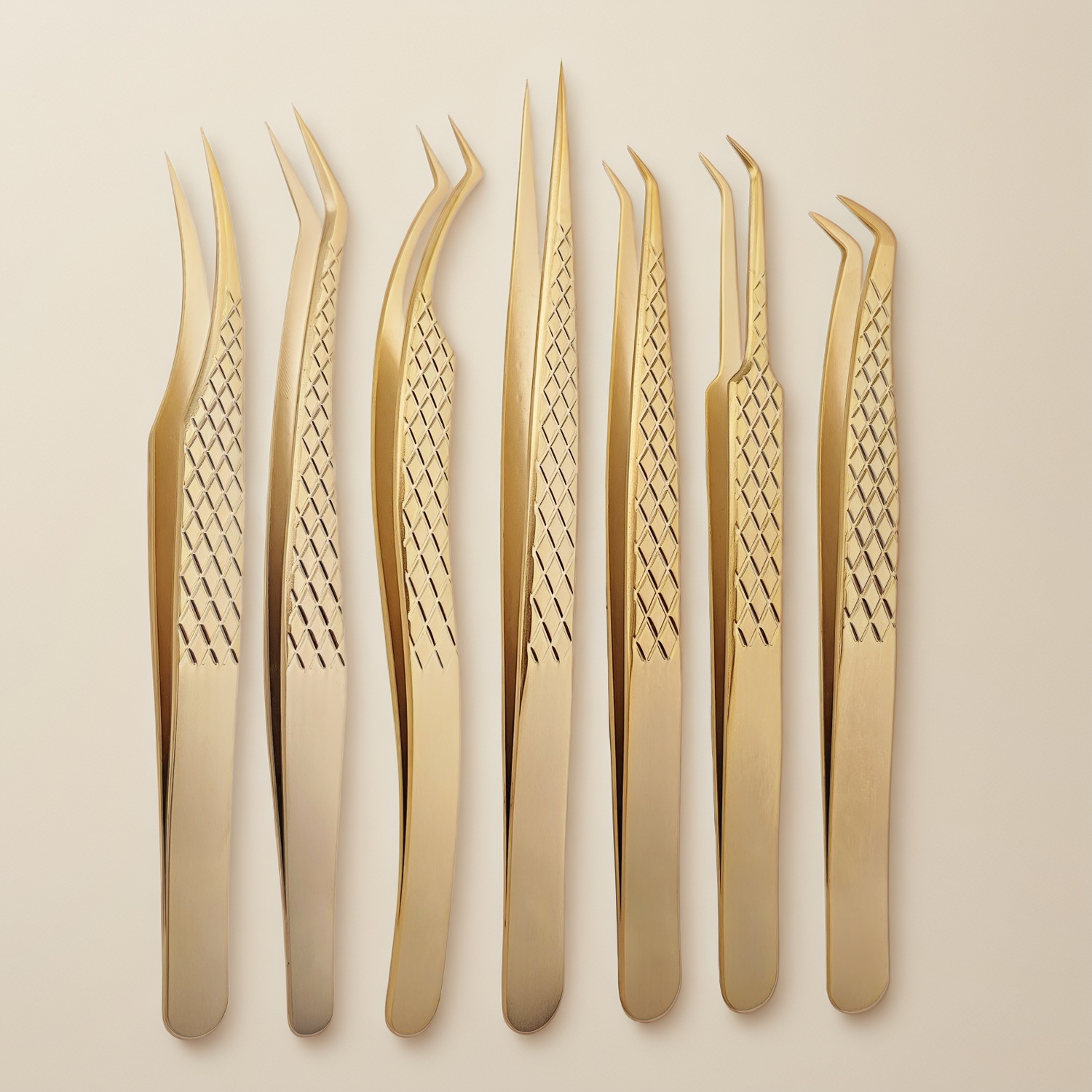
- Tip style: Different tip shapes suit different tasks. A salon may need more than one style so artists can select the best tool for isolation, classic application or volume techniques.
- Material durability: Stainless steel is a practical choice for professional beauty tools because it supports repeated handling and routine cleaning when maintained correctly.
- Workstation consistency: Buying similar tools across stations helps teams follow shared procedures and makes replacement planning easier.
Matching Tweezer Types to Salon Use Cases
No single tweezer shape is ideal for every lash technique. Salons that offer multiple eyelash extension services often benefit from a small, organized set of tools for each station. The table below shows how buyers can think through common tweezer roles without relying on one generic option for every task.
| Salon task | What the tweezer needs to support | Buyer consideration |
|---|---|---|
| Isolation | Separating one natural lash from surrounding lashes | Look for clean tip visibility and comfortable control near the lash line. |
| Classic extension placement | Picking up and placing individual extensions | Prioritize accurate tip closure and balanced tension for repeated movements. |
| Detailed correction work | Adjusting small areas during application | Choose a tool that allows fine handling without blocking the artist’s view. |
| High-volume appointment days | Long periods of repetitive use | Evaluate ergonomics, grip texture and how the tool feels after extended use. |
This approach helps salons purchase according to real workflow. For example, a lash artist who mainly performs classic sets may prefer different handling than an artist who frequently works on detailed fills. By mapping the tool to the task, beauty businesses can build a practical kit instead of over-ordering items that do not match their service menu.
Ergonomics, Grip and Hand Fatigue
Hand comfort is especially important in eyelash extension work because the artist must maintain a steady position for long periods. Ergonomic design is not only about comfort; it affects precision. If a tweezer requires too much pressure to close, the hand may fatigue before the appointment is finished. If the surface is too smooth for the user’s preference, the artist may grip harder than necessary, which can reduce control.
Olimor Beauty’s precision tweezers are described with ergonomic designs and grips intended to support control during delicate tasks. For buyers, the best practice is to assess how a tool performs in realistic use. Consider the size of the artist’s hand, the angle at which they work and the type of lash services offered. A tweezer that feels ideal to one artist may be less comfortable for another, so salons often benefit from offering a limited range of compatible styles rather than only one option.
Bulk Purchasing for Salons and Beauty Businesses
Buying hair salon supplies in bulk can support inventory planning, especially for businesses that run multiple treatment rooms, train new lash artists or need backup tools ready for sanitation cycles. However, bulk purchasing should still be based on tool suitability. Ordering a large quantity before checking handling, tip alignment and staff preference can lead to unused stock.
A practical purchasing process can include these steps:
- Define service needs: List the lash services offered and the specific tweezer roles required for each workstation.
- Choose evaluation criteria: Include tip closure, grip, tension, finish, cleaning routine and storage needs.
- Standardize where possible: Use consistent tools for common tasks so staff can train and replace tools efficiently.
- Plan replacements: Precision tools can be damaged if dropped or stored loosely, so keep spare tweezers available.
- Review supplier communication: For B2B purchasing, clear product information and responsive support are part of the sourcing decision.
Buyers comparing professional beauty tools can browse Olimor’s beauty tool products to review available options and consider how different tools fit their salon operations. For businesses preparing a purchase plan or comparing supply requirements, the send an inquiry page is a direct way to discuss sourcing needs.
Cleaning, Storage and Daily Care
Even high-quality tweezers can lose performance if handled poorly. Lash tweezers should be cleaned according to the salon’s hygiene procedures and stored in a way that protects the tips. The most common damage comes from dropping the tool, pressing the tips against hard surfaces or mixing precision tweezers loosely with other metal tools. Once the tips are bent or misaligned, performance may be affected even if the tool still looks usable.
Salon managers can protect their investment by creating a simple tool-care routine. Each workstation should have a safe place for clean tweezers, a separate area for used tools awaiting cleaning and a protective case or holder for storage. Staff should avoid using lash extension tweezers for unrelated tasks such as removing packaging, handling non-beauty items or scraping adhesive from hard surfaces. A precision tweezer should remain dedicated to precision work.
What to Check When Sourcing from a Beauty Tool Supplier
Professional buyers need tools that fit both technical and operational requirements. When reviewing a beauty tool supplier, consider the consistency of the product information, the range of tip styles, the suitability for salon workflows and the level of communication available before ordering. Product appearance is important in a client-facing salon, but reliable handling and practical after-purchase planning are more important for everyday use.
Olimor Beauty emphasizes quality assurance and internal checks from raw materials to final packaging, supporting professional buyers who need dependable B2B beauty supplies. Buyers should still evaluate tools according to their own service menu, cleaning process and staff preferences. This keeps the purchasing decision grounded in real salon use rather than relying only on product photos.
If your business is building a broader purchasing list, Olimor’s product collections can help you review related beauty tool categories. For sourcing questions or help narrowing a tool list for your salon, you can also contact Olimor.
Building a Reliable Lash Tool Setup
A strong eyelash extension service depends on repeatable detail: the artist’s technique, the client consultation, the hygiene process and the tools used at the workstation. Tweezers are a small item in the overall salon budget, but they influence the artist’s control during every application. Choosing the right stainless steel precision tweezers, maintaining them carefully and purchasing them through a practical B2B process can help salons support consistent service quality.
For beauty businesses, the best approach is to select tools based on application needs, comfort and durability rather than choosing only by appearance. Gold-plated precision tweezers can bring a refined professional look, while stainless steel construction and thoughtful grip design support everyday salon use. With clear selection criteria and proper care, eyelash extension tweezers become a dependable part of a professional lash service system.
Tag: