

Tweezers OEM: How to Source Precision Beauty Tweezers with Confidence
For beauty brands, lash studios, distributors, and private-label tool buyers, tweezers are small products with a large impact on customer satisfaction. A tweezer that looks polished but has poor closure, weak tension, or an uncomfortable grip can quickly damage trust. A well-specified OEM tweezer, on the other hand, supports repeatable work in eyebrow grooming, eyelash extension application, nail art handling, and other close-detail beauty tasks.
Olimor Beauty provides tweezers OEM services for businesses that need practical customization without losing sight of performance. The goal is not only to create a good-looking tool, but to define the right tip shape, hand feel, alignment, finish, and inspection standard for the user who will actually hold the tweezer for long sessions.
What Matters Most in Tweezers OEM Manufacturing
In OEM beauty tools, the first decision should be function. A tweezer may be sold as a simple accessory, but its performance depends on fine details: how the arms flex, whether the tips meet evenly, whether the finish feels secure in the hand, and whether the tool stays consistent from one production batch to the next.
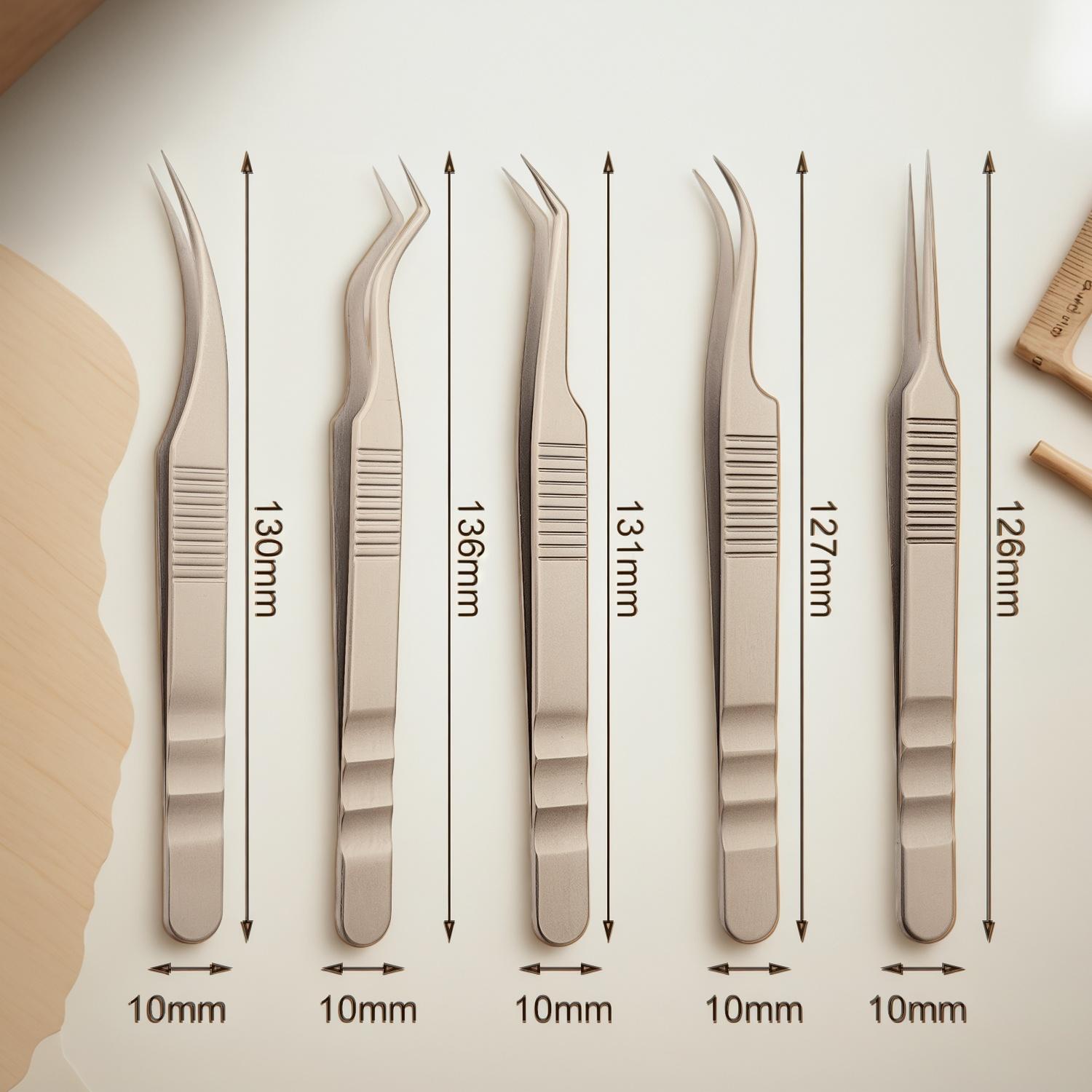
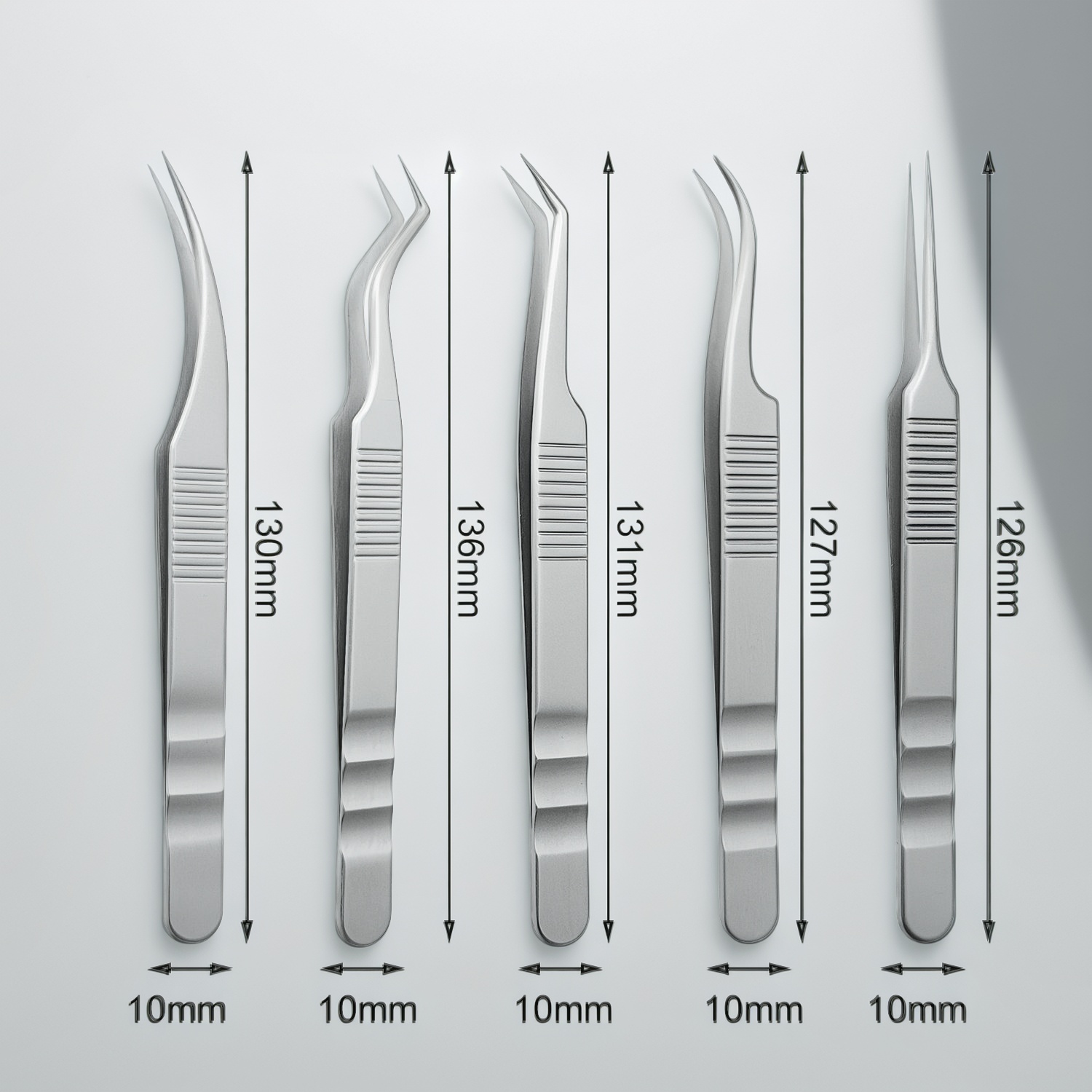
The supplied Olimor Beauty tweezer range includes stainless steel tweezers with ergonomic designs, lengths from 126mm to 136mm, and a consistent 10mm width. These dimensions are useful for beauty professionals because they provide enough handle length for controlled grip while keeping the tool compact enough for cosmetic kits and salon stations. The 10mm width also supports stable handling, especially when a user needs precise control near the eye area or along the brow line.
For OEM buyers, it is helpful to treat the tweezer as a combination of several design decisions rather than one finished object. Before moving to branding or packaging, confirm the intended application, user experience, and expected price position. A professional lash tweezer, a brow retail tweezer, and a crafting-detail tweezer may all look similar in photos, but they should not be evaluated by the same criteria.
Choosing the Right Tip Shape for the Application
Tip shape is one of the most important choices in an OEM custom tweezers project. Olimor Beauty supports options such as straight, slant, pointed, and curved tips. Each style is suited to a different type of handling task, and buyers should choose based on real user needs rather than appearance alone.
| Tip type | Best suited for | Buyer notes |
|---|---|---|
| Straight tip | General handling, separating, and controlled gripping | Good for buyers who want a versatile tool for kits or multi-use beauty sets. |
| Slant tip | Eyebrow grooming and hair removal | The angled edge can help users approach hairs from a comfortable direction. |
| Pointed tip | Fine detailing and grasping tiny objects | Requires careful quality control because tip alignment and sharpness are especially visible. |
| Curved tip | Eyelash extension work and delicate placement | Often selected for lash professionals who need access and visibility near the lash line. |
When comparing samples, do not judge only the tip outline. Open and close the tweezer repeatedly and check whether the tips meet cleanly without crossing, gapping, or sliding. For pointed and curved tips, examine the final millimeters of the tip under good light. Even a small mismatch can affect pickup accuracy.
Comfort, Tension, and Control During Long Use
A tweezer may pass a quick visual inspection yet still feel tiring during daily professional use. Beauty professionals often repeat the same hand movements for extended periods, so the resistance of the arms and the grip position matter. If the tweezer requires too much force, users may experience hand fatigue. If it is too soft, the tool may feel imprecise or unstable.
The ergonomic design referenced in Olimor Beauty's stainless steel tweezers is important because comfort is not only about shape; it is also about predictable response. Buyers should test samples with realistic movements. For lash extension work, simulate picking up and placing fine lashes. For brow tools, test gripping short and fine hairs at different angles. For retail beauty kits, consider whether a first-time consumer can use the tool comfortably without special technique.
Useful sample checks include:
- Hold the tweezer near the natural grip area and close it 30 to 50 times to evaluate tension consistency.
- Check whether the tweezer slips in the hand when fingers are dry and when they are slightly moisturized.
- Compare the balance of 126mm, 130mm, and 136mm style lengths if multiple sizes are being considered.
- Inspect whether the arms return evenly after pressure is released.
- Confirm that the tool does not pinch the user's skin during normal closing motion.
Material and Finish Decisions for OEM Custom Tweezers
Stainless steel is a practical material for beauty tweezers because it supports a clean, durable tool body and is suitable for repeated handling. The original Olimor Beauty specification refers to stainless steel tweezers with a sleek matte finish and rust-resistant, durable performance. For buyers, the key is to connect the material and finish to the sales channel and usage environment.
A matte finish can help reduce the appearance of fingerprints and may feel secure in the hand compared with very glossy surfaces. It also gives a restrained professional appearance, which can work well for salon tools, lash accessories, and private-label beauty lines. However, finish selection should be reviewed together with logo placement, packaging style, and the expectations of the end user.
When planning a finish or surface treatment, request physical samples rather than relying only on digital images. Photos may not show how the finish reflects light, how edges feel, or whether the tool surface has a comfortable texture. If the tweezer will be sold as part of a set, compare the finish with other tools in the same line so the final presentation feels consistent.
Quality Checks Buyers Should Define Before Production
A reliable tweezers supplier should be able to discuss inspection points in practical terms. For OEM projects, quality control is strongest when the buyer defines what matters before production begins. Olimor Beauty states that its projects involve internal quality control across raw materials and production processes, but buyers should still prepare a clear checklist for evaluating samples and bulk goods.
Consider using the following steps when reviewing OEM tweezer samples:
- Visual inspection: Check shape consistency, surface finish, edges, logo placement, and any visible marks.
- Tip alignment: Close the tweezer gently and confirm that both sides meet evenly at the intended contact point.
- Grip test: Pick up fine items such as thin fibers, lashes, or short hairs depending on the intended use.
- Tension review: Test whether hand pressure feels stable and comfortable across repeated use.
- Finish review: Examine whether the matte surface looks even across the arms and tip area.
- Packaging fit: Make sure the tweezer does not move excessively in its insert, sleeve, or box.
These checks are simple, but they prevent many common problems. A tweezer that passes appearance review but fails the grip test may lead to returns or poor professional feedback. A tool that performs well but arrives in weak packaging may still look low value at retail.
Branding, Packaging, and Sourcing Questions
OEM custom tweezers often need more than a private logo. Buyers may need to decide whether the product is sold individually, included in a lash kit, bundled with brow scissors, or placed in a larger tool collection. These decisions affect packaging size, insert design, product copy, and the level of protection needed during shipping.
For branding, keep the mark clear and appropriate to the tool size. Overly large logos can distract from the clean surface of a precision tweezer, while very small logos may not be readable after production. Packaging copy should be concise and accurate. Avoid claims that cannot be supported, and focus on practical benefits such as tip type, intended use, stainless steel construction, ergonomic handling, and care guidance.
Before confirming an OEM project, buyers can compare related beauty tool products and review broader product collections to decide whether the tweezer should stand alone or fit into a coordinated range. If a brand is preparing a new launch or replacing an existing supplier, it is helpful to organize desired tip types, finish preferences, packaging direction, and target user before starting formal discussions. For project communication, buyers can send an inquiry or contact Olimor with sample requirements and application details.
Care Guidance to Improve End-User Satisfaction
Even a well-made tweezer needs proper care. Clear care instructions reduce misuse and help customers understand the value of the product. For beauty applications, users should clean the tool after use, keep the tips protected, and avoid dropping the tweezer onto hard surfaces. A fall can damage alignment even if the body appears intact.
For retail packaging or product inserts, include simple guidance: wipe the tweezer clean after use, dry it before storage, store it with a tip protector or inside its case, and use the correct tip style for the task. For pointed or curved tweezers, remind users not to twist the tips against hard surfaces. These small instructions can reduce complaints and extend the useful life of the tool.
Building a Better OEM Tweezer Program
A successful tweezers OEM project begins with a specific use case and ends with consistent execution. Buyers should choose the correct tip shape, confirm comfort through repeated handling, review stainless steel and matte finish samples in person, and define inspection criteria before production. Details such as length, 10mm width, ergonomic feel, tip closure, and packaging protection all contribute to how the final product is perceived.
Olimor Beauty supports OEM custom tweezers for businesses that need precision beauty tools with practical customization. By approaching sourcing as a performance decision rather than only a branding exercise, buyers can create tweezers that serve professionals and consumers reliably in daily beauty work.
Tag: