

Eco-Friendly Metal Finishing in Nail Clippers: A Practical Guide for Buyers
Metal finishing is one of the most important steps in nail clipper production, yet it is often reduced to a simple question of shine. For beauty tool buyers, distributors and private label teams, the finish affects much more than appearance. It influences corrosion resistance, surface feel, cleanability, edge protection, packaging compatibility and how confidently a product can be positioned for increasingly sustainability-minded customers.
Eco-friendly metal finishing does not mean ignoring performance. A nail clipper still has to cut cleanly, feel stable in the hand and withstand repeated use in bathrooms, salons, travel kits or retail displays. The goal is to evaluate finishing methods in a way that balances durability, user safety, manufacturing consistency and reduced environmental burden. Olimor Beauty works with beauty tool buyers who need reliable products and clear sourcing conversations around practical production choices. You can browse related beauty tool products or compare broader product collections when planning a nail care assortment.
Why Metal Finishing Matters in Nail Clipper Production
A nail clipper is a compact tool with several demanding surfaces. The cutting edges must remain precise. The lever should feel smooth under pressure. The body needs to resist moisture, fingerprints and daily handling. Metal finishing helps manage all of these requirements by refining the surface after forming, grinding and assembly preparation.
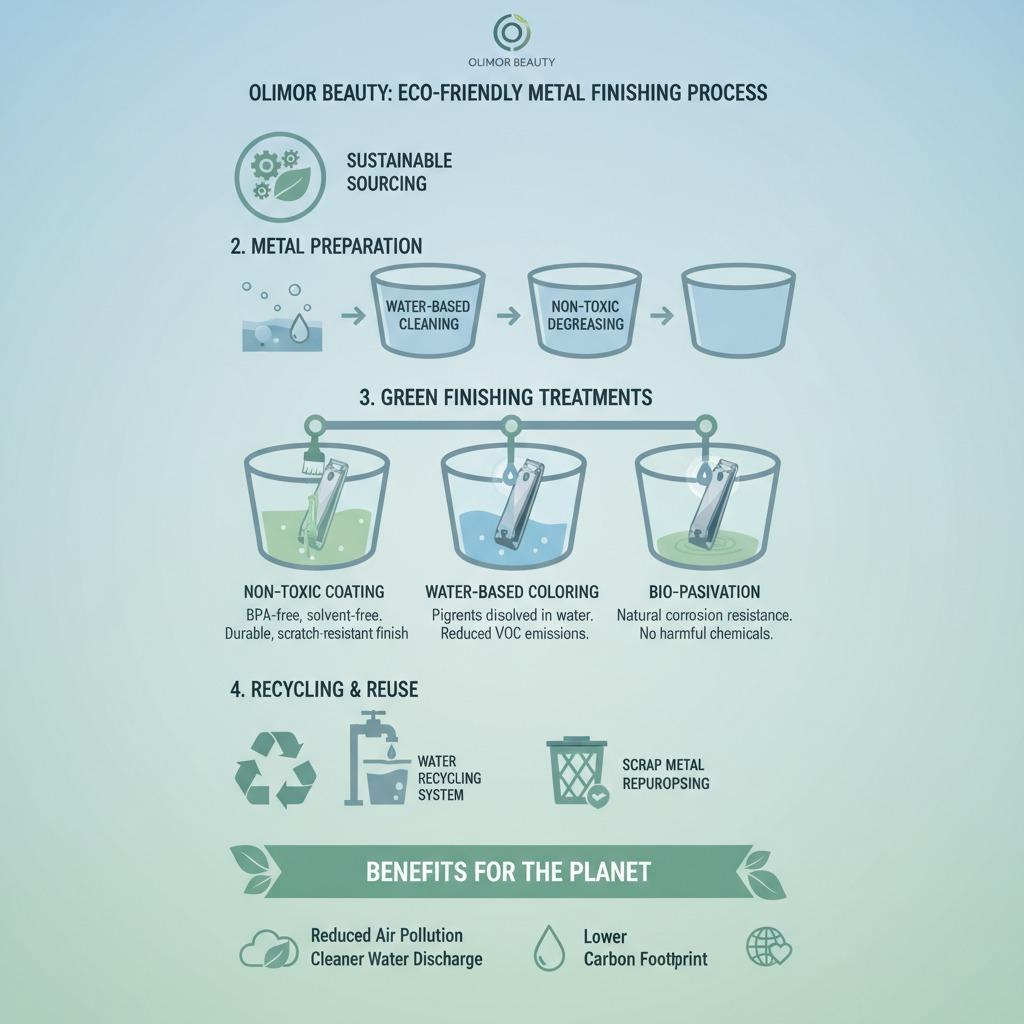
For stainless steel tools, finishing may involve polishing, deburring, cleaning, passivation-related surface treatment, coating or other steps depending on the desired product outcome. Each step can affect the final look and feel. A bright polished clipper communicates cleanliness and sharpness, while a satin or matte effect may reduce visible fingerprints and support a more understated retail style. Neither option is automatically better; the right choice depends on the target customer, price position, packaging and expected use environment.
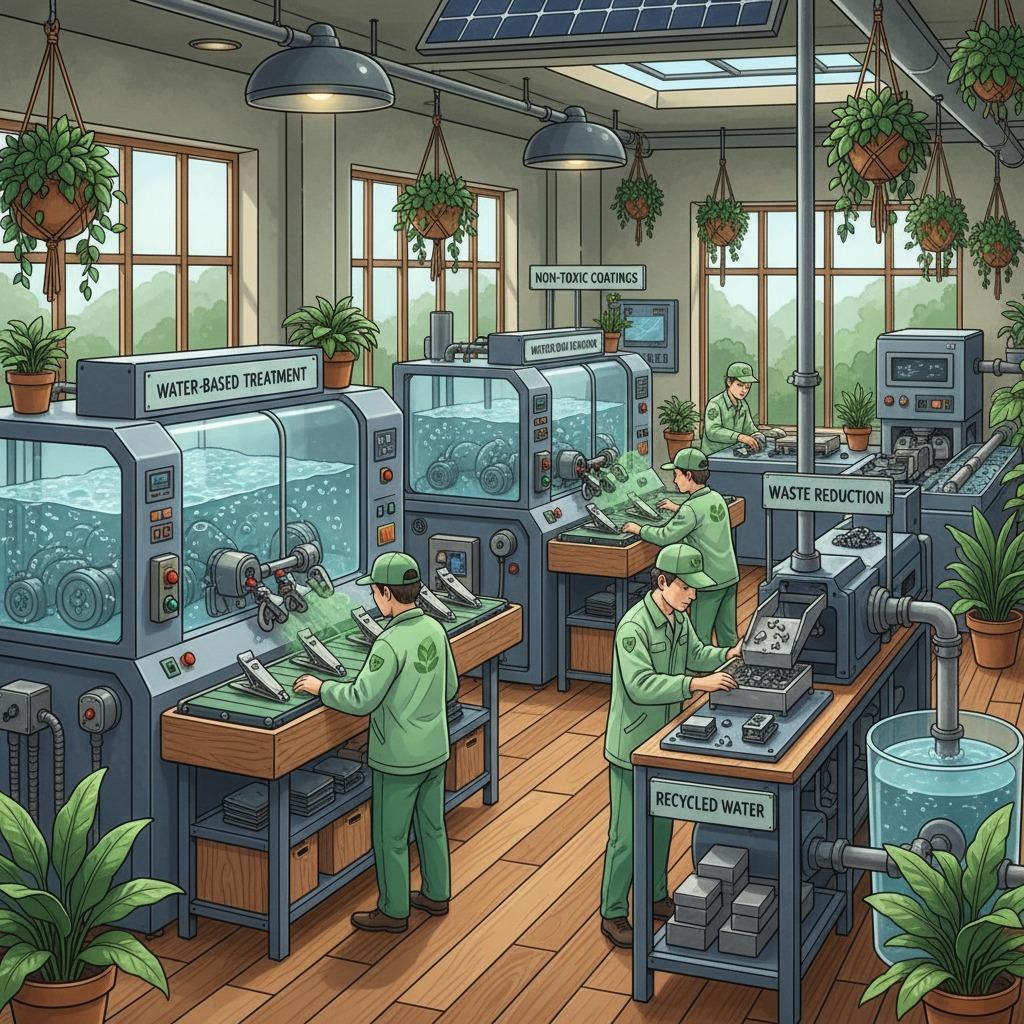
Eco-friendly finishing enters the conversation because traditional metal processing can involve chemicals, wastewater, energy consumption and material waste. A responsible sourcing approach looks at how the finish is achieved, not only how the product looks when it leaves the factory. Buyers should pay attention to process control, cleaning practices, waste handling, finish consistency and whether the selected surface treatment is appropriate for a tool that may be used close to skin and nails.
What Makes a Finish More Eco-Friendly?
There is no single universal label that makes a nail clipper finish sustainable. Instead, eco-friendlier finishing is usually the result of several practical decisions made across production. These may include reducing hazardous substances, improving water management, choosing lower-waste processes, optimizing polishing steps to avoid unnecessary rework and selecting finishes that support longer product life.
A finish that chips quickly, stains easily or causes the product to be discarded early is not environmentally responsible, even if it looks appealing at first. Longevity is part of sustainability. For nail clippers, a good finish should remain stable under ordinary use, tolerate normal cleaning and protect the tool without interfering with the cutting action.
- Reduced chemical burden: Preference for treatments and cleaning steps designed to limit unnecessary hazardous inputs where suitable for the product design.
- Water and waste awareness: Attention to wastewater handling, residue control and efficient process planning during finishing.
- Durable surface performance: Finishes chosen for realistic use conditions rather than short-term visual impact only.
- Consistent application: Process stability that reduces rejected parts, re-polishing and avoidable scrap.
- Compatibility with packaging: Surfaces that resist abrasion, staining or humidity issues during storage and shipping.
For buyers, the best approach is to discuss sustainability as a set of measurable production and quality expectations rather than as a vague marketing claim. This makes it easier to compare suppliers and avoid finishes that look attractive in samples but become inconsistent in bulk production.
Common Finish Options and How to Evaluate Them
When selecting a nail clipper finish, consider the intended sales channel and user behavior. A salon-focused tool may prioritize a professional appearance and easy wipe-down surface. A travel or promotional item may need strong resistance to storage wear. A retail gift set may require a finish that looks consistent under bright shelf lighting.
| Finish consideration | Why it matters for nail clippers | Buyer evaluation tip |
|---|---|---|
| Surface smoothness | Rough edges or uneven polishing can affect comfort and perceived quality. | Check the lever, handle edges, jaw area and underside, not only the top face. |
| Corrosion resistance | Nail clippers are often stored in humid bathrooms or cosmetic bags. | Review intended use conditions and define realistic storage and cleaning expectations. |
| Fingerprint visibility | Highly reflective finishes may show handling marks in retail or salon use. | Compare bright, satin and matte samples under typical lighting. |
| Coating stability | Decorative coatings must not wear quickly around moving parts. | Inspect pivot areas, lever contact points and cutting jaw edges after repeated opening. |
| Cleanability | Nail dust and residue can collect around joints and curved surfaces. | Choose designs and finishes that can be wiped clean without trapping residue. |
It is also important to separate decorative preferences from functional requirements. A color finish may support a brand story, but the buyer still needs to assess abrasion risk, color consistency and compatibility with the clipper mechanism. A simple stainless finish may be the better choice for a professional or minimalist line if it offers easier inspection and long-term usability.
Quality Checks for Eco-Conscious Nail Clipper Sourcing
Quality control should connect directly to the finishing process. A nail clipper can pass a quick visual check and still have issues that appear after packaging, transport or repeated use. Buyers should develop a finish inspection plan that covers appearance, touch, movement and basic durability expectations.
Start with the surfaces customers notice first: the top lever, front jaw, side profile and any logo or decorative area. Then inspect the areas that often reveal production shortcuts, such as inner corners, the underside of the lever, the pin area and edges near the cutting jaws. These areas can show polishing inconsistency, burrs, stains or coating buildup.
- Review sample consistency: Compare multiple pieces from the same sample batch rather than approving one perfect unit.
- Inspect by touch: Run a fingertip carefully along non-cutting edges to identify rough spots or unfinished transitions.
- Check movement after finishing: Open and close the lever to confirm that polishing or coating has not affected smooth operation.
- Look for trapped residue: Examine creases and pivot areas for polishing compound, dust or discoloration.
- Assess packaging interaction: Place samples in intended packaging materials to see whether rubbing, humidity or inserts affect the finish.
For eco-conscious sourcing, reducing defects is also an environmental issue. Every rejected unit represents wasted material, labor, energy and shipping space. Clear inspection criteria help prevent avoidable rework and make the final assortment more dependable.
Questions to Use When Comparing Suppliers
Because finishing details can vary by product design and production route, buyers should prepare focused questions before confirming a nail clipper project. The aim is not to collect vague assurances, but to understand whether the supplier can control the finish at scale and support the product position you want.
- Which finishing steps are used for the selected nail clipper design, and which steps are decorative versus functional?
- How is finish consistency checked across a batch, including inner surfaces and moving parts?
- What cleaning process is used to remove polishing residue before assembly or packing?
- How are wastewater, polishing residues or finishing by-products managed within the production workflow?
- Which finish is most suitable for humid bathroom storage or travel-kit use?
- Can the same finish be maintained if the product is later adapted for a set or retail collection?
- How should the finished nail clipper be cleaned and stored by the end user?
These questions are especially useful when building a private label nail care range or comparing multiple finishes for the same clipper shape. If you are preparing specifications for a new order, you can send an inquiry with your target market, finish preference and packaging plan so the discussion starts with practical requirements.
Maintenance Guidance for End Users
Even a well-finished nail clipper needs reasonable care. End-user instructions can reduce complaints and support a longer product life. This is particularly important for brands that position products around responsible consumption: a durable tool should be easy to maintain.
After use, nail clippers should be cleared of nail fragments and wiped dry before storage. If cleaning is needed, a soft cloth is usually preferable to abrasive pads that may scratch polished or coated surfaces. Users should avoid leaving metal tools in standing water or sealed damp bags for long periods. For shared environments, cleaning practices should follow the hygiene expectations of the setting, while avoiding harsh treatment that could damage the finish.
Packaging inserts or online product pages can explain these steps in simple language. This helps customers understand that corrosion resistance and finish durability are supported by both manufacturing quality and everyday storage habits.
Building a More Responsible Nail Tool Assortment
Eco-friendly metal finishing in nail clippers is not only a manufacturing topic; it is a product strategy topic. The most responsible choice is often the finish that matches the user, lasts well, creates fewer defects and avoids unnecessary processing. Buyers should evaluate samples with the same care they give to cutting performance, because the surface finish shapes both customer perception and long-term satisfaction.
Olimor Beauty supports practical beauty tool sourcing conversations around product function, finish expectations and assortment planning. Whether you are comparing nail clippers for retail, salon distribution or a broader grooming set, define the finish requirements early and connect them to packaging, maintenance and quality inspection. To discuss a project or clarify suitable options, contact Olimor with your product goals and intended sales channel.
Tag: