

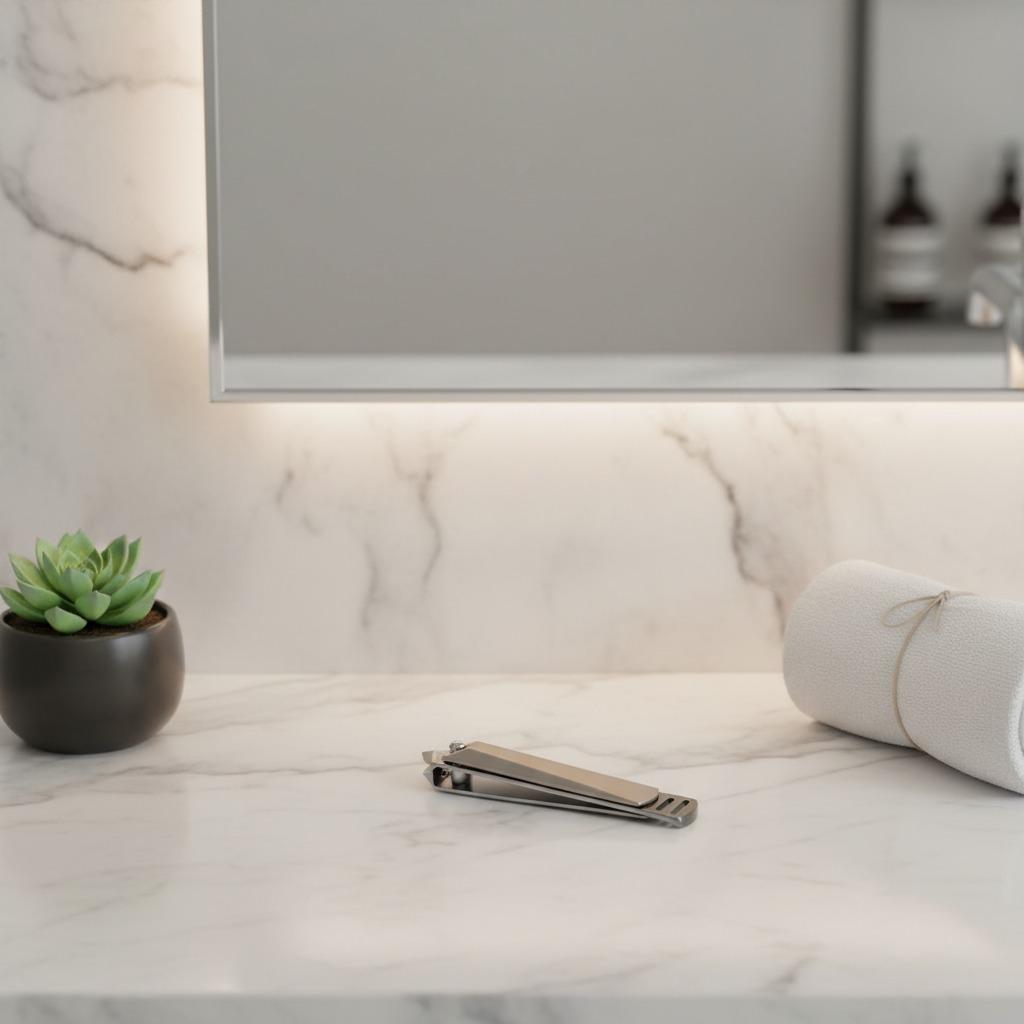
How to Source a 70mm Stainless Steel Nail Clipper from a Factory
For retailers, distributors, salon suppliers and private-label buyers, a nail clipper may look like a simple product. In practice, it is a precision grooming tool where small differences in blade alignment, leverage, material finish and packaging can influence customer satisfaction. A compact clipper that cuts cleanly, feels stable in the hand and resists daily wear can become a reliable repeat-purchase item in a beauty tool range.
This guide focuses on sourcing a stainless steel nail clipper from a factory or wholesaler, using the compact Olimor Beauty nail clipper described here as the reference point. The tool measures 70mm in length and 15mm in width, with a lightweight 30g build. It is designed with sharp, curved stainless steel blades, a comfortable grip and a modern appearance suitable for both everyday personal grooming and professional retail assortment planning.
If you are comparing suppliers, reviewing samples or preparing an OEM project, the goal is not only to find the lowest unit cost. A better approach is to understand how the clipper performs, how consistently it can be produced and how well it fits your target customer.
What Makes a Compact Nail Clipper Worth Sourcing?
A 70mm nail clipper sits in a practical middle ground. It is small enough for travel pouches, handbags, toiletry kits and impulse retail displays, while still offering enough body length for controlled use. At 15mm wide and 30g, the clipper is easy to carry without feeling flimsy. For buyers, this matters because the product can serve multiple channels: personal care kits, pharmacy counters, beauty accessory shelves, travel sets and promotional grooming bundles.
The curved blade profile is also important. Fingernails naturally follow a gentle curve, so a curved cutting edge can help users trim more efficiently than a poorly shaped flat edge. Sharp stainless steel blades are intended to deliver clean cuts without snagging, which is one of the main complaints customers have with low-quality clippers. Snagging, splitting or crushing the nail often indicates a weak cutting edge, poor blade alignment or inadequate spring action.
When evaluating this type of product, consider the full user experience. Does the lever open and close smoothly? Is the grip comfortable enough for repeated use? Does the cutting edge meet evenly from side to side? Is the finish clean around the corners and edges? These details are small, but they determine whether the clipper feels like a quality grooming tool or a disposable accessory.
Key Product Details to Confirm Before a Bulk Order
When communicating with a nail clipper factory or wholesaler, specific product facts reduce confusion. For this Olimor Beauty nail clipper, the explicit reference details are its 70mm length, 15mm width and 30g weight. The design uses stainless steel blades with a curved cutting profile, a lightweight structure, a comfortable grip and rust-resistant material. These features are useful starting points for a buyer specification sheet.
Before placing a larger order, organize sample evaluation around measurable and visible criteria. A simple checklist can prevent decisions based only on appearance.
- Size and weight: Confirm that samples match the expected 70mm length, 15mm width and 30g weight closely enough for your packaging and product listing needs.
- Blade sharpness: Test clean cutting on typical fingernail thicknesses without pulling, tearing or leaving rough edges.
- Blade alignment: Check that the two cutting edges meet evenly and do not cross, gap or close unevenly.
- Lever action: Open and close the clipper repeatedly to assess smoothness, resistance and stability.
- Grip comfort: Evaluate whether the body and lever give enough control for both quick trimming and careful shaping.
- Surface finish: Look for burrs, sharp unfinished corners, uneven polish, discoloration or marks that could affect perceived quality.
- Rust resistance expectations: Review how the material and finish are positioned for normal grooming environments, especially bathrooms and travel bags.
- Packaging fit: Confirm whether the compact size works with your blister card, box, pouch or retail display plan.
This type of checklist is especially useful when several suppliers appear similar online. A clipper can look acceptable in photographs but perform differently when tested by hand.
Wholesale and OEM Buyers: Matching the Clipper to the Channel
The same nail clipper can be marketed in different ways depending on the buyer’s channel. A beauty retailer may position it as an everyday grooming essential. A distributor may combine it with nail files, tweezers or cuticle tools. A salon supplier may sell it as a compact professional accessory for staff kits or client retail. An OEM buyer may want the core clipper structure adapted into private-label packaging.
For wholesale buyers, consistency is often the priority. If you are stocking multiple retail locations or supplying regional distributors, every carton should contain clippers that look and function the same. Differences in blade sharpness, lever tightness or finish can lead to returns and inconsistent customer reviews. For OEM buyers, the focus expands to customization planning, packaging compatibility and brand presentation.
When browsing Olimor Beauty’s wider range of beauty tool products, think about how a nail clipper fits into a broader assortment. A compact clipper may work best as a standalone SKU, but it can also support themed grooming kits or entry-level personal care collections. If your business organizes purchasing by category, reviewing product collections can help you identify complementary tools that suit the same price tier and audience.
Manufacturing Questions That Help Separate Good Samples from Good Supply
A sample is only the first step. The more important question is whether the factory can repeat that sample quality across production. Nail clippers require reliable forming, sharpening, assembly and inspection. A small misalignment at the blade can make the product feel weak even if the material appears attractive.
Instead of relying on general claims, prepare practical manufacturing questions. Focus on the areas that affect customer experience and supply reliability:
- How is blade alignment checked during production? Even cutting depends on accurate contact between the curved edges.
- What visual standards are used for surface finish? Buyers should understand how scratches, burrs, stains or rough edges are controlled.
- How is cutting performance evaluated? The method should reflect real nail-trimming use rather than only appearance.
- How are nonconforming pieces separated? A clear inspection process helps reduce mixed-quality cartons.
- What packaging options are compatible with the 70mm size? The packaging should protect the cutting edge while presenting the product clearly.
- How are bulk cartons prepared for transport? Compact metal tools can rub against each other if not packed properly.
These questions do not require the factory to reveal confidential production methods. They simply help buyers understand whether quality is built into the process or checked only at the end.
Packaging, Presentation and Retail Readiness
A compact stainless steel nail clipper is often purchased quickly. The customer may be replacing a lost clipper, preparing a travel kit or adding a practical tool to a shopping basket. Packaging should therefore make the product easy to understand. Clear product visibility, simple feature language and secure placement can improve the buying experience.
For retail, the 70mm size is an advantage because it can fit small cards, compact boxes or kit inserts. However, buyers should avoid packaging that makes the clipper difficult to remove or inspect. If the product is intended for professional channels, a cleaner and more minimal presentation may be more appropriate than colorful impulse packaging.
Private-label buyers should also consider how much information belongs on the package. Useful points may include stainless steel blades, curved cutting edge, compact size and everyday grooming use. Avoid overloading the package with vague claims. Customers respond better to clear, credible information that matches the product in hand.
Maintenance Guidance Customers Will Appreciate
Including basic care instructions can reduce complaints and extend product life. Stainless steel grooming tools are practical, but they still benefit from proper storage and cleaning. Buyers can add simple care guidance to packaging, online listings or product inserts.
- Wipe the blades after use to remove nail dust and moisture.
- Store the clipper in a dry place rather than leaving it wet in a bathroom area.
- Avoid using the clipper on materials other than nails, as this can dull or damage the cutting edge.
- Keep the tool away from young children when not in use.
- Replace the clipper if the blades become misaligned, loose or unable to cut cleanly.
Clear maintenance guidance is not filler; it protects the customer experience. A user who understands how to store and use the clipper properly is more likely to judge the product fairly and buy again.
How to Move from Sample Review to Inquiry
Once the sample meets your requirements, prepare a concise inquiry with the information a supplier needs to respond accurately. Include the target product type, estimated order purpose, preferred packaging direction, destination market and any private-label requirements. If you already have retail packaging dimensions or compliance wording from your market, include those details early so they can be considered before production planning.
For sourcing teams comparing nail clipper factory options, Olimor Beauty can be reviewed as a supplier for compact stainless steel grooming tools and related beauty accessories. To discuss specifications, packaging direction or wholesale planning, you can contact Olimor. If you are ready to share project details, you can also send an inquiry with your purchasing requirements.
A good nail clipper sourcing decision balances size, cutting performance, finish, packaging and production consistency. For a compact 70mm stainless steel clipper, those details are what turn a small grooming tool into a dependable product for retail shelves, travel kits and private-label beauty ranges.
Tag: