

Tweezers Wholesale Sourcing Guide for Beauty Retailers and Professional Buyers
Buying tweezers wholesale sounds simple until the products arrive and the differences become obvious. A tweezer that looks acceptable in a catalog may not grip fine hair cleanly, may feel uncomfortable during repeated use, or may lose alignment after a short period of handling. For salons, beauty retailers, hotel amenity buyers, and private-label personal care programs, those small details affect customer satisfaction and repeat purchasing.
Olimor Beauty supplies professional beauty tools for buyers who need practical, consistent grooming instruments rather than one-time novelty items. When sourcing tweezers in bulk, the goal is not only to find a sharp-looking product. The better goal is to build a reliable selection that fits real use cases: eyebrow shaping, blackhead care, fine facial hair removal, manicure support, travel grooming kits, or guest amenity sets.
This guide explains how to evaluate wholesale tweezers from the perspective of performance, hygiene, durability, packaging, and sourcing decisions, so your team can make clearer product choices before placing a bulk order.
What Professional Buyers Should Expect from Wholesale Tweezers
Professional-grade tweezers must do more than close at the tip. They should offer controlled grip, balanced hand feel, and consistent finishing from piece to piece. In a retail setting, customers may judge the product first by appearance, but their long-term impression comes from whether the tips meet properly and whether the tool removes hair without repeated pulling.
For salon and spa buyers, consistency is even more important. A technician may use tweezers many times in one workday, so poor alignment or uncomfortable tension quickly becomes a practical problem. A hotel or travel kit buyer has a different concern: the tool should be compact and easy to include in a set, while still looking clean, hygienic, and useful enough for guests.
When comparing options, evaluate each tweezer against the work it is expected to perform. Eyebrow grooming, blackhead care, splinter removal, nail art assistance, and general grooming may require different tip shapes. A single low-cost universal tweezer may not satisfy every customer group. A better wholesale assortment often includes a small range of tip profiles, finishes, and packaging formats.
Tip Shape Matters: Matching Tweezers to Real Use Cases
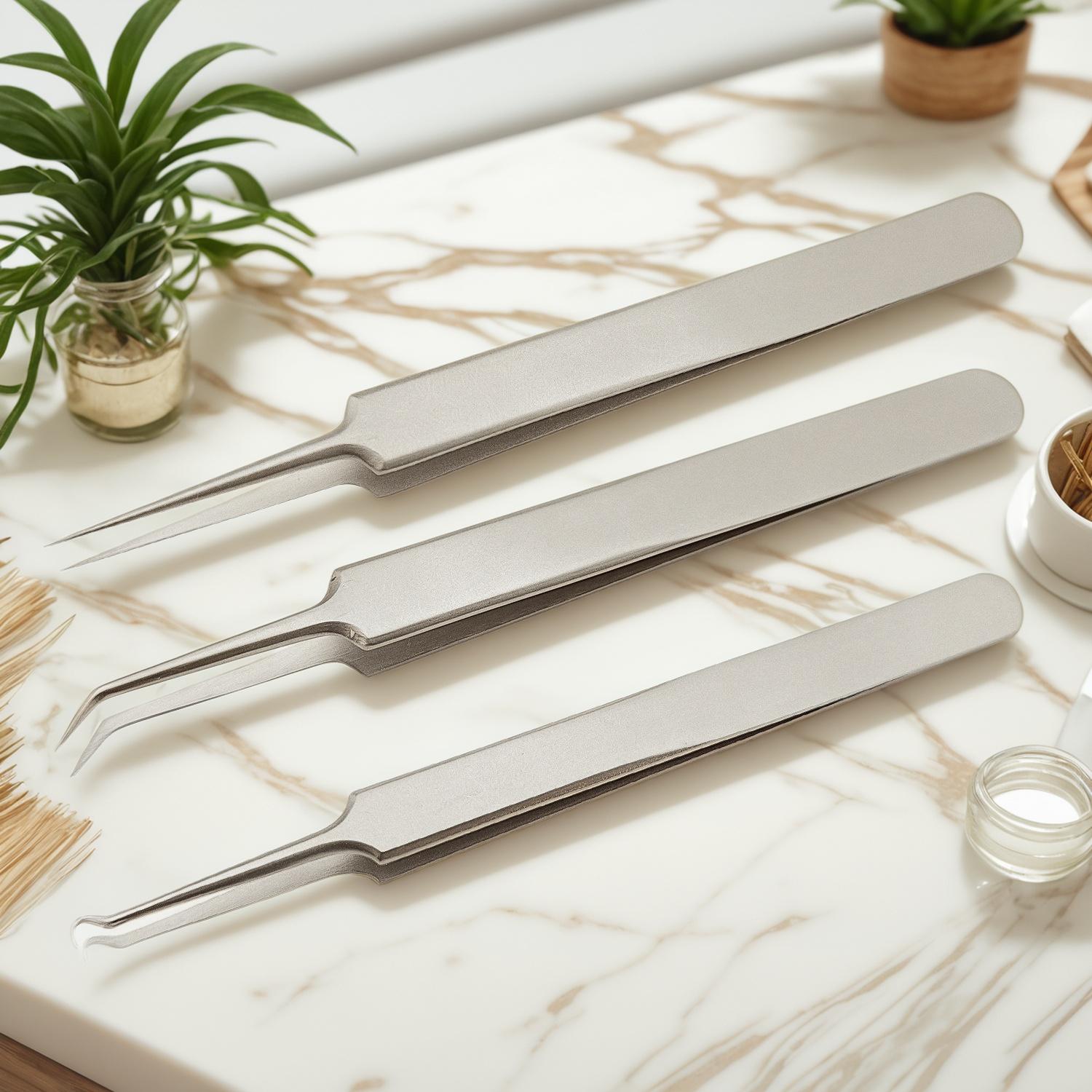
The tip is the working part of the tweezer, so it deserves the closest attention. Olimor Beauty’s blackhead tweezer set illustrates why different shapes are useful: the set includes three stainless steel tweezers designed for specific purposes, including a straight tweezer for precision, an angled tweezer for difficult contours, and a curved tweezer for sensitive areas. That type of functional separation helps buyers think beyond appearance and select tools according to actual use.
Common tweezer tip styles can support different categories of beauty and grooming work:
- Straight tips: useful when the user needs direct visibility and controlled placement, such as precision grooming or handling small beauty accessories.
- Slanted or angled tips: popular for eyebrow shaping because the angle can follow facial contours and help reach short hairs more comfortably.
- Pointed tips: suitable for very fine work, but they require careful handling and appropriate user guidance because the points are sharper.
- Curved tips: helpful for delicate areas or tasks where a softer approach angle improves control.
- Flat tips: useful for broader gripping tasks, though they may be less effective for very fine hair removal.
For wholesale programs, the best choice depends on where the product will be sold or used. A brow-focused retailer may prioritize slanted tweezers, while a grooming kit may benefit from a compact general-purpose option. A salon or spa assortment can justify multiple tip shapes because professionals need different tools for different treatments.
Material, Finish, and Hygiene Considerations
Stainless steel is a common choice for professional tweezers because it supports durability, cleanability, and a smooth finished appearance. The original Olimor Beauty blackhead tweezer set uses stainless steel, which is a practical material for beauty tools that may be handled frequently. However, buyers should still evaluate the execution, not just the material name. Tip alignment, edge finishing, polishing quality, and resistance to deformation all affect the user experience.
For beauty retailers, the surface finish also influences perceived value. A smooth, evenly finished tweezer looks more trustworthy on a retail display and feels better in the hand. For professional users, finish quality affects cleaning. Rough edges, gaps, or poorly finished joints may trap residue and make the tool harder to maintain.
Hygiene expectations vary by channel. A retail tweezer for personal use has different handling needs than a salon tool used in a service setting. Even so, every buyer should consider how easily the tool can be wiped, cleaned, dried, and stored. Packaging should also protect the tips during transport because damaged tips are one of the most common reasons a tweezer fails to perform properly.
A Practical Checklist for Evaluating Bulk Tweezer Samples
Before placing a larger wholesale order, it is wise to review samples with a structured process. A visual inspection alone is not enough. The following table gives buyers a simple way to compare tweezer samples across performance and commercial requirements.
| Evaluation Area | What to Check | Why It Matters |
|---|---|---|
| Tip alignment | Tips should meet evenly without visible gaps or twisting. | Poor alignment causes slipping and repeated pulling. |
| Grip performance | Test on fine hair or a comparable thin fiber. | The tweezer should grip cleanly without excessive pressure. |
| Hand tension | Open and close the tool repeatedly. | Tension should feel controlled, not too stiff or too loose. |
| Edge finishing | Check for burrs, rough corners, or overly sharp non-working edges. | Comfort and safety depend on careful finishing. |
| Surface finish | Look for consistent polishing, coating, or color. | Appearance affects retail value and brand perception. |
| Packaging fit | Confirm that the tips are protected and the product is secure. | Packaging prevents damage during shipping and handling. |
This type of checklist is especially useful when different departments are involved in sourcing. Product managers may focus on function, brand teams on presentation, and operations teams on packing efficiency. A shared checklist keeps the decision process grounded in measurable observations.
Wholesale Tweezers for Retail, Salon, Hotel, and Amenity Programs
Different buyers need different wholesale solutions. A beauty retailer may want tweezers that are easy to merchandise, visually consistent, and suitable for repeat consumer purchase. A salon distributor may prioritize durable tools that professionals can use comfortably throughout the day. A hotel amenity buyer may need compact grooming tools that fit neatly into a personal care kit and improve the guest experience without unnecessary complexity.
Olimor Beauty’s range of grooming instruments can support multiple channels, including manicure-related tools and stainless steel personal care instruments. If your team is building a broader program, it may help to review related beauty tool products rather than treating tweezers as a separate item. Coordinating tweezers with nail tools, grooming accessories, or facial care tools can create a more coherent product assortment.
For buyers working on seasonal launches, gift sets, hotel kits, or retail displays, the product should be evaluated as part of the full customer experience. Consider how the tweezer will be presented, how the end user will understand its intended use, and whether the tool’s shape matches the claims on the package. Clear product positioning reduces complaints and helps customers choose the right tool.
Quality Control Questions That Help Reduce Sourcing Risk
Olimor Beauty emphasizes internal quality control from raw material selection to final inspection. For wholesale buyers, the most useful approach is to connect that quality mindset with concrete purchasing questions. Instead of relying only on product photos, review how the supplier manages consistency across batches and how samples represent the final order.
Helpful sourcing questions include:
- Are the sample tweezers produced with the same material, finish, and packaging approach intended for the bulk order?
- How are tip alignment and closing performance checked during inspection?
- What packaging options protect the tips during shipping and storage?
- Can the assortment include different tip shapes for different grooming uses?
- How should the product be cleaned, stored, and handled by the end user?
- What labeling information is needed for the target market and sales channel?
These questions do not require exaggerated claims or unnecessary specifications. They help the buyer confirm whether the product is appropriate for the intended use and whether the supplier can support consistent execution.
Maintenance Guidance to Improve End-User Satisfaction
Even a well-made tweezer performs better when it is maintained properly. For consumer retail, simple care instructions can reduce misuse and returns. For salons or beauty service settings, tool handling procedures should follow the business’s hygiene practices and local requirements.
Useful end-user guidance may include wiping the tweezer after use, drying it before storage, keeping the tips protected, and avoiding drops that can damage alignment. Tweezers should not be thrown loosely into a crowded drawer or cosmetic bag without protection, because the tips are the precision area of the tool. If the tip alignment is bent, the product may no longer grip fine hair effectively.
For sets that include multiple tweezer shapes, the packaging or instruction card should explain the function of each shape. A straight tweezer, angled tweezer, and curved tweezer are easier to appreciate when the user understands why each one exists. Clear guidance can make a set feel more professional and reduce the chance that a customer uses the wrong tool for a delicate task.
Building a Smarter Wholesale Tweezer Assortment
A strong wholesale tweezer program starts with understanding the user. Are you serving brow professionals, beauty retailers, hotel guests, manicure accessory buyers, or general grooming customers? Once the use case is clear, it becomes easier to select the right tip shapes, finishes, packaging styles, and quality checkpoints.
Olimor Beauty works with buyers looking for professional beauty tools, including tweezers and related grooming instruments. If you are comparing options for a new assortment or planning a bulk purchase, explore Olimor product collections to see how tweezers can fit into a wider personal care range. For project-specific questions, you can also send an inquiry with your target channel, preferred tool type, and packaging needs.
Wholesale tweezers should be selected with the same care as any customer-facing beauty tool. When precision, comfort, hygiene, and packaging are considered together, the result is a more reliable product program and a better experience for the people who use the tool every day.
Tag: