

How to Choose a Tweezers Manufacturer for Precise Beauty Tools
For beauty brands, salons, brow studios, lash technicians, and retail buyers, tweezers are small tools with a large impact on customer satisfaction. A pair that looks attractive but fails to grip cleanly can lead to broken hairs, wasted time, and poor repeat sales. Choosing a tweezers manufacturer is therefore not only a sourcing decision; it is a quality decision that affects your brand reputation every time the tool is used.
Olimor Beauty works in the beauty tools category with a focus on practical, well-finished tools for professional and retail use. When comparing suppliers, buyers should look beyond surface appearance and examine material choice, tip alignment, finishing, customization options, packaging control, and export reliability. The right manufacturing partner should help you build a product line that is consistent from sample to bulk order, not just attractive in a product photo.
What Makes a Good Tweezers Manufacturer?
A reliable tweezers manufacturer must control several details that are easy to overlook. The two arms of the tweezer need balanced tension, the tips need accurate alignment, and the edges must be finished so they grip hair without scratching skin. If any of these details vary across production, users will notice immediately.
Stainless steel is commonly selected for professional tweezers because it supports durability, corrosion resistance, and a clean finished appearance. The original Olimor Beauty product information highlights high-grade stainless steel and a focus on durability and flawless grip for tasks such as eyebrow shaping and lash application. For buyers, the key is to confirm not just the material claim, but the way the finished tool performs in hand.
When reviewing a manufacturer, ask for evidence of process control. This can include inspection steps for raw materials, tip grinding, polishing, plating or color finishing, logo application, and final packing. Good manufacturing is repeatable. A polished sample is useful, but a consistent production run is what protects your margin and your brand.
Tip Shape, Grip, and Daily Use Cases
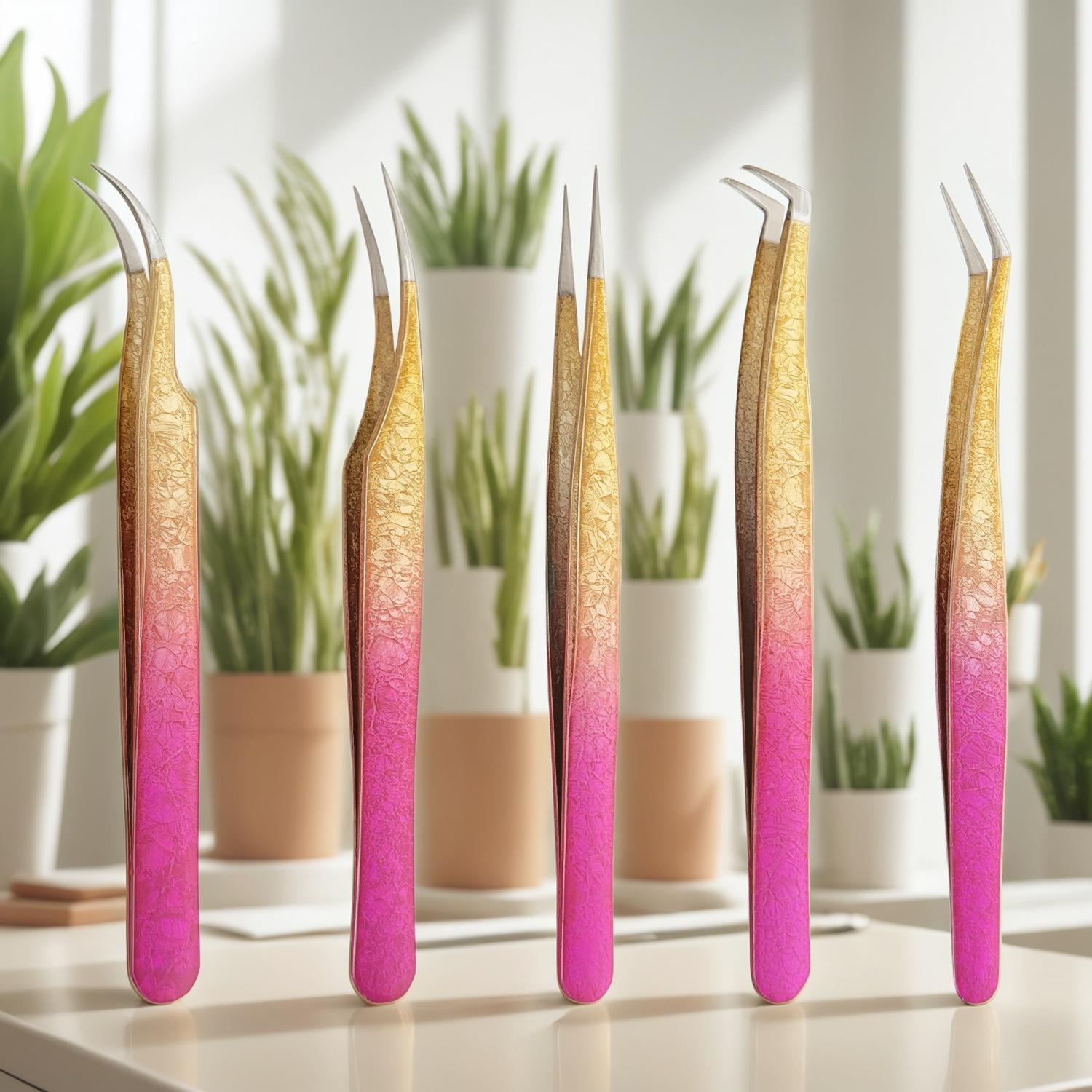
Different beauty tasks require different tweezer shapes. A brow artist may prefer a slanted tip for general shaping, while a lash technician may use curved or pointed styles for detail work. The supplied Olimor Beauty information notes slanted and curved tips, which are common options in professional tweezers sets. Instead of choosing one style for every customer, buyers should match tip type to the end user.
- Slanted tips: Often used for eyebrow shaping because the angled edge can reach hairs from multiple directions.
- Pointed tips: Useful for very fine work where accuracy is more important than speed.
- Curved tips: Commonly used in lash and detail applications because the curve can improve visibility and access.
- Flat tips: Suitable for broader gripping needs, though less specialized for fine brow work.
The best way to judge tip quality is through use, not description alone. A tweezer should close evenly along the working edge, grip a fine hair without excessive pressure, and release cleanly. It should not feel loose, overly stiff, or sharp in a way that makes the user cautious. For professional users who repeat the same movement all day, the hand feel is just as important as the tip shape.
Evaluating Stainless Steel, Finish, and Color Treatments
Material and finish influence both performance and shelf appeal. Stainless steel construction can support long service life, but buyers should also review polishing, edge finishing, and surface treatment. A tweezer that is rough near the tips or uneven along the arms may look acceptable in packaging but disappoint in use.
Olimor Beauty’s referenced Gradient Precision Tweezers Set features a gold-to-pink gradient design. A gradient finish can help a retail product stand out, especially for beauty boutiques, gift sets, and branded cosmetic accessory lines. However, color should never compensate for weak function. For any colored or plated tweezer, evaluate the finish for even coverage, clean edges, and resistance to obvious handling marks during normal inspection.
If you are building a private label line, consider whether your customers care more about professional minimalism, a fashion-forward color finish, or a set designed for gifting. The finish should match the sales channel. A salon training kit may prioritize easy identification and grip, while a retail set may need stronger visual appeal on a display shelf.
Custom Logo Tweezers and Branding Decisions
Custom logo tweezers can support brand recognition for salons, brow bars, lash studios, cosmetic retailers, and promotional beauty kits. The supplied Olimor Beauty information identifies custom logo tweezers as an available branding direction. For buyers, the important decision is not simply whether a logo can be added, but how the branding will look after handling, cleaning, packing, and shipping.
Before approving a customized order, review logo size, placement, contrast, and durability. A logo placed too close to the working end may look awkward, while a logo that is too large can make a premium tool feel promotional. Packaging should also be considered as part of the branding system. A tweezer with a clean logo but a generic package may not deliver the retail impression you need.
- Confirm the tweezer style and finish before finalizing logo artwork.
- Check whether the logo remains readable on the selected color or gradient surface.
- Review a physical pre-production sample when branding accuracy matters.
- Match the packaging format to your channel: salon supply, retail shelf, online order, or gift set.
- Keep artwork files organized so repeat orders remain consistent.
Buyers comparing options can browse Olimor beauty tool products to understand available categories and then send an inquiry with their intended market, finish preference, and branding needs.
Quality Checks That Matter Before Export
Export quality is more than strong packaging. Tweezers are handled closely by the end user, so visible defects and functional problems are easy to notice. The original Olimor Beauty details mention quality checks from raw materials to packaging. For international buyers, a practical inspection plan should cover both appearance and function.
| Inspection Area | What to Check | Why It Matters |
|---|---|---|
| Tip alignment | Tips meet evenly when closed | Improves hair grip and reduces user frustration |
| Tension | Arms close with controlled pressure | Prevents hand fatigue and inconsistent performance |
| Surface finish | No rough edges, stains, or uneven color | Protects perceived quality and retail value |
| Logo placement | Correct position, size, and orientation | Maintains brand consistency across units |
| Packaging | Clean pack, correct labels, protected tips | Reduces damage and supports export presentation |
For wholesale orders, sampling should include more than one unit. A single perfect sample does not prove consistency. Review several pieces for repeated performance, especially if your order includes multiple tip styles or color finishes. If you plan to sell through e-commerce, also consider how the tool will look in close-up photography and how the packaging will survive parcel shipping.
Ergonomics for Salons, Lash Artists, and Retail Customers
Ergonomic design is important because tweezers are used with small, repeated hand movements. Olimor Beauty’s existing product information emphasizes designs intended to reduce hand strain during prolonged use. In practice, comfort comes from the relationship between arm width, tension, weight, surface texture, and balance.
Salon and lash professionals may hold tweezers for long sessions, so overly stiff tension can become tiring. Retail customers may be less experienced, so a comfortable grip and predictable closure can make the tool easier to use at home. If your target audience includes beginners, avoid overly specialized shapes unless the packaging or product page explains the use clearly.
For sets, consider combining shapes that make sense together. A set should not simply include more pieces; it should solve more grooming or application tasks. A slanted tweezer, a curved tweezer, and a fine-detail option can be easier to explain than several nearly identical tools. Clear product education can reduce returns and improve customer confidence.
Sourcing Questions to Compare Suppliers Fairly
When comparing tweezers suppliers, use the same checklist for each candidate. This helps you separate real capability from broad claims. Keep the questions specific, and evaluate the answers together with samples.
- Which tweezer tip styles are available for the intended beauty use?
- What stainless steel and finishing options are offered for this product category?
- How are tip alignment, tension, and surface finish inspected?
- Can the supplier support custom logo placement and branded packaging?
- How are colored or gradient finishes protected during packing and transport?
- What information is needed to prepare a clear quotation for wholesale or private label supply?
- How will repeat orders be controlled so the product matches the approved sample?
These questions are especially useful for buyers developing a new brow tool line, adding tweezers to a cosmetics range, or sourcing tools for a salon group. If you are still comparing product directions, Olimor product collections can help you review related beauty tool categories. For project-specific communication, you can also contact Olimor with your intended application and branding requirements.
Building a Better Tweezers Line with Olimor Beauty
A strong tweezers line starts with clear positioning. Decide whether your priority is professional brow shaping, lash application, retail gifting, private label cosmetics accessories, or salon resale. Then evaluate the manufacturer’s ability to deliver the correct tip style, reliable grip, comfortable handling, attractive finish, and consistent packaging.
Olimor Beauty’s focus on stainless steel tweezers, custom logo options, export-oriented quality checks, ergonomic designs, and varied tip styles makes the company relevant for buyers who need practical beauty tools rather than generic accessories. The most successful sourcing projects are built on detailed product expectations: what the tool must grip, how it should feel, how it should look on the shelf, and how it should represent the brand after repeated use.
For buyers seeking a tweezers manufacturer, the final decision should combine sample testing, branding review, packaging planning, and production consistency. A tweezer may be a compact product, but when it is well made, it becomes a dependable part of a professional kit or a trusted retail beauty accessory.
Tag: