

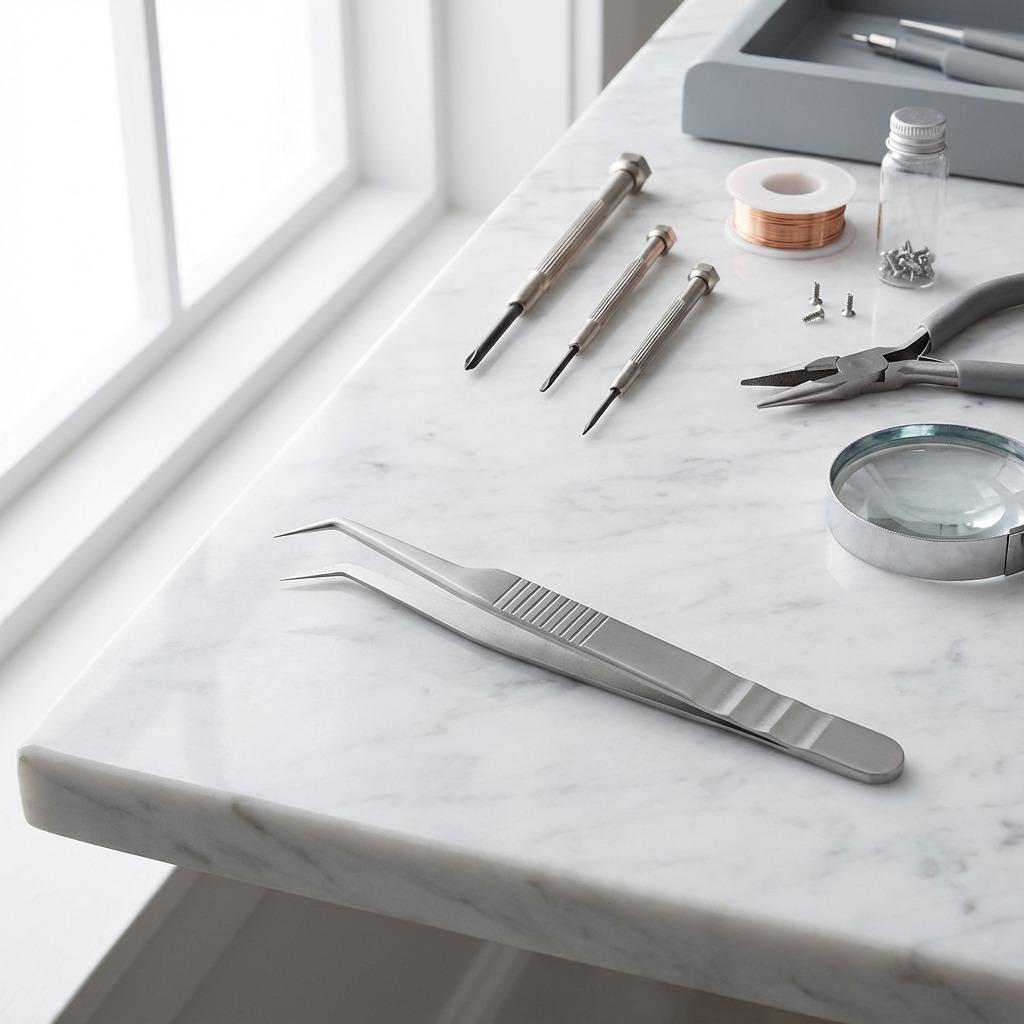
How to Choose a Tweezers Manufacturer for Precision Beauty Tools
For beauty brands, salon distributors, lash studios and private-label buyers, tweezers are small tools with a big impact on customer experience. A well-made tweezer feels balanced, grips cleanly and keeps its alignment through repeated use. A poor one can slip on fine hair, feel unstable in the hand or wear out too quickly. That is why choosing a tweezers manufacturer should be treated as a product-quality decision, not only a price comparison.
Olimor Beauty works in the beauty-tools field with stainless steel tweezers, ergonomic handling, textured or ridged grip options, corrosion-resistant finishes and tip styles suited to detailed work. Depending on the product line, buyers may see angled, curved, straight, pointed or fine-point designs, along with visual finishes such as gradient gold-to-pink or mint green. These are useful sourcing details because they show the kind of practical features buyers should inspect before placing a wholesale or custom order. If you want to review current options, you can browse the tweezers range or explore matching beauty tools.
What a Precision Tweezers Manufacturer Should Control
A true manufacturer should influence more than appearance. It should control or directly manage material selection, forming, tip finishing, inspection and packaging. Those steps determine whether a tweezer feels precise in daily grooming tasks such as eyebrow shaping, facial hair removal, lash pickup or detail work around the brow line.
When buyers review a supplier, the key question is simple: can the supplier deliver a consistent tool that performs well in fine, repetitive work? For beauty tools, consistency matters as much as style. A polished photo is not enough if the tips do not meet evenly or the tension feels too stiff for repeated use.
In the supplied product descriptions, Olimor tweezers are associated with stainless steel construction, ergonomic handling, ultra-fine points, angled tips, ridged or textured grip and quality checks. Those are the kinds of attributes that affect both working performance and the buyer’s retail presentation.
Why Tip Alignment Matters Most
Tip alignment is the first thing to inspect. If the two tips do not meet cleanly, the tweezer may slip, break fine hair or require extra force. That can frustrate both consumers and professionals.
For brow shaping, the tip must catch short or fine hairs without unnecessary pressure. For lash-related work, stability and point control matter even more because the user is working close to delicate areas. A small misalignment may not be obvious in a product image, but it can be easy to feel during use.
Buyers should test several pieces, not just one sample, and check whether the tips close evenly under light pressure. In a manufacturing partnership, repeatable alignment is one of the clearest signs of reliable process control.
Material and Finish: Stainless Steel, Surface Quality and Durability
Stainless steel is commonly used for beauty tweezers because it supports durability, a clean appearance and easy maintenance when properly finished. But buyers should not treat the term “stainless steel” as a complete specification. The important questions are how the tool is formed, how the surface is finished and how the working tips behave after handling and storage.
A corrosion-resistant finish is useful for long-term appearance and day-to-day use. Surface treatment should also be even across the batch. Decorative finishes such as gold-to-pink gradients or mint green surfaces can support retail presentation, but they should never interfere with tip performance. Buyers should look for even coverage, clean edges and no visible roughness that could affect handling.
For salon and lash use, the surface should be smooth enough to wipe clean while the tips remain precise. For retail buyers, the finish is part of shelf appeal, but visual style should support function rather than replace it.
Grip and Ergonomics: Comfort Is a Quality Feature
Many tweezers fail not because they cannot close, but because they are uncomfortable or unstable in use. A textured grip, ridged surface or crinkle finish can help improve control, especially when the user performs detailed work for long periods.
Professional users may open and close the tool many times in one session. If the tension is uneven or the handle feels slippery, the tweezer becomes tiring and less accurate. Good ergonomics should help the tool sit naturally in the fingers and reduce excess pressure.
Buyers should also think about tool length. The supplied product information includes ergonomic tweezers in the 115mm to 130mm range. Shorter tools may offer close hand control, while longer ones may suit tasks that benefit from reach or visibility. The right choice depends on the intended use and the customer segment.
Choose the Right Tip Style for the Job
One of the most important sourcing mistakes is treating every tweezer shape as interchangeable. Different tip styles fit different use cases, and your assortment should reflect how customers actually work.
| Tip style | Best suited for | What buyers should check |
|---|---|---|
| Angled tip | Eyebrow shaping and general hair removal | Confirm the slanted edges meet evenly from corner to corner. |
| Curved tip | Brow contours, lash-related work and hard-to-reach areas | Check that the curve improves access without reducing control. |
| Straight tip | Controlled gripping, separation and general precision tasks | Test whether the contact area grips consistently. |
| Fine-point tip | Detailed work that needs pinpoint accuracy | Inspect symmetry and ensure the point is cleanly finished. |
| Pointed tip | Precision work where visibility matters | Review the point carefully for safe, accurate finishing. |
Angled tweezers are often the most familiar retail option for eyebrow shaping. Curved and fine-point styles can support more specialized users. A mixed set can be useful for buyers who want to serve different techniques with one coordinated assortment.
Wholesale Tweezers: Standard Stock or Custom Logo Options?
Wholesale buyers usually decide between standard stock and customized products. Standard tweezers are often useful when speed, availability and simple replenishment matter most. They can work well for distributors, salon backbar tools, training kits or retailers that do not need private branding.
Custom logo tweezers can be valuable when the product is part of a branded retail line, a gift set, a salon merchandise program or a promotional kit. In that case, buyers should review logo placement, finish compatibility, packaging and sample approval before production begins.
Customization should not be treated as decoration alone. It should be considered alongside grip comfort, tip protection and display needs. A logo should support the product, not interfere with how it feels in use.
| Sourcing option | Best suited for | Main buyer focus |
|---|---|---|
| Standard wholesale tweezers | Distributors, basic retail inventory, salon supply | Consistent quality, availability and bulk purchasing |
| Custom logo tweezers | Private-label brands, beauty kits, promotional products | Brand presentation, logo placement and sample approval |
| Professional assortment sets | Salon buyers, lash and brow specialists | Tip variety, grip control and day-to-day usability |
How to Assess Samples Before Bulk Ordering
Sample testing should imitate real use. A tweezer that looks perfect in a photo may still fail after repeated opening and closing, or when gripping fine hair. Create a simple test routine and apply it to each sample.
- Inspect the tips under good lighting and confirm they meet evenly.
- Test grip on fine, short and thicker hairs or similar test materials.
- Open and close the tool repeatedly to check resistance and control.
- Feel the grip area for comfort, stability and any sharp edges.
- Review the surface finish for stains, rough polishing marks or discoloration.
- Check packaging protection so the tips are not damaged in transit.
For professional buyers, feedback from brow artists or lash technicians is especially useful. They can notice subtle issues that a purchasing team may miss, such as hand fatigue, visibility around the tip or control during repeated work.
What to Ask a Tweezers Supplier Before You Commit
A good supplier conversation should focus on how the tool will be made, checked and packed. If you are sourcing for retail or professional use, ask for clear answers on the following points:
- What material is being used and what finish is applied?
- Which tip styles are available for the intended use case?
- How is tip alignment checked during production or final inspection?
- Can the supplier support custom logo or custom packaging requests?
- How are the tips protected during storage and shipping?
- Can the same specification be repeated across future orders?
Buyers who need broader beauty-tool planning can also use the same evaluation logic across their full range. If you are comparing tweezers with other grooming items, it helps to review the full beauty-tool collection so the finish, presentation and use case stay aligned.
How to Compare Manufacturers on Real Business Value
Price matters, but it should not be the only deciding factor. A cheaper tweezer that bends, slips or wears out too soon can create returns and damage brand trust. The better approach is to compare suppliers on repeatability, fit for use, packaging readiness and communication quality.
Look at the full picture: tip precision, material behavior, finish consistency, ergonomics, packaging protection and the supplier’s ability to repeat the approved sample. For businesses that sell into salons or professional channels, this is especially important because customers expect dependable handling and clean presentation.
When a supplier can explain how a product supports brow shaping, lash work or general grooming, that is usually a better sign than a generic sales claim. You are not just buying a metal tool. You are buying the user experience that comes with it.
Quality Standards and Documentation
Buyers often ask whether a supplier can support recognized quality systems or market requirements. In general, you may see references to ISO 9001 quality-management practices or relevant public bodies and market rules for your destination market. Verify the applicable version, the exact scope and the supplier documentation before making any claim in your own market materials.
This point matters because professional buyers need confidence in process control, packaging accuracy and repeatable production. Documentation should support the product specification, not replace sample review. Always check the actual documents you receive and confirm that they match the order you intend to place.
When Olimor Fits a Sourcing Project
Olimor Beauty is relevant for buyers looking for stainless steel beauty tweezers, ergonomic handling, visual finish options and custom logo potential. The available descriptions point to practical product details such as angled, curved, straight and fine-point styles, textured grips, gradient finishes and inspection-focused sourcing. Those are all useful when you need a tool that can work in salon, retail or private-label settings.
If your team is shortlisting suppliers, you can send a sourcing inquiry with your preferred tip style, finish direction, packaging needs and branding requirements. If you need direct support, contact the Olimor team to discuss current options and sample review.
FAQ
Can I request samples before placing a larger order?
Yes, sample review is a practical way to check tip alignment, grip comfort, finish quality and packaging protection before committing to bulk sourcing.
Is there a minimum order quantity listed here?
No numeric MOQ is provided in the source material. Ask the supplier directly based on your product type, customization needs and order plan.
Can tweezers be customized with a logo?
Custom logo options are relevant for private-label brands, salons and retail kits. Confirm logo placement, finish compatibility and sample approval before production.
What quality checks should I ask about?
Ask how tip alignment, finish consistency, packaging protection and batch repeatability are reviewed. For professional use, functional testing matters as much as appearance.
How long is lead time?
Lead time is not stated in the source material. It should be confirmed directly with the supplier based on stock status, customization and order size.
For buyers comparing wholesale tweezers for beauty retail, salon supply or private label, the best sourcing decision is the one that balances alignment, comfort, finish and repeatable quality. A strong manufacturer helps you protect brand reputation while giving end users a tool that feels reliable in daily work.
Tag: