

Rust-Resistant Nail Clippers: How to Choose, Use and Source Them Well
Rust-resistant nail clippers are a practical choice for homes, salons, travel kits and beauty tool retailers because nail care tools often meet water, humid bathrooms, alcohol wipes, creams and daily handling. A clipper that loses its clean finish too quickly can look unprofessional, feel rough in the hand and become harder to keep hygienic. For buyers comparing beauty tool products, rust resistance is not only about appearance; it also affects perceived quality, shelf appeal and long-term user satisfaction.
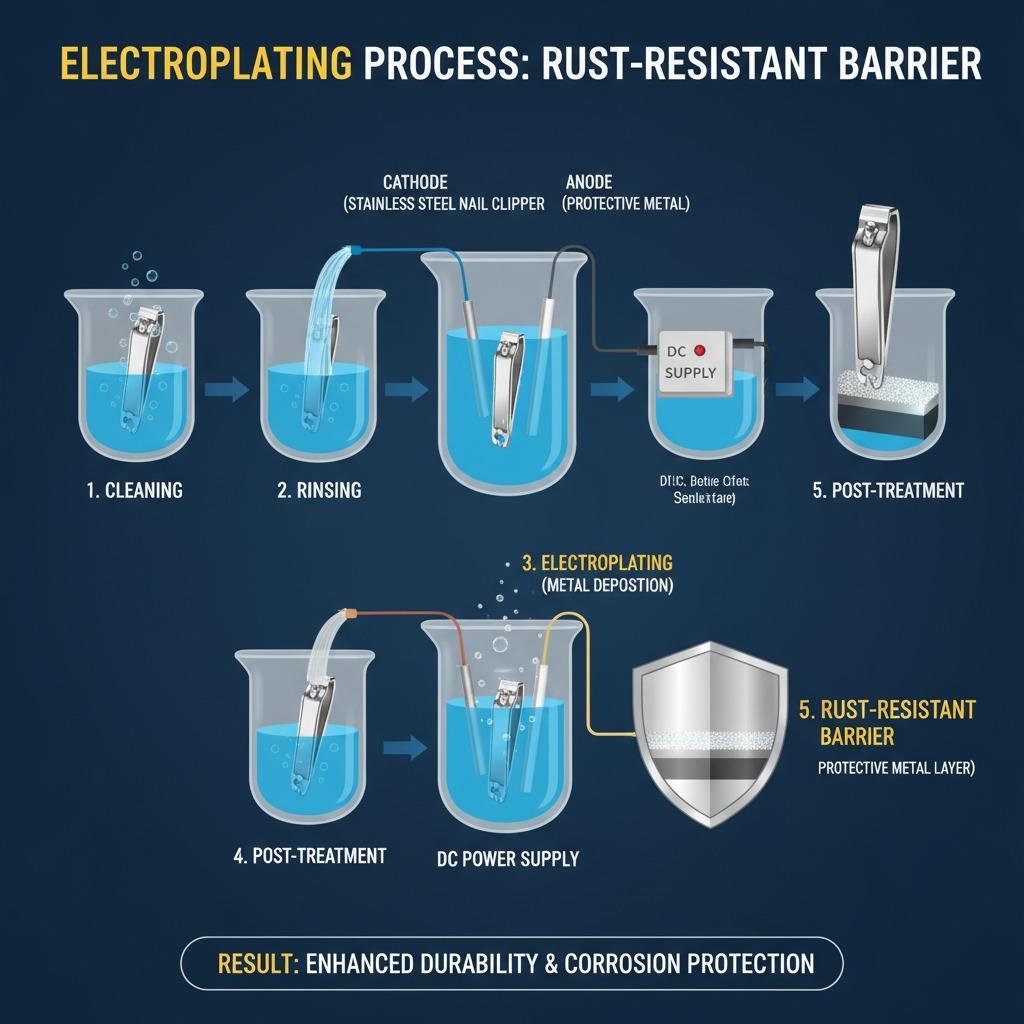
Olimor Beauty focuses on nail care tools designed for regular grooming use, and the supplied rust-resistant nail clipper information highlights an electroplating process applied over a stainless steel base. That combination is important: stainless steel contributes to the tool structure, while the plated surface adds a protective barrier against moisture and environmental exposure. The result is a clipper intended to remain cleaner-looking and more reliable through repeated use when it is selected, stored and maintained correctly.
Why rust resistance matters in nail clippers
Nail clippers work in conditions that are tougher than many small beauty tools. They may be used after handwashing, kept near sinks, packed in toiletry bags or cleaned between users. Even when the cutting edge is still functional, visible corrosion can make the tool look old, poorly maintained or unsafe. This is especially important for beauty retailers, manicure kit brands, hospitality suppliers and salons that need tools to look professional for longer.
Rust resistance also supports smoother maintenance. A cleaner surface is easier to wipe dry and less likely to show staining after contact with moisture. It does not remove the need for cleaning or storage discipline, but it gives the tool a better chance of staying presentable. For end users, this means fewer worries about replacing a clipper simply because the surface has deteriorated. For wholesale buyers, it can reduce customer complaints related to early discoloration when the product is used in ordinary grooming environments.
How electroplating supports durability
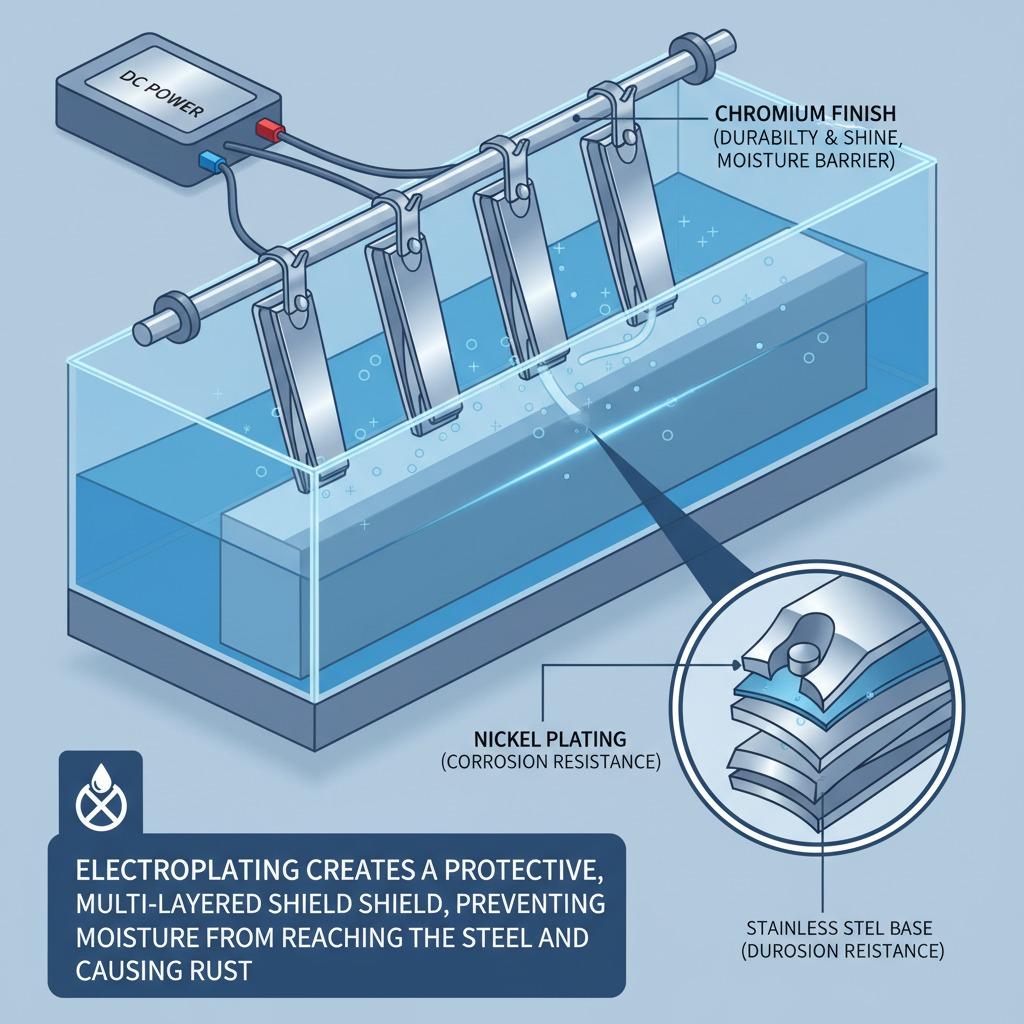
The original product information emphasizes electroplating as a key part of the rust-resistant design. Electroplating deposits a thin metal layer onto the stainless steel base, forming a protective surface. In nail clippers, this finish can help limit direct contact between the base metal and moisture in everyday environments. It also contributes to a more polished, professional appearance that suits retail packaging and personal grooming kits.
When evaluating electroplated nail clippers, buyers should think beyond the word “plated.” A good finish should look even across the body, lever, edges and visible curved areas. Patchy color, cloudy areas, bubbles or rough spots may indicate inconsistent finishing. Because clippers include moving parts and shaped surfaces, the plating should not interfere with opening, closing or cutting action. A practical inspection checks both appearance and function together.
Electroplating is not a substitute for careful use. Any plated finish can be damaged by harsh abrasion, long-term wet storage or corrosive cleaning chemicals. However, when combined with sensible maintenance, it offers a useful barrier that helps the tool resist rust in routine nail care settings.
Selection criteria for retailers, salons and personal care brands
Choosing rust-resistant nail clippers requires a balance of finish quality, cutting feel, handling comfort and packaging suitability. A product can look attractive in photos but still disappoint if the lever feels loose, the jaws do not align, or the edge leaves the nail ragged. For buyers building a nail care range or comparing product collections, the following criteria are worth checking before placing a sourcing decision.
- Surface consistency: Look for an even plated finish without visible pits, discoloration, peeling or cloudy sections.
- Jaw alignment: The two cutting edges should meet cleanly. Poor alignment can crush or split the nail instead of cutting smoothly.
- Lever action: The lever should press down firmly without feeling unstable, overly stiff or loose.
- Edge performance: A nail clipper should make a controlled cut with minimal pressure. Buyers can test on suitable sample materials or in approved product evaluation settings.
- Grip and ergonomics: The original information notes ergonomic design. Check whether the shape supports confident handling for different users.
- Cleaning practicality: Smooth surfaces and accessible edges make it easier to wipe the clipper dry after use.
- Packaging fit: If the clipper is sold in a kit, travel pouch or retail blister pack, confirm that the finish is protected from scratches during transport.
Best use cases for rust-resistant nail clippers
Rust-resistant clippers are suitable for many channels, but they are especially valuable where moisture exposure is common or where product appearance influences repeat purchase. A household bathroom tool may be exposed to steam every day. A travel clipper may sit in a damp wash bag. A salon tool may be wiped frequently and handled by multiple staff members. In each case, a corrosion-resistant finish helps preserve the look and function of the tool.
Retailers can position rust-resistant nail clippers as everyday essentials rather than disposable accessories. They also work well in manicure kits, personal grooming sets, travel care sets and promotional wellness kits where the buyer wants a compact item with clear utility. For salons and professional buyers, the most important benefit is dependable presentation: a clipper that looks clean and well finished supports client confidence.
For personal users, the value is simple. A rust-resistant clipper can be kept near a grooming area, carried in a bag or stored in a drawer with fewer concerns about early surface damage, provided it is dried and stored properly after use.
Maintenance habits that protect the finish
Even a rust-resistant nail clipper benefits from good care. The most common cause of premature surface issues is not a single use, but repeated wet storage. Leaving the tool on a damp sink, closing it while water remains around the joint, or storing it in a sealed wet pouch can reduce the benefit of the protective finish.
- Wipe after use: Remove nail dust and moisture with a clean, dry cloth after each grooming session.
- Dry before storage: If the clipper has been rinsed or wiped with a damp cloth, allow it to dry fully before placing it in a pouch or drawer.
- Avoid harsh abrasives: Steel wool, gritty pads or aggressive polishing compounds can damage the plated surface.
- Use appropriate cleaning methods: Follow cleaning practices suitable for the intended setting, especially in professional environments.
- Store separately: Keep the clipper from rubbing against keys, files or other metal objects that may scratch the finish.
These habits are easy to communicate on packaging inserts, product pages or after-sales care cards. For brands and retailers, clear care guidance can reduce misuse-related complaints and help customers understand how to get better performance from the tool.
Inspection points before bulk purchasing
For sourcing teams, rust resistance should be evaluated as part of a complete quality review rather than as a single product claim. The supplied information refers to quality checks from raw materials to final packaging, which is the right direction for a beauty tool that depends on both metalwork and finishing. During sample review, document findings with photos and consistent notes so different samples can be compared fairly.
| Inspection area | What to check | Why it matters |
|---|---|---|
| Plated finish | Even color, smooth surface, no peeling or visible bubbles | Supports rust resistance and retail appearance |
| Cutting edges | Clean meeting point and smooth clipping action | Determines the actual user experience |
| Lever and hinge | Stable movement without looseness | Affects control, comfort and perceived quality |
| Ergonomics | Comfortable pressure point and secure grip | Helps users clip nails accurately |
| Packaging protection | No rubbing, scratching or movement during packing | Preserves finish before sale |
If your business needs a rust-resistant nail clipper for a retail line, salon supply program or kit project, prepare details about the intended sales channel, packaging format, target user and expected cleaning conditions. This helps narrow the right product direction without relying on vague claims.
Working with Olimor Beauty on nail care tools
Olimor Beauty offers beauty tools for buyers who need practical grooming products with attention to finish, usability and inspection. For rust-resistant nail clippers, the key buying conversation should cover the electroplated surface, stainless steel base, ergonomic handling, packaging requirements and quality expectations. Clear communication at the sample stage is especially useful because small differences in finish, edge alignment and lever feel can strongly affect customer response.
To review related items, start with Olimor’s beauty tool products or browse product collections for broader nail and grooming tool options. If you are preparing a sourcing project, you can send an inquiry with your application, packaging needs and evaluation priorities. For additional support or project discussion, contact Olimor directly.
A well-chosen rust-resistant nail clipper should look clean, cut reliably and be simple to maintain. By focusing on finish quality, electroplating consistency, cutting performance and proper care instructions, buyers can select a nail care tool that meets everyday grooming needs while presenting a professional image.
Tag: