

Choosing Tweezers for False Lash Application: What Professionals Should Look For
False lash application and eyelash extension work depend heavily on control. Adhesive technique, lash mapping, and hand position all matter, but the tweezer is the tool that connects the artist to the lash. A poorly balanced or mismatched tweezer can slow down isolation, make pickup inconsistent, and increase hand fatigue during long appointments. A well-chosen set gives lash technicians options for classic placement, volume fan creation, detailed isolation, and finishing work.
Olimor Beauty offers a Professional Eyelash Extension Tweezers Set designed for technicians, salons, training academies, and beauty supply buyers who need practical tools for repeated use. The set includes five stainless steel tweezers in different lengths and tip shapes, finished in a fuchsia-to-gold gradient. Rather than treating each tweezer as interchangeable, it helps to understand what each shape is intended to do and how to evaluate the set for daily lash service.
Why False Lash Tweezers Need More Than a Sharp Tip
For lash work, precision is not only about pointed ends. A useful tweezer must close evenly, feel stable in the hand, and allow the technician to control small lashes without excess pressure. In false lash strip work, tweezers may be used to lift the lash band, position inner and outer corners, and press the band close to the natural lash line. In eyelash extension services, the demands become more detailed: one tweezer may isolate a single natural lash while another picks up, dips, and places the extension.
Because lash services often involve repeated fine movements, tool comfort matters. A tweezer that requires too much force can create fatigue. A tweezer that is too light or poorly aligned can make delicate placement feel unstable. Buyers should also consider how easy the tools are to clean, store, and assign to different technicians. Stainless steel construction is useful in a professional environment because it supports routine cleaning and is suitable for tools handled repeatedly throughout the working day.
Inside the Five-Piece Professional Eyelash Extension Tweezers Set
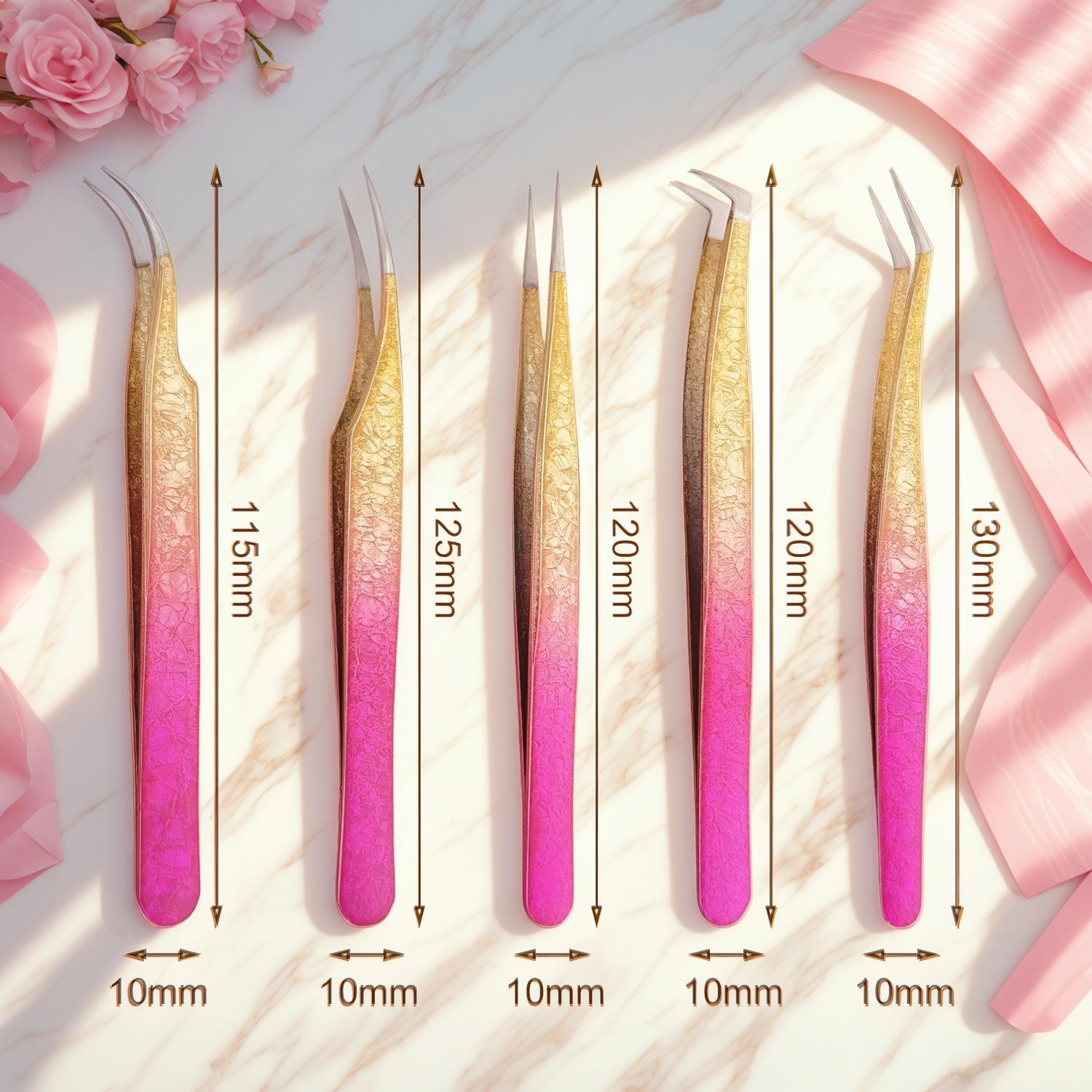
The Olimor Beauty set includes five tweezers, each with a different role. This is important for lash businesses because technicians rarely rely on one shape for every technique. Isolation, pickup, angled placement, fan creation, and intricate finishing work all benefit from different tip geometry and shaft length.
| Tweezer in the Set | Main Use | Where It Helps Most |
|---|---|---|
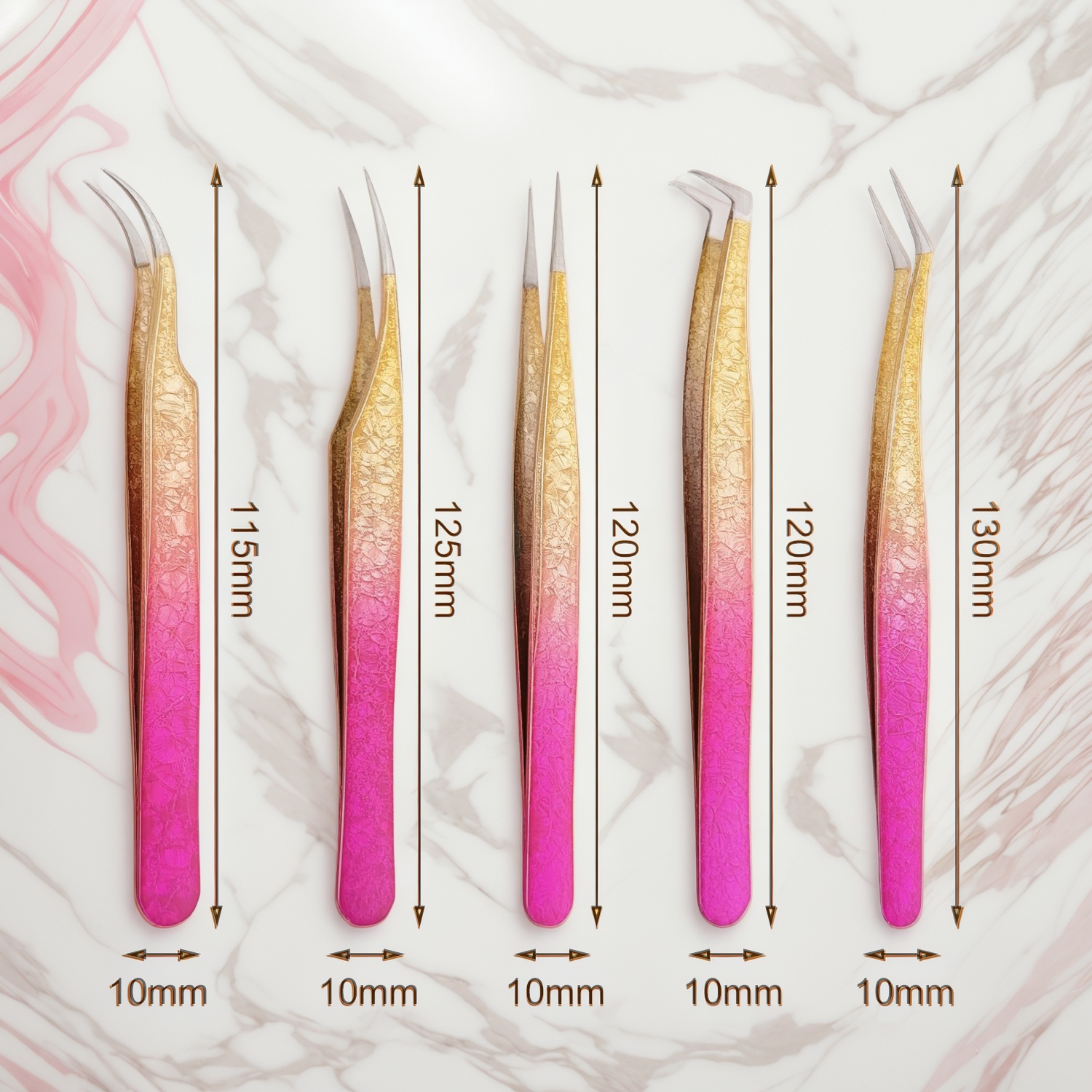
| 115mm curved tweezer | Isolation | Separating natural lashes during extension placement |
| 125mm straight tweezer | Accurate pickup | Lifting individual lashes or strip lashes with a direct grip |
| 120mm angled tweezer | Classic sets | Controlling placement angle for single-extension application |
| 120mm volume tweezer | Fan creation | Helping form and handle volume lash fans |
| 130mm precision tweezer | Intricate work | Detailed correction, placement, and fine finishing tasks |
This combination gives a lash artist more flexibility than a single tweezer purchase. For example, a technician may prefer the curved tweezer for clear isolation in dense natural lashes, then switch to the angled or volume tweezer depending on whether the set is classic or volume. The straight tweezer remains valuable for simple pickup tasks and for technicians who prefer a direct line of sight. The longer 130mm precision tweezer can be helpful when working carefully around tight areas or refining small details.
How to Match Tweezer Shape to Lash Technique
Different lash services create different tool demands. A buyer sourcing tweezers for a salon team should think less about which tweezer looks most professional and more about which shape supports the technician’s actual workflow.
- For strip false lashes: a straight tweezer can help lift the lash band cleanly from its tray, while an angled or curved tweezer may help position corners close to the lash line.
- For classic eyelash extensions: the 120mm angled tweezer supports controlled placement, while the isolation tweezer keeps one natural lash separated from neighboring lashes.
- For volume lash work: the 120mm volume tweezer is intended for fan creation, where grip consistency and the closing point of the tweezer become especially important.
- For correction and finishing: the 130mm precision tweezer can assist with small adjustments where a broader or less precise tool may block visibility.
- For training environments: a five-piece set allows students to compare shapes and learn why tool selection affects speed, posture, and accuracy.
Technicians often develop personal preferences over time, but a complete set gives them room to test grip position, hand angle, and lash pickup method. This is especially useful for salons with multiple artists, because the same service menu may require different tools depending on the technician’s hand position and technique.
Selection Criteria for Salons and Beauty Supply Buyers
When evaluating tweezers for false lash application, B2B buyers should look beyond the surface finish. The fuchsia-to-gold gradient on this set gives the tools a recognizable appearance, but practical performance depends on construction, alignment, and consistency across pieces. For salons, inconsistent tools can create training problems: one artist may get reliable pickup while another struggles with a tweezer that closes differently.
Use the following checklist when comparing lash tweezers for professional or wholesale purchasing:
- Tip alignment: the tips should meet evenly so lashes can be held without sliding or crushing.
- Closing tension: the tweezer should not require excessive force, especially for long appointments or high-volume service days.
- Technique coverage: the set should include shapes suitable for isolation, pickup, classic application, volume fan creation, and detail work.
- Material suitability: stainless steel is a practical choice for professional tools that require routine cleaning and repeated handling.
- Finish consistency: a uniform finish helps create a polished retail or salon presentation, particularly when tools are displayed or issued to staff.
- Packaging and inventory fit: buyers should consider how sets will be stored, assigned, replenished, and presented to technicians or customers.
For buyers comparing broader categories, Olimor’s beauty tool products can help place lash tweezers alongside other beauty tools used in retail, salon, and distribution channels. If the goal is to build a coordinated supply plan rather than purchase one item at a time, reviewing product collections may also help with category planning.
Care, Cleaning, and Storage for Longer Tool Life
Lash tweezers are fine tools, and their performance can change if the tips are dropped, bent, or stored loosely with heavier items. Even a small shift in alignment may affect pickup and placement. Professional teams should create a handling process so every artist treats the tweezers consistently.
After use, remove visible residue according to the salon’s hygiene procedure and local professional standards. Avoid scraping the tips with hard objects, because this may affect the contact point. Dry the tools thoroughly before storage. When storing multiple pieces, use a case, sleeve, or organized tray that protects the tips from impact. Keeping each tweezer in its assigned place also helps technicians find the correct tool quickly during appointments.
For managers, it is useful to inspect tweezers regularly. Check whether the tips still meet cleanly, whether the tool feels smooth when closing, and whether any piece has been damaged by a fall. A simple inspection routine can prevent service interruptions and help identify when a replacement set should be prepared for the workstation.
Buying in Bulk Without Treating Quality as Optional
Many salons, beauty schools, and distributors search for affordable tweezers in bulk because lash tools are used daily and may need to be issued across several workstations. Price is important, but the lowest-cost option can become expensive if tools are inconsistent, uncomfortable, or unsuitable for the techniques being taught or performed.
A more practical sourcing approach is to define the required use cases first. Does the team provide classic sets only, or are volume services also common? Are the tools intended for experienced lash artists, beginners, retail customers, or training kits? Does the buyer need a consistent visual finish for branded presentation? Answering these questions helps avoid overbuying the wrong shape or understocking the tools technicians use most often.
Olimor Beauty’s internal quality control process covers the product flow from raw materials to final packaging, supporting more consistent sourcing for businesses that need repeatable supply. Buyers who need to discuss quantities, packaging considerations, or product suitability can send an inquiry or contact Olimor with their purchasing requirements.
A Practical Set for Lash Professionals and Supply Channels
The best tweezers for false lash application are not defined by one feature alone. They should support the technique, feel controlled in the hand, and remain practical for professional care and storage. A five-piece stainless steel set gives lash artists the ability to switch tools based on the task rather than forcing one tweezer to handle every movement.
With a 115mm curved tweezer for isolation, 125mm straight tweezer for accurate pickup, 120mm angled tweezer for classic sets, 120mm volume tweezer for fan creation, and 130mm precision tweezer for intricate work, the Olimor Beauty Professional Eyelash Extension Tweezers Set covers the main tool needs of lash application and extension services. For salon owners, trainers, and beauty supply buyers, that range makes the set a practical option for building reliable lash workstations and supporting consistent technique across a team.
Tag: