

Choosing Olimor Beauty as a Tweezers Wholesaler for Lash and Brow Tools
For lash studios, brow bars, beauty retailers, training academies, and online sellers, tweezers are not a minor accessory. They are one of the most handled tools in the service room and one of the most inspected products by experienced customers. A tweezer that feels unbalanced, has misaligned tips, or loses grip too quickly can slow down application work and create unnecessary product returns. That is why selecting a tweezers wholesaler should involve more than comparing a unit price.
Olimor Beauty supplies beauty tools for professional and retail use, including tweezers designed for lash extension, separation, isolation, eyebrow shaping, and detailed grooming tasks. If you are deciding where to buy tweezers for resale or service use, the right starting point is to define the tool type, user scenario, finish, inspection expectations, and packaging needs before placing a bulk order.
Why Wholesale Tweezer Quality Matters in Daily Beauty Work
Professional tweezers are judged by the smallest details. Lash artists need tips that can isolate natural lashes cleanly, pick up extension fibers consistently, and sit comfortably in the hand during long appointments. Brow specialists need reliable closing tension and precise contact at the tip. Retail customers often evaluate a tweezer within seconds by checking the finish, weight, and how accurately the tips meet.
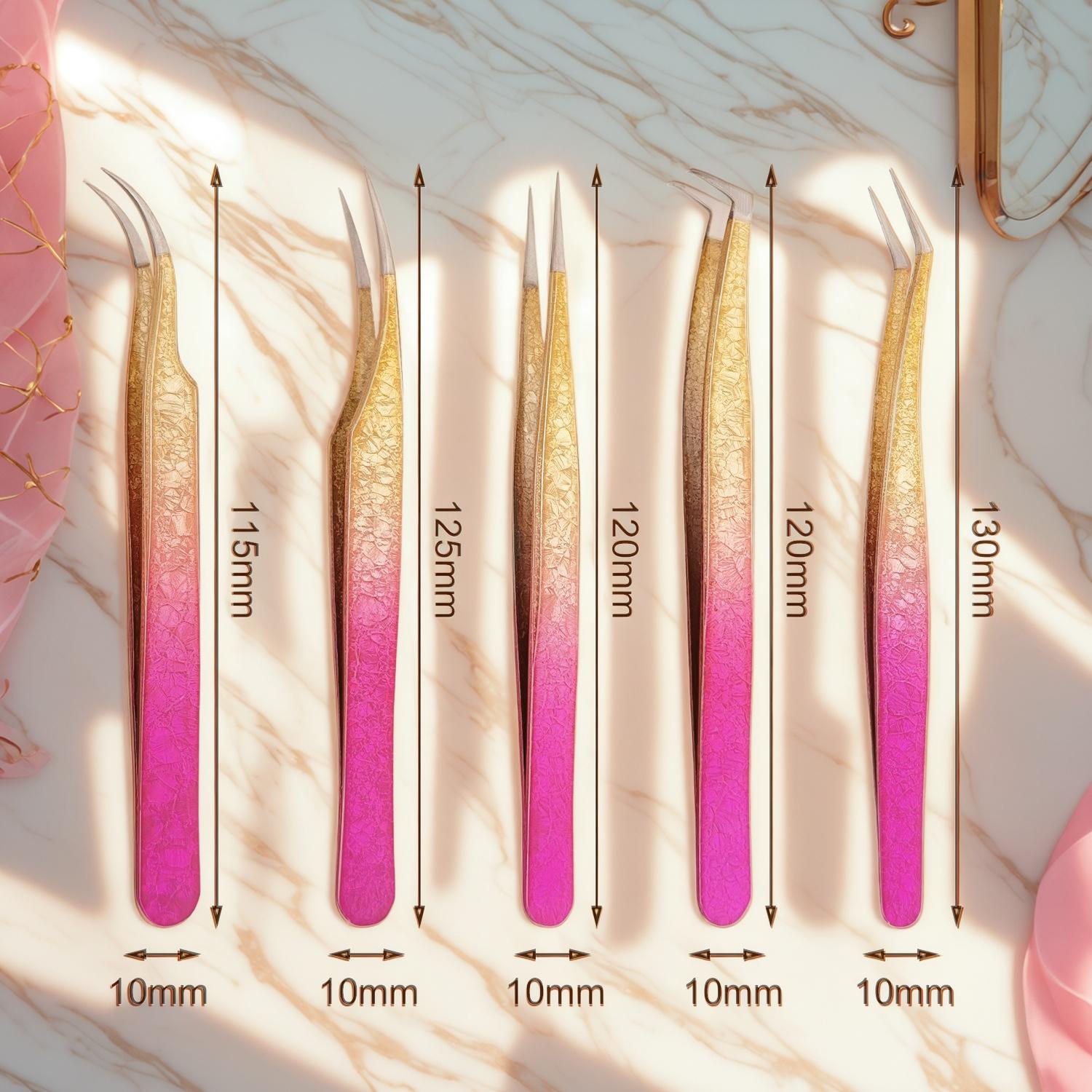
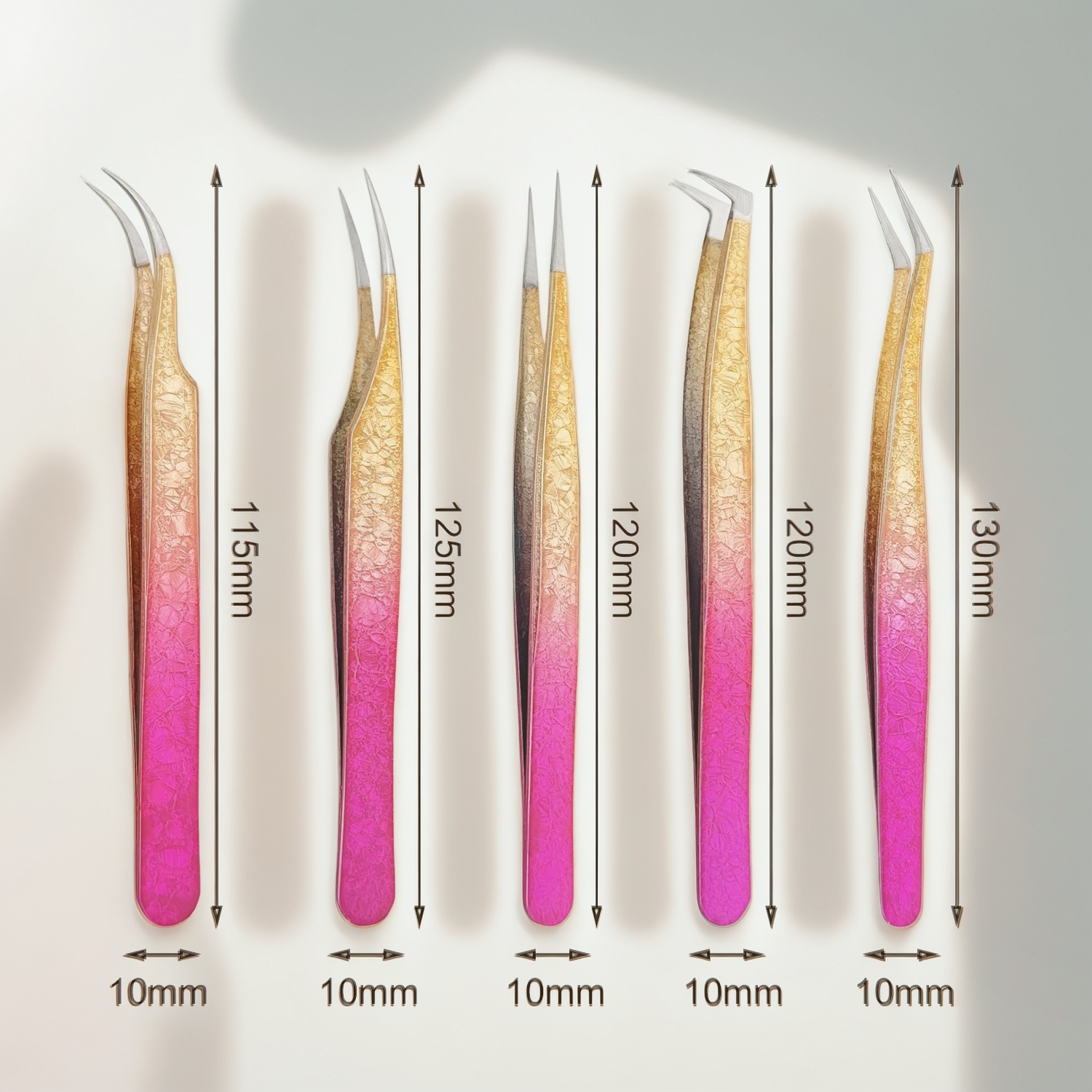
The original Olimor Beauty tweezer range described for this page includes professional eyelash extension tweezers with a magenta-to-gold gradient finish. That type of visible finish can help a tool stand out in a salon kit or retail display, but appearance should always be matched with functional selection. The supplied product information also highlights stainless steel construction, a practical choice for beauty tools because it supports durability and corrosion resistance when the tool is cleaned and stored properly.
For wholesale buyers, consistency is especially important. One attractive sample is not enough if the following cartons vary in alignment or finishing. Before you buy tweezers in bulk, evaluate whether the wholesaler can support repeatable product standards, careful inspection, and clear communication about the assortment you are ordering.
Match Tweezer Shapes to Lash and Brow Use Cases
Different tweezer shapes exist because lash and brow tasks require different hand positions, contact angles, and pressure control. A retailer selling to beginners may need a balanced selection that is easy to explain. A salon purchasing for internal use may prefer a narrower mix based on the techniques its artists perform every day.
The supplied Olimor Beauty description mentions a five-piece set for eyelash extensions, including a 115 mm curved-tip tweezer for isolating lashes and a 130 mm straight pointed tweezer for precise separation. These details are useful because length and tip shape influence how the tool behaves in the hand. A curved tip can help a lash artist work around the eyelid area with visibility, while a straight pointed tweezer can support controlled separation work.
- Isolation tweezers: Choose curved or angled tips that help separate natural lashes without blocking the artist’s view.
- Pickup tweezers: Look for firm, even tip contact so lash extensions can be lifted without repeated squeezing.
- Straight pointed tweezers: Useful for fine separation, detailed placement, and controlled handling of small items.
- Angled brow tweezers: Common for eyebrow shaping because the slanted edge can grip short hairs at a practical angle.
- Training kits: A mixed set helps students understand which tweezer shape fits each step of the service.
If you are building a wholesale assortment for multiple customer types, consider stocking both specialist lash tools and more familiar brow tweezer shapes. You can review wider sourcing options through Olimor beauty tool products or compare categories through the available product collections.
What to Check Before You Buy Tweezers in Bulk
Bulk buying is efficient only when the product meets the end user’s expectations. A low-cost shipment can become expensive if a salon rejects the tools or retail customers complain about poor grip. For tweezers, the most important checks are simple but detailed: tip alignment, closing tension, surface finish, handle comfort, packaging protection, and batch consistency.
Use the following checklist when evaluating samples or preparing a wholesale order:
- Tip meeting point: Close the tweezer under light pressure and confirm that the tips meet evenly. Uneven contact reduces grip and can frustrate lash work.
- Edge smoothness: Inspect the tips and side edges for rough areas that could scratch skin, snag lashes, or damage packaging.
- Spring and tension: The tool should close with control. Too much tension increases hand fatigue; too little can feel unstable.
- Material and finish: Stainless steel construction is desirable for durability. Decorative finishes, such as the magenta-to-gold gradient described for Olimor Beauty tweezers, should look even and clean.
- Hand feel: Check balance, weight, and grip during realistic movements rather than judging only by appearance.
- Protective packaging: Tip protectors, sleeves, or suitable packing can reduce damage during shipping and storage.
- Assortment clarity: Confirm which shapes and lengths are included, especially when ordering a multi-piece lash tweezer set.
The original product information notes quality assurance from raw material inspection through final packaging. For a wholesale buyer, that type of process is valuable because tweezers are precision items. Even small deviations at the tip can change the user experience.
Design Details That Affect Professional Comfort
Comfort is not only about a soft grip or attractive surface. In lash and brow services, comfort comes from predictable control. A tweezer should help the hand stay relaxed while still providing enough feedback to grip tiny hairs or extensions. Lightweight handling and a slip-resistant grip were highlighted in the supplied product description, both of which matter for professionals who work through multiple appointments in a day.
Tip style should be considered together with handle length and angle. A 115 mm curved-tip isolation tweezer, for example, may feel different from a 130 mm straight pointed tweezer because the hand sits at a different distance from the working area. For training schools, including several shapes in a kit can help students learn how tool geometry changes technique. For experienced salons, narrowing the assortment to the most-used shapes can improve efficiency and reduce unused inventory.
Visual finish can also support retail positioning. The described magenta-to-gold gradient gives the tool a recognizable appearance without changing the core requirement: accurate tips and comfortable control. If you plan to sell through an online shop, clear product photos and shape descriptions are essential because buyers cannot test the tool before ordering.
Wholesale Sourcing Questions for Salons, Retailers, and Distributors
When choosing a tweezers wholesaler, the best questions focus on product suitability and repeat order reliability. Avoid relying only on broad claims such as “professional quality.” Instead, define what professional quality means for your audience. A lash academy may prioritize a complete practice set. A brow retailer may prioritize slanted tweezers with attractive consumer packaging. A distributor may need consistent labeling, carton organization, and clear item identification.
Consider these buying scenarios:
- Salon use: Prioritize functional shapes, hand comfort, and easy identification between isolation and pickup tools.
- Retail resale: Prioritize clean finishing, protective packaging, simple product names, and clear customer instructions.
- Training kits: Include multiple tweezer types so learners can practice isolation, separation, pickup, and brow grooming.
- Online stores: Prepare accurate descriptions of tip shape, tool length where available, finish, and intended use.
- Distributor orders: Focus on carton consistency, batch organization, and a stable assortment for repeat purchasing.
If you already know the shapes and quantities you need, you can send an inquiry with your preferred assortment and intended market. If you are still comparing options or need help matching tools to your sales channel, contact Olimor for product selection guidance.
Care, Storage, and Handling for Longer Tweezer Life
Even well-made tweezers can lose performance if they are dropped, stored tip-down, or cleaned harshly without drying. For salons and retailers, providing basic care guidance helps protect the user experience and reduces avoidable complaints. The goal is to keep the tips aligned and the surface clean.
After use, remove residue according to the cleaning practices appropriate for the service environment. Dry the tool before storage, especially around the joint and tip area. Use a protective cap or sleeve when placing tweezers in a drawer, kit, or travel case. Never use precision lash tweezers for unrelated tasks such as opening containers, scraping adhesive from hard surfaces, or bending metal parts; those actions can damage the tips.
Retailers can turn these care points into a short insert or product page note. Salons can train staff to return each tweezer to a fixed location after cleaning. Small handling habits are often the difference between a tweezer that stays reliable and one that becomes difficult to use after a few weeks.
Build a Better Bulk Tweezer Order with Olimor Beauty
A strong wholesale tweezer order starts with a clear understanding of your customers. Lash artists need precision and fatigue control. Brow professionals need clean grip and consistent closing. Retail shoppers need a tool that looks trustworthy, feels comfortable, and performs immediately. Olimor Beauty’s tweezer selection, including stainless steel lash extension tools and the described gradient-finish options, can support these needs when matched carefully to the right use case.
Before placing a bulk order, decide which shapes are essential, how the tools will be packaged, what product information your buyers need, and how you will inspect samples. By treating tweezers as precision beauty tools rather than simple accessories, you can reduce returns, support professional performance, and create a more dependable wholesale assortment.
Tag: