

Custom Tweezers from China: What Beauty Buyers Should Check Before Ordering
Custom tweezers are small tools, but the buying decision is not small for a beauty brand, salon supplier, lash trainer, nail art distributor or grooming retailer. The right pair can support clean eyebrow shaping, controlled lash placement, careful nail decoration and other detailed work. The wrong pair can create inconsistent grip, hand fatigue, customer complaints and wasted inventory.
Olimor Beauty supplies custom and personalized tweezers for buyers who need precision tools with practical customization options. The focus is on stainless steel construction, user comfort, quality checks and dependable handling. This guide explains how to evaluate tweezers for professional use and resale, what customization should actually improve, and what to check when sourcing from a China tweezers exporter.
Why Custom Tweezers Matter in Beauty and Detail Work
Tweezers look simple, yet their performance depends on a combination of material, tip finish, alignment, tension and balance. For eyebrow grooming, the tips must meet accurately enough to hold fine hairs without cutting or slipping. For eyelash extensions, the tweezer must help the technician isolate, pick up or place lashes with control. For nail art, small embellishments need to be handled without crushing or dropping them. For crafting or delicate repair tasks, controlled contact is often more important than force.
Custom tweezers are useful because different users do not all need the same shape or feel. A home grooming set may prioritize ease of use and a polished appearance. A salon buyer may want a tool that performs consistently across many daily services. A distributor may need products that can be personalized for private-label packaging or retail sets. Customization is most valuable when it supports the way the tool will be used, not when it only changes the surface appearance.
Material and Hygiene: Why Stainless Steel Is a Practical Choice
The original product focus is stainless steel, and that is a sensible material choice for beauty tweezers. Stainless steel supports durability, resists corrosion and is suitable for hygienic tool care. For buyers, this matters because tweezers are frequently used near the eyes, brows and face, where cleanliness is essential.
When comparing suppliers, do not only ask whether the tweezer is stainless steel. Review the full material and finishing approach. The surface should feel smooth in the hand, with no rough edges near the grip or tip. If the tweezers will be used in salons, they should be easy to clean and sterilize according to the salon’s tool-care procedures. If the tweezers are intended for retail, the finish should also remain visually consistent after normal handling and display.
A practical buyer checklist for stainless steel tweezers includes:
- Corrosion resistance: appropriate for repeated cleaning and normal beauty-tool storage conditions.
- Smooth finish: no sharp burrs, rough grip edges or uneven polishing.
- Tip integrity: tips should close cleanly and stay stable during controlled pressure.
- Ease of sterilization: suitable for hygiene routines used by the target market.
- Consistent appearance: important for retail sets, salon kits and personalized tweezers.
Tip Shape, Alignment and Tension: The Details That Decide Performance
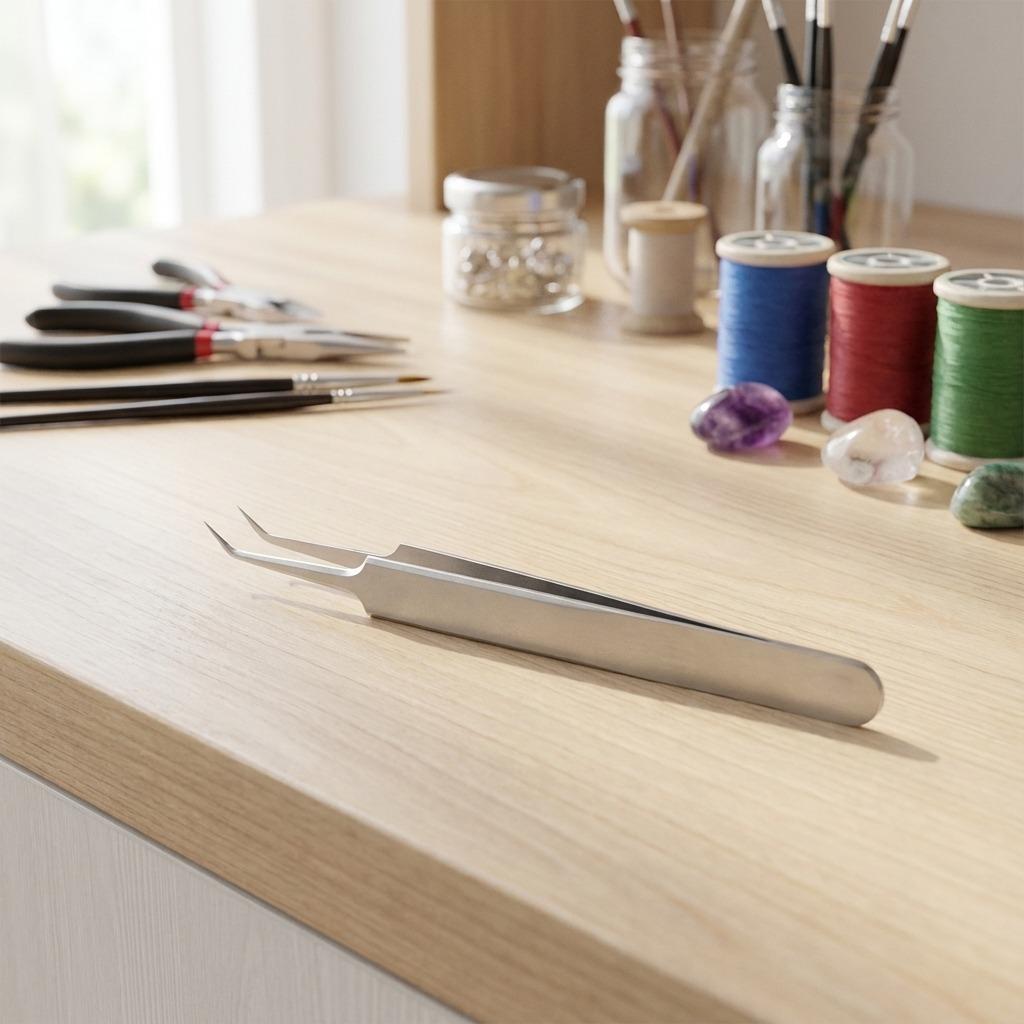
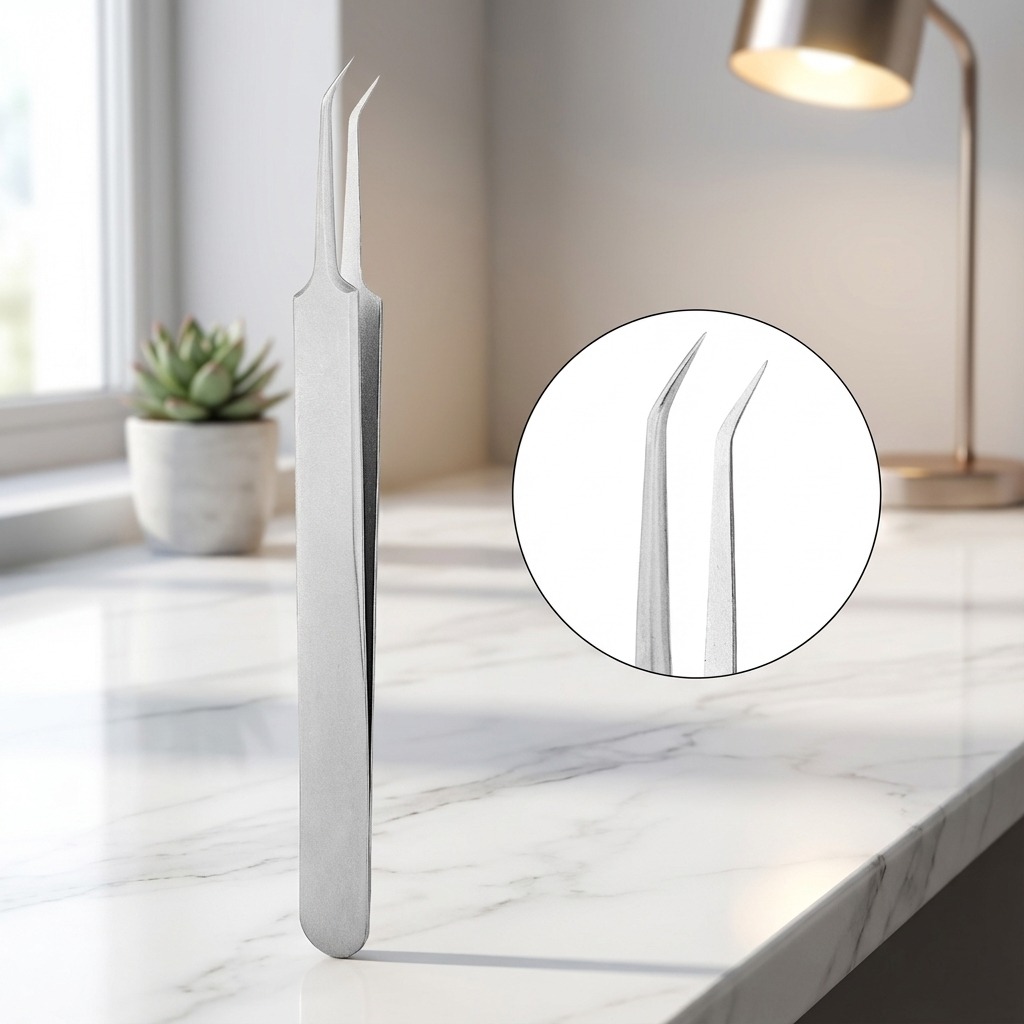
For tweezers, the tip is the working surface. Even a well-made body will disappoint users if the tips do not align or if the closing pressure feels unstable. Olimor Beauty’s custom tweezers are described with a focus on precision, balanced tension and practical handling, including options such as slightly bent tips for enhanced control.
Tip selection should begin with the task. Straight tips can be useful for general gripping and simple grooming. Angled or slanted tips often help with eyebrow shaping because the user can approach the hair from a comfortable angle. Fine tips are more suitable for delicate work, but they require careful handling and protective packaging. Slightly bent tips can improve visibility and hand position in certain lash, nail or detail applications.
Tension is equally important. If the tweezer is too stiff, users may experience fatigue during repeated work. If it is too loose, the tool may feel imprecise and fail to hold fine materials securely. Balanced tension allows the user to close the tips with control and release without strain. For professional buyers, sample testing should include repeated open-close cycles, not just a quick first impression.
Personalized Tweezers: Customization That Supports the Buyer’s Goal
Personalized tweezers can serve many commercial purposes. A beauty brand may want a consistent color or finish that fits its retail line. A salon chain may prefer tools that are easy to identify and separate by workstation. A lash educator may need tweezers for student kits. A distributor may need packaging or product presentation that matches a target sales channel.
Useful customization should be planned around the customer and the use environment. A dramatic finish may look appealing online, but comfort, grip and tip reliability still matter more during daily work. If tweezers are part of a larger set, the shape and finish should coordinate with other beauty tool products so the range feels intentional rather than assembled at random.
Before confirming a personalized tweezer project, define these points clearly:
- Primary use: brow grooming, lash extension, nail art, crafting, salon kit or retail gift set.
- Target user: beginner, at-home beauty customer, salon technician, trainer or distributor.
- Preferred tip style: general, slanted, fine, curved or slightly bent, depending on the work.
- Grip expectation: smooth, textured or shaped for longer handling comfort.
- Brand presentation: surface look, packaging direction and whether the tweezer joins a wider collection.
Quality Checks Buyers Should Request or Perform on Samples
Quality control for tweezers should be practical and repeatable. Olimor Beauty emphasizes internal controls, material inspection, production checks and a commitment to reliable tools. Buyers can support that process by evaluating samples in a structured way before moving forward with a larger order.
Start with visual inspection. Look for even finishing, clean edges, consistent shape and proper tip contact. Then test grip by picking up different materials relevant to the use case: fine brow hairs for grooming, practice lashes for lash work, small rhinestones for nail art or delicate components for crafting. A tweezer intended for professional use should not only grip once; it should perform repeatedly without the user having to change hand pressure constantly.
| Check | What to Look For | Why It Matters |
|---|---|---|
| Tip alignment | Tips meet evenly without visible gaps | Improves grip on fine hairs and small items |
| Tension | Controlled closing force, not too stiff or loose | Reduces fatigue and supports accuracy |
| Surface finish | Smooth edges and consistent polishing | Improves comfort and retail appearance |
| Cleaning suitability | Material and finish support hygienic care | Important for salons and repeat use |
| Packaging protection | Tips are protected during storage and shipping | Prevents damage before the customer receives the tool |
Sourcing from a China Tweezers Exporter: Practical Questions for Better Decisions
Working with a China tweezers exporter can be efficient when communication is specific. Instead of asking only for the lowest price, buyers should define the product function, target market and required presentation. This helps the exporter recommend a suitable tweezer type and reduces the risk of receiving samples that do not match the real use case.
Useful sourcing questions include: What stainless steel construction is used for this style? How are the tips checked for alignment? What options are available for grip design or personalized appearance? How are sharp or fine tips protected in packaging? Can the selected tweezer be coordinated with other tools in a retail or salon range? These questions help compare suppliers on practical capability rather than claims alone.
For buyers building a broader beauty range, it is also worth reviewing related product collections to see how tweezers fit with other grooming or beauty tools. A consistent sourcing plan can simplify packaging design, quality expectations and customer positioning across multiple products.
Care, Storage and User Guidance for Longer Service Life
Even well-made tweezers need proper care. Retailers and professional buyers should consider including simple care guidance with the product. This can reduce avoidable damage and improve customer satisfaction. After use, tweezers should be cleaned according to the user’s hygiene routine and dried before storage. Fine tips should not be left loose in drawers where they may collide with harder tools. Protective caps or suitable packaging help preserve alignment, especially for pointed or slightly bent tips.
Users should avoid twisting the tweezer while gripping, using the tips as a scraper, or applying force beyond the intended task. These habits can damage the contact point and reduce precision. For salons, separating tools by service type also helps maintain performance; a tweezer used for nail embellishments may not be ideal for lash isolation later.
When Custom Tweezers Are the Right Product for Your Range
Custom tweezers are a strong fit when your customers value accuracy, hygiene, comfort and presentation in a compact tool. They can work as a standalone retail product, a salon supply item, part of a brow or lash kit, or a personalized accessory for training and promotional use. The key is to choose a tweezer that matches the task first, then refine the appearance and packaging.
Olimor Beauty supports buyers looking for stainless steel custom tweezers, personalized tweezers and export-ready beauty tools with a focus on practical precision and reliable handling. If you are comparing options for a new range or need to clarify the right tweezer style for your market, you can contact Olimor or send an inquiry with your intended application, target user and customization goals.
Tag: