

Custom Tweezers for Lash Extension Precision and OEM Beauty Tool Buyers
Custom tweezers are small tools, but in lash extension work they influence speed, control, comfort, and final application quality. A lash artist may use tweezers for isolation, pickup, fan creation, placement, and adjustment, so a poor match between the tool and technique can lead to slippage, uneven fans, hand strain, or inconsistent results. For beauty brands, salons, training academies, and distributors, custom tweezers also carry a product identity: finish, tip angle, grip texture, and packaging choices all affect how the tool is perceived by professional users.
Olimor Beauty supports beauty tool buyers looking for OEM custom tweezers and other professional beauty tools. This guide explains how to think through custom tweezer selection without relying on vague claims. It focuses on the practical details that matter most for eyelash extension tools: tip shape, alignment, grip feel, finish, inspection, and daily maintenance.
Why Custom Tweezers Matter in Lash Extension Work
Generic tweezers may be acceptable for simple grooming tasks, but lash extension application requires a more controlled tool. A lash artist works with fine fibers, adhesive timing, narrow placement zones, and repeated hand movements over long appointments. Small differences in tip closure, spring tension, and surface grip can become noticeable after hundreds of pickups and placements.
Custom tweezers allow a buyer to match the tool to the intended application rather than forcing one shape to serve every purpose. For example, angled tips can help create a stable hold on delicate lash extensions and reduce slippage during pickup or placement. In volume techniques, including Russian volume or hybrid sets, the contact point of the tweezer is especially important because the artist needs to form, hold, and place fans without crushing or losing fibers.
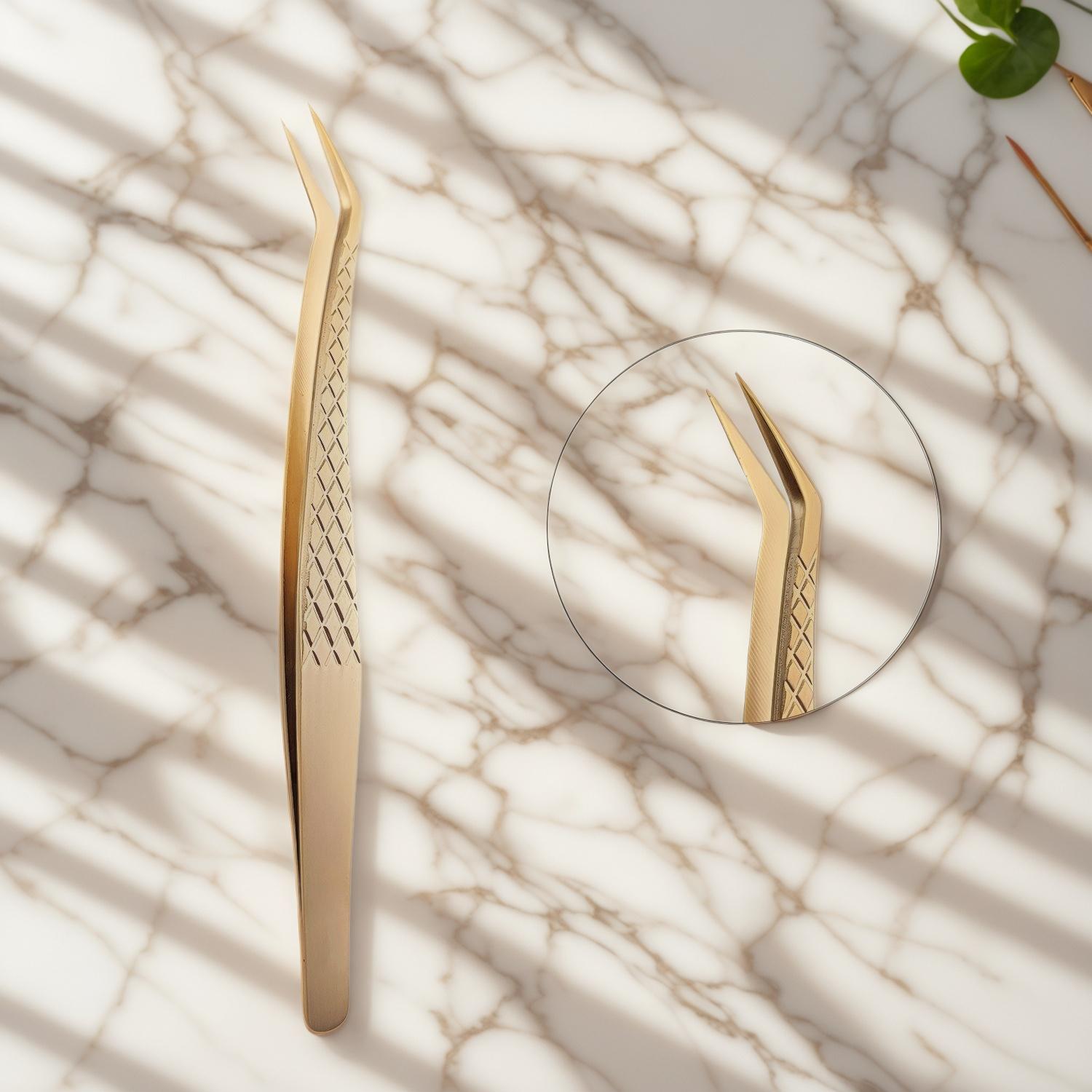
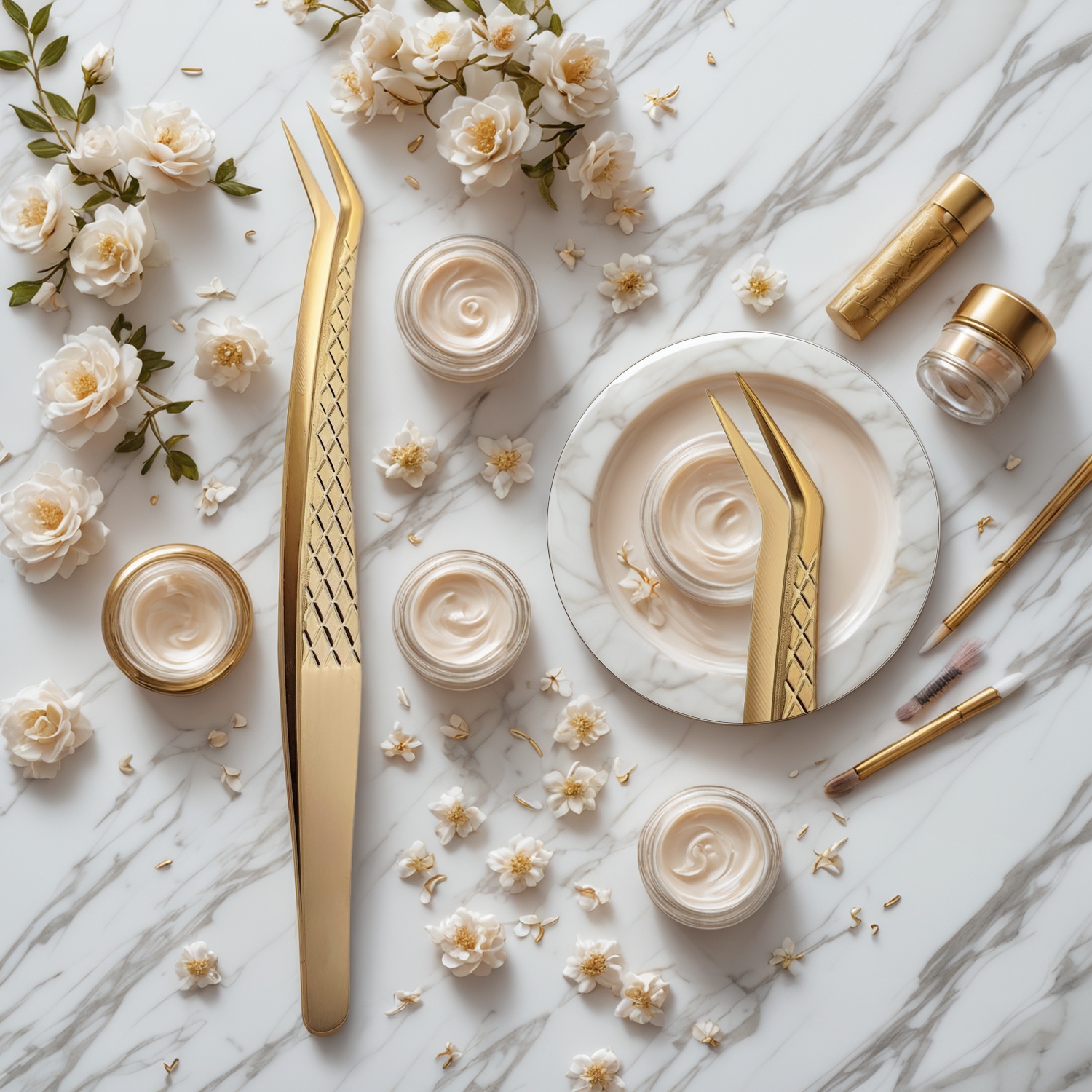
For OEM buyers, customization also supports consistent brand positioning. A radiant gold finish can give the tool a polished, professional appearance, while a textured diamond-patterned grip can support control during prolonged use. These design choices should never be treated as decoration only; they should support how the tool is actually used at the workstation.
Key Selection Criteria for OEM Custom Tweezers
When developing OEM custom tweezers, it helps to evaluate the tool from the user’s perspective first. The best design brief is not simply “make it attractive.” It should define who will use the tweezer, what technique it supports, and what problems it should reduce.
- Tip function: Decide whether the tool is mainly for isolation, classic pickup, volume fan creation, placement, or multipurpose lash work. Angled tips can provide a firm grip for delicate lash extensions and may suit artists who need a controlled pickup angle.
- Tip closure and alignment: The working points should meet cleanly. A tiny gap or uneven contact point can cause lash fibers to slip, especially when working with fine extensions.
- Hand comfort: Consider how the tool feels during long appointments. A textured grip, such as a diamond-patterned surface, can help the fingers maintain control without excessive pressure.
- Material choice: The original custom tweezer design described by Olimor Beauty uses stainless steel, a common choice for beauty tools because it supports durability and cleanability when properly handled.
- Finish: A radiant gold finish can create a refined visual effect for professional kits, retail display, or branded tool collections.
- Balance: The tweezer should not feel tip-heavy or unstable. Good balance supports more precise hand movement.
- Brand presentation: If the tool is intended for retail or salon supply, confirm how the finish, logo position, and packaging will support the brand without interfering with handling.
Buyers comparing beauty tool products can review broader options at beauty tool products and then narrow the custom tweezer brief based on actual use cases.
Design Your Own Tweezers: Practical Choices to Define Early
The phrase “design your own tweezers” can sound simple, but successful customization depends on clear decisions made before sampling. A beauty brand or salon buyer should identify the performance goal first, then build the appearance around it. This avoids a common problem: a tweezer that looks premium but does not feel right in daily use.
Start with the main user group. A training academy may prefer tweezers that are forgiving for new lash artists, while an advanced volume lash artist may want a very specific pickup point and controlled closing feel. A retail-focused beauty brand may place more emphasis on finish and packaging, but it should still confirm that the tool is dependable in real lash work.
Next, define the working style. For lash extensions, slender and fine tips can support detailed application, while angled tips can help the user approach the lash line at a comfortable position. If the tweezer is intended for Russian volume or hybrid sets, the buyer should pay close attention to how well the tips hold multiple fine extensions without shifting.
Finally, connect the visual choices to the user experience. A gold finish may help the tool stand out, but the surface should also remain practical for cleaning and handling. A textured grip may look distinctive, but its main value is to support control and reduce unnecessary hand effort during repeated use.
Questions to Resolve Before Sampling
A strong sample request is specific. It gives the manufacturer enough information to understand the intended performance while leaving room for practical recommendations. The table below shows common customization points and what buyers should clarify before moving forward.
| Customization point | What to decide | Why it matters |
|---|---|---|
| Tip angle | Whether the tool is for isolation, pickup, placement, volume, or mixed use | The angle affects access, grip stability, and hand position |
| Tip contact | How precise and firm the closing point needs to be | Poor contact can cause lash slippage or uneven fan handling |
| Grip texture | Smooth surface or textured grip such as diamond pattern | Grip affects comfort and control during long services |
| Finish | Gold finish or another approved finish option | The finish influences brand appearance and professional presentation |
| Material direction | Whether stainless steel is required for the project | Material affects durability, care, and user confidence |
| Branding | Logo placement, visual style, and packaging direction | Branding should not interfere with grip or cleaning |
If your project involves a broader beauty tool line rather than a single tweezer, browse Olimor product collections to consider how tweezers may fit with related tools in a coordinated range.
Quality Checks That Matter for Custom Tweezers
Quality control for tweezers should focus on the details the end user will notice immediately. A tool can look clean in photos but still fail in the hand if the tips do not align or the closing pressure feels inconsistent. Olimor Beauty emphasizes strict internal quality control for custom tweezers, including attention to ergonomic design and final inspection.
For buyers, a practical inspection checklist should include the following points:
- Visual finish: Check for obvious scratches, uneven coating appearance, rough edges, or distracting surface marks.
- Tip alignment: View the tips under good lighting and confirm that they meet evenly at the intended contact point.
- Grip stability: Hold the tweezer as a lash artist would during service and check whether the textured area supports control.
- Closing feel: Open and close repeatedly to evaluate spring response, comfort, and consistency.
- Application simulation: Test the tool with representative lash extensions to see whether it grips, releases, and places fibers predictably.
- Cleaning practicality: Confirm that the finish and grip area can be wiped and maintained according to salon hygiene routines.
This type of review is especially useful when ordering OEM custom tweezers because the same design may be produced in quantity. Catching handling or alignment issues during sampling is far easier than addressing user complaints after launch.
Maintenance Tips for Longer Service Life
Even well-made custom tweezers need proper care. Lash extension tools are used around adhesive, remover, cleansers, and frequent hand contact, so daily handling affects performance over time. A small nick at the tip can change how the tool picks up lashes; residue near the closing point can reduce precision.
Clean tweezers according to the hygiene procedures appropriate for your salon or market. Avoid dropping them on hard surfaces, because fine tips can bend or lose alignment. Store each tweezer in a protective sleeve, case, or organized tool tray so the tips do not rub against other metal tools. If adhesive residue is present, remove it carefully using a method suitable for the tool and finish rather than scraping aggressively at the tips.
It is also helpful for salons and academies to assign tweezers by function. One pair used for isolation should not be casually mixed with a pair reserved for volume pickup if the artists depend on a specific grip and closing feel. Clear storage habits protect both the tool and the consistency of the lash service.
How Custom Tweezers Support Professional Buying Decisions
For a lash artist, the right custom tweezer can reduce small frustrations throughout the appointment. For an OEM buyer, it can become a reliable product that reflects the brand’s attention to detail. The strongest projects usually combine practical performance requirements with a clear visual direction: stainless steel construction, an appropriate angled tip, a comfortable grip texture, and a finish that suits the target customer.
Before finalizing a custom tweezer project, prepare a concise brief covering application type, preferred tip style, finish direction, grip requirements, branding needs, and inspection priorities. If you are comparing tool options for a salon, academy, or beauty brand, you can contact Olimor for project communication or send an inquiry with your customization goals.
Custom tweezers are not only about appearance. In lash extension work, precision comes from the relationship between design, material, hand comfort, and consistent inspection. Choosing those details carefully helps create a tool that looks professional, feels controlled, and supports the detailed work beauty professionals perform every day.
Tag: