

Custom Tweezers for Bulk Beauty Tool Programs
Custom tweezers may look simple, but for a beauty retailer, salon supplier, grooming kit brand, or promotional product buyer, small design choices can strongly affect user satisfaction. A tweezer that grips fine hair cleanly, feels stable in the hand, and keeps its finish through repeated handling is more likely to be kept, recommended, and reordered. For bulk order tweezers, consistency matters as much as appearance: every unit in a retail display or kit should deliver the same controlled grip.
This guide explains what to review when sourcing custom tweezers from a China tweezers exporter or beauty tool manufacturer, especially when your project requires a specific finish, shape, logo, or packaging format. The focus is practical: tip performance, material considerations, user comfort, inspection points, and ordering decisions that help prevent common problems before production begins.
What Makes a Custom Tweezer Worth Ordering in Bulk?
A good tweezer is not defined by decoration alone. Customization should support the way the tool will be used. For eyebrow shaping, facial hair removal, lash application, splinter removal, or beauty kit inclusion, the tweezer must close evenly and apply pressure without requiring the user to squeeze too hard. If the tips meet poorly, even an attractive finish will not compensate for the lack of precision.
For business buyers, the best starting point is to define the application. A retail eyebrow tweezer may prioritize a clean cosmetic appearance and an easy-to-sell package. A salon tool may need a comfortable grip for repeated use. A gift set or travel kit may require a compact design and protective cap. A private label program may focus on logo placement, color matching, and carton presentation. When these requirements are clear, it becomes easier to compare options from beauty tool products and determine which customization choices add real value.
Tip Shape and Alignment: The Main Performance Check
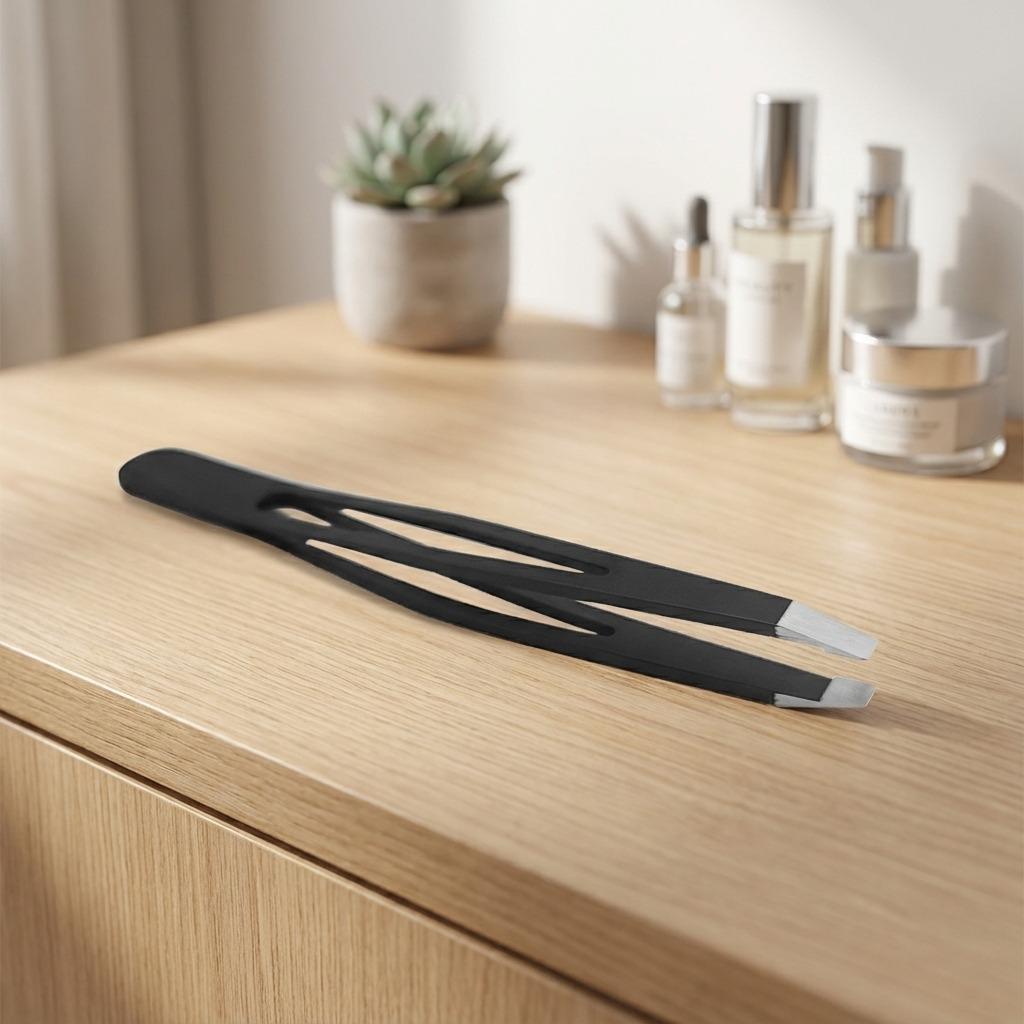
The tweezer tip is the working part of the tool, so it deserves the closest attention. The supplied product description highlights precision-slanted tips designed to grasp fine hairs. A slanted tip is popular because it gives users both a broad gripping edge and a pointed corner for more detailed work. This makes it suitable for eyebrow grooming and general beauty use.
When reviewing samples or preparing a bulk order, pay attention to the following tip details:
- Full contact: The two tips should meet evenly without gaps along the gripping edge.
- Clean edges: The slanted edge should feel precise, not rough, jagged, or overly sharp against the skin.
- Balanced tension: The tweezer should close with controlled pressure, not feel too stiff or too weak.
- Fine hair grip: The tips should hold a thin hair without slipping when moderate pressure is applied.
- Symmetry: Both arms should align neatly from body to tip, supporting predictable closure.
These checks are simple but important. They help separate a decorative beauty accessory from a reliable grooming tool. In bulk programs, it is also useful to define an acceptable inspection method for tip alignment so that production is judged consistently.
Material, Finish, and Handling Comfort
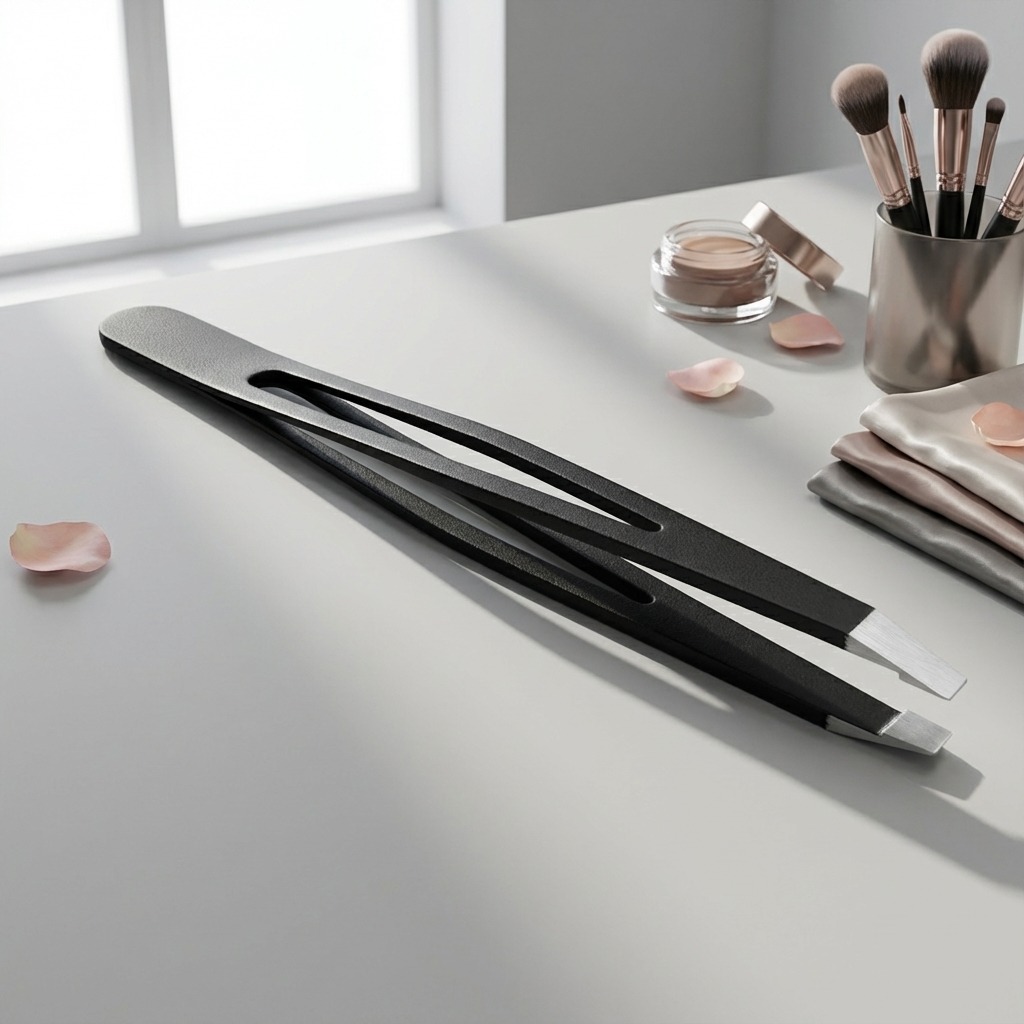
The original product details describe stainless steel tweezers in a matte black finish with an ergonomic wide body. Stainless steel is commonly chosen for beauty tools because it supports durability and can be finished in different ways. The matte black surface is also practical: it reduces glare under bright lighting and gives the product a refined, modern appearance without relying on a highly reflective shine.
The wider body is more than a visual detail. It can make the tweezer easier to control, especially for users who prefer a steadier pinch area. A narrow tweezer may feel lightweight and compact, while a wider body can provide more surface contact for the fingers. Neither approach is automatically better; the right choice depends on the customer group and the retail position of the product.
For custom tweezers, consider how the finish interacts with branding. A matte surface can make logos appear clean when the marking method is compatible with the coating. However, logo size, placement, and contrast should be tested on a real sample instead of judged only from a digital layout. A logo that looks balanced on a rendering may appear too small, too close to the tip, or poorly contrasted on the finished tool.
Customization Choices That Actually Help Buyers
Custom options should make the tweezer easier to sell, easier to use, or easier to include in a larger kit. Too many cosmetic variations can complicate purchasing without improving the user experience. Before finalizing a design, decide which elements matter most for the project.
| Customization area | What to decide | Why it matters |
|---|---|---|
| Tip style | Slanted, pointed, flat, or another working edge | Determines the grooming task the tweezer performs best |
| Body shape | Wide body, slim body, length, and grip area | Affects comfort, control, and perceived quality |
| Finish | Matte black, polished, colored, or other surface style | Influences appearance, glare, and shelf appeal |
| Logo | Placement, size, contrast, and marking method | Supports brand recognition without interfering with use |
| Packaging | Individual pouch, card, box, kit placement, or bulk packing | Protects the tips and fits the sales channel |
This type of comparison is especially useful when the tweezer will be sold with other product collections, such as manicure tools, brow accessories, facial care items, or travel grooming kits. A consistent color and packaging direction can make the whole set look planned rather than assembled from unrelated components.
Bulk Order Tweezers: How to Reduce Risk Before Production
Bulk order tweezers require more planning than a small sample purchase. The goal is to avoid discovering problems after thousands of pieces have already been finished and packed. A structured approval process helps protect both performance and appearance.
- Confirm the use case. Decide whether the tweezer is for brows, lashes, grooming kits, retail display, salon supply, or promotional use.
- Review a physical sample. Check hand feel, closing tension, tip contact, finish, and logo position on an actual unit.
- Define the approved standard. Keep a reference sample or clear images showing the accepted tip shape, color, logo, and package.
- Plan packaging early. Protective packaging can help prevent tip damage during handling and shipment.
- Set inspection priorities. Focus on tip alignment, finish defects, logo accuracy, and package condition.
These steps do not require complicated technical language. They simply create shared expectations. For a product as precision-dependent as tweezers, visual approval alone is not enough; functional checking should be part of the conversation.
Questions to Use When Comparing a China Tweezers Exporter
When working with a China tweezers exporter, buyers often compare price first. Price is important, but it should be considered together with sampling support, production consistency, and export communication. A lower unit cost can become expensive if the tips do not grip, the logo is inconsistent, or packaging fails to protect the product.
Use a practical checklist when evaluating a supplier or preparing an inquiry:
- Can the supplier provide a sample with the intended body shape, tip style, finish, and logo location?
- How will tip alignment and gripping performance be checked during production?
- What packaging options are suitable for protecting the slanted tips?
- How should artwork be supplied for logo marking or retail packaging?
- What information is needed to quote accurately, such as quantity, finish, packaging, and shipping destination?
- Can the product be adapted for a kit without damaging the tips or increasing handling risk?
Olimor Beauty works with beauty tool buyers who need practical sourcing discussions rather than vague claims. If you are preparing a new program, you can send an inquiry with your target use, preferred finish, and packaging direction. If your project is still at the planning stage, contact Olimor to discuss which product details should be confirmed before sampling.
Care and Maintenance Guidance for End Users
Even well-made stainless steel tweezers need basic care. Including simple maintenance instructions on packaging or product inserts can reduce complaints and help customers keep the tool performing properly. After use, the tips should be wiped clean and kept dry. If the tweezer is stored loose in a cosmetic bag, a protective cap or pouch can help prevent tip damage. The tool should not be used as a pry tool, nail tool, or general household implement, because twisting force can affect alignment.
For retail brands, this information is also useful content for product pages. It shows customers that the tool is designed for precision use and should be handled accordingly. Clear instructions can improve the perceived value of custom tweezers without making unsupported claims.
Choosing Custom Tweezers That Fit Your Brand Program
The strongest custom tweezer programs balance function, appearance, and repeatable production. The matte black stainless steel tweezer described here, with a wide ergonomic body and precision-slanted tips, offers a focused example: a clean cosmetic finish, practical handling surface, and a tip style suited to fine-hair gripping. For bulk buyers, the next step is to match those features to the intended sales channel and confirm the details through sampling and clear approval standards.
Whether you are building a private label brow tool, adding a tweezer to a grooming kit, or preparing retail-ready beauty accessories, prioritize the details users notice immediately: grip, comfort, tip protection, and consistent finish. A custom tweezer does not need unnecessary decoration to be effective. It needs to work smoothly, represent your brand clearly, and arrive in packaging that protects the precision edge until the customer is ready to use it.
Tag: