

Custom Tweezers for Business: Precision, Branding and Bulk Buying Decisions
For salons, beauty retailers, private label brands and promotional buyers, tweezers are small products with a large influence on customer trust. A tweezer that grips cleanly, feels balanced in the hand and keeps its tip alignment over repeated use can support a professional brand image. A weak or poorly aligned tool can do the opposite, even if it looks acceptable in a product photo.
When sourcing custom tweezers for business, the key is to look beyond the lowest unit price. Buyers need to compare performance, material quality, customization options, packaging compatibility and long-term replacement risk. This is especially important for tweezers for resellers, where the product may be judged not only as a grooming tool but also as a reflection of the brand printed on it.

Why Custom Tweezers Matter in B2B Beauty Sourcing
Mass-market tweezers can be suitable for occasional personal use, but business buyers usually need a more consistent standard. A salon may use the same tool throughout the day. A retailer may place the tweezer inside a beauty kit where every component affects the perceived value of the set. A promotional company may need a practical gift that customers actually keep and use.
Custom tweezers give businesses the opportunity to connect utility with brand identity. A logo, finish, color direction or packaging format can help the tool match a brand line or campaign. However, customization should not be treated as a decorative step only. The tool must first perform its basic function well: gripping fine hairs accurately without excessive pressure, slipping or pulling unevenly.
For buyers comparing beauty tool products, tweezers can be a smart category because they are compact, useful and easy to combine with other grooming accessories. They are also simple for customers to understand, which makes quality differences immediately noticeable in use.
Performance Checks: Tip Alignment, Grip and Comfort
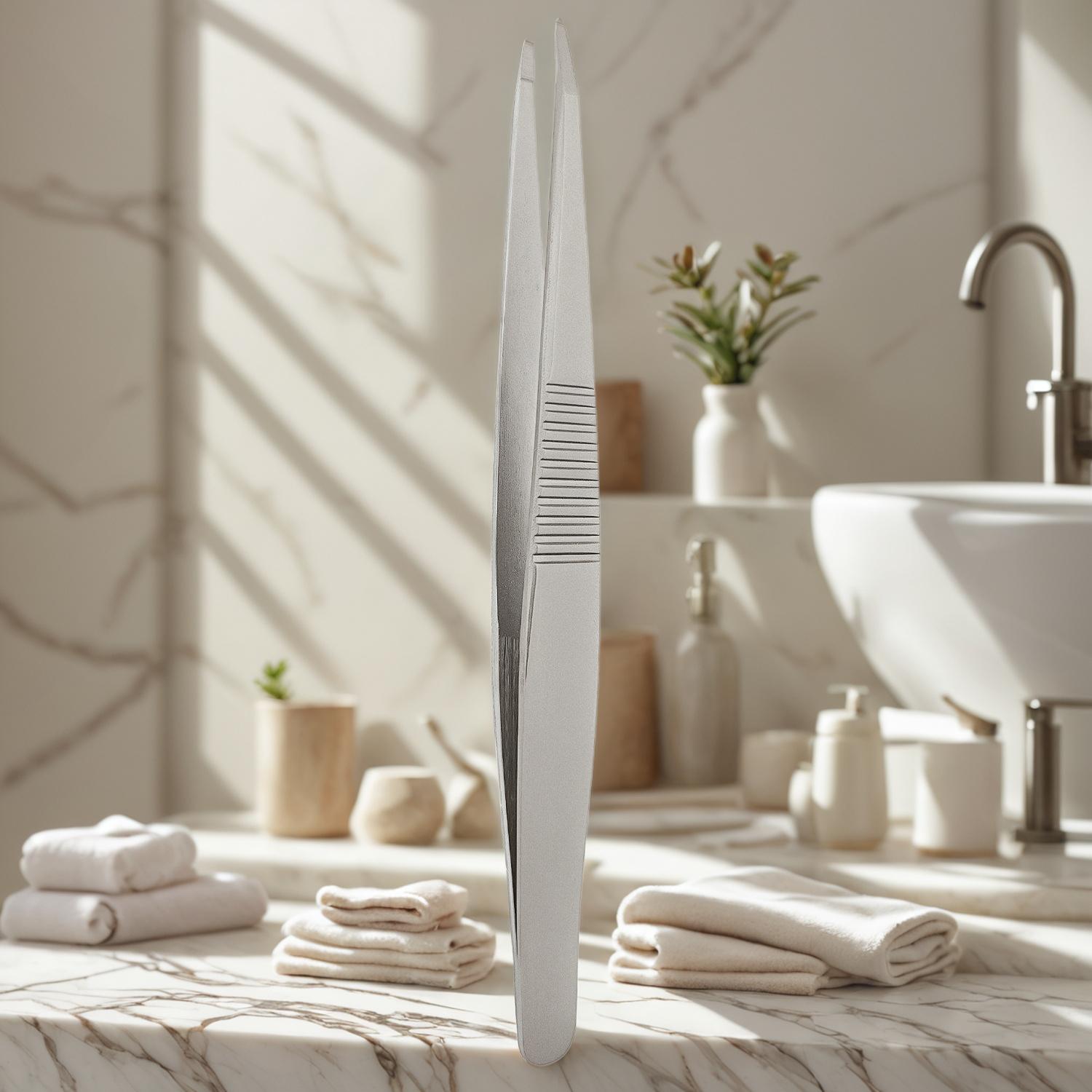
The most important part of any tweezer is the tip. If the tips do not meet evenly, the tweezer may miss fine hairs or require repeated attempts. This can frustrate end users and reduce confidence in the product. The original distinction between standard tools and professionally crafted options often comes down to details such as polished stainless steel, hand-filed tips and sharp alignment.
Before committing to a bulk order, business buyers should evaluate samples with real-use checks rather than only visual inspection. A simple internal test can reveal whether the tweezer is suitable for resale, salon use or inclusion in a branded set.
- Tip closure: Check whether both tips meet evenly from edge to edge without a visible gap.
- Grip on fine hairs: Test on fine fibers or real grooming use to see whether the tweezer catches cleanly.
- Spring tension: The tweezer should not feel too stiff for repeated use or too weak to control.
- Edge feel: Tips should be precise but not so rough that they scratch the skin during normal handling.
- Hand comfort: Consider whether the shape is easy to hold for both short and longer sessions.
- Surface finish: Look for smooth polishing, clean edges and consistent appearance across samples.
These checks help separate a product that merely looks attractive from one that can support professional use. For B2B tweezers, consistency is often more important than a single impressive sample. The buyer should think about how the full order will perform when customers open different units from different cartons.
Material and Finish Considerations for Business Buyers
Stainless steel is commonly valued in beauty tools because it offers a clean appearance and practical durability. The supplied product information highlights polished stainless steel, which is relevant for buyers who want a tool that feels more substantial than lower-grade, easily bending metal alternatives. Still, material claims should be evaluated together with workmanship. A good material can underperform if the tips are poorly shaped or the body is uncomfortable.
Finish also affects branding. A highly reflective polish may suit a premium beauty counter, while a softer finish may be easier to pair with simple packaging. The right choice depends on the selling channel and the rest of the product range. For a salon, function and sanitation-friendly handling may be the main priorities. For a retailer, shelf presentation and customer unboxing may also matter. For a promotional buyer, the printable area and logo clarity may be central.
Buyers should also consider how the tweezer will be packed. A loose tweezer in a basic sleeve creates a different impression from one placed in a protective pouch, carded pack or kit. Packaging should protect the tips from impact during shipping and storage, because even a small bend can affect performance.
Bulk Tweezers Price vs. Long-Term Value
The lowest bulk tweezers price can be tempting, especially for large campaigns or entry-level retail programs. However, the cheapest option may create hidden costs. If tips misalign easily, if finishes look inconsistent or if customers complain about poor grip, the buyer may spend more on replacements, customer service and lost repeat sales.
A value-based sourcing approach compares total business outcome rather than unit cost alone. For tweezers for resellers, a reliable tool may support a stronger retail price and better customer reviews. For salons, a durable tweezer can reduce the need for frequent reordering. For gift or promotional use, a tool that customers keep using gives the brand more repeated exposure than a disposable-feeling item.
| Buying factor | Low-cost generic risk | Better B2B sourcing goal |
|---|---|---|
| Tip alignment | Uneven grip and missed hairs | Consistent closure and clean catching |
| Material feel | Thin body that bends or feels weak | Stable hand feel suitable for repeated use |
| Finish quality | Scratches, rough edges or inconsistent shine | Smooth, retail-ready appearance |
| Branding | No differentiation from commodity tools | Logo or packaging that supports brand recall |
| Customer response | Higher complaint and replacement risk | Greater confidence in the brand experience |
This does not mean every business needs the most expensive option. It means the chosen tweezer should match the promise of the brand and the expectations of the buyer’s end customer.
Customization Choices That Actually Support Your Brand
Customization works best when it is intentional. A logo alone does not make a tweezer feel premium; the product must still be precise and comfortable. At the same time, the right branding choices can make a small tool feel connected to a broader product line.
For custom tweezers, buyers may evaluate several brand-related decisions: where the logo should appear, whether the surface finish supports legibility, whether the tool will be sold individually or inside a kit, and how the package will explain its use. The goal is not to overload a small product with visual information. A clean, clear brand mark is often more effective than complicated decoration.
Businesses building a coordinated assortment can compare tweezers with other product collections to make sure finish, packaging and positioning are consistent. For example, a tweezer included in a brow care set should visually fit the other items in the set. A promotional tweezer for a beauty event may need a simpler presentation that prioritizes portability and immediate recognition.
Who Benefits Most from Custom Tweezers?
Custom tweezers can serve different types of buyers, but each group should evaluate them through a slightly different lens. Salons need tools that feel controlled in the hand and maintain performance through frequent use. Beauty retailers need tools that look credible on shelf and satisfy customers after purchase. Resellers need a product that can stand apart from unbranded alternatives. Promotional companies need a useful, compact item that does not feel throwaway.
Private label beauty brands should pay special attention to consistency between the tweezer and the rest of the line. If a brand sells precise brow products, the tweezer should reinforce that promise. If the brand focuses on everyday grooming, the tweezer should be easy to use and packaged in a way that feels approachable.
A Practical Sourcing Checklist Before Ordering
Before moving from sample approval to bulk purchasing, buyers should define acceptance standards. This avoids making decisions based only on appearance or price. A practical checklist can include:
- Confirm the intended user: salon professional, retail customer, gift recipient or kit buyer.
- Test multiple samples for tip alignment and gripping ability.
- Review surface finish, edges and overall hand feel.
- Check whether the branding method is clear and suitable for the chosen finish.
- Make sure packaging protects the tips during shipping and storage.
- Compare unit price with expected resale value, complaint risk and brand positioning.
- Prepare reference samples or approval criteria before full production.
If your business is comparing options for a private label program, retail assortment or promotional order, you can contact Olimor to discuss suitable beauty tool directions or send an inquiry with your project requirements.
Choosing Tweezers That Represent Your Business Well
A custom tweezer may be small, but it carries a clear message about your business. When the tips align, the body feels stable and the branding looks clean, customers associate those qualities with the company behind the product. When the tool slips, bends or looks unfinished, the brand loses credibility.
The best sourcing decision balances precision, durability, presentation and cost. For business buyers, the question is not simply “What is the lowest bulk tweezers price?” A better question is “Which tweezer will support the experience we want customers to have with our brand?” By focusing on performance first and customization second, companies can build a more reliable product offering and create branded tweezers that customers are more likely to use, keep and recommend.
Tag: