

Custom Tweezers for Business: How to Source a Branded Precision Tool Line
For beauty retailers, salon suppliers, grooming brands, and resellers, tweezers are small products with a large impact on customer perception. A pair that grips cleanly, feels balanced in the hand, and arrives in well-presented packaging can strengthen confidence in your brand. A pair with poor alignment, rough edges, or inconsistent tension can do the opposite, even if the rest of your product range is strong.
Custom tweezers for business are not simply generic tools with a logo added at the end. The buying decision should cover the tweezer shape, tip style, finish, grip design, packaging approach, quality control process, and export readiness. Olimor Beauty works with stainless steel beauty tools for B2B partners, including tweezers for resellers and branded grooming ranges. The goal is to help business buyers develop a product that looks professional, performs reliably, and fits the market they serve.
Why Custom Tweezers Matter for B2B Beauty Brands
Many companies begin by comparing standard stock tweezers with customized B2B tweezers. Stock products can be useful for quick purchasing, but they rarely create a memorable brand experience. They may also limit your control over shape, finish, packaging, and market positioning. If multiple sellers offer the same unbranded tool, it becomes difficult to compete on anything except price.
Custom tweezers give your business more control. You can align the tool with your audience: a salon-focused line may need a clean professional look, while a retail beauty kit may benefit from attractive packaging and a comfortable grip. A men’s grooming set, lash kit, brow kit, or travel accessory range may each require a different presentation. Customization also helps resellers create product families rather than one-off items.
Brand identity is not limited to logo placement. It includes the feel of the tool, the confidence of the tip contact, the neatness of the finish, and the consistency between batches. When customers repeatedly receive a tool that performs as expected, your brand becomes associated with precision and care.
Key Product Decisions Before Placing a Custom Order
Before discussing artwork or packaging, B2B buyers should define how the tweezer will be used. Different customers value different details. A brow specialist may care most about clean hair removal and fine tip alignment. A reseller building a general grooming line may care about durability, easy handling, and packaging that explains the product clearly.
Useful selection criteria include:
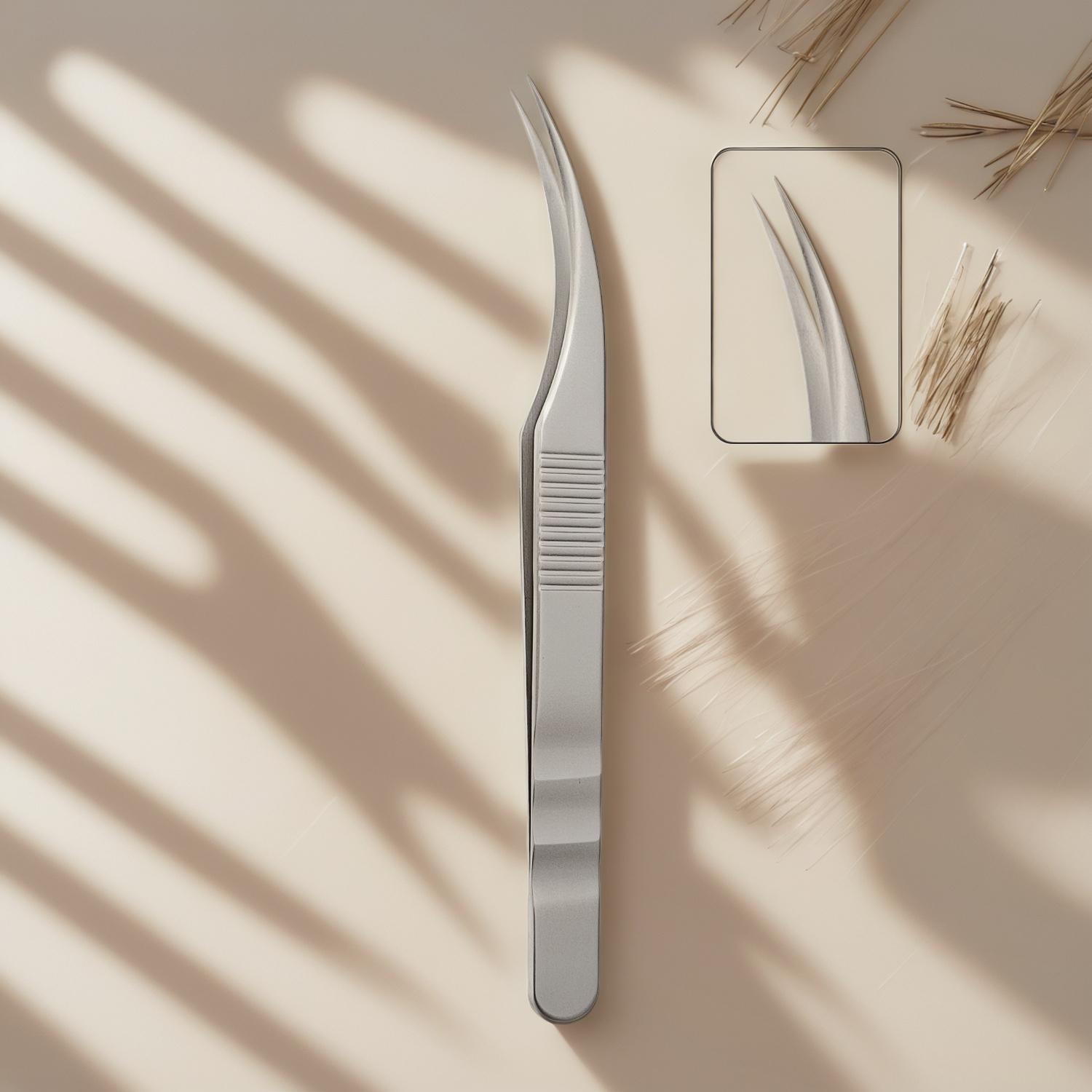
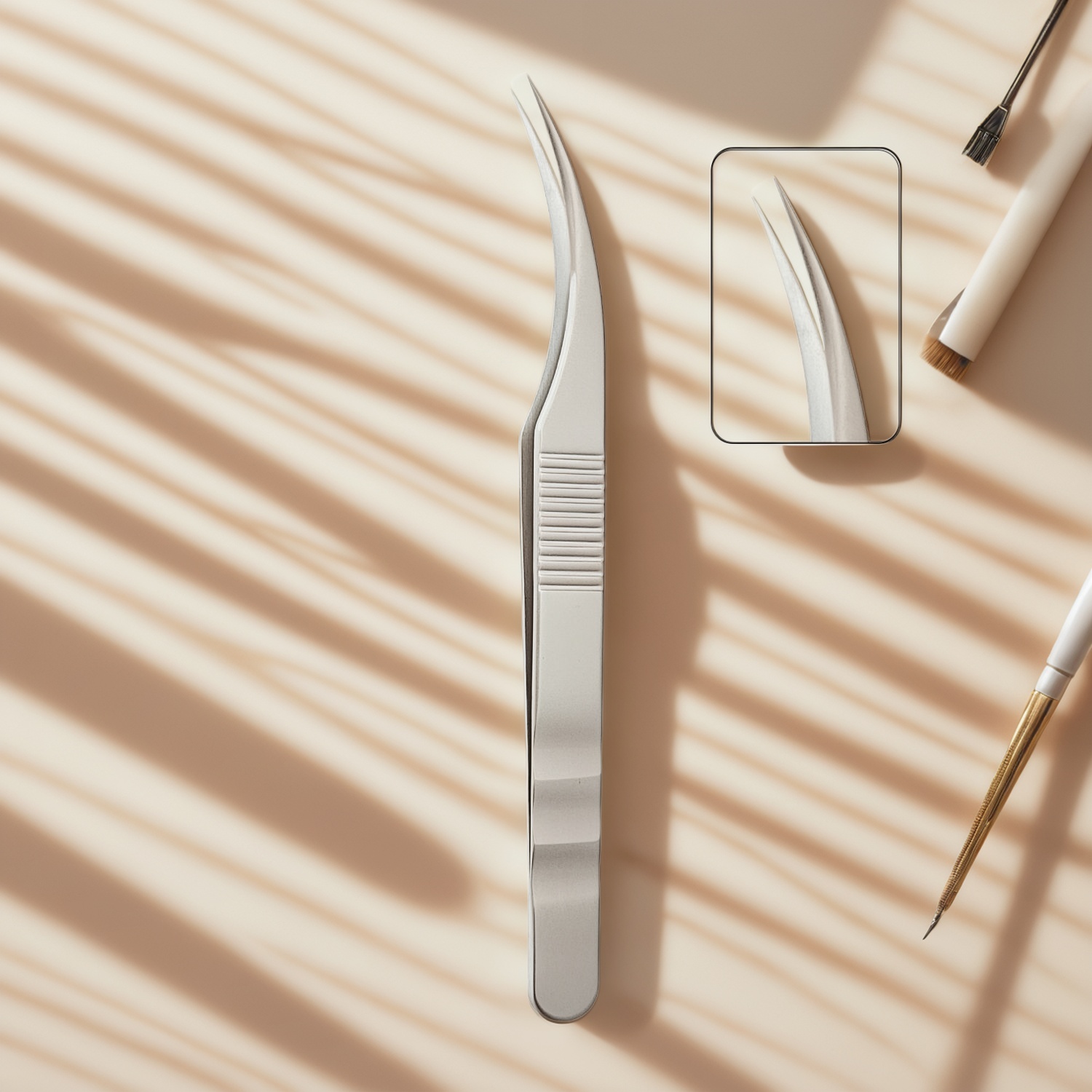
- Tip style: Slanted tips are widely used for eyebrow grooming; pointed or precision tips suit detail work; curved precision tips may be suitable for specialized handling tasks.
- Grip and control: Grooved grips can help users maintain control, especially when hands are damp or when the tool is used repeatedly in a professional setting.
- Material direction: Stainless steel is a common choice for beauty tools because it supports a clean, professional product appearance and can be maintained properly when handled with care.
- Finish and appearance: A polished, matte, or coated look changes how the product is perceived, but the finish should not interfere with safe handling or tip precision.
- Packaging role: Packaging may need to support retail display, salon resale, shipping protection, or inclusion in a larger kit.
- Branding method: Consider where the logo appears, how visible it should be, and whether the design remains readable on a small metal surface.
These decisions should be made together. A premium-looking package cannot compensate for a tweezer that does not grip well. Likewise, a well-made tool may underperform commercially if the packaging does not explain its use or match the customer’s expectations.
Comparing Standard, Private Label, and Fully Custom Tweezers
Not every buyer needs the same level of customization. A distributor testing a new category may start with a simpler branded option, while an established beauty brand may need a more detailed design process. The table below can help clarify which route may fit your sourcing plan.
| Option | Best for | Main advantage | Buyer consideration |
|---|---|---|---|
| Standard tweezers | Fast category testing or basic wholesale supply | Simple purchasing process | Limited brand distinction and fewer design choices |
| Private label tweezers | Resellers, salon suppliers, and retail kits | Branding with a more efficient development path | Artwork, packaging, and product consistency still need careful review |
| Fully custom tweezers | Established brands or differentiated product ranges | More control over shape, grip, finish, and packaging concept | Requires clearer specifications and more detailed sampling approval |
The right choice depends on your sales channel, timeline, and brand strategy. If your customers mainly compare price, a standard or private label option may be enough. If you want to build a recognizable beauty tool range, more customization can make the product easier to defend in a crowded market.
Sourcing Tweezers from China: What Business Buyers Should Evaluate
Many buyers consider tweezers export from China because of established manufacturing experience and the ability to support custom beauty tool production. However, a strong sourcing result does not come from choosing a country alone. It comes from choosing a manufacturing partner with a clear process, realistic communication, and attention to detail from material inspection to final packaging.
When comparing domestic sourcing with international manufacturing, price is only one factor. Domestic sourcing may feel simpler for communication or logistics, but it may also limit manufacturing options or raise cost. International production can offer broader tooling and customization possibilities, but buyers should be disciplined about samples, specifications, packaging standards, and shipment documentation.
A practical buyer checklist should include:
- Confirm the intended tweezer type, including tip shape and target use.
- Review physical samples before approving bulk production.
- Check tip alignment, edge smoothness, tension, and hand feel.
- Approve logo size, placement, and packaging artwork before production.
- Define acceptable packaging condition for retail or resale channels.
- Plan carton labeling and export documents according to your market needs.
- Keep a reference sample for future batch comparison.
This type of checklist keeps the discussion focused on measurable product outcomes. It also helps avoid vague approval language such as “good quality,” which can mean different things to different teams.
Quality Details That Affect Customer Satisfaction
With tweezers, small differences matter. A customer may not know the technical reason a tool feels good, but they will notice whether it grips hair cleanly, whether the tips meet evenly, and whether the edges feel comfortable. For B2B buyers, these details affect reviews, repeat purchases, and retailer confidence.
Important quality points include tip symmetry, closing tension, surface cleanliness, burr control, and packaging protection. If tweezers rub against other items during transport, the finish may be affected before the product reaches the customer. If packaging is too weak, a well-made tool may still arrive looking poorly presented. A quality plan should therefore include both the metal tool and the final packed product.
Olimor Beauty’s approach to beauty tool sourcing emphasizes inspection from raw material review through final packaging. For buyers, this matters because a tweezer is not judged only at the factory bench. It is judged when a reseller opens the carton, when a retailer places it on display, and when the final customer uses it for the first time.
Branding and Packaging Choices for Resellers
For tweezers for resellers, packaging often carries much of the sales message. The product itself is compact, so the packaging must communicate the use case quickly. A brow tweezer, precision tweezer, or grooming tweezer should not be confusing to the buyer. Clear labeling can reduce returns and help customers choose the correct tool.
Useful packaging content may include the tweezer type, basic care instructions, safe storage guidance, and brand contact information. Avoid overcrowding the design. Beauty tools often sell best when the packaging looks clean and the product benefit is easy to understand. If the tweezers are part of a kit, keep the visual language consistent across the full range.
Logo placement on the tweezer should also be practical. A very large mark may look unbalanced on a small tool, while an overly subtle mark may not support brand recognition. The best choice depends on your sales environment: online product images, salon resale counters, subscription boxes, and retail shelves all present the product differently.
How to Prepare a Clear Inquiry for Custom B2B Tweezers
A well-prepared inquiry helps move a custom project forward efficiently. Instead of starting with only a target price, provide a short product brief. This allows the manufacturing team to understand the customer, channel, and performance expectations behind the order.
Your brief can include the target market, tweezer style, preferred finish, logo requirements, packaging format, estimated order timing, and any reference sample you want to match or improve. If you are still comparing options, it is also useful to explain whether you are building a premium salon tool, an affordable resale item, or a kit component.
You can review Olimor Beauty’s broader beauty tool products to understand available product directions, or browse product collections when planning a coordinated range. For project discussion, use send an inquiry with your brief, artwork needs, and target channel. If you need help clarifying a sourcing plan, you can also contact Olimor.
Building a Stronger Tweezer Line Over Time
The first custom tweezer order should not be treated as the end of product development. After launch, collect feedback from sales teams, salons, distributors, and end users. Look for repeated comments about grip, tip style, packaging, or perceived value. This feedback can guide future versions, related tools, or multi-piece grooming sets.
A focused tweezer line can start with one reliable product and expand into variations for different uses. The key is to keep each addition purposeful. Add a new tip style because your customers need it, not simply to increase the number of SKUs. Adjust packaging because it improves clarity or channel fit, not just because trends change.
For business buyers, custom tweezers are a practical way to connect product performance with brand identity. By defining the use case, choosing suitable design details, reviewing samples carefully, and planning packaging around the sales channel, your company can offer a beauty tool that feels intentional from first impression to daily use.
Tag: