

Custom Tweezers for Business: A Practical Sourcing Guide for Beauty Brands and Resellers
Choosing custom tweezers for business is not only a packaging or logo decision. For beauty brands, salons, distributors and retailers, tweezers sit close to the customer experience: they must feel stable in the hand, meet the task they are sold for and hold up to repeated professional use. A tweezer that looks attractive but fails at tip alignment or comfort can quickly create returns, complaints and lost trust.
For that reason, sourcing should begin with function. Are the tweezers intended for lash application, brow shaping, general grooming, precision work or a mixed retail display? Once the intended use is clear, it becomes easier to compare tip shape, length, finish, packaging options and supplier reliability. This guide explains how to evaluate B2B tweezers, how resellers can build a more useful product mix and what to consider when sourcing tweezers export from China.
Start With the Business Use Case, Not the Decoration
Custom tweezers can support many business models, but each model has different priorities. A salon may need a dependable tool for daily service work. A lash brand may need tweezers that match specific application techniques. A reseller may need a balanced range that helps customers choose quickly. A private-label beauty line may care about both reliable performance and consistent presentation across a collection.
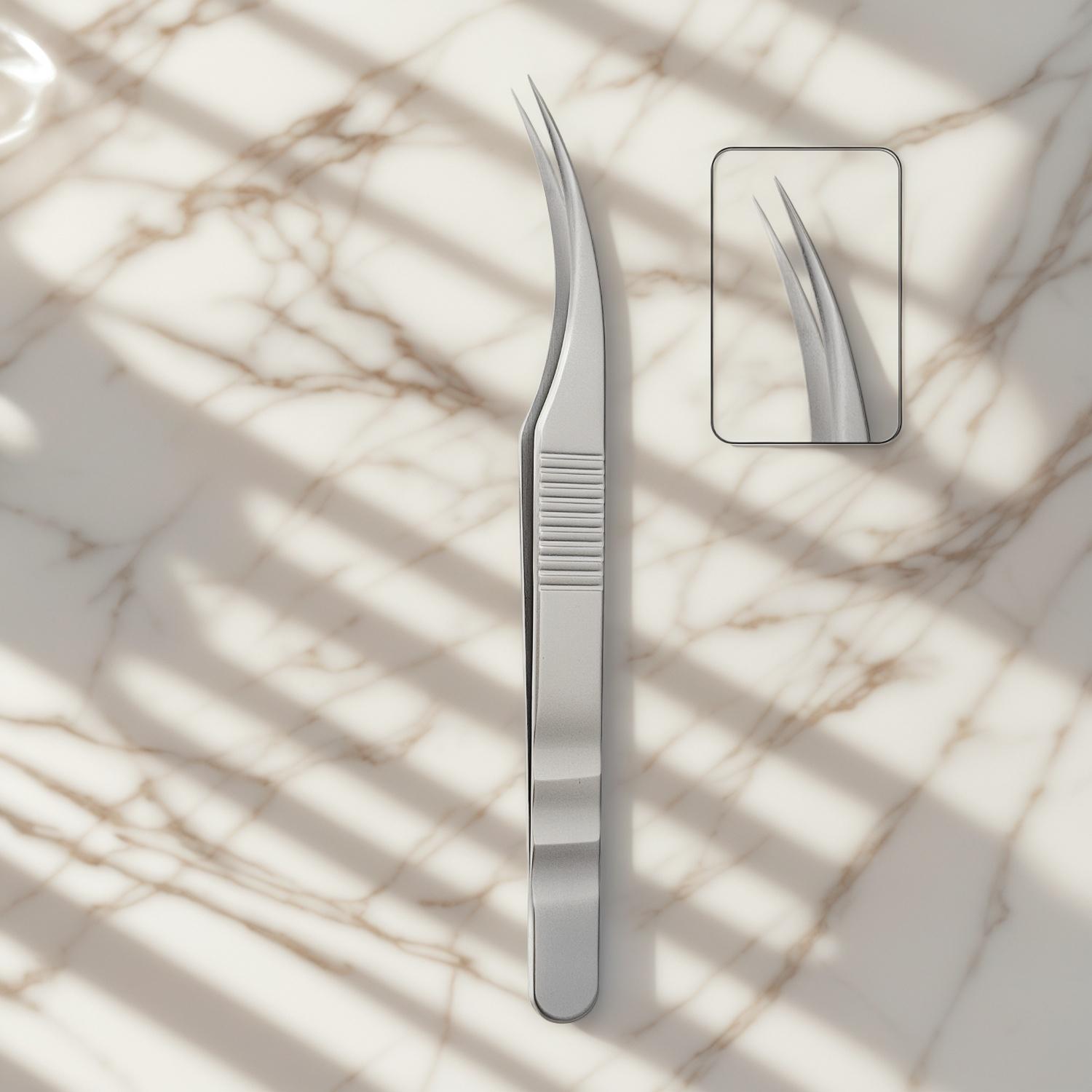
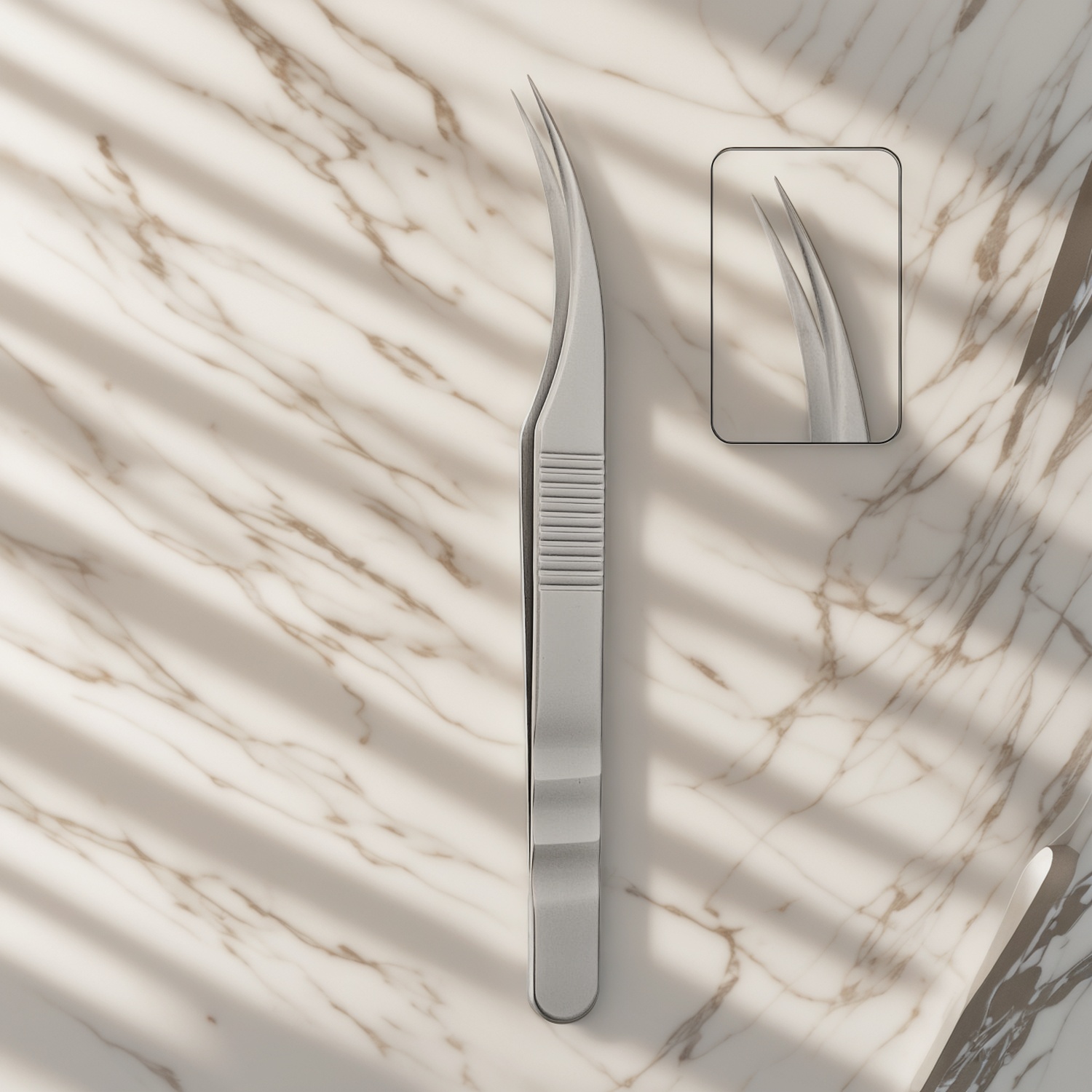
Before discussing customization, define the commercial role of the product. This prevents over-ordering a style that looks good in photographs but does not match the end user’s need. For example, curved precision tweezers and specialized lash application tools may appeal to lash professionals, while straight or pointed tip designs may suit customers looking for detailed grooming or general precision work.
- Professional salon use: prioritize grip comfort, alignment, repeatability and easy handling during long service periods.
- Lash application: compare curved and precision styles based on control, visibility and technique preference.
- Retail resale: build a small but clear assortment so customers can understand the purpose of each tweezer.
- Brand merchandising: consider how the tool, packaging and product description communicate quality without overstating specifications.
Key Selection Criteria for Custom Tweezers
A useful sourcing conversation should move beyond color and logo placement. The most important questions are about the tweezer body, tip design and consistency from batch to batch. Olimor Beauty focuses on beauty tools including tweezers made with stainless steel and ergonomic designs, which are practical starting points for a product intended for professional or resale channels.
Length is one comparison point. The supplied range of 126mm to 136mm gives buyers room to choose between compact control and slightly longer handling. Tip design is another important factor. Curved, straight and pointed tips serve different user expectations, so a single universal tweezer may not satisfy every segment.
| Selection factor | Why it matters | Buyer notes |
|---|---|---|
| Tip shape | Determines the type of precision work the tool supports. | Compare curved, straight and pointed options against your target customer’s task. |
| Length | Affects balance, reach and comfort in the hand. | Consider options within the 126mm to 136mm range based on use case. |
| Material | Influences durability, feel and perceived value. | Stainless steel is a common choice for quality-focused beauty tweezers. |
| Ergonomics | Supports better control during repetitive or detailed work. | Assess hand feel, pressure and stability, not appearance alone. |
| Packaging | Protects tips and communicates the product position. | Match packaging to professional, retail or private-label sales channels. |
Direct B2B Sourcing Versus General Marketplace Buying
Businesses often compare direct B2B sourcing with purchasing from a general marketplace. Both approaches can work, but they solve different problems. Marketplace buying may be useful for small sampling, quick comparisons or very low-volume testing. Direct sourcing is usually better when a company needs consistent presentation, repeated supply and closer alignment between product function and brand expectations.
When you source B2B tweezers directly from a specialized beauty-tool supplier, you can discuss the product as a technical tool rather than a generic accessory. This is especially important for custom tweezers for business, because the final product must meet a commercial standard: it needs to be sellable, usable and consistent enough to represent your brand.
A direct supplier relationship can also make communication clearer across the full process, from raw material inspection to final packaging. That does not remove the need for buyer-side review, but it gives your team a more structured way to confirm expectations before committing to a product line. To explore available categories before narrowing a sourcing brief, review Olimor’s beauty tool products or browse related product collections.
Building a Strong Tweezer Range for Resellers
For resellers, the biggest risk is often not a lack of products but a confusing assortment. Too many similar-looking tweezers can make purchasing harder for the customer. A stronger range explains the role of each tool clearly: one for curved precision work, one for straight alignment tasks, one pointed tweezer for detailed use and possibly a lash-focused option for beauty professionals.
When selecting tweezers for resellers, think in terms of customer decision-making. Retail customers and salon buyers usually want to know what the tip is for, how the tool feels and whether it fits their work. Product pages and packaging should avoid vague claims and instead describe practical differences. If the product is stainless steel, say so. If the tool has an ergonomic design, connect that to handling and control.
- Define the end user: lash artist, brow technician, salon buyer, retail consumer or distributor.
- Choose a focused tip mix: include curved, straight and pointed styles only when each has a clear role.
- Review handling: compare pressure, balance and comfort across the selected lengths.
- Plan packaging tiers: professional supply, retail display and private-label presentation may need different approaches.
- Prepare product education: give resellers short usage notes so staff and customers can choose correctly.
What to Check When Considering Tweezers Export from China
Tweezers export from China is a common sourcing path for companies that need manufacturing scale and competitive supply options. The opportunity is real, but it should be managed with a clear checklist. The goal is not simply to find the lowest unit cost; it is to secure a product that can be sold confidently under your business name.
Quality assurance is the central issue. For tweezers, small details matter: tip alignment, surface finish, grip tension, protective packaging and consistency between samples and production. Buyers should request clear confirmation of product details and review samples in the same way the final customer will use them. If the tweezers are for lash application, test them during lash-related work. If they are for retail grooming, evaluate whether a non-specialist customer can understand the product’s purpose.
Documentation should be organized before ordering. Keep approved samples, packaging references, artwork files and product descriptions aligned. If your company works with multiple internal teams, make sure purchasing, marketing and quality review are checking the same version of the product. This reduces mistakes when moving from sample approval to repeat orders.
Customization Decisions That Affect Brand Perception
Customization should support the tool’s credibility. A logo, color or package design cannot compensate for an unsuitable tweezer, but it can help a strong product look coherent within a beauty brand. For custom tweezers for business, the most useful customization decisions are usually the ones that make the product easier to identify, sell and protect.
Consider whether the branding is meant for a premium salon tool, an accessible retail item or a distributor catalog. A minimalist package may suit professional buyers who care about function. A more descriptive retail package may help consumers choose between tip shapes. Protective sleeves or packaging details can also matter because tweezer tips need to arrive in good condition.
When preparing artwork or packaging text, avoid making claims that are not supported by confirmed specifications. Instead, focus on clear and useful language: tip type, intended application, material if confirmed, care notes and safe storage guidance. This creates a better customer experience and lowers the risk of misunderstanding.
Care, Handling and After-Sales Notes for Beauty Businesses
Even well-sourced tweezers need correct handling. Businesses that sell or use tweezers should provide simple care information so the tool performs as intended for longer. This is especially important for salons and resellers, because customers often judge quality based on the first few uses and the condition of the tip over time.
- Keep tweezer tips protected during storage and transport to reduce the chance of misalignment.
- Clean tools according to the hygiene practices required for the service environment.
- Avoid dropping tweezers on hard surfaces, as impact can affect the tips.
- Store different tip shapes separately or label them clearly for professional stations.
- Train staff to match the tweezer style to the task rather than using one tool for every service.
For retail businesses, care instructions can be included on packaging inserts or product pages. For professional buyers, short training notes can help teams maintain consistency across service locations. These small details make the product easier to use and can reduce avoidable complaints.
How to Prepare a Clear Sourcing Inquiry
A good sourcing inquiry saves time for both the buyer and supplier. Instead of asking only for a catalog, prepare a brief that explains your customer, expected use case, preferred tip types, length range, packaging direction and branding needs. If you are comparing B2B tweezers for resale, include whether the products will be sold individually, in sets or as part of a larger beauty-tool assortment.
Olimor Beauty can be approached as a beauty-tool sourcing partner for companies evaluating custom tweezers, reseller assortments and export supply. When you are ready to discuss a project, you can send an inquiry with your basic product requirements or contact Olimor for business communication. The more precise your brief is, the easier it is to compare options and move toward a product that fits your brand, customers and channel strategy.
Custom tweezers are small tools, but they carry a large amount of brand responsibility. By focusing on use case, tip design, handling, packaging and quality review, beauty businesses can source tweezers that are practical for professionals, understandable for resellers and credible for long-term brand development.
Tag: