


Custom Tweezers for Business: A Practical B2B Buying Guide
For salons, beauty retailers, private label brands and distributors, tweezers are small tools with a large impact on customer trust. A tweezer that grips cleanly, feels stable in the hand and maintains its alignment after repeated use can support repeat purchases and fewer complaints. A poorly made tweezer, by contrast, can damage the perceived quality of an entire beauty tool range.
When sourcing custom tweezers for business, the goal is not simply to find the lowest unit price. B2B buyers need a product that performs consistently across a batch, matches the use case of the end customer and can be presented in a way that suits retail, salon or distributor channels. Olimor Beauty focuses on high-quality stainless steel tweezers with ergonomic designs, making this category especially relevant for buyers who want dependable grooming tools for professional and consumer use.
Who Buys Custom Tweezers in the B2B Market?
Custom tweezers serve several business models, and each one evaluates the product differently. A salon may care most about comfort, grip and tip precision because technicians use the tool repeatedly throughout the day. A beauty retailer may focus on shelf appeal, perceived value and customer reviews. A distributor needs stable supply, consistent quality and packaging that can move through different sales channels without confusion.
Before comparing suppliers, define the customer journey for the tweezer. Will it be sold as a standalone grooming tool, included in a brow kit, used by professionals in a salon, or bundled with other beauty tool products? The answer affects the tip shape, finish, packaging level and inspection priorities.
Common B2B use cases include:
- Salon and brow studios: tools used frequently by trained staff, where comfort and accuracy matter.
- Retail beauty brands: products sold to consumers who judge both appearance and function.
- Distributors and wholesalers: larger-volume buyers who need repeatable specifications and reliable replenishment.
- Gift sets and grooming kits: tweezers paired with other beauty accessories where design consistency matters.
- Private label product lines: customized tools that must reflect the brand’s quality positioning.
Tip Design Is the Core Performance Decision
The tip is the most important part of any tweezer. Even when two products look similar, differences in tip alignment, edge finishing and tension can change the user experience. For custom tweezers, businesses should choose a tip design based on the task their customers perform most often.
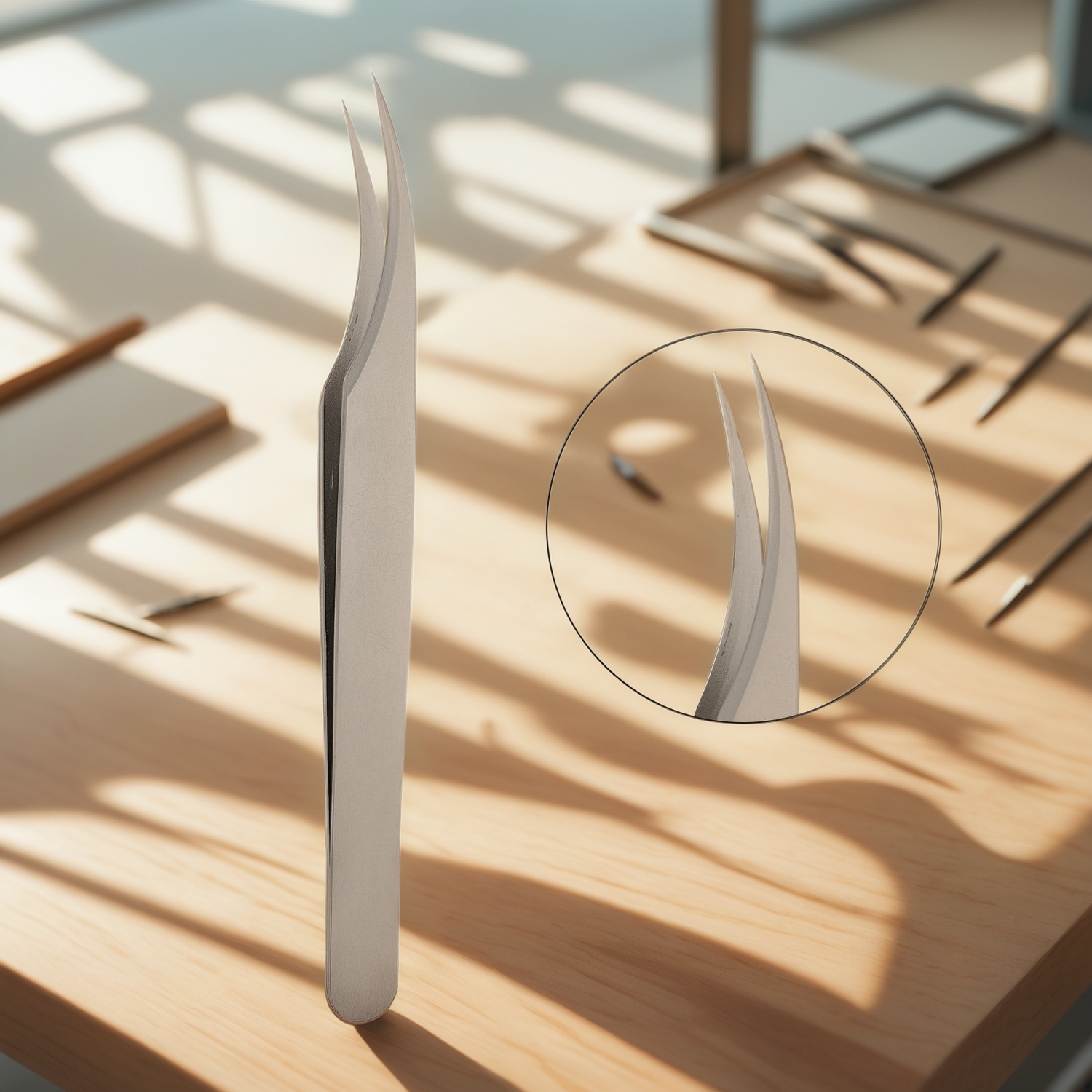
Slanted tips are a popular choice for eyebrow shaping and general grooming because they provide a broad contact area while still allowing controlled hair removal. The original product direction highlights precisely engineered slanted tips for grip, making them a strong option for consumer and salon-facing assortments. Curved tips, also noted in Olimor Beauty’s tweezer capabilities, can help with maneuverability in specific grooming tasks where access and viewing angle matter.
When reviewing samples, look beyond visual appearance. Open and close the tweezer several times. Check whether the tips meet evenly from corner to corner. Test the grip on fine hair or a comparable fiber. A tweezer that looks polished but fails to hold fine strands will not meet the expectations of serious beauty buyers.
Stainless Steel, Durability and Corrosion Resistance
Material choice affects both performance and customer perception. Stainless steel is valued in beauty tweezers because it supports durability, clean finishing and corrosion resistance when properly produced and maintained. For B2B buyers, this matters because the product may pass through warehousing, shipping, retail handling and repeated consumer use before the full quality impression is formed.
A durable tweezer should resist bending during normal use, maintain stable spring tension and keep the tips aligned. Corrosion resistance is also important for tools used around bathrooms, salons and humid storage conditions. While a buyer should not assume every stainless steel tweezer performs identically, stainless steel is a sensible starting point for professional-looking grooming tools.
Maintenance guidance can also reduce after-sale issues. If your brand sells tweezers directly to consumers, include simple care instructions: wipe the tips after use, keep the tool dry before storage and use a protective cap or case where appropriate. These small instructions help customers preserve grip and alignment.
How to Compare Bulk Tweezers Price and Real Value
Bulk tweezers price is important, but it should be read together with quality, inspection standards, finishing consistency and packaging needs. The cheapest option may be attractive on a spreadsheet, yet inconsistent tip alignment or weak finishing can increase returns, negative reviews and brand damage. A better comparison is total value per sellable unit.
Use the table below to compare offers from a practical purchasing perspective:
| Buying Factor | What to Check | Why It Matters |
|---|---|---|
| Tip alignment | Tips meet evenly and grip fine hair or fibers | Directly affects user satisfaction |
| Material and finish | Stainless steel quality, smooth edges, clean surface | Supports durability and perceived value |
| Hand feel | Comfortable tension and ergonomic handling | Reduces strain during repeated use |
| Batch consistency | Samples match production expectations | Important for retail reviews and distributor confidence |
| Packaging readiness | Retail, kit or bulk packaging requirements are clear | Prevents channel-specific delays |
| Quality control | Inspection points before shipment are defined | Reduces defective or unsellable units |
When reviewing a quotation, separate essential performance requirements from optional presentation upgrades. For example, a beauty brand may prioritize a refined finish and retail packaging, while a salon supplier may prioritize comfort and long-term tool performance. Both are valid, but they should not be priced as if they serve the same sales purpose.
Customization Choices That Actually Matter
Customization should support product positioning, not distract from performance. For tweezers, the most valuable customization decisions usually relate to tip type, finish, ergonomic feel, color direction, branding approach and packaging format. A high-visibility retail brand may need stronger shelf presentation, while a distributor may require clear labeling and practical cartons for efficient handling.
Useful customization questions include:
- What is the primary use? Eyebrow shaping, general grooming, kit inclusion or professional salon use?
- Which tip shape fits the customer? Slanted for versatile grooming, curved for more specialized maneuverability, or another design if available.
- How premium should the finish appear? The visual finish should match the target price point and sales channel.
- How will the product be packaged? Retail display, pouch, protective sleeve, kit insert or distributor bulk format.
- What brand elements are needed? Logo placement, packaging artwork and instruction copy should be planned early.
Buyers building a broader range can also review Olimor Beauty’s product collections to think about how tweezers may coordinate with other tools in a beauty assortment.
Quality Control Priorities for Tweezers for Distributors
Distributors have a specific challenge: they often supply many downstream customers, so inconsistency becomes costly. Tweezers for distributors should be evaluated for repeatable quality from raw material handling through finishing, assembly, inspection and final packaging. Even if the product is simple, small variations in alignment can create large differences in user experience.
A practical inspection plan for B2B tweezers should include visual surface checks, tip alignment checks, grip performance checks and packaging checks. Visual checks identify scratches, uneven finishing or rough edges. Alignment checks confirm that the tips close correctly. Grip tests confirm the tweezer can catch fine material. Packaging checks ensure the product arrives ready for the intended sales channel.
It is also helpful to establish approved samples before bulk production. These samples create a shared reference for shape, finish, tension and packaging. For distributors, this reference is especially useful when reordering, because it reduces ambiguity and helps maintain continuity across shipments.
Questions to Resolve Before Placing a B2B Tweezer Order
A strong sourcing process prevents misunderstandings. Before confirming an order, prepare a concise specification sheet that describes the desired tweezer type, material direction, finish, tip shape, packaging, branding files and inspection expectations. This does not need to be complicated, but it should be specific enough for both sides to evaluate the same product.
Consider documenting the following:
- Target sales channel: salon, retail, distributor, kit or online store.
- Preferred tip design and the grooming task it should support.
- Expected hand feel, including comfortable tension and ergonomic handling.
- Packaging format and whether consumer instructions are required.
- Branding placement and artwork readiness.
- Sample approval process before larger production.
- Inspection priorities for surface finish, alignment and grip.
If your team is comparing custom tweezer options or planning a private label grooming tool range, you can send an inquiry with your intended use case and customization needs. For broader sourcing questions, you may also contact Olimor to discuss suitable beauty tool directions.
Building a Better Tweezer Program for Your Brand
Custom tweezers for business are successful when product performance, pricing and presentation work together. A reliable stainless steel tweezer with comfortable ergonomics and precise tips can support salon-quality results, but the buying process should still be disciplined. Define the customer, choose the right tip design, compare value beyond the lowest price and set clear inspection expectations.
For beauty brands, retailers, salons and distributors, the best tweezer is not always the most decorative or the cheapest. It is the one that performs consistently in the customer’s hand and reinforces the quality promise of your business. With careful sourcing and clear specifications, B2B tweezers can become a dependable part of a professional beauty tool assortment.
Tag: