

Custom Tweezers for Lash Artists: How to Choose OEM Precision Tools
Custom tweezers are small tools, but for lash extension artists, brow specialists and beauty tool buyers, they affect speed, comfort and consistency every working day. A tweezer that feels balanced in the hand, closes cleanly at the tips and grips delicate lashes without slipping can make detailed work easier to repeat. For brands and salon suppliers, customization also matters because the tool has to match a target user, a retail price position and a visual identity.
Olimor Beauty supplies custom tweezers for professional beauty use, including OEM custom tweezers for buyers who need personalized finishes, handle treatments or branding direction. When comparing options, it is useful to look beyond the color or surface effect and evaluate how the tool will be used: isolation, volume fan creation, lash separation, brow grooming, or general beauty kit use. This guide explains the main selection points so you can make a clearer sourcing decision before moving into samples or production planning.
What Makes Custom Tweezers Different from Standard Tweezers?
Standard tweezers are usually selected from an existing design with a fixed finish, fixed tip shape and fixed handle style. Custom tweezers give buyers more control over the product’s practical and visual details. That may include the tweezer angle, surface finish, color direction, logo placement, handle texture, packaging concept or a combination of these choices. For lash brands, those decisions are not only cosmetic; they influence how the tool feels during a full appointment.
A lash artist may use several tweezers during one service. One tool may be used to isolate natural lashes, while another may be used to pick up or build volume fans. If the closing point is inconsistent, or if the tension is too firm for long sessions, hand fatigue and inaccurate pickup can become problems. Custom development allows a buyer to define the intended application first and then select the design details that support that use.
For beauty brands, custom tweezers also help create a more coherent product range. A tool can be designed to fit alongside other beauty tool products, such as lash accessories or brow tools, without forcing every item to look identical. The best customization choices make the product easier to recognize while still protecting its working performance.
Key Selection Criteria for Lash Extension Tweezers
When sourcing custom tweezers, start with the working requirements rather than the finish. A dramatic coating is less valuable if the tweezer does not align at the tip or if the handle shape becomes uncomfortable after repeated use. Buyers should prepare a simple checklist for internal review and sample testing.
- Tip shape: Straight, curved, angled or double-curved tips suit different lash techniques. The tip should match the intended task, such as isolation, pickup or volume fan creation.
- Tip contact: The closing area should meet cleanly. Uneven contact can cause lashes to slip or can make the artist apply unnecessary pressure.
- Tension: The tweezer should open and close smoothly. Excessive tension may tire the hand; overly loose tension can reduce control.
- Grip area: Textured handles can help reduce slipping, especially during longer sessions or in busy salon conditions.
- Balance: A tool should not feel heavy at the tip or awkward in the fingers. Balance affects precision as much as shape.
- Surface finish: Coatings and plating should be considered for appearance, corrosion resistance and brand positioning.
- Packaging compatibility: The final tweezer design should fit the selected packaging without damaging the tips during shipping or storage.
These points are also useful for comparing samples from different suppliers. Instead of judging only by appearance, test each pair in the same conditions and record how it performs during common lash movements.
OEM Custom Tweezers for Brand and Salon Use
OEM custom tweezers are suitable for beauty brands, distributors and salon groups that want tools aligned with a specific market. A buyer may need a premium-looking tweezer for retail sale, a practical training tool for lash courses, or a coordinated set for professional kits. Each use case may require a different balance between finish, comfort and cost control.
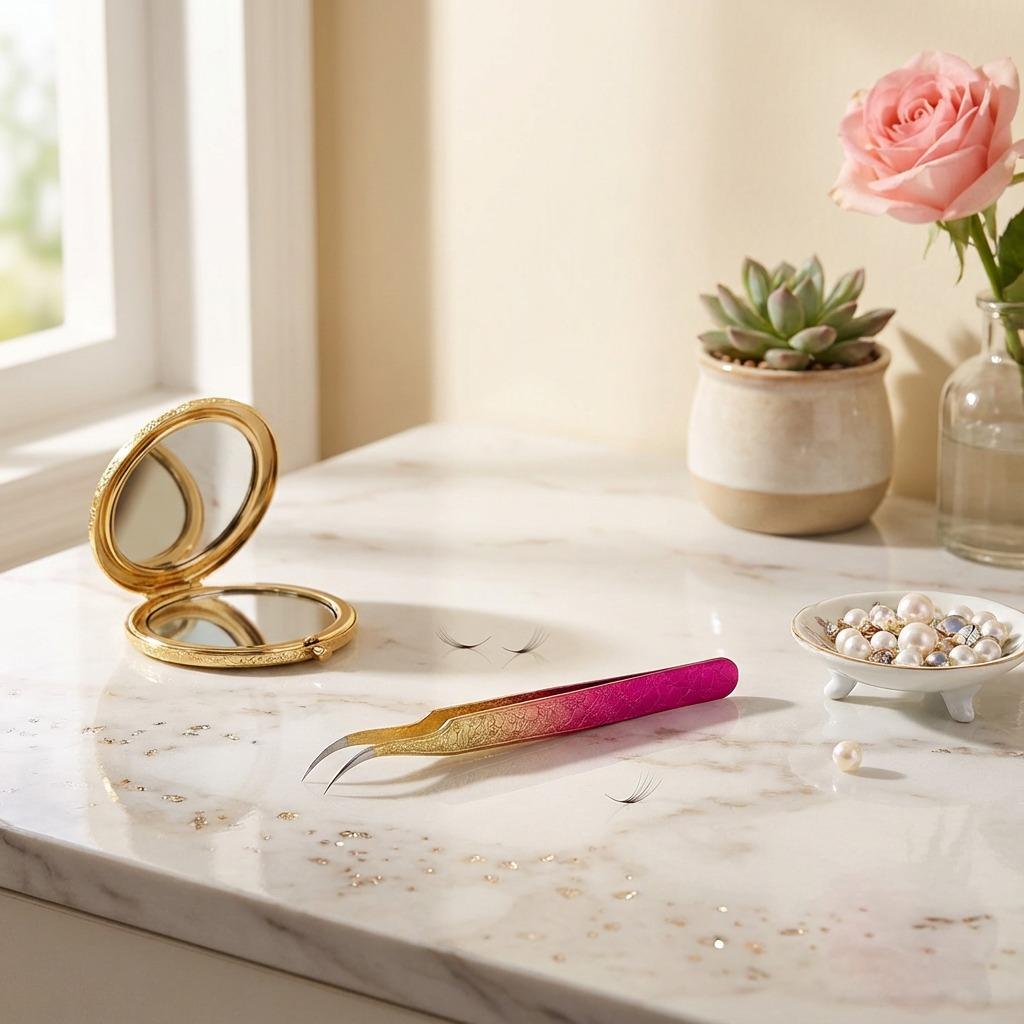
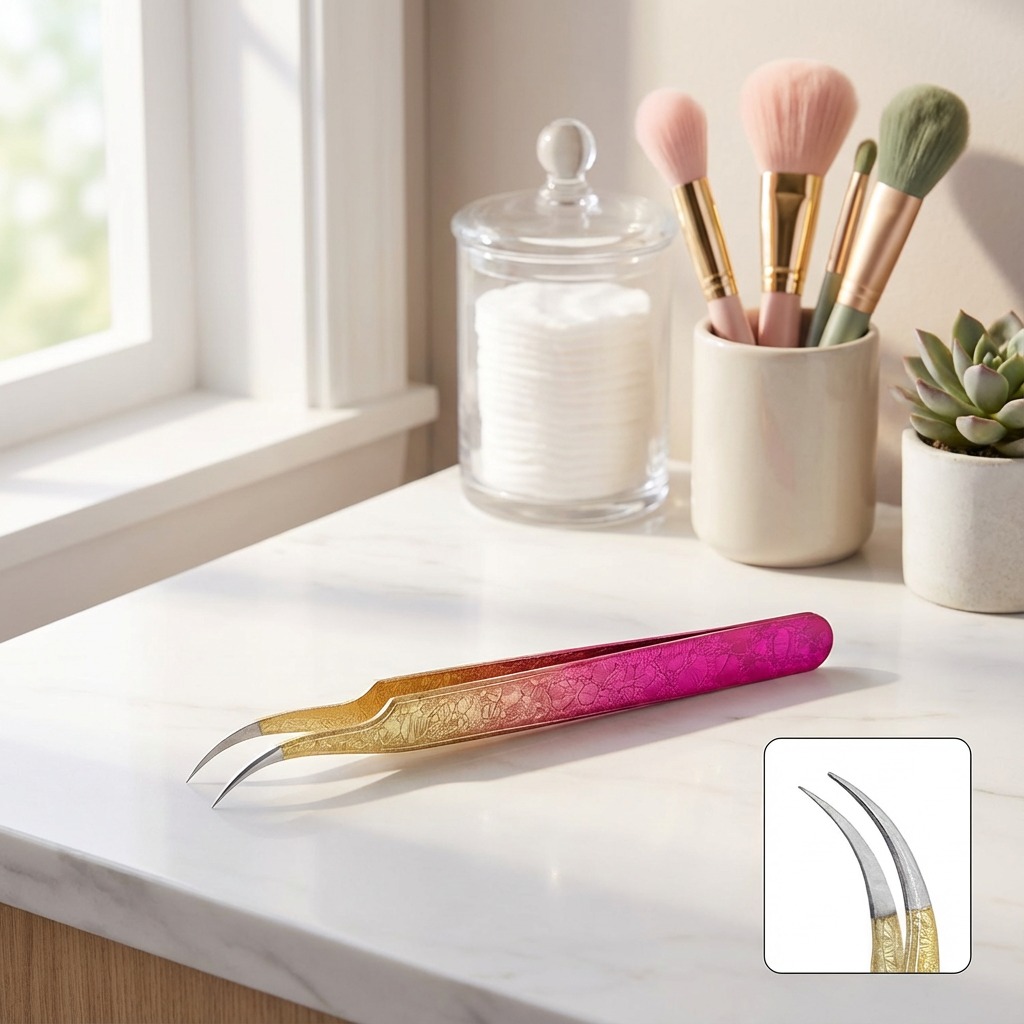
One example referenced by Olimor Beauty is the Rainbow Titanium Plated Eyelash Volume Tweezers. This type of design uses a gold-to-pink gradient appearance and double-curved tips, with a textured handle to support comfort during detailed work. The double-curved tip form is especially relevant for lash extension artists who need control when separating lashes or working with volume fans. The titanium coating also supports a durable surface presentation for frequent beauty use.
Even when a buyer chooses a visually distinctive style, the practical questions remain the same. Does the tip close consistently? Is the pickup point suitable for the intended lash technique? Does the handle feel secure without being harsh? Can the finish fit the target customer’s expectations? These decisions are part of OEM planning and should be clarified before confirming a final design direction.
Buyers exploring custom ranges can review Olimor’s wider product collections to consider how tweezers may sit beside other beauty tools in a retail or professional assortment.
Working with a China Tweezers Exporter
As a China tweezers exporter, Olimor Beauty serves buyers who need beauty tools prepared for international markets. For custom tweezers, export readiness is not only about shipping the product; it also involves stable manufacturing communication, inspection steps and packaging that protects precision tips. The original product information notes that stainless steel custom tweezers are inspected from raw materials to final packaging, which is important because small defects can affect the entire user experience.
When evaluating an exporter, buyers should focus on practical process questions. How are samples reviewed before bulk production? What appearance standard is used for plated or coated surfaces? How are tips protected during packaging? What reference sample will be used to judge future production? These questions help reduce misunderstandings and create a clearer path from concept to finished goods.
It is also useful to define acceptable variation in advance. Handmade finishing and precision alignment work can involve small differences, so the buyer and supplier should agree on what matters most: tip contact, closing tension, coating appearance, logo clarity or packaging condition. A clear approval sample is one of the simplest ways to keep expectations consistent.
Inspection Points Before Approving a Custom Tweezer Sample
Before confirming an OEM tweezer sample, test it as a working tool. A sample may look attractive in photographs, but real use reveals whether it supports the intended technique. If the buyer is not a lash artist, it is worth having a professional technician test the sample during normal application movements.
- Check alignment under good lighting. Close the tweezer slowly and confirm that the tips meet in the intended contact area.
- Test pickup with real lash materials. Use the type of lash strips, fans or fibers your customers are likely to use.
- Evaluate hand comfort. Open and close the tweezer repeatedly to judge tension and fatigue.
- Inspect the finish. Look for uneven coating, rough edges, discoloration or marks that may affect retail presentation.
- Review logo placement. If branding is included, confirm size, readability and position before production.
- Check packaging protection. Ensure the tip area is protected so the tweezer does not arrive bent or scratched.
A short written approval checklist can prevent confusion later. It also helps purchasing, quality and marketing teams agree on the same product standard.
Daily Care and Maintenance for Longer Tool Life
Custom tweezers should be cared for like precision instruments. Stainless steel and coated finishes are chosen for beauty tool use, but daily handling still affects performance. Dropping a tweezer can bend the tips, and storing it loose with other tools can damage the closing point. For lash professionals, small tip changes can make a familiar tool feel unreliable.
After use, clean the tweezer according to the salon’s hygiene procedure and the requirements of the products used during service. Avoid scraping the tip against hard surfaces, and do not use the tweezer to pry open lids or remove dried adhesive from surfaces. Store each tweezer with tip protection when possible, especially during travel or in mobile lash kits.
For retail brands, care instructions are worth including in packaging or product inserts. Simple guidance helps end users protect the tool and reduces complaints caused by accidental misuse. A care card can explain cleaning, drying, storage and avoiding impact without making unrealistic claims.
How to Plan a Custom Tweezer Project
A successful custom tweezer project starts with a specific user. A beginner lash student, an advanced volume artist and a beauty retail shopper may all prefer different features. Once the user is defined, the buyer can decide the key design direction: functional professional tool, colorful retail item, coordinated salon kit, or premium branded accessory.
Next, prepare the product brief. Include the intended use, preferred tip shape, finish direction, logo needs, packaging idea and any sample references. Keep the brief focused on decisions that affect the product. If exact technical details are not yet known, describe the working result you need, such as smooth closing tension, secure grip or a finish suitable for a colorful lash brand.
Olimor Beauty can support custom tweezer discussions for beauty tool buyers considering OEM development. To begin a project or compare sourcing options, you can send an inquiry with your design direction, or contact Olimor for guidance on the next steps. The more clearly you define the tool’s use, the easier it is to develop a tweezer that looks appropriate, feels controlled and meets the expectations of professional beauty users.
Tag: