

Custom Tweezers: How to Choose Precision Tools for Beauty and Detail Work
Custom tweezers are small tools, but they influence product quality, user comfort and brand perception more than many buyers expect. For a beauty brand, salon supplier or grooming kit buyer, a tweezer is not only a metal accessory. It is a tool that must align accurately, grip cleanly, feel balanced in the hand and maintain its finish through repeated use. When custom tweezers are selected carefully, they can support eyebrow shaping, lash handling, nail art, jewelry placement, crafting and other detail-focused tasks.
Olimor Beauty works with beauty tool buyers who need practical, attractive and usable tweezers for retail sets, professional kits and OEM projects. The goal is not simply to add a logo to a generic tool. A useful custom tweezer project starts with the task, the user and the handling experience, then moves into tip shape, surface texture, color, packaging and inspection requirements.
What Makes Custom Tweezers Different from Standard Tweezers?
Standard tweezers are usually selected from an existing shape, finish and package. They can be suitable for general retail, but they may not fully match a brand’s audience or usage scenario. Custom tweezers allow the buyer to define a more specific experience: a sharper visual identity, a better grip texture, a certain finish style, or a package that fits a beauty collection.
Customization can also help separate tools by application. A brow tweezer may need firm closure and comfortable finger pressure. A lash or detail tweezer may need finer tips and more delicate control. A jewelry or craft tweezer may require a shape that helps place tiny parts without blocking the user’s view. In OEM custom tweezers, these details matter because the buyer is often planning repeat sales, bundled kits or a recognizable private-label product line.
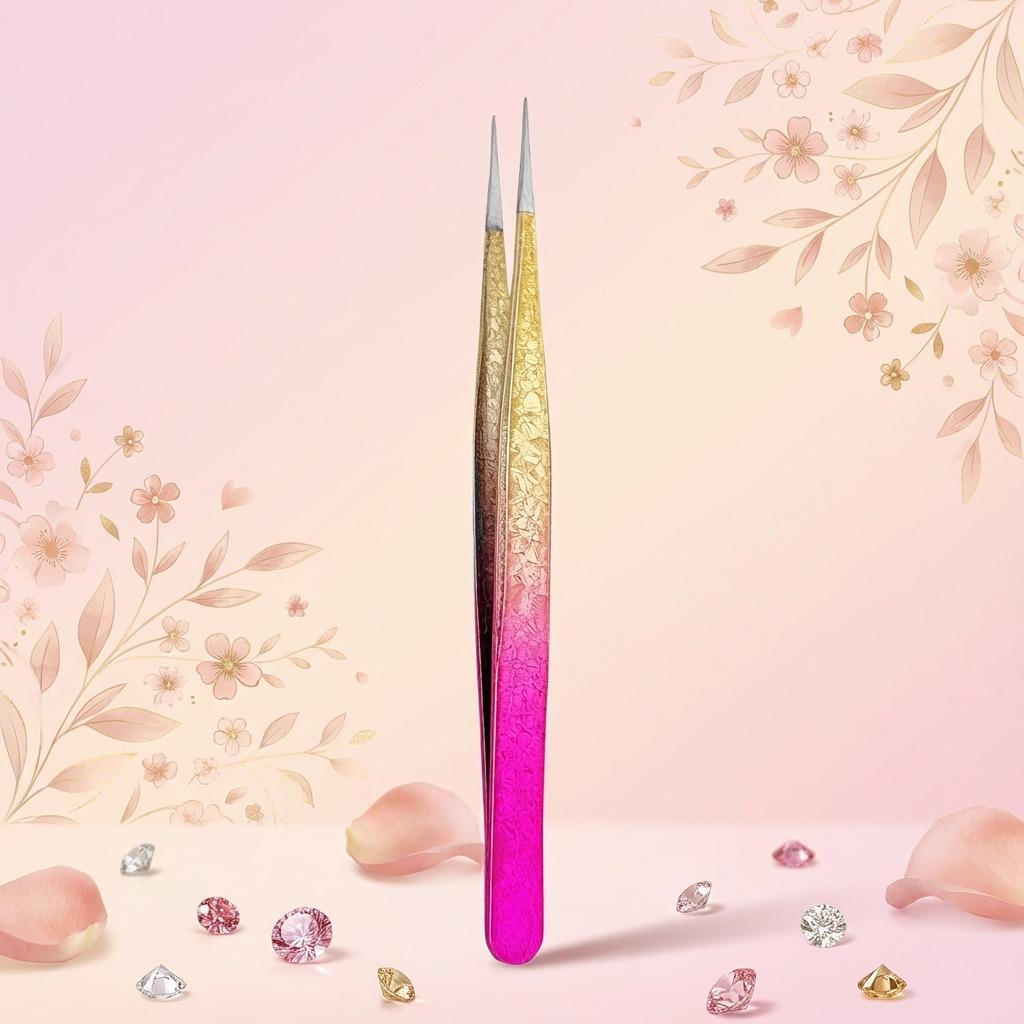
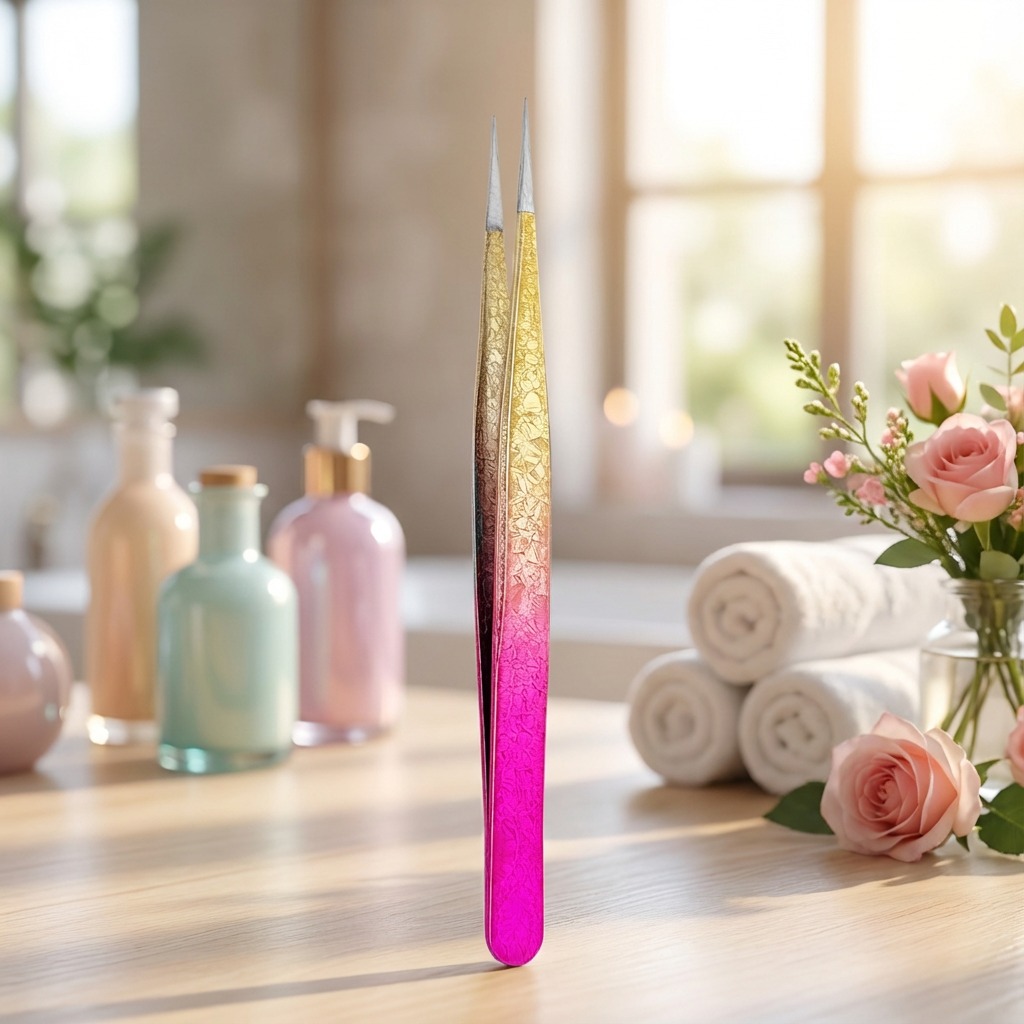
The Gradient Precision Tweezers referenced by Olimor Beauty show how appearance and handling can work together. The supplied design uses stainless steel construction, ultra-fine needle-like tips, textured grip areas and gradient-fused colors in gold, pink and brown hues. These explicit design features are useful for buyers who want a tool that looks distinctive while still focusing on control and daily usability.
Key Selection Criteria for OEM Custom Tweezers
Before choosing colors or packaging, define how the tweezer will be used. This step helps avoid a common sourcing problem: selecting a tool that looks good in product photos but does not match the end user’s task. A salon buyer, for example, may prioritize finger comfort during repeated use, while a retail beauty kit buyer may also consider shelf presentation and giftability.
- Tip style: Fine, needle-like tips are useful for precise picking, placement and detailed grooming. Wider or angled tips may be preferred for general brow work, depending on the intended use.
- Tip alignment: The two tips should meet consistently. Poor alignment causes slipping, hair breakage or difficulty handling small items.
- Closing tension: Tweezers should close firmly without requiring excessive pressure. Too much tension can fatigue the fingers; too little can reduce control.
- Grip texture: Textured areas can help users maintain control, especially when working under lights, with skincare products nearby, or during longer sessions.
- Material choice: Stainless steel is a common choice for durable beauty tools and is explicitly used in the Olimor Beauty tweezer design described on this page.
- Finish and color: Gradient finishes or color treatments can support brand identity, but the finish should suit the expected handling, packaging and care routine.
- Packaging compatibility: Consider whether the tweezer will be sold alone, included in a brow set, placed in a travel kit or paired with other beauty tool products.
Matching Tweezer Types to Real Use Cases
Custom tweezers should be designed around the user’s hand and the work area. In beauty applications, the tool may be used close to the eye area or around shaped brows, so control and visibility are essential. In jewelry and crafting, the user may need to pick up small stones, decals or decorative parts. In electronics or repair-related detail work, ultra-fine tips can help users reach narrow spaces, although each buyer should confirm the exact application requirements before placing an OEM order.
For eyebrow grooming, users often value a tool that grips hair cleanly without repeated attempts. Tip contact, edge consistency and tension are more important than a dramatic surface finish. For lash and nail art work, a fine profile can improve placement accuracy. For gift sets and retail beauty kits, appearance becomes more important because the tweezer may be seen as part of a complete brand experience.
Olimor Beauty’s gradient design in gold, pink and brown hues may fit buyers looking for a refined color direction without relying on loud graphics. The textured surface also serves a practical purpose by helping the fingers locate a stable hold. This combination can be particularly useful for private-label buyers who want a tool that feels different from basic plain-metal tweezers but still remains suitable for everyday beauty tasks.
Custom Design Decisions That Affect the Final Product
OEM custom tweezers involve more than choosing a logo position. Each design decision can change how the tool feels, how it photographs, how it fits in packaging and how customers judge quality. A useful development brief should separate functional requirements from visual requirements.
| Decision Area | Why It Matters | Buyer Checklist |
|---|---|---|
| Tip shape | Controls precision, visibility and picking ability | Define whether the tweezer is for brows, lashes, nail art, jewelry or multi-use kits |
| Grip texture | Improves handling and reduces slipping | Check whether the texture feels comfortable during repeated opening and closing |
| Finish color | Supports brand style and retail appeal | Review color consistency, surface feel and compatibility with other tools in the set |
| Logo placement | Affects branding without interfering with grip | Choose a visible area that will not make the tool uncomfortable to hold |
| Packaging | Protects tips and shapes the customer’s first impression | Confirm whether a sleeve, card, pouch or kit insert is most suitable |
If the tweezer will be part of a broader assortment, review how it fits with other product collections. Consistent color direction, packaging language and tool finish can help a brand present a cleaner, more professional range.
Quality Points to Review Before Bulk Production
A tweezer can look acceptable at first glance while still failing in use. For this reason, buyers should review samples under realistic handling conditions. Try the tool with the type of task your end customer will perform: brow grooming, lash placement, nail decoration, jewelry assembly or small-object handling. This practical review reveals issues that product photos cannot show.
Important quality points include tip symmetry, smooth opening and closing, surface consistency, edge feel, grip comfort and packaging protection. The tips should be protected during transport because even minor impact can affect alignment. If a tweezer has a decorative finish, examine whether the visual effect is even across the handle and whether any sharp or rough areas remain around textured sections.
Olimor Beauty describes strict internal quality controls and checks from raw materials to final packaging for its tweezer products. For buyers, this type of process is valuable because tweezers depend on small tolerances. Even a slight mismatch at the tip can make the tool feel unreliable. When planning an OEM order, prepare a written approval standard for samples so the final production can be compared against a clear reference.
Care and Maintenance Guidance for End Users
Including simple care instructions can reduce customer complaints and help the product last longer. Many tweezer problems begin with poor storage rather than poor manufacturing. Fine tips can become bent if dropped into a crowded drawer or stored loose in a makeup bag. A small sleeve, cap or protective insert can be useful, especially for ultra-fine tip designs.
- Wipe the tweezer after use to remove cosmetic residue, skin oil or dust.
- Dry the tool before storage, especially if it has been cleaned with a damp cloth.
- Store with the tips protected to preserve alignment.
- Avoid dropping the tweezer onto hard surfaces, as the tips may bend or become uneven.
- Keep the tool away from children and use caution around the eye area.
For professional settings, buyers may also want to include cleaning and hygiene guidance appropriate to the market where the tool will be sold. Requirements can vary by channel and region, so packaging copy should be reviewed carefully before printing.
How to Prepare a Clear OEM Tweezer Inquiry
A well-prepared inquiry helps the sourcing process move faster and reduces misunderstandings. Instead of asking only for “custom tweezers,” describe the intended product and customer. Useful details include the application, preferred tip type, finish direction, logo requirements, packaging idea and whether the tweezer will be sold alone or in a set.
If you already have a target sample, share what you like and dislike about it. If you do not, start with the user scenario: salon brow service, retail grooming kit, lash accessory, nail art tool or detail craft tool. From there, the product team can help narrow down suitable structures and surface options. You can send an inquiry with your project requirements or contact Olimor to discuss how custom tweezers could fit your brand assortment.
Custom tweezers work best when beauty, comfort and precision are considered together. A distinctive finish can attract attention, but accurate tips, stable tension and practical packaging determine whether customers continue using the tool. For brands and professional buyers, focusing on these details is the most reliable way to create custom tweezers that look refined, perform consistently and support repeat purchasing.
Tag: