

Custom Tweezers for Beauty Brands: What to Check Before You Order
Custom tweezers are small tools, but they carry a lot of responsibility for a beauty brand. A pair of tweezers has to grip cleanly, feel comfortable in the hand, look consistent on the shelf, and support the image of the retailer, salon, or private label line selling it. For brow shaping, lash application, and everyday grooming, the difference between an ordinary tweezer and a well-developed custom tweezer often comes down to details: tip alignment, surface finish, grip comfort, decoration durability, and packaging presentation.
Olimor Beauty works with beauty tools for buyers who need practical products with room for personalization. This guide explains how to evaluate custom tweezers for retail, OEM, and export projects without relying on vague claims. It focuses on the buying decisions that matter most: what type of tweezer suits your users, which design elements can be customized, how to review samples, and how to maintain the final product so it continues to perform well.
Why Custom Tweezers Matter in a Beauty Tool Range
Tweezers are often one of the first beauty tools a customer buys and one of the items they replace when performance drops. Because they are used close to the eyes and skin, buyers expect precision, cleanliness, and a controlled grip. For brands, this makes tweezers a useful product for building trust: if a customer likes the feel and accuracy of a simple grooming tool, they are more likely to consider other items in the same beauty tool range.
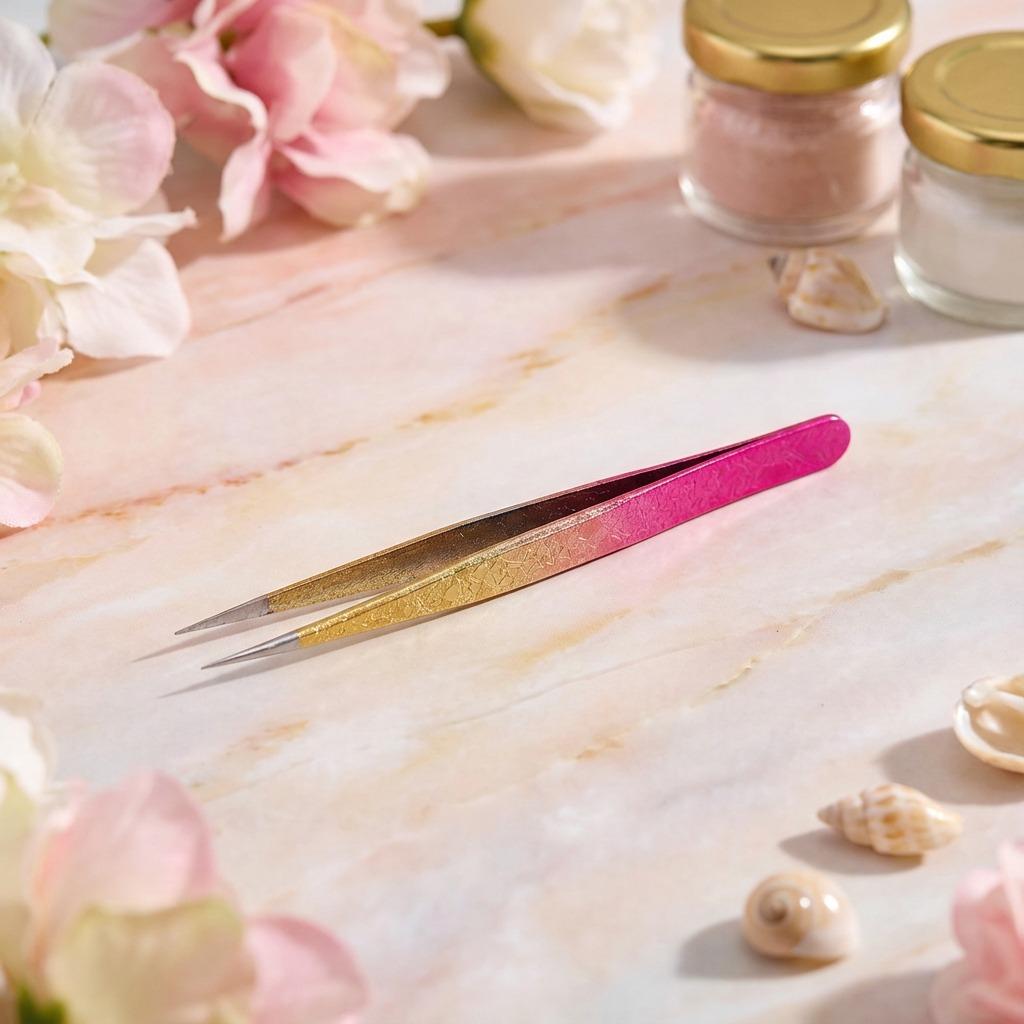
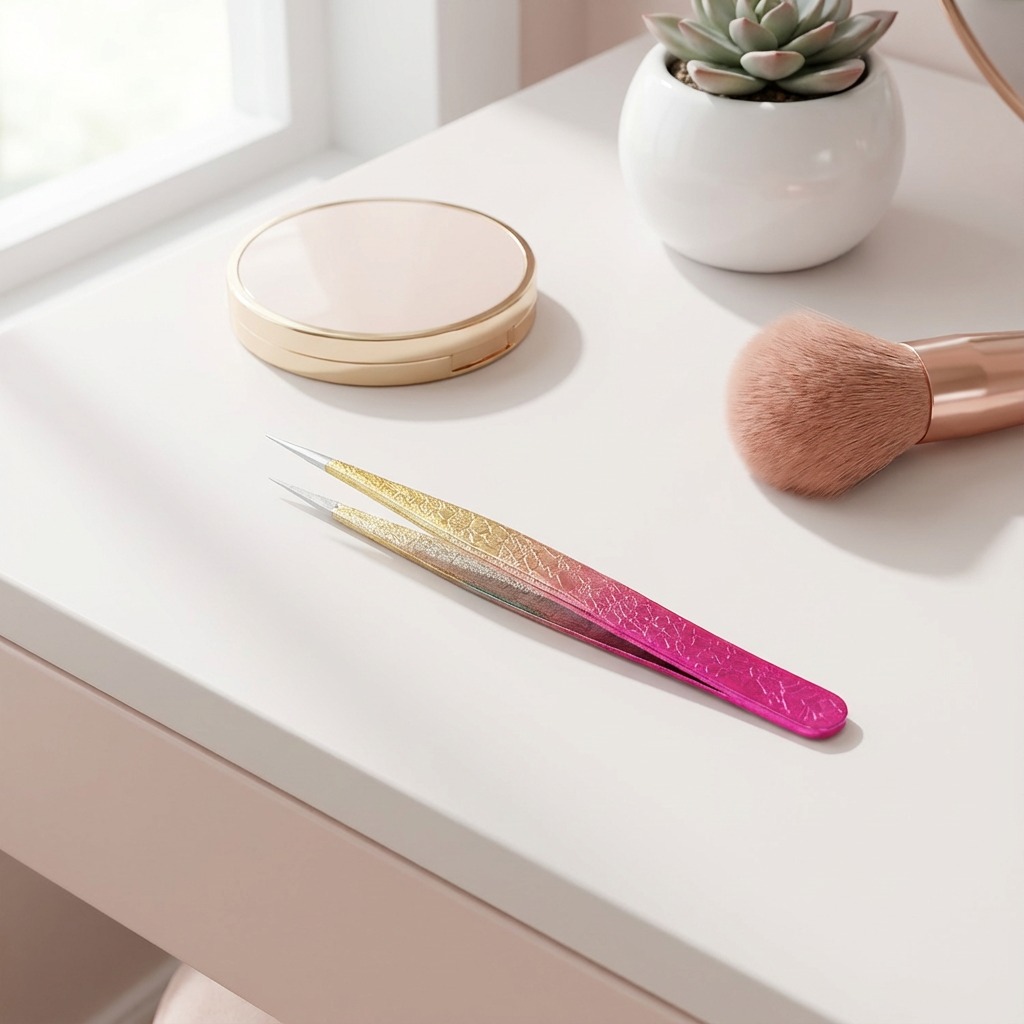
Customization also helps position the product. A minimalist stainless-steel tweezer may suit a professional salon kit, while a decorative finish can appeal to gifting, retail displays, or beauty accessory collections. The original Olimor Beauty concept includes gradient coloration moving from golden tones to pink, with floral pattern details on stainless-steel bodies. This kind of visual direction can make a tweezer more memorable, but appearance should never replace functional checks. The tool still needs to close evenly, grip fine hairs, and remain comfortable during repeated use.
If you are planning a broader sourcing project, custom tweezers can be reviewed alongside other beauty tool products to keep color, packaging, and quality expectations consistent across the range.
Key Selection Criteria for Precision and Usability
When reviewing custom tweezers, start with the way the tool will be used. Brow shaping, lash placement, facial hair removal, and general grooming can require slightly different handling. A buyer does not need to overcomplicate the process, but the following criteria should be checked before confirming an OEM order.
- Tip alignment: The two tips should meet evenly without visible gaps. Poor alignment causes slipping and makes it harder to grip short or fine hairs.
- Tip shape: Slanted tips are commonly used for brow grooming, while pointed or fine tips may be preferred for detailed work. Choose based on the main use case and the skill level of the end user.
- Grip tension: The tweezer should close with controlled pressure. If tension is too stiff, hands tire quickly; if too loose, precision can suffer.
- Surface feel: A smooth body can look clean and premium, while textured or shaped grip areas may help users maintain control.
- Edge finishing: Tips and sides should feel finished, not rough. This is especially important for tools used near delicate skin.
- Weight balance: Lightweight tweezers are easy to carry, but they should still feel sturdy enough for controlled movement.
- Decoration placement: Patterns, colors, or logos should not interfere with the grip area or make the tool slippery during use.
A good sample review combines visual inspection with hands-on testing. Open and close the tweezer repeatedly, test it on fine fibers or suitable sample hairs, and check whether the grip remains consistent along the tip. For professional buyers, it is useful to test with several people, because hand size and technique can affect how the tool feels.
OEM Custom Tweezers: Design Choices That Affect the Final Product
OEM custom tweezers allow a brand to develop a product that matches its visual identity and price positioning. Customization may involve color, surface decoration, logo placement, packaging, and product sets. The Gradient Precision Tweezers referenced by Olimor Beauty show one possible direction: a stainless-steel body with a gradient finish transitioning from golden hues to vibrant pink, accented by floral patterns. This type of design is suited to brands that want a more expressive beauty accessory rather than a plain utility tool.
Before deciding on a custom design, separate the decorative choices from the performance requirements. The tool must first meet the intended function. After that, the design can be refined for the target channel: retail shelf, online marketplace, salon kit, gift set, or private label collection. A finish that photographs well online may not be the same finish that works best for frequent salon use, so match the design to the customer’s real environment.
| Decision Area | What to Consider | Why It Matters |
|---|---|---|
| Tip style | Slanted, pointed, fine, or general-purpose options | Determines the main grooming use and user skill level |
| Body finish | Plain metal, gradient color, printed pattern, or other decorative direction | Affects shelf appeal and brand positioning |
| Grip comfort | Body shape, tension, and surface feel | Influences control during brow shaping or lash application |
| Logo and artwork | Placement, size, contrast, and durability expectations | Supports branding without reducing usability |
| Packaging | Retail card, pouch, box, or set packaging concepts | Protects the tips and communicates product value |
For brands comparing multiple tools or visual directions, browsing product collections can help clarify how tweezers may fit into a coordinated assortment.
Working With a China Tweezers Exporter
For many buyers, working with a China tweezers exporter is about more than placing an order. It involves communication, sample evaluation, packaging coordination, export preparation, and quality consistency. Olimor Beauty positions its custom tweezers for global accessibility, which is especially relevant for retailers, distributors, and private label buyers who need products that can be prepared for different markets.
A practical sourcing process should include a clear product brief. Instead of simply requesting “high quality tweezers,” describe the intended user, sales channel, preferred appearance, packaging concept, and any functional concerns. For example, a brow-focused tweezer for retail customers may prioritize a slanted tip, decorative finish, and protective packaging, while a salon-focused version may prioritize a clean professional look and comfortable grip during longer sessions.
Useful sourcing questions include:
- What tweezer tip style is recommended for the main grooming task?
- How will the sample be checked for tip alignment and closing tension?
- Which decoration methods are suitable for the desired color or pattern?
- Where can branding be placed without affecting hand feel?
- How will the tweezer tips be protected during packaging and shipping?
- What inspection points should be confirmed before mass production?
- Can the packaging be adapted for retail display, online sales, or set building?
These questions keep the discussion specific. They also help avoid disappointment caused by focusing only on appearance while overlooking the practical performance of the tool.
Quality Checks Before Approving Custom Tweezer Samples
Sample approval is one of the most important stages in a custom tweezer project. A product may look attractive in photos but still fail if the tips do not meet correctly or the grip feels uncomfortable. Review samples under good lighting and handle more than one piece if possible. Consistency between samples is as important as the quality of a single unit.
Begin with the tips. Close the tweezer slowly and check whether the contact point is even. The tips should not cross awkwardly, leave a gap, or meet only at one tiny point unless that is intentionally designed for a specialized use. Next, test the spring tension by opening and closing the tool several times. The motion should feel controlled and repeatable.
Then review the finish. On decorative designs, check whether color transitions, patterns, and logos appear clean. For gradient or floral designs, confirm that the decoration suits the tool’s shape and does not look distorted in the grip area. Inspect edges and corners for roughness. Since tweezers are handled often and used close to the face, comfort and finishing should be treated as part of quality, not as minor details.
Finally, examine packaging. Even a well-made tweezer can arrive with damaged tips if packaging does not secure the tool properly. Tip protection, clean presentation, and clear product identification all matter for retail and export orders.
Care and Maintenance for Long-Term Performance
Custom tweezers perform best when users treat them as precision tools rather than loose accessories. Clear care instructions can reduce returns and help customers keep the tool in good condition. This is especially useful for private label buyers who want the end user to have a positive experience after purchase.
- Wipe the tips after use to remove cosmetic residue, oils, or small particles.
- Keep the tweezer dry before storing it, especially after cleaning.
- Store it with the tips protected so they do not become bent or misaligned.
- Avoid dropping the tweezer, as impact can damage the tip alignment.
- Do not use brow or lash tweezers for hard materials that can dull or deform the tips.
- If used in a professional setting, follow appropriate hygiene procedures for tools used near skin and eyes.
Brands can include concise care text on packaging inserts or product pages. This helps customers understand that precision depends not only on manufacturing, but also on daily handling.
Building a Better Custom Tweezer Brief
A strong brief saves time and leads to better samples. Include the target user, preferred tip type, visual reference, packaging needs, and any restrictions related to branding or sales channels. If you are building a full beauty tool range, include notes on how the tweezer should coordinate with other items in color, finish, and presentation.
For buyers planning OEM custom tweezers, Olimor Beauty can be approached with a clear concept and practical performance expectations. Whether the goal is a decorative gradient tweezer, a professional-looking grooming tool, or a coordinated product set, the best results come from balancing appearance with tip precision, comfort, packaging protection, and consistent inspection points.
To discuss a custom tweezer project or compare options for your market, you can contact Olimor or send an inquiry with your product brief, target use, and packaging requirements.
Tag: