

Custom Tweezers for OEM Beauty Brands: How to Choose Precision Tools That Fit Your Market
Custom tweezers are small tools, but they carry a surprising amount of responsibility for a beauty brand. A customer may notice the color first, yet long-term satisfaction usually depends on the details that are harder to see: whether the tips meet cleanly, whether the tension feels controlled, whether the edges grip fine hair without cutting it, and whether the finish keeps its appearance after repeated handling. For beauty retailers, salons, private-label brands and promotional buyers, OEM custom tweezers can become a compact, practical product that supports daily grooming and brand recognition at the same time.
Olimor Beauty works with beauty tools including tweezers for buyers who need thoughtful product choices rather than generic catalog items. This guide explains how to evaluate custom tweezers from a product-development perspective, with attention to precision, user comfort, finish options, packaging and quality checks. It is written for buyers comparing OEM options and for brands preparing a clearer specification before they send an inquiry.
What Makes Custom Tweezers Different from Standard Tweezers?
Standard tweezers are usually selected as finished items: the shape, finish, packaging and branding are already decided. Custom tweezers give a buyer more control over the choices that affect both performance and shelf appeal. Depending on the project, customization may involve color, surface finish, logo placement, packaging style, tip type, grip texture or a combination of these details.
The main reason to develop OEM custom tweezers is not simply to create a different look. The strongest projects begin with a clear use case. A brow-focused line may need precise slant tips that help remove individual hairs cleanly. A travel set may prioritize compact size and protective packaging. A salon retail product may need a comfortable grip and a finish that looks clean after frequent handling. A giftable beauty accessory may rely more heavily on color, presentation and perceived quality.
When reviewing beauty tool products, buyers should treat tweezers as both a functional tool and a branded touchpoint. A good pair should feel controlled in the hand, close evenly, and match the quality expectations of the retail channel where it will be sold.
Key Performance Details to Specify Before OEM Production
Precision is the core of any tweezer. A polished finish and attractive color cannot compensate for tips that do not align. Before focusing on decoration, a buyer should define the performance requirements that matter most for the target user. This helps prevent misunderstandings during sampling and makes quality review more practical.
- Tip type: Slant tips are common for eyebrow shaping because they offer visibility and control. Pointed tips may suit detailed work, while flat or broader tips can be better for specific cosmetic applications.
- Tip alignment: The two sides should meet evenly at the gripping point. Uneven alignment can cause slipping, broken hairs or user frustration.
- Tip edge feel: Edges need to grip effectively without feeling rough or overly sharp against the skin.
- Spring tension: Tweezers should open and close smoothly. Too much resistance can create hand fatigue; too little can reduce control.
- Body shape: The body should sit comfortably between the fingers, especially for users who shape brows frequently.
- Grip area: A textured grip or shaped handle can improve control, particularly when hands are damp from skincare products.
The original product description refers to stainless steel, honed tips and a textured grip. Those are useful characteristics to consider because they relate directly to durability, grip control and hair removal precision. If a buyer is creating a private-label tweezer, these points should be translated into sample evaluation criteria rather than left as general expectations.
Finish, Color and Branding Choices That Support Retail Appeal
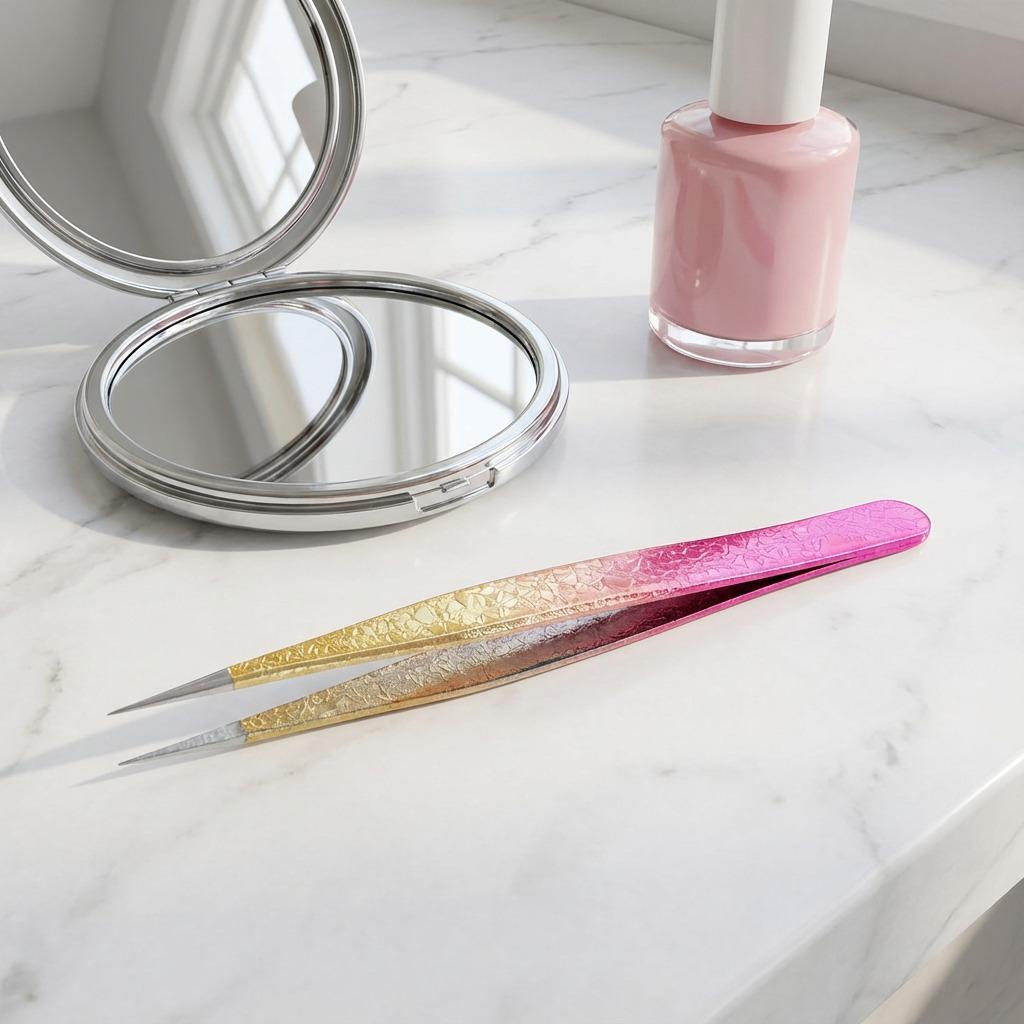
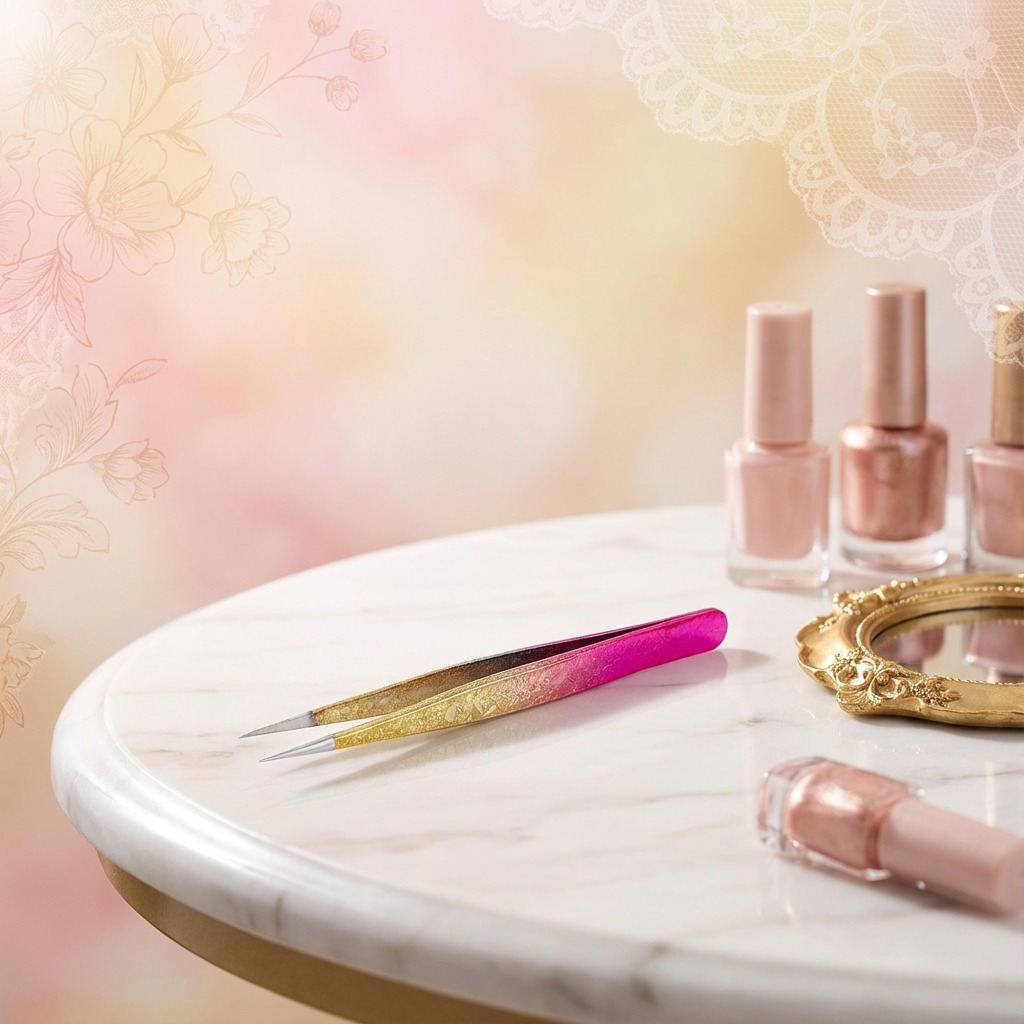
Custom tweezers are often chosen because they allow a beauty brand to create a more memorable visual identity. The supplied example highlights a pink-to-gold ombre finish on Dual-Tip Gradient Precision Tweezers, showing how color can make a small grooming tool feel more giftable and more aligned with a brand’s visual language. A gradient finish can be especially effective for beauty retail because it is easy to understand in product photography and appealing in compact packaging.
Color, however, should be selected with the product’s selling environment in mind. A bright finish may work well for trend-driven online beauty stores, while a more neutral metallic look may suit professional salon retail or minimalist skincare brands. Logo placement should also be practical. A mark that looks attractive on a render may become less legible if placed on a narrow curved surface or on a highly reflective finish.
Useful branding decisions include:
- Choose a finish that fits the audience. Younger fashion-led consumers may respond to gradients or color effects, while professional users may prefer restrained finishes.
- Keep logos readable. Fine lettering can lose clarity on a small tweezer body, so simple marks often perform better.
- Match packaging to positioning. A premium-looking tweezer can feel less convincing if packed in a very basic sleeve that does not protect the tips.
- Think about product photography. Reflective finishes need careful lighting; matte or satin effects may be easier to photograph consistently.
How to Evaluate Samples Before Committing to a Custom Tweezer
Sampling is where a custom tweezer project becomes real. Instead of reviewing only appearance, buyers should test several pieces in a consistent way. A simple checklist can make sample feedback clearer and reduce the chance of approving a product based only on its first impression.
| Evaluation area | What to check | Why it matters |
|---|---|---|
| Tip closure | Tips meet evenly with no visible gap at the gripping point | Supports accurate hair removal and reduces slipping |
| Grip test | Fine hair or test fibers can be held without excessive pressure | Shows whether the tweezer performs beyond its appearance |
| Hand feel | Body shape and tension feel comfortable during repeated use | Helps prevent fatigue for brow shaping or salon work |
| Finish review | Color, gradient, logo and surface are consistent across samples | Protects brand presentation and retail consistency |
| Packaging fit | Tips are protected and the product does not move excessively | Reduces damage risk during shipping and handling |
It is helpful to test samples with the same routine your customer is likely to use. For brow tweezers, check visibility near the brow line and the ability to isolate individual hairs. For travel or promotional tweezers, check whether the packaging protects the tips in a bag or retail display. For a gift set, review how the tweezer looks beside other tools in the same collection.
Quality Checks for a China Tweezers Exporter Relationship
Working with a China tweezers exporter can be efficient for brands that need OEM beauty tools, but a successful project depends on clear expectations. Buyers should avoid vague instructions such as “make it premium” or “good quality.” Instead, convert expectations into observable requirements. Tip alignment, surface finish, logo clarity, packaging condition and batch consistency are all easier to evaluate than broad claims.
For custom tweezers, quality control should include appearance and function. Appearance checks cover color consistency, surface marks, printing or engraving position, and packaging presentation. Functional checks cover tip closure, tension, grip performance and whether the tweezer feels stable in use. If a finish is described as resistant to scratching, the buyer should define how the surface will be reviewed during sample approval and shipment inspection.
Documentation can also improve communication. Photos of approved samples, marked drawings, packaging references and written inspection points make it easier for both sides to understand the target. Buyers comparing different product collections may also want to align tweezers with nail tools, lash tools or other grooming accessories so the full retail offer feels consistent.
Maintenance Guidance to Include for End Users
A custom tweezer should not only look good at purchase; it should remain useful after repeated grooming sessions. Including simple care guidance in packaging or product pages can reduce misuse and support customer satisfaction. Maintenance advice does not need to be complicated, but it should be practical.
- Wipe the tips after use to remove oils, skincare residue or brow product.
- Keep the tweezer dry before storing, especially around the tips and joint area.
- Use a tip cover or protective package when carrying tweezers in a travel bag.
- Avoid dropping the tool, as impact can affect tip alignment.
- Do not use brow tweezers as a general household tool; bending or prying can damage precision edges.
These instructions are especially important for private-label products because a customer’s experience reflects on the brand. A well-made tweezer can still perform poorly if its tips are bent in a makeup bag or if residue is allowed to build up on the gripping surface.
Preparing a Clear OEM Custom Tweezers Brief
Before contacting a supplier, prepare a short but specific brief. It does not need to include every technical detail, but it should explain the product’s purpose, audience and preferred appearance. A strong brief may include the desired tip type, finish direction, logo requirements, packaging format, target retail channel and any sample references that show the intended look or hand feel.
For example, a brow-focused online beauty brand might request stainless steel tweezers with slant tips, a colored gradient finish, simple logo placement and protective retail packaging. A salon distributor might prioritize a neutral finish, comfortable tension and packaging that communicates professional use. These two projects may look similar at a distance, but their priorities are different.
Olimor Beauty can support buyers considering custom tweezers as part of a broader beauty tool range. To discuss suitable options for your market, contact Olimor with your product direction, branding needs and sample expectations. Clear decisions at the start help create custom tweezers that are attractive, practical and aligned with the way your customers actually groom.
Tag: