

How to Source Custom Nail Clippers for Your Business
Custom nail clippers are small products, but for retailers, distributors, salons, gift suppliers and personal care brands, they can carry a surprising amount of business value. A well-made clipper is used frequently, fits easily into grooming kits, and can be branded for retail shelves, promotional programs or professional resale. The challenge is that many nail clippers look similar online, while the differences in cutting feel, handle comfort, finish and packaging only become obvious when the product reaches the end user.
For B2B buyers, sourcing should go beyond asking for a low bulk nail clipper price. The better approach is to define the use case, compare the build quality, review customization options and confirm how the product will be packed and presented. Olimor Beauty supplies beauty tool products for business buyers, including stainless steel grooming tools such as nail nippers designed for precise trimming and comfortable handling. This guide explains how to evaluate custom nail clippers with a practical sourcing mindset.
Start With the Buyer and Use Case
Before comparing suppliers, clarify who will use the nail clipper and where it will be sold. A clipper for a professional pedicure station is not evaluated in exactly the same way as a compact retail grooming item or a branded giveaway. Distributors may prioritize stable repeat supply and packaging consistency. Retailers may care more about shelf appeal, barcoding space and clear product benefits. Beauty professionals may focus on sharpness, control and cleaning convenience.
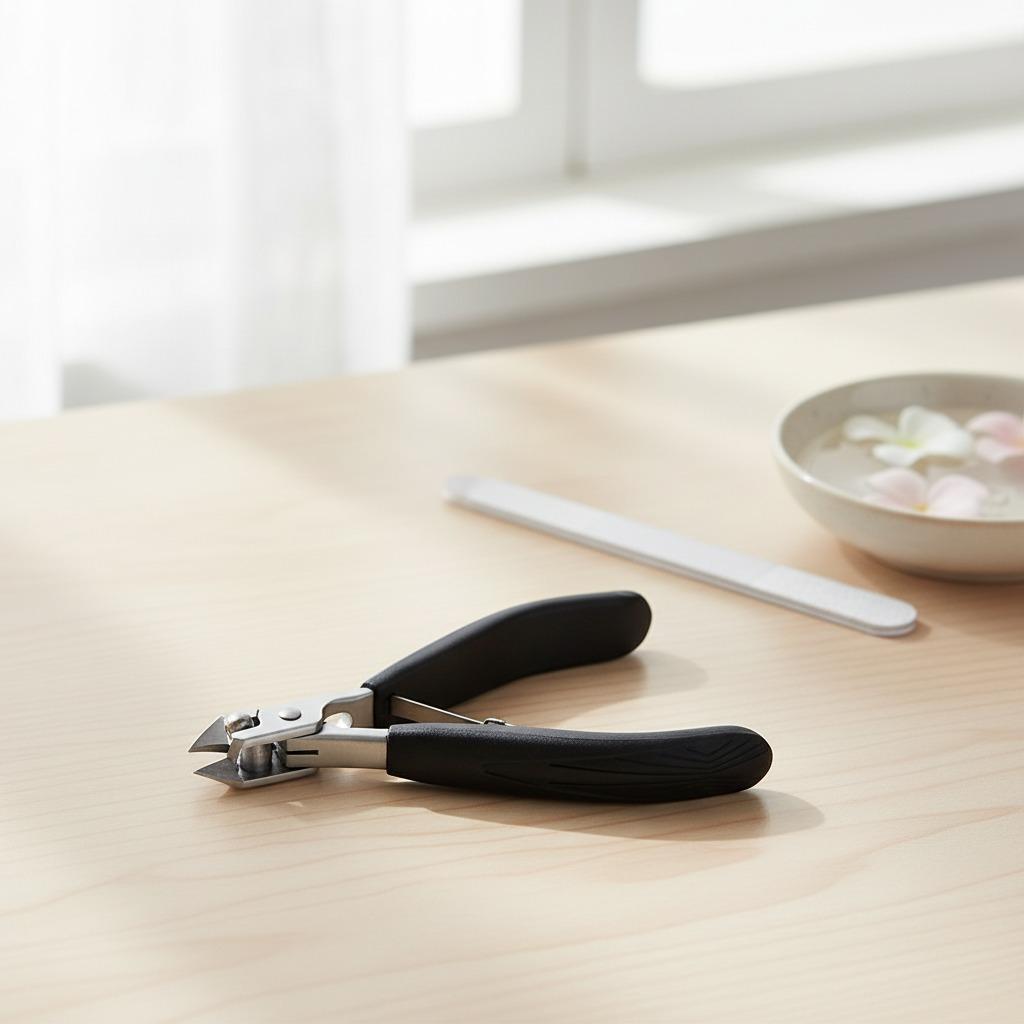
For thicker nails, a nail nipper style with curved blades can be more suitable than a very small standard clipper, because the shape gives the user more control when trimming. The supplied Olimor Beauty Nail Nipper is described with sharp, curved stainless steel blades and non-slip handles, which makes those points useful to evaluate when selecting a product for professional or home grooming markets. If your assortment already includes files, tweezers or cuticle tools, a nail clipper can also be sourced as part of a broader personal care set.
Understand the Main Custom Nail Clipper Options
Customization can help a beauty tool feel aligned with your brand, but the right choice depends on sales channel and budget. Some buyers need a discreet logo on the tool. Others need retail-ready packaging, color direction or a coordinated grooming kit. The most important point is to choose customization that improves recognition without making the product harder to use or more expensive than the channel can support.
- Logo placement: Common branding goals include a logo on the handle, packaging card, pouch or outer box. Check that the logo remains readable at the final size.
- Packaging format: Retail buyers often need packaging that protects the cutting edge, explains the product clearly and fits display requirements.
- Finish and color direction: A finish should match the brand image, but it should also resist visible wear during handling and storage.
- Assortment planning: A single nail nipper may be sold alone, paired with nail files, or included in a travel grooming set.
- Market positioning: Decide whether the item is a value tool, a practical everyday product, or a more refined personal care accessory.
When browsing beauty tool products, compare individual tools not only by appearance but also by the end customer’s expected use. A buyer serving pharmacies, beauty retailers and nail salons may need different packaging or positioning for each channel.
Evaluate Materials, Cutting Performance and Comfort
The core value of a nail clipper is its cutting performance. Stainless steel is commonly preferred for grooming tools because it supports durability and a clean appearance. However, buyers should still assess the details that affect real use: blade alignment, edge sharpness, spring or lever feel, handle grip, and whether the tool cuts smoothly without crushing the nail.
For a nail nipper, curved blades should meet evenly and allow controlled trimming along the natural nail shape. Handles should feel stable in the hand, especially when the user applies pressure. A non-slip handle can be important for both salon and home use, because nail care often happens after washing, soaking or applying products. Even when the tool looks attractive, poor ergonomics can create returns, negative reviews and weak repeat orders.
Use samples to check the following points before committing to a larger order:
- Open and close the tool several times to feel whether movement is smooth and consistent.
- Inspect the cutting edge for visible gaps, rough spots or uneven alignment.
- Test the grip and handle shape with both dry and slightly damp hands.
- Review whether the blade cover, pouch or packaging protects the edge during shipping.
- Confirm that the branding method does not interfere with grip or cleaning.
Compare Bulk Nail Clipper Price With Total Value
Bulk price matters, but it is only one part of the sourcing decision. A very low unit price can become expensive if the product produces complaints, inconsistent packaging, or a finish that does not match your brand standard. For B2B nail clipper buyers, the stronger measure is total landed value: product quality, customization, packaging, inspection expectations, shipping protection and the ability to reorder consistently.
| Buying factor | Why it matters | What to review |
|---|---|---|
| Tool construction | Affects cutting feel and durability | Blade alignment, handle comfort, opening and closing action |
| Material and finish | Influences customer perception | Stainless steel appearance, surface consistency, visible defects |
| Customization | Supports brand recognition | Logo size, placement, packaging artwork and readability |
| Packaging | Protects the item and supports retail sale | Edge protection, display format, labeling area and shipping strength |
| Quality control | Reduces returns and buyer risk | Inspection criteria, sample approval and batch consistency |
Instead of asking only for the cheapest quote, prepare a clear comparison sheet. Include the same product type, customization request and packaging expectation for each supplier. This makes the final decision more objective and helps avoid comparing a basic unbranded item with a retail-ready customized tool.
Plan Branding and Packaging for Your Sales Channel
A custom nail clipper should be easy for the buyer to understand at first glance. Retail packaging may need a product name, usage benefit, care instructions and a visible view of the tool. Distributor cartons may require clear item identification and consistent packing. Salon resale packaging may benefit from a clean, professional presentation that does not take up too much shelf space.
For e-commerce, packaging also needs to survive shipping and photograph well. A clipper with reflective metal surfaces can be difficult to show online if the packaging creates glare or hides the tool. When approving artwork, review the actual sample or a realistic mockup rather than relying only on a flat design file. If your brand sells multiple grooming items, consider whether the nail clipper packaging should match your existing product collections in color, typography and claims style.
Be careful with product claims. Unless you have verified testing or regulatory support, avoid exaggerated wording. Simple, accurate descriptions such as stainless steel nail nipper, curved blades, non-slip handle, or suitable for home and professional grooming are more reliable than broad performance promises.
Set Practical Quality Checks Before Ordering
Quality control for custom nail clippers should be defined before production, not after goods are packed. Buyers can create a simple approval standard that covers appearance, function and packaging. This does not require complex language, but it should be specific enough to prevent misunderstandings.
A practical checklist may include: acceptable logo position, clean surface finish, smooth tool movement, no loose components, even blade contact, correct packaging artwork, carton labeling, and sample approval before bulk production. If you are ordering a nail nipper style, include checks for blade symmetry and handle grip. For retail orders, also review whether the packaging protects customers from exposed sharp edges while still presenting the product clearly.
Olimor Beauty emphasizes quality checks from raw materials to final packaging in its beauty tool process. For buyers, the useful takeaway is to align your own inspection expectations with the supplier’s production workflow. Share your priorities early, especially if your sales channel has strict packaging, labeling or display requirements.
Build a Custom Nail Clipper Sourcing Brief
A clear sourcing brief saves time and reduces quote errors. It should describe the product type, target market, branding needs and packaging expectations. You do not need to know every technical detail before starting, but you should provide enough information for a supplier to recommend a practical option.
- Product type: standard nail clipper, nail nipper, or grooming set component.
- Target user: retail consumer, salon professional, distributor, gift buyer or e-commerce customer.
- Branding: logo placement, color direction, packaging artwork and language requirements.
- Quality priorities: cutting smoothness, grip comfort, finish consistency and packaging protection.
- Order planning: sample needs, expected reorder pattern and destination market.
If you are ready to compare options, you can send an inquiry with your brief or contact Olimor to discuss suitable beauty tool directions for your channel. The best sourcing conversations are specific: the more clearly you define your customer and sales environment, the easier it is to choose a custom nail clipper that supports repeat business.
Final Thoughts for B2B Buyers
Custom nail clippers are worth sourcing carefully because they combine everyday usefulness with strong branding potential. The right tool should cut cleanly, feel comfortable, present well in packaging and match the expectations of your sales channel. For distributors and retailers, that means balancing bulk price with product consistency and customer satisfaction. For beauty professionals and personal care brands, it means choosing a tool that supports trust every time it is used.
By reviewing samples, defining customization goals and setting basic quality checks before ordering, B2B buyers can avoid many common sourcing problems. A nail clipper may be a small item, but when it is well selected and properly branded, it can become a dependable part of a profitable beauty tool assortment.
Tag: