

How to Source Encased Custom Nail Clippers for Your Business
A custom nail clipper for business use is a small product, but it can influence how buyers judge an entire grooming range. For distributors, promotional suppliers, salon supply companies and private-label beauty brands, the right clipper needs to be easy to position, practical for daily use and consistent enough to support repeat orders. Encased nail clippers are especially useful in B2B programs because the cover helps keep the tool neat in storage, retail packaging, travel kits and personal care sets.
This guide focuses on sourcing encased nail clippers from a buyer’s point of view: how to choose between sizes, what to check before adding branding, how to compare bulk pricing, and how to prepare a brief that helps a supplier quote accurately. Olimor Beauty offers beauty-tool products for wholesale and customization projects, and this article uses the product facts available for this encased nail clipper category without adding unsupported claims.
What Makes an Encased Nail Clipper Suitable for B2B Buyers?
In consumer retail, a nail clipper is often judged in seconds: how it looks, how it feels in the hand and whether it appears clean and durable. In B2B purchasing, the evaluation is broader. A distributor must think about carton handling, product consistency, margin, after-sales issues and whether the clipper fits the end customer’s buying occasion.
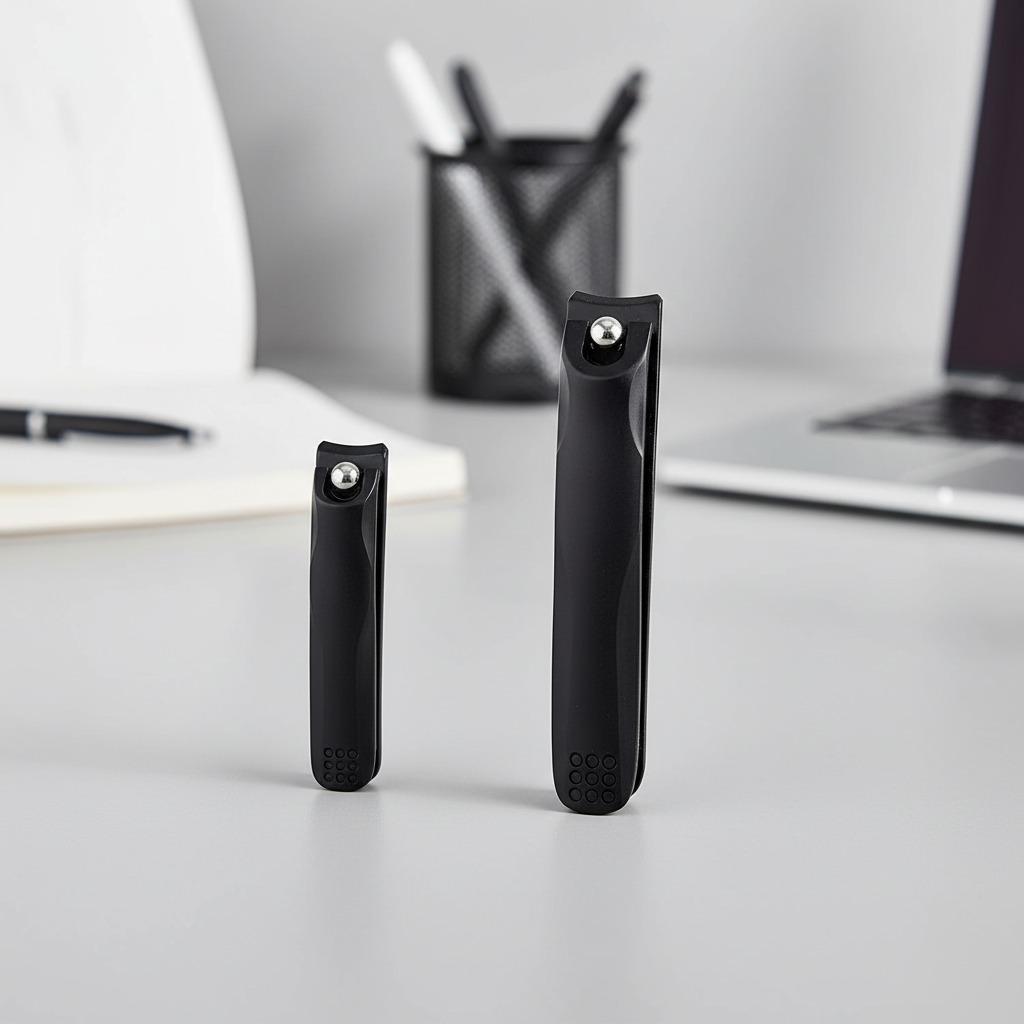
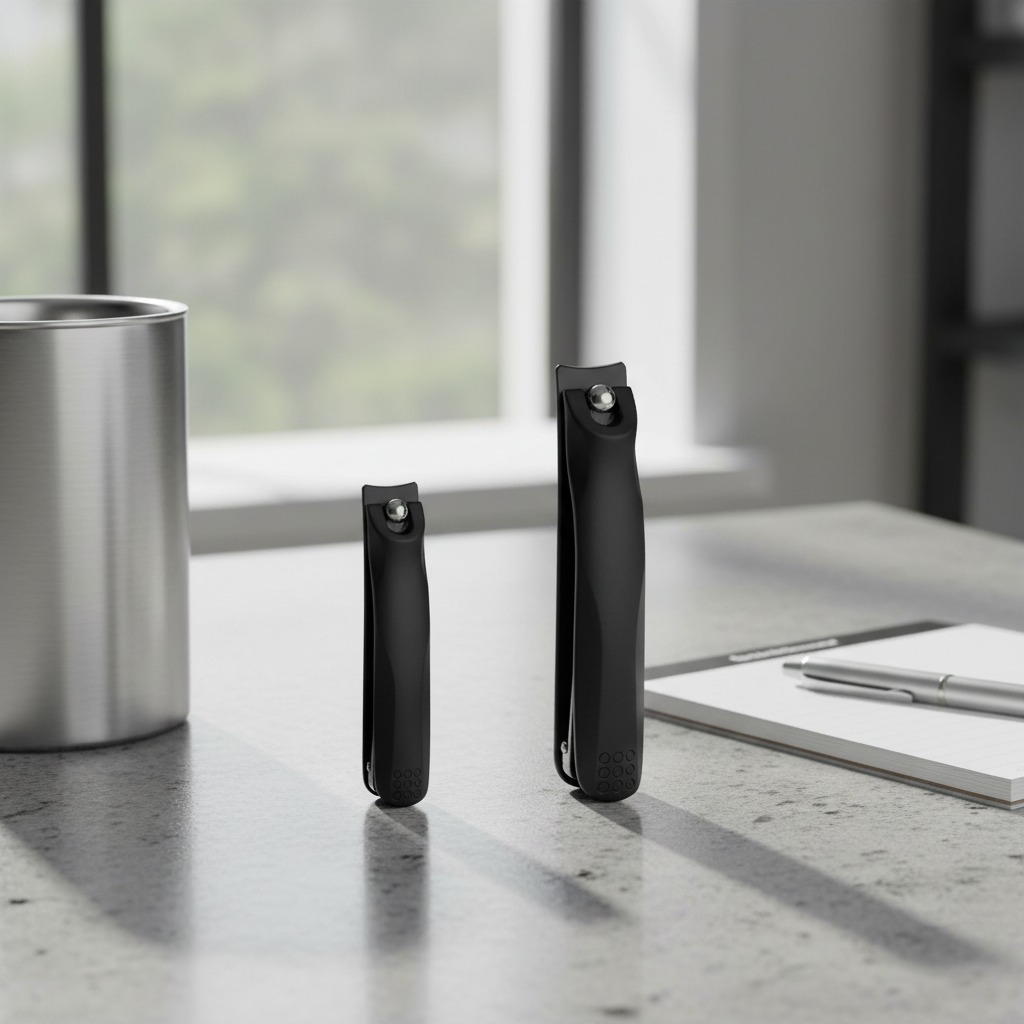
An encased design gives the product a more contained appearance than a bare metal clipper. It can also help make the item easier to include in travel grooming kits, gift sets, salon retail displays or compact personal care assortments. When the finish is matte black, as with the Olimor Beauty encased nail clipper shown here, the product can fit modern, unisex and minimalist grooming lines without relying on decorative styling.
For a custom program, the key question is not simply “Can a logo be added?” It is whether the clipper has the right balance of cutting performance, weight, size, surface finish, packaging compatibility and visual identity for your target customer. A low-cost product that causes complaints can be expensive over time. A well-specified item can become a repeatable SKU across multiple sales channels.
Choosing Between the 59mm and 74mm Nail Clipper Sizes
The supplied Olimor Beauty encased nail clipper is available in two stated sizes: a compact 59mm version weighing 24 grams and a larger 74mm version weighing 43 grams. These measurements are useful because they help buyers match the product to its intended retail or wholesale program rather than choosing only by appearance.
| Option | Stated size and weight | Best-fit B2B use cases | Buyer considerations |
|---|---|---|---|
| Compact encased clipper | 59mm, 24g | Travel kits, compact grooming sets, promotional personal care packs, convenience retail | Prioritize portability, light shipping weight and easy storage in small packaging formats. |
| Larger encased clipper | 74mm, 43g | Home grooming ranges, salon retail, men’s grooming sets, premium-feel assortments | Assess hand feel, perceived value and whether the larger format matches the target customer’s expectations. |
For many distributors, the compact 59mm version is easier to place in travel-related or multi-piece kits because it occupies less space. The 74mm option can be better when the product is sold as a more substantial individual grooming tool. If your channels include both online retail and physical distribution, consider how each size will photograph, hang, sit in a tray or fit into an existing box.
Before committing to a size, map the clipper to the selling environment. A pharmacy buyer may care about easy shelf display and clear function. A salon supplier may care more about professional-looking presentation. A promotional buyer may need a compact item that can be distributed in volume. The best size is the one that supports the sales story and reduces friction for the channel.
Material, Cutting Feel and Finish: What to Inspect
The Olimor Beauty encased nail clippers described here use stainless steel blades, ergonomic handles and a matte black finish. These are valuable starting points, but B2B buyers should still evaluate production samples carefully. Stainless steel blades are important because the cutting edge is the functional core of the tool. If the clipper pulls, bends, leaves rough edges or feels unstable, branding will not compensate for poor performance.
When reviewing samples, create a simple inspection routine that can be repeated by your purchasing, quality or merchandising team. The goal is to compare samples consistently, not to rely on one person’s first impression.
- Cutting alignment: Check that the upper and lower cutting edges meet evenly across the full curve.
- Lever action: Press several times to feel whether the movement is smooth, controlled and not overly stiff.
- Handle comfort: Confirm that the ergonomic handle is comfortable for the intended customer group and does not create sharp pressure points.
- Finish consistency: Review the matte black surface under good lighting for scratches, uneven color or visible defects.
- Encasement fit: Make sure the case closes or sits neatly, without rattling or interfering with use.
- Cleanliness: Inspect for metal dust, oil residue or packaging debris before retail packing.
If your business sells through multiple countries or channels, build your internal acceptance criteria early. A clear sample approval process helps avoid disagreements later when the order is inspected, packed or shipped to customers.
Planning Custom Branding Without Weakening the Product
Customization can turn a standard grooming tool into a private-label item, a distributor exclusive or a branded promotional product. However, the best branding decision depends on the available surface area, finish, packaging style and target price point. A small encased nail clipper should not be overloaded with visual elements. A clean logo placement or simple packaging identity often works better than complicated decoration.
Before requesting a quote, prepare a practical branding brief. Include your logo file format, preferred logo location, desired packaging approach, target market and any retail compliance information you already know. If you are comparing this item with other beauty tool products, keep the branding system consistent so the nail clipper does not look disconnected from the rest of the range.
Buyers should also think about how the product will be sold after customization. For example, a distributor may want neutral branding that can serve several accounts, while a private-label beauty company may want packaging that clearly fits an existing grooming collection. Promotional programs may prioritize logo visibility and delivery timing. Retail programs may prioritize barcoding, shelf presentation and consumer-facing instructions.
How to Compare Bulk Nail Clipper Pricing Realistically
Bulk nail clipper price comparisons can be misleading if buyers look only at the unit cost. Two quotes may appear similar, but the included services, packaging assumptions, customization method, inspection expectations and shipping terms can vary. For a fair comparison, request quotes using the same product size, finish, packaging concept and branding requirements.
A useful quote comparison should include more than the base item price. Consider packaging cost, logo application, sample cost, tooling or setup if applicable, export packing, inspection arrangements and freight terms. Also account for the cost of product issues. A clipper with poor blade alignment or inconsistent finish may create returns, replacement shipments or damage to your customer relationship.
When margins are tight, it can be tempting to remove quality checks from the process. For grooming tools, that is risky. Nail clippers are handled directly by consumers, and performance problems are noticed immediately. It is better to define a practical quality checklist and confirm what will be inspected before production and before shipment. Olimor Beauty describes a commitment to quality inspections, and buyers can strengthen the process by stating their own acceptance expectations clearly.
Building a Supplier Brief for Distributors and Private-Label Programs
A precise sourcing brief saves time for both the buyer and supplier. It helps avoid vague conversations such as “send your best price” and replaces them with a product plan that can be quoted, sampled and revised. This is especially important for distributors managing several customer types.
- Define the end channel: Identify whether the clipper is for retail, salon supply, gift sets, travel kits, promotional use or online resale.
- Select the size: Choose between the 59mm, 24g compact version and the 74mm, 43g larger version based on use case.
- Confirm finish expectations: State that the matte black finish should be consistent and suitable for your packaging style.
- Describe branding needs: Provide logo files, color references and preferred placement if customization is required.
- Outline packaging: Explain whether you need individual retail packaging, kit packing or bulk packing for later assembly.
- List inspection points: Include blade alignment, lever movement, surface finish, case fit and packing cleanliness.
- Share ordering timeline: Provide the target sample review date, production window and delivery deadline.
If you are still comparing product directions, review Olimor Beauty’s product collections to see how an encased nail clipper could fit alongside other grooming and beauty tools. If your team already has artwork, packaging ideas or a distribution schedule, you can send an inquiry with those details for a more focused discussion.
After Delivery: Handling, Storage and Reorder Decisions
Sourcing does not end when the order arrives. Nail clippers should be stored in a dry, clean environment, away from conditions that could affect packaging or surface appearance. For distributors, warehouse handling matters because a small tool can be damaged cosmetically if cartons are crushed or if individual packages rub against each other during movement.
Track customer feedback after the first shipment. Useful signals include comments on cutting feel, packaging damage, finish scratches, logo durability and size preference. If the compact version sells well in travel kits but the larger version performs better as a standalone item, your reorder plan can separate the two channels rather than treating them as interchangeable.
For repeat orders, keep an approved sample, packaging reference and inspection checklist on file. This gives your team a baseline when reviewing future production. If you need to adjust branding, packaging or assortment strategy, contact Olimor with the approved product details so the next conversation starts from a clear reference point.
Final Buying Guidance
An encased custom nail clipper is a practical B2B product when it is selected with the end channel in mind. The 59mm, 24g option supports compact and travel-focused programs, while the 74mm, 43g option can suit buyers looking for a more substantial grooming tool. Stainless steel blades, ergonomic handles and a matte black finish provide a strong product foundation, but sample inspection and clear sourcing briefs are what turn that foundation into a reliable wholesale item.
For distributors, private-label brands and beauty-tool buyers, the best approach is to evaluate size, finish, cutting performance, packaging and branding together. A small grooming tool can carry a large amount of brand trust when it performs consistently and arrives ready for the channel it was designed to serve.
Tag: