

Custom Made Nail Clipper Sourcing: Exporter Insights for Buyers
A custom made nail clipper may look simple, but buyers know that small differences in cutting feel, grip comfort, finishing and packaging can affect repeat purchases. For retailers, beauty distributors, grooming kit brands, salon suppliers and promotional buyers, the goal is not only to find a nail clipper that cuts nails cleanly. The goal is to source a tool that feels reliable in the hand, presents well to the customer and can be produced with consistent quality across an order.
Olimor Beauty works in the beauty tools category where practical performance and appearance both matter. A custom made nail clipper is especially suited to private label programs, branded grooming sets, travel care kits and everyday personal care ranges. This guide explains what to evaluate before placing an order, how to compare supplier capabilities and which questions help you avoid common sourcing mistakes.
What Makes a Custom Made Nail Clipper Worth Sourcing?
For end users, the value of a nail clipper is judged in seconds: Does it align easily? Does it cut without tearing? Does the lever feel stable? Does the handle offer enough control? For business buyers, those same user impressions become commercial risks or advantages. A clipper that feels weak or inconsistent can lead to complaints, while a well-made tool can support stronger customer trust in a grooming line.
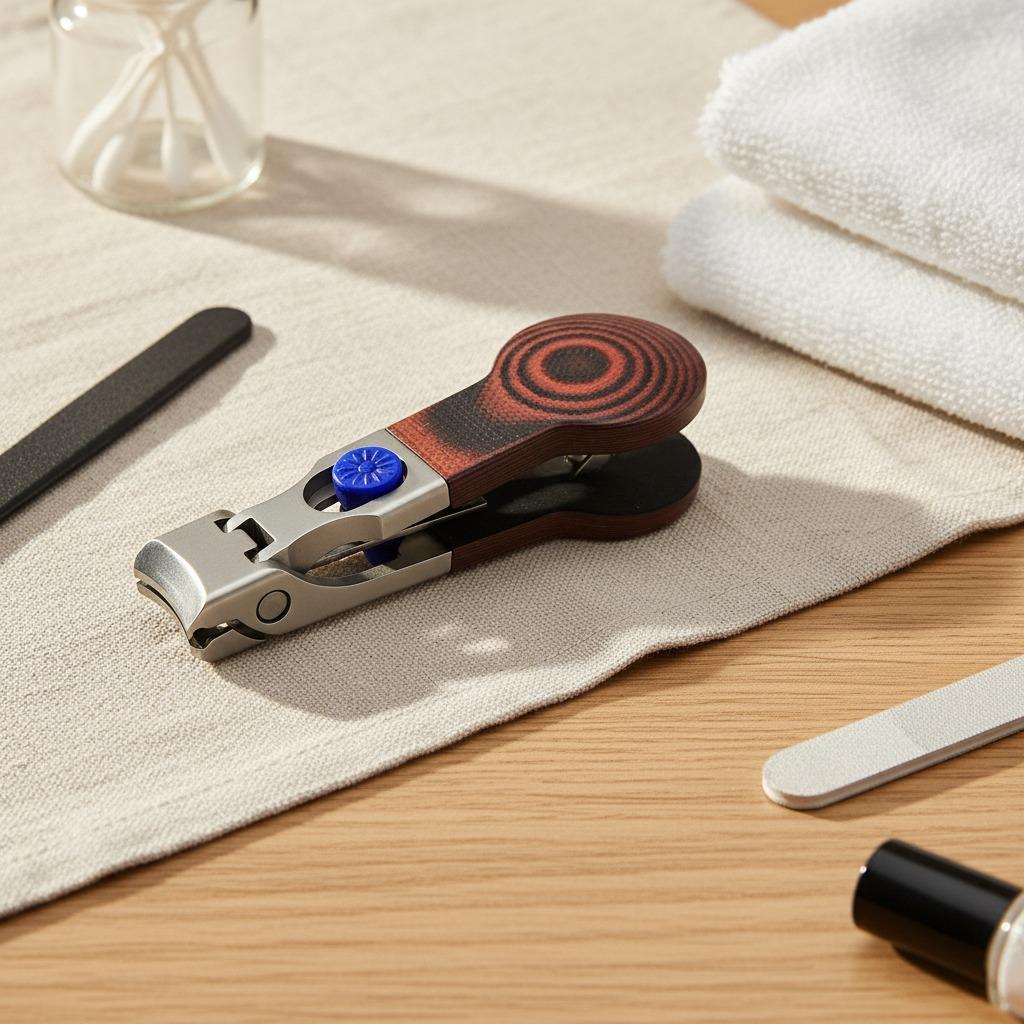
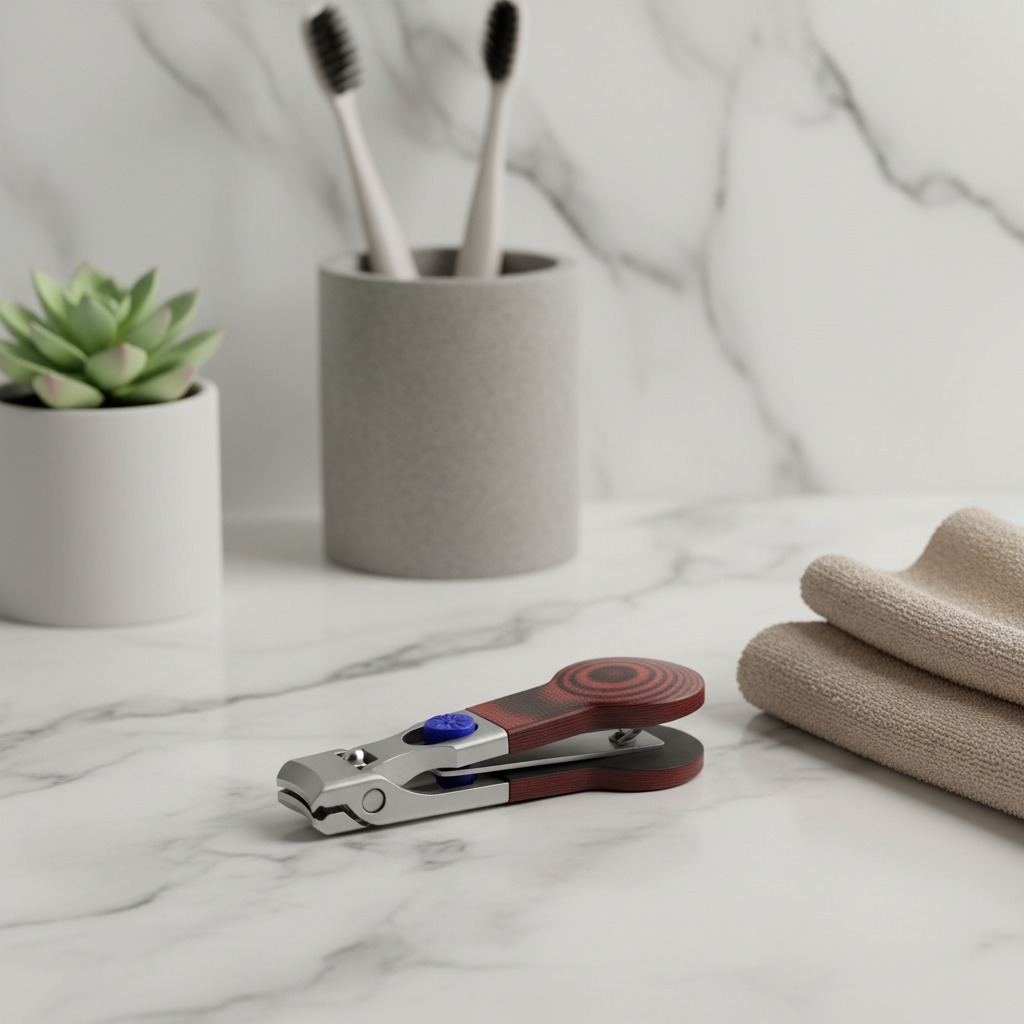
The custom made nail clipper shown by Olimor Beauty combines stainless steel construction with a patterned handle design and blue accents. The design uses concentric circle patterns to create visual distinction while helping the product stand apart from plain metal clippers. This kind of detail is useful when a buyer wants a product that is still practical but has enough design identity for retail display, gift packaging or branded sets.
Customization should not be limited to decoration. Buyers should also consider the intended use environment. A home grooming product may prioritize comfortable handling and attractive packaging. A salon supply item may require a more durable impression and easy cleaning. A travel kit clipper may need compact presentation and secure packaging. Clarifying the use case first helps prevent a product from being customized only on appearance while ignoring the daily experience of the user.
Key Selection Criteria for a Reliable Nail Clipper Supplier
When comparing nail clipper suppliers, buyers should go beyond catalog photos. Images can show the basic design, but they do not fully communicate cutting performance, surface finish, lever tension or consistency. A reliable supplier should be able to discuss the product in terms of material selection, production control and final inspection rather than relying only on visual appeal.
Based on the supplied product details, Olimor Beauty highlights stainless steel construction, an ergonomic handle, sharp cutting edges and internal quality control from raw material selection through final assembly. These are the right categories for buyers to examine. The following checklist can help when reviewing a custom made nail clipper sample:
- Cutting alignment: The upper and lower cutting edges should meet evenly without visible offset.
- Cutting smoothness: The clipper should cut cleanly without crushing or splitting the nail.
- Lever stability: The lever should feel secure and should not wobble excessively during use.
- Grip comfort: The handle shape and surface should allow steady control, especially for repeated use.
- Surface finishing: Edges, corners and decorative areas should feel smooth and comfortable to touch.
- Decoration consistency: Patterns, blue accents or other custom details should appear consistent from piece to piece.
- Packaging fit: The clipper should sit securely in its selected packaging without scratching or moving unnecessarily.
This checklist is useful for both sample review and pre-shipment evaluation. It also gives purchasing, quality and marketing teams a shared language when deciding whether a custom version is ready for production.
Customization Decisions That Affect Buyer Success
Customization can add value, but only when it supports the product’s intended position. A budget retail clipper, a premium grooming gift and a salon counter product may all require different decisions. Before choosing colors, patterns or packaging, buyers should define the target audience, retail price tier, distribution channel and expected use frequency.
The Olimor Beauty nail clipper described in the product content uses a unique patterned design with blue accents. This detail gives the tool a more recognizable appearance than a plain clipper. For private label buyers, similar design decisions can help create shelf differentiation, but they should remain practical. A handle treatment that looks good but feels slippery will not serve the customer. A decorative feature that complicates cleaning may not be suitable for professional environments.
Consider these customization areas carefully:
- Visual identity: Color accents, pattern style and finish should match the buyer’s brand direction without making the product look overdesigned.
- Handle experience: An ergonomic handle can improve control, especially for customers who use the clipper frequently.
- Packaging format: Blister cards, boxes, travel pouches or kit packaging each create a different buying impression and cost structure.
- Brand placement: Logo position should be visible but not interfere with comfort, cleaning or the main decorative surface.
- Assortment planning: A nail clipper may sell alone or as part of a grooming set with related beauty tools.
Buyers developing a broader care range can review Olimor’s beauty tool products to think about how nail clippers may fit alongside other grooming accessories. For assortment planning, Olimor’s product collections can also help buyers compare categories and plan a more coherent product line.
Quality Control Points from Material to Final Assembly
Quality control for a nail clipper should be practical and repeatable. The original product information notes that Olimor Beauty checks each stage from raw material selection to final assembly. For buyers, the important point is to define what should be checked at each stage so the finished product matches the approved sample.
Raw material review should focus on whether the chosen stainless steel construction is appropriate for the product’s position and whether the surface can support the intended finish. During forming and assembly, the focus shifts to cutting edge alignment, lever movement and rivet or pivot stability. At finishing, inspectors should look for burrs, scratches, rough corners and inconsistent decorative effects. Final inspection should include both appearance and basic function, not only counting and packaging.
The most effective buyer conversations are specific. Instead of asking generally whether the quality is good, discuss what will be inspected and how defects will be classified. For example, a minor cosmetic mark on the back of the lever may not have the same importance as a misaligned cutting edge. A small color variation may be acceptable in some promotional orders but unacceptable for a premium retail display. Clear standards reduce disputes and help the exporter understand what matters most to the buyer.
How Exporter Communication Supports Better Orders
Working with top nail clipper exporters is not only about production. It is also about communication before sampling, during confirmation and after goods are prepared. A strong sourcing process begins with a complete brief. Buyers should provide target market, sales channel, preferred design direction, packaging expectation and any compliance or labeling needs relevant to their destination market.
If details are still undecided, a structured inquiry is better than a vague request. Include the intended buyer type, whether the clipper will be sold individually or in a set, what visual direction is preferred and whether there are benchmark products to compare. This helps the supplier recommend practical options without guessing.
Before approving production, review a physical sample whenever possible. Check the clipper with different nail thicknesses, hold it under normal lighting, open and close the lever repeatedly and inspect the decorative areas. If the product will be photographed for e-commerce, look at how the blue accents and patterned handle appear in images. A product can look different in studio photos than it does under store lighting, so buyers should evaluate both practical function and presentation.
For custom programs, you can send an inquiry with your project requirements or contact Olimor to discuss nail clipper sourcing details, packaging direction and sample review steps.
Maintenance and End-User Guidance to Reduce Complaints
Even a well-made nail clipper benefits from simple care instructions. Buyers often focus on production but overlook the small usage notes that can improve the customer experience. Clear end-user guidance on packaging inserts, product pages or after-sales materials can help reduce avoidable complaints.
Recommended user guidance may include keeping the clipper clean and dry after use, wiping the cutting area before storage and avoiding use on materials other than nails. If the clipper is part of a grooming kit, it should be stored so the cutting edges do not rub against other metal tools. For salon or shared-use environments, cleaning procedures should follow the buyer’s local hygiene requirements and the practices of the business using the tool.
Maintenance guidance should be concise and realistic. Customers are unlikely to follow complicated instructions for a small grooming tool, but they can understand basic care. A short care note can also reinforce the product’s value by showing that the brand takes function seriously.
Final Buying Perspective
A custom made nail clipper is a small product with many details that affect buyer satisfaction. Stainless steel construction, sharp cutting edges, ergonomic handling, decorative patterns and reliable inspection all contribute to a better result. The best sourcing decisions come from balancing design appeal with practical performance: a product should look appropriate for the brand, feel comfortable in the hand and deliver a clean cut consistently.
For retailers, distributors, salons and private label brands, the right supplier relationship can make custom nail clipper sourcing more predictable. By preparing a clear brief, evaluating samples carefully and setting practical inspection expectations, buyers can develop a nail clipper that fits the target market and supports long-term customer confidence.
Tag: