

Custom Logo Tweezers for Beauty Brands: What to Check Before You Order
Custom logo tweezers are small, but they carry a surprising amount of responsibility. For a beauty brand, salon, brow studio, retail kit or promotional grooming set, tweezers are not just a giveaway item. They are a precision tool that customers may use close to the eye area, often for eyebrow shaping, lash application, splinter removal or detail work. If the tips do not meet cleanly, the grip feels slippery, or the finish wears quickly, the brand printed on the handle is associated with that experience.
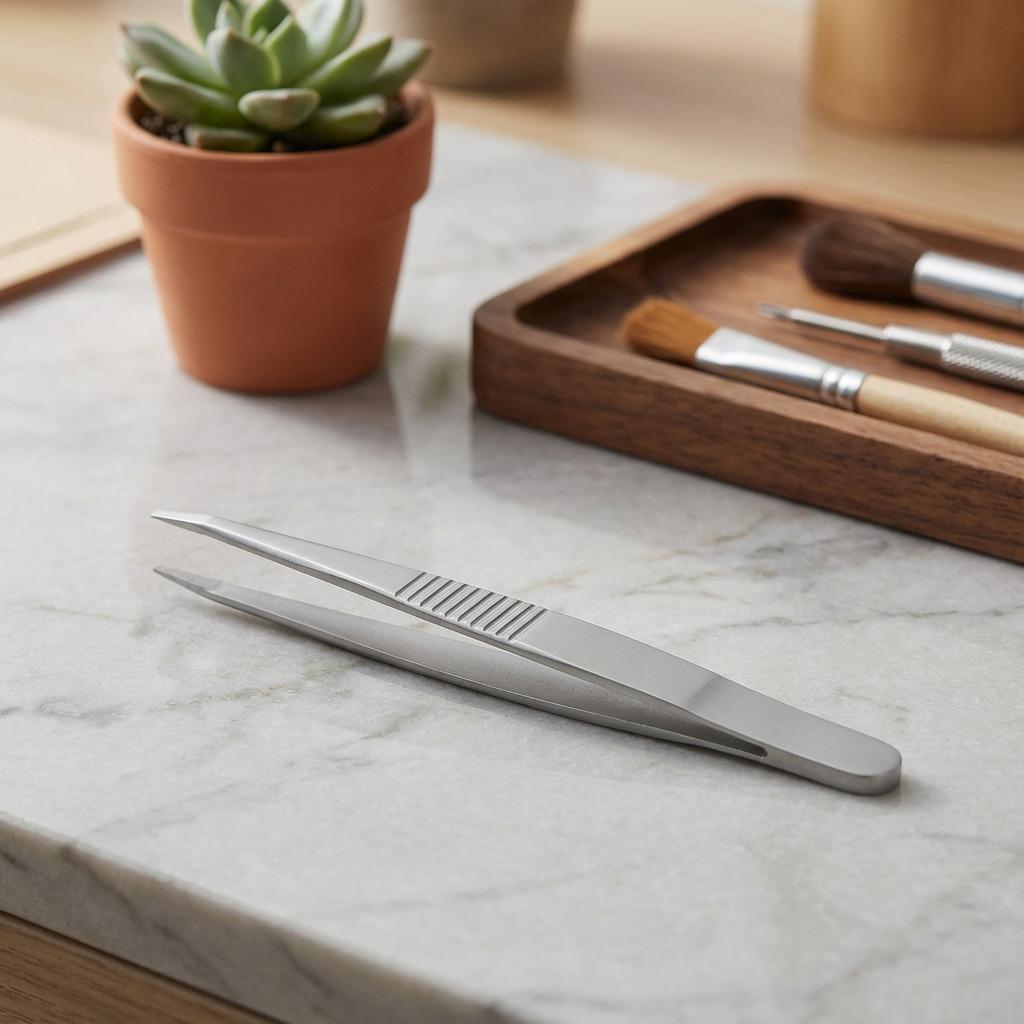
Olimor Beauty offers custom logo tweezers for buyers who need a practical grooming tool with brand presentation. The original product details highlight stainless steel construction, a 115 mm length, a lightweight 14 g body, textured grip and aligned tips. Those features matter because they affect control, durability and everyday usability. This guide explains how to evaluate branded tweezers before adding them to a beauty line, professional kit or promotional program.
Why Custom Logo Tweezers Work Well for Beauty Branding
Tweezers are frequently handled, stored in makeup bags and used during close-up grooming tasks. That makes them a useful brand carrier when the product itself is reliable. Unlike a purely decorative promotional item, a well-made tweezer has a clear purpose. It can be sold as a standalone tool, included with brow products, paired with lash accessories, placed in travel grooming kits or used by salons as part of client-facing retail.
The key is to treat the logo as part of the product design rather than the only value. A printed or etched logo may create brand recall, but the tool still needs proper balance, tip contact and comfortable handling. For businesses comparing beauty tool products, tweezers are often attractive because they are compact, easy to bundle and relevant to a wide range of beauty customers.
Core Product Features to Evaluate
Before focusing on color, logo size or packaging, start with the tool itself. A tweezer used for eyebrow shaping or fine detail tasks must perform consistently. The supplied product information notes a stainless steel body, 115 mm length and 14 g weight. Those are practical dimensions for a hand tool: long enough to hold securely, yet light enough for controlled movements.
- Material: Stainless steel is commonly selected for beauty tweezers because it can provide strength and corrosion resistance when properly manufactured and maintained.
- Tip alignment: The two tips should meet evenly. Poor alignment causes hair to slip, increases frustration and may lead users to squeeze harder than necessary.
- Grip texture: A textured grip helps reduce slipping, especially when used with skincare products or in humid salon environments.
- Weight and balance: At 14 g, the tool is lightweight, but buyers should still check whether it feels stable rather than flimsy.
- Length: A 115 mm body provides enough surface for handling and may also allow practical logo placement without crowding the design.
When reviewing samples, test the tweezers on fine hair or a comparable material rather than judging them only by appearance. Open and close the arms repeatedly to feel the tension. The pressure should be firm enough to grip, but not so stiff that it causes hand fatigue during repeated use.
Logo Placement: Visibility Without Compromising Use
A custom logo should support the product, not interfere with function. On tweezers, the usual branding area is the handle or outer body. Because the user holds the tool close to the tips, logo placement needs to avoid high-friction gripping zones when possible. If the branding sits where fingers repeatedly press, it may wear faster depending on the marking method and surface finish.
For beauty brands, clean and restrained placement often looks more professional than oversized artwork. Consider how the tweezer will appear in packaging, online product photos and in a customer’s hand. A narrow tool body can make complex logos difficult to reproduce clearly, so simplified artwork may be more effective. Buyers preparing a logo file should check line thickness, spacing and whether the mark remains readable at small size.
Color contrast also matters. A logo that looks good on a flat design proof may become hard to see on a brushed or reflective finish. If the tweezers use a metal surface, evaluate samples under normal bathroom, salon and retail lighting rather than only under studio lighting.
Use Cases for Branded Tweezers
Custom logo tweezers can serve different buyer goals, and each use case affects the selection criteria. A salon may care most about repeated handling and easy cleaning. A retail beauty brand may prioritize packaging presentation and shelf appeal. A promotional buyer may need a balance between cost control and a tool that still feels credible.
| Use case | What matters most | Recommended checks |
|---|---|---|
| Eyebrow grooming kits | Tip precision and comfortable tension | Test grip on fine hairs and inspect tip alignment |
| Lash accessory bundles | Control, cleanliness and compact packaging | Check handling near the tip and packaging fit |
| Salon retail products | Durability and professional appearance | Review finish consistency and logo wear resistance |
| Promotional beauty gifts | Brand visibility and practical everyday use | Confirm logo clarity, protective packaging and basic function |
For buyers building a broader product range, it can be useful to compare branded tweezers with other product collections to create a coordinated set. The goal is not only visual consistency, but also a similar level of user experience across the kit.
Quality Checks Before Approving Production
Because tweezers are precision tools, small manufacturing variations can be noticeable. A buyer checklist should cover both cosmetic and functional points. Cosmetic inspection includes surface finish, scratches, logo position, logo clarity and packaging condition. Functional inspection should include tip contact, arm tension, grip feel and whether the tool holds fine material without slipping.
- Review pre-production samples: Confirm the exact logo size, position, finish and general hand feel before moving forward.
- Check tip symmetry: Look at the tips from the front and side. Uneven contact is one of the most common performance issues.
- Test repeated opening and closing: The arms should return smoothly without feeling loose or overly stiff.
- Inspect the grip area: Texturing should feel helpful, not sharp or uncomfortable.
- Assess packaging protection: Tips should be protected during shipping and storage so they do not arrive bent or damaged.
For export-oriented orders, documentation, packing method, carton labeling and inspection standards should be clarified early. The original product information refers to export quality standards and quality assurance from raw material checks through final packaging. In practice, buyers should define what “acceptable” means for their order, including visual tolerances, logo positioning tolerance and sample approval rules.
Maintenance Guidance Customers Will Appreciate
Good after-purchase instructions reduce complaints and help customers use the product safely. Stainless steel tweezers still benefit from proper care. Users should wipe the tips after use, keep the tool dry before storage and avoid dropping it on hard surfaces, since impact can affect tip alignment. If the tweezers are used in a professional setting, cleaning procedures should follow the salon’s hygiene requirements and local regulations.
It is also helpful to remind users not to use eyebrow tweezers as general household pliers. Pulling thick objects, opening containers or scraping hard surfaces can damage the tips. A precision grooming tool lasts longer when it is used for the tasks it was designed to handle.
Choosing a Tweezers Supplier for Long-Term Consistency
A custom logo tweezer order is rarely only about the first shipment. If the product becomes part of a retail line or recurring promotional kit, consistency matters. Buyers should compare suppliers on sample accuracy, communication, packaging options, inspection process and ability to repeat the same finish and logo placement over time. Factory direct communication can also help reduce misunderstandings because details such as tip finish, logo artwork and packing method are handled closer to production.
When details such as order quantity, packaging style or branding method are not yet finalized, prepare a simple requirement sheet before requesting a quotation. Include the intended use, target market, logo file, preferred finish, packaging expectations and any inspection criteria. To discuss a custom logo tweezer project, buyers can send an inquiry or contact Olimor with artwork and product requirements.
Final Thoughts
Custom logo tweezers can be an effective branded beauty tool when precision and presentation are considered together. Stainless steel construction, aligned tips, a textured grip, practical 115 mm length and lightweight 14 g body all contribute to a better user experience. The logo adds identity, but the tool’s performance determines whether customers keep using it.
For beauty brands, salons and kit developers, the best approach is to evaluate tweezers as both a grooming instrument and a brand touchpoint. Check samples carefully, define inspection expectations, protect the tips in packaging and choose logo placement that looks clear without affecting grip. With the right sourcing decisions, custom logo tweezers can support daily grooming while keeping your brand in the customer’s hand.
Tag: