

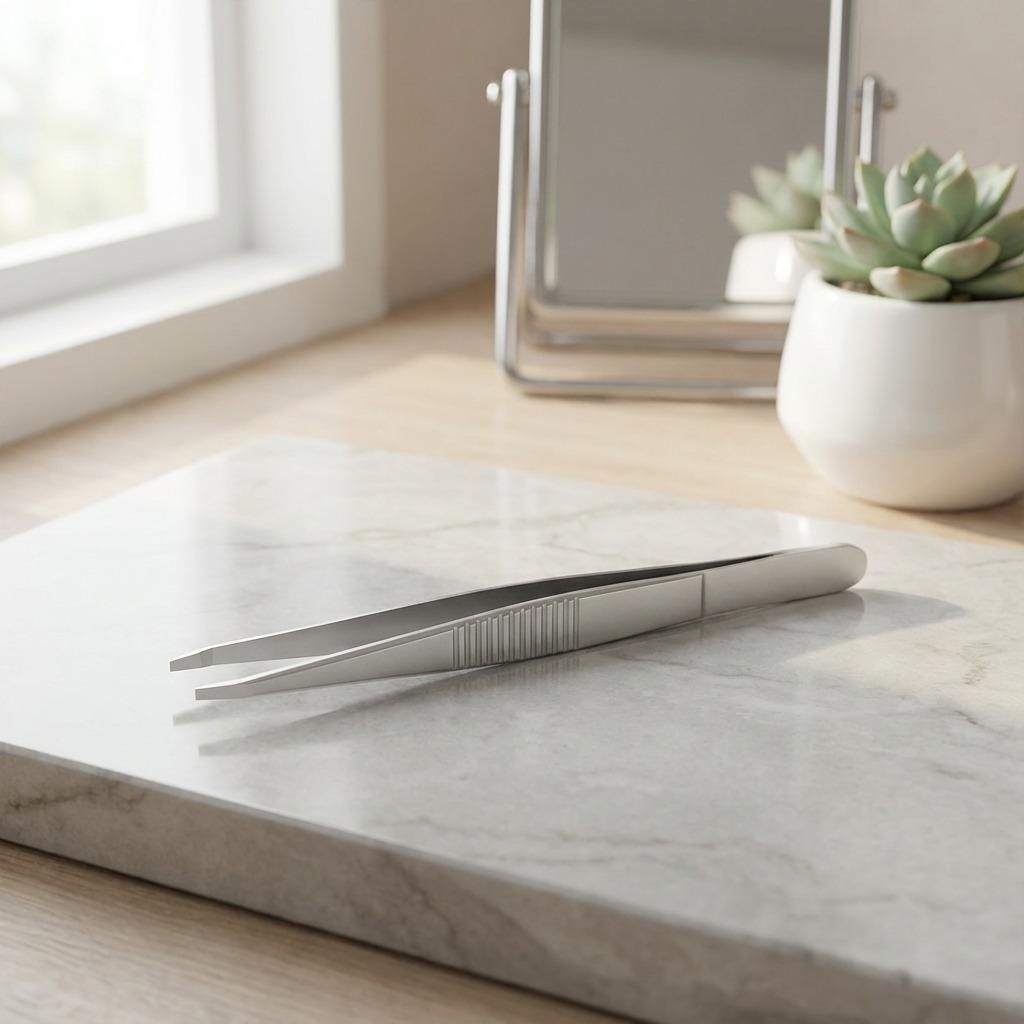
Custom Logo Tweezers for Beauty Brands: A Practical Sourcing Guide
Custom logo tweezers are small beauty tools with unusually high visibility. They sit on salon stations, travel in makeup bags, appear in brow kits and are handled close to the face. For beauty brands, salon groups, distributors and promotional buyers, that repeated use can turn a simple grooming tool into a practical brand touchpoint.
The most successful custom tweezers are treated as precision tools first and branded products second. A clean logo cannot make up for misaligned tips, uncomfortable tension or a finish that looks inconsistent across a batch. Before requesting samples, buyers should define how the tool will be used, what level of finish is expected, how the logo should appear and how the tweezers will be packed for retail or professional use.
This guide focuses on the sourcing decisions that matter: material direction, tip style, logo placement, sample evaluation, quality checks, packaging and supplier communication. If you are comparing tweezers with other beauty tool products, use the same practical checklist so your decision is based on performance as well as presentation.
Why Custom Logo Tweezers Suit Beauty and Brow Programs
Tweezers are used for tasks where accuracy and comfort matter: brow shaping, removing fine hairs, applying small beauty accessories, tidying nail details and handling delicate items. Because the user sees and feels the tool at close range, the product communicates more than a printed name. It can signal whether a brand understands professional grooming habits.
For brow studios and salons, branded tweezers help create a consistent visual standard across service stations. For retail beauty brands, they can be sold as standalone accessories or included in grooming kits. For distributors and private label sellers, custom tweezers are compact, easy to display and simple for buyers to compare during sampling.
However, the tool must match the commercial use case. A salon buyer may care most about alignment, tip control and cleanability. A retail brand may focus on shelf appeal, packaging and repeat customer satisfaction. A promotional buyer may want a simple logoed item, but still needs reliable function so the product is not discarded after one use.
Start With Function Before Artwork
The first sourcing question should not be logo color. It should be what the tweezer must do for the end user. A slant-tip tweezer is commonly chosen for brow shaping because the angled edge helps users approach hair from a controlled direction. A fine-tip or pointed option may suit more delicate work, but it requires careful handling and may not be appropriate for every consumer. Straight or flat tips can serve specific tasks, but they may not be the best choice for detailed brow work.
Olimor Beauty’s existing tweezer-related details include stainless steel tweezers, corrosion-resistant variants, textured grips, slant-tip ends, lightweight construction and a 115mm Ultra Precision Tweezer option. Some supplied product information also refers to models weighing 14 grams. These details are useful starting points, but buyers should confirm the exact specification of the sample they are evaluating rather than assuming every model shares the same length, weight or finish.
When reviewing a sample, close the tweezers slowly and look at the tips from several angles. The tips should meet evenly without a visible twist or gap. The closing force should feel controlled, not stiff or loose. If the tool is intended for brow use, test it on the type of fine hair the customer is likely to remove. If it will be used for beauty accessories or craft-like detail work, test it on a similar small item.
Compare Materials, Finishes and Tip Styles
Stainless steel is widely used for beauty tweezers because it supports a clean appearance and can be offered in corrosion-resistant variants. Still, buyers should not treat all stainless steel tweezers as equal. Tip grinding, polishing, handle shaping, surface finish and packaging protection all affect how the final product performs and looks.
Finish choice also affects branding. A brushed or matte surface can look professional and reduce glare in product photography. A polished surface can appear bright and premium, but logo contrast needs to be checked carefully. Colored finishes or coatings can improve shelf appeal, but buyers should consider wear points, cleaning habits and whether the look fits the brand’s market position.
| Decision Area | Best Used When | What to Check in Samples |
|---|---|---|
| Slant tip | Brow shaping, general grooming and salon kits | Even edge contact, comfortable angle and clean hair grip |
| Fine or pointed tip | Delicate beauty tasks and precision handling | Tip symmetry, safe packaging and suitability for target users |
| Textured grip | Professional handling or users who need more control | Comfort, cleaning access and whether the logo avoids the grip area |
| Matte or brushed finish | Subtle branding and professional retail presentation | Logo contrast, consistency of finish and visible scratches |
| Polished or colored finish | Gift sets, promotional kits and display-focused retail | Surface marks, decoration clarity and protection during packing |
The table should guide discussion, not replace sample testing. A tweezer that looks attractive in photos may still fail if the tips do not meet cleanly or if the tension causes hand fatigue.
Logo Placement and Decoration: Keep It Legible and Practical
A tweezer provides a narrow branding surface, so artwork must be simplified for the actual product. Fine lettering, thin lines and complex icons may lose clarity on metal, especially when the surface is reflective or textured. The most effective logo treatments usually use strong contrast, clean shapes and a location that does not interfere with grip.
Logo placement should be chosen with the user’s fingers in mind. A mark placed where fingers apply repeated pressure may wear faster or feel distracting. A logo placed on a flatter visible section can stay readable while allowing the tool to function normally. If the handle has a textured grip, the logo is usually better placed on a smoother area.
Before approving a logo sample, check these points:
- Use a clean, approved vector artwork file so the supplier is not recreating the mark from a low-resolution image.
- Confirm whether the logo should be subtle, retail-facing or clearly visible for salon station use.
- Review legibility under normal room lighting, not only studio photography.
- Check that the logo works on the selected finish and color.
- Make sure branding on the tweezer matches packaging, insert cards and any kit components.
- Keep an approved physical sample or clear reference photos for reorder comparison.
Decoration should support the product, not dominate it. A small, sharp logo on a well-balanced tweezer often communicates more professionalism than an oversized mark that interrupts the tool’s shape.
Packaging, Retail Presentation and Care Details
Packaging is not only a sales decision. It protects the tips, keeps the logo presentation clean and affects how the customer first experiences the product. Tweezers can shift during transport if inserts are loose or if the tips are not protected. For fine or pointed styles, packaging should be reviewed carefully because damaged tips can affect both safety perception and performance.
For retail kits, consider how the tweezer sits next to other beauty tools. The logo should be visible if that is part of the selling point, but the tool should also be easy to remove without bending the tips. For salon and professional supply orders, simple protective packaging may be more important than display graphics, especially if the tools will be unpacked and organized at workstations.
Care instructions are also useful. Buyers should avoid making unsupported claims about sterilization, medical use or special performance. Instead, provide practical guidance that fits the product and target market, such as keeping the tips protected, cleaning after use according to the buyer’s intended application and storing the tweezer dry. Professional users should follow applicable local hygiene rules for their services.
Quality Checks Buyers Should Use Before Ordering
Good quality control for custom logo tweezers is practical and repeatable. Many common problems can be found through visual inspection, functional checks and comparison against the approved sample. Buyers do not need to invent complicated testing to catch obvious issues such as misaligned tips, rough edges, inconsistent logos or scratched finishes.
A useful incoming inspection checklist includes:
- Compare random pieces with the approved sample for shape, finish, tip style and logo location.
- Close the tweezer under normal hand pressure and confirm the tips meet evenly.
- Check grip on fine hair or a defined test material that reflects the intended use.
- Look for burrs, stains, scratches, coating defects and sharp unintended edges.
- Review logo clarity, position and color consistency across the batch.
- Confirm packaging protects the tips and prevents movement during transit.
- Separate questionable pieces and document issues with photos before discussing resolution.
For larger or repeat orders, buyers may refer to recognized inspection frameworks such as ISO 2859-1 for sampling procedures, where appropriate. If selling into consumer markets, also consider the expectations of relevant public bodies such as the U.S. Consumer Product Safety Commission or applicable EU product safety rules. Requirements can change, so verify current versions and request the supplier documents that apply to your market. Do not assume a supplier holds a certification unless it is specifically provided and current.
Cost Factors Without Reducing Everything to Unit Price
Custom logo tweezer cost is influenced by more than the base tool. Material direction, finish, tip style, decoration method, packaging, order complexity, inspection expectations and shipping arrangement can all affect the final quotation. A lower unit price may not be the better option if it leads to poor tip alignment, weak packaging or a logo that does not match the approved sample.
When comparing quotations, ask suppliers to separate the main cost drivers where possible. Clarify whether the quote includes logo application, packaging, sample charges, artwork setup, export packing or any special finishing. Avoid assuming that two stainless steel tweezers are comparable unless the tip style, finish, size, packaging and inspection requirements are similar.
It is also useful to compare the commercial purpose. A promotional giveaway may not need the same presentation as a retail brow kit, but it still needs acceptable function. A professional salon product may justify more attention to grip, alignment and packaging protection because the tool will be used repeatedly in front of clients.
How to Evaluate a Custom Tweezer Supplier
A good supplier should help translate your brand idea into a workable product specification. Clear communication matters because small details affect the final tool: tip geometry, handle texture, finish, logo position and packaging protection. If you are reviewing multiple items across a beauty tools collection, keep the supplier brief consistent so every sample is judged against the same expectations.
Ask potential suppliers practical questions: Which tweezer models are available for logo customization? What surface finishes are suitable for the artwork? Can the logo be positioned away from the main finger pressure area? What packaging options protect the tips? How should buyers review and approve a pre-production sample? Which inspection records or product documents can be provided for the order?
Factory-direct communication can be helpful when customization is involved because there are fewer layers between the buyer’s requirements and production feedback. Even then, decisions should be documented. Keep a specification sheet with the selected model, material direction, finish, tip style, logo file, logo size and placement, packaging method and approved sample photos. This record helps prevent confusion during reorders.
When Custom Logo Tweezers Are the Right Choice
Custom logo tweezers are a strong fit when the tool has a defined role in your offer. They work well for brow service branding, retail grooming kits, private label accessories, professional training sets, beauty subscription programs and distributor catalogs. They are less effective when selected only because they are small and easy to brand. Customers keep tools that work well; they discard tools that feel flimsy or uncomfortable.
For a new beauty tool line, start with a focused assortment rather than too many variations. A slant-tip stainless steel tweezer can cover brow and general grooming needs, while a precision option may serve more detailed use cases. After the functional choices are clear, packaging and branding can be refined around the user experience.
Olimor Beauty can discuss custom logo tweezers, stainless steel beauty tools and factory-direct sourcing requirements. To share artwork, intended use and product questions, send a sourcing inquiry or contact Olimor Beauty. A clear brief makes it easier to evaluate samples and build a branded tool customers will continue using.
FAQ: Custom Logo Tweezers
Can I request samples before placing a custom logo order?
Yes, buyers should review samples before approving production. Use samples to check tip alignment, tension, finish, logo placement, packaging protection and overall handling. Confirm sample terms directly with Olimor Beauty for the model and customization you need.
Is there a minimum order quantity for custom logo tweezers?
MOQ can depend on the selected tweezer model, finish, logo method and packaging plan. Ask for the current requirement when you submit artwork and specifications, and avoid assuming the same MOQ applies to every option.
What customization details should be included in my brief?
Include intended use, target customer, preferred tip style, material direction, finish, logo file, logo size, logo placement, packaging needs and any inspection expectations. Reference photos or an approved sample can help reduce misunderstanding.
How should I check quality when the order arrives?
Compare random pieces with the approved sample. Check tip contact, grip performance, surface finish, logo consistency and packaging condition. Document any concerns with photos before discussing next steps with the supplier.
Can lead time be confirmed before production?
Lead time should be confirmed for the specific order after model selection, artwork review, sample approval and packaging requirements are clear. Customization and packaging decisions can affect timing, so request an updated schedule before final approval.
Tag: