

Custom Logo Tweezers: A Practical Sourcing Guide for Beauty Brands
Custom logo tweezers are small products, but they carry a surprising amount of brand value. For a brow studio, beauty retailer, promotional program or private-label grooming line, the tweezer is often handled at close range, stored for years and judged by how cleanly it grips fine hair. A printed or engraved logo can make the tool feel more professional, but branding alone cannot compensate for poor alignment, uncomfortable edges or a finish that wears too quickly.
This guide is written for buyers comparing branded tweezers for salon, retail or distribution use. It focuses on practical selection criteria: tweezer tip type, surface finish, logo placement, packaging, inspection and supplier communication. If you are also comparing other beauty tool products, the same sourcing discipline applies: define the user, confirm the function, then decide how the branding should support the product rather than distract from it.
Why Custom Logo Tweezers Work for Beauty and Grooming Brands
Tweezers are frequently used in eyebrow shaping, facial grooming, lash work, nail art preparation and general personal care. Because the tool is compact and reusable, a logo can stay visible long after the first purchase or appointment. This makes custom tweezers useful for several business goals: retail add-ons, salon merchandising, gift sets, professional kits and brand awareness campaigns.
However, the best use of a logo depends on the audience. A salon may prefer a subtle mark that looks clean beside other professional tools. A youth-focused beauty line may choose a stronger color finish or decorative pattern. A distributor serving multiple markets may need a more neutral appearance that works across different retail environments. Before discussing artwork, decide whether the tweezer is meant for professional treatment rooms, home grooming kits, travel sets or promotional bundles.
- Salons and brow bars: prioritize comfortable handling, dependable grip and a polished professional appearance.
- Retail beauty brands: balance visual appeal, packaging presentation and repeat customer satisfaction.
- Distributors and importers: need consistent batches, clear packing details and practical export communication.
- Gift set planners: should match the tweezer finish with mirrors, scissors, lash tools or other accessories.
Choosing the Right Tweezer Shape and Finish
The most important sourcing decision is not the logo method; it is the tweezer itself. A buyer should first confirm the intended use and then match the tip shape and grip surface to that use. Slant tips are widely used for eyebrow shaping because they can approach hair at an angle. Pointed tips may suit fine detail work, while flat tips may be preferred for broader gripping tasks. If the page, order file or supplier quotation does not specify the tip style, include it in the product brief before approving samples.
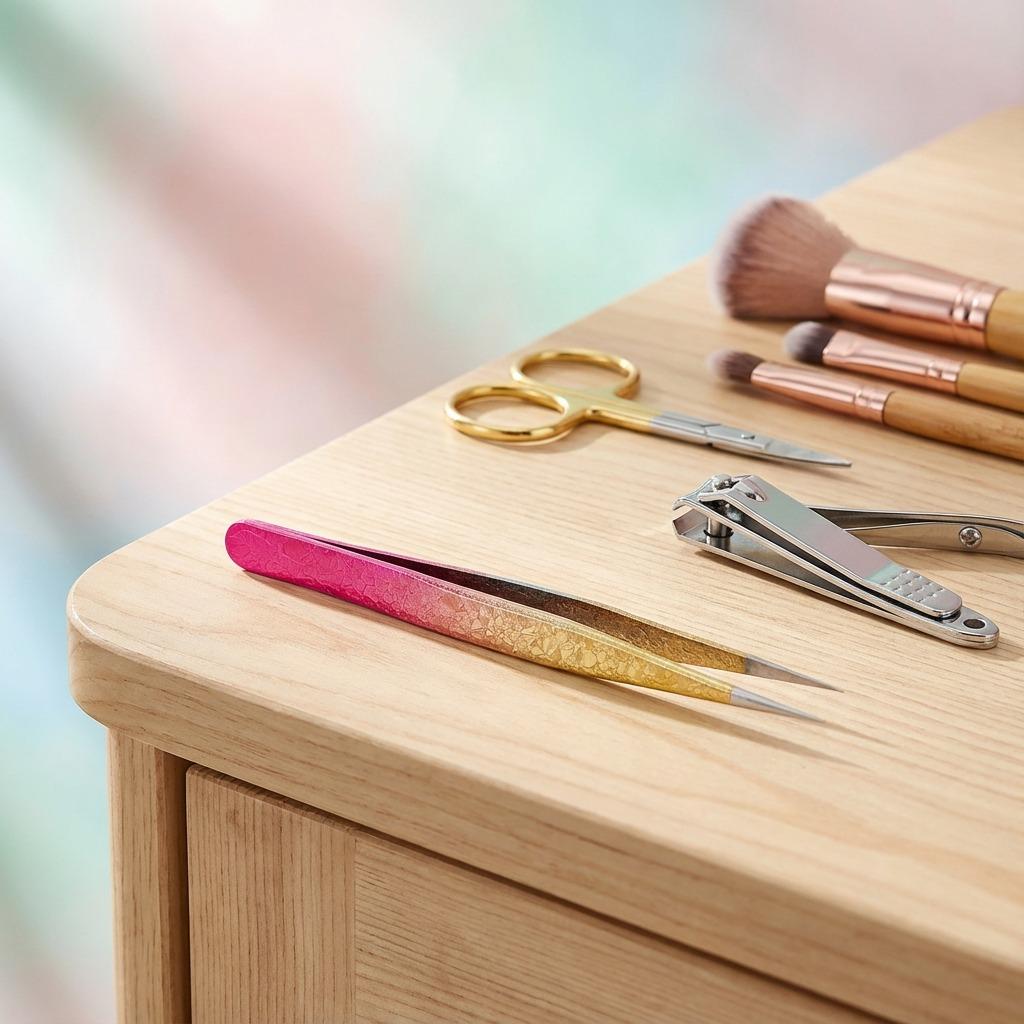
Surface finish also matters because it affects both appearance and handling. Smooth polished surfaces can look premium, but some users prefer a textured or embossed grip area for control. The supplied product information references Gradient Precision Tweezers with gold-to-pink gradients and embossed patterns for grip. That type of visual treatment may suit beauty retail, promotional kits or brands that want a more decorative tool. For more conservative professional kits, a simpler matte, satin or classic metallic finish may be easier to pair with different packaging styles.
When evaluating a finish, avoid judging only by a front-view photo. Ask how the tool looks from the side, whether the color is even near the edges and how the logo sits against the background. A logo that looks sharp on a plain surface may lose contrast on a gradient finish. Dark logos, light logos, laser marks and single-color prints should all be reviewed against the actual tweezer finish, not only against a digital mockup.
Logo Placement: Keep Branding Clear Without Hurting Usability
A tweezer has limited branding space, so placement is a design and usability decision. The logo should be visible when the tool is displayed in packaging, but it should not sit where repeated finger pressure will quickly wear it or make the grip feel uneven. Many buyers place the logo on the outer arm where it remains readable when the tool is held or placed in a pouch.
Prepare artwork in a simple format whenever possible. Fine lines, tiny lettering and multi-color gradients can be difficult to reproduce on a narrow metal tool. If the brand mark includes small text, consider using the symbol only on the tweezer and reserving the full logo for the backing card, pouch or outer box. This often creates a cleaner result and avoids crowding the tool.
Before confirming production, review a physical sample or at least a production-method sample for logo size, position and contrast. A sample is especially important when using a decorative body finish, because reflections can change how the mark appears under retail lighting or salon lamps.
Quality Checks for Export-Quality Tweezers
Export buyers need consistency across the full order, not just one attractive sample. Quality assurance should cover grip performance, finish appearance, logo accuracy and packaging condition. The original sourcing claim for export-quality tweezers centers on durability, sharpness and reliable finishing; those qualities should be translated into clear inspection points during purchasing.
| Check point | What to review | Why it matters |
|---|---|---|
| Tip alignment | Tips meet evenly when closed, without visible crossing or gaps. | Poor alignment can make fine hair difficult to grip. |
| Edge feel | No sharp burrs along the arms, grip area or tip edges. | Comfort and safety affect repeat use and reviews. |
| Tension | Tool closes with controlled resistance, not too loose or stiff. | Consistent tension reduces hand fatigue during detailed work. |
| Logo result | Correct position, size, color or mark depth compared with approved sample. | Branding errors are costly after packing or export. |
| Surface finish | Even color, no obvious scratches, spots or coating defects. | The finish is part of the perceived product value. |
| Packaging | Correct quantity, clean presentation and protection from rubbing. | Good packing helps preserve the finish in transit. |
For professional buyers, it is useful to create an approval file that includes product photos, logo artwork, packaging layout and the acceptable inspection standard. This reduces confusion when reordering or expanding into related product collections.
Factory-Direct Sourcing and Supplier Communication
Factory-direct sourcing can help buyers communicate more clearly about finish, logo placement, packing and production details. It can also reduce the number of handoffs between the brand and the people making the product. The benefit is not only cost control; it is the ability to catch design and quality questions early.
When comparing a tweezers supplier, focus on how clearly the supplier can turn your concept into a controlled order. A good sourcing conversation should include the intended market, expected use, tweezer shape, finish preference, logo method, packaging type and inspection needs. If you are unsure which finish or logo position is practical, provide the brand style direction and ask for workable options rather than approving a design that may not translate well onto metal.
Buyers should also separate confirmed specifications from preferences. For example, a required logo position is different from a preferred color tone. Required details should be written into the order documents; preferences can be discussed during sampling. This distinction helps both sides avoid disputes and keeps the project moving.
- Define the user: salon professional, retail consumer, gift recipient or distributor customer.
- Select the tweezer type and finish before finalizing logo artwork.
- Review a physical sample for grip, alignment, surface and logo clarity.
- Confirm packaging dimensions, unit presentation and carton labeling needs.
- Keep approved samples and artwork files for future repeat orders.
Packaging Decisions for Branded Tweezers
Packaging changes how custom logo tweezers are perceived. A simple sleeve may be suitable for salon back-bar use or promotional distribution. A blister card, paper box or pouch may work better for retail display or gift sets. The key is to match the packaging with the product value and sales channel. Heavy packaging can raise cost and waste for a low-cost giveaway, while minimal packaging may undercut a premium retail tool.
Consider how the logo appears as a system. The tweezer may carry a small mark, while the package explains the brand, use instructions, care guidance and barcode or regulatory information required by the selling market. Do not overload the tweezer itself with information that belongs on packaging. A clean tool paired with clear packaging usually looks more professional than a crowded imprint.
Care and Use Guidance That Reduces Complaints
Even a well-made tweezer can disappoint if customers use or store it poorly. Include simple care guidance in the package, especially for retail and gift set orders. Recommend wiping the tips after use, keeping the tool dry, storing it away from hard objects that can damage the tips and using the protective cap if one is provided. For salons, tools should be cleaned according to the hygiene procedures required in their working environment.
Clear care language can reduce avoidable complaints about dullness, contamination or bent tips. It also gives the end user confidence that the brand understands professional grooming tools, not just decoration.
When to Contact Olimor Beauty
Custom logo tweezers are most successful when product function, appearance and brand application are planned together. If you are developing a branded tweezer for retail, salon supply, promotional use or export distribution, prepare your artwork, target market and preferred finish before requesting a quotation. This makes sampling more efficient and helps identify potential issues with logo size, contrast or packaging early.
To discuss custom logo tweezers or related beauty tool sourcing, you can contact Olimor with your project details. If you already have artwork, quantity planning and packaging direction ready, you may also send an inquiry for a more focused sourcing conversation. A careful brief at the start is the simplest way to create branded tweezers that look good, grip reliably and represent your beauty business well.
Tag: