

Custom Logo Tweezers: Practical Sourcing Guide for Beauty Brands, Salons and Distributors
Custom logo tweezers are small beauty tools with direct brand impact. They are held close to the face, used for precise work, and judged quickly by their tip alignment, tension, grip comfort, finish and appearance. When your logo is added, the tweezer becomes more than a tool: it becomes a visible part of your service experience, retail offer or private label range.
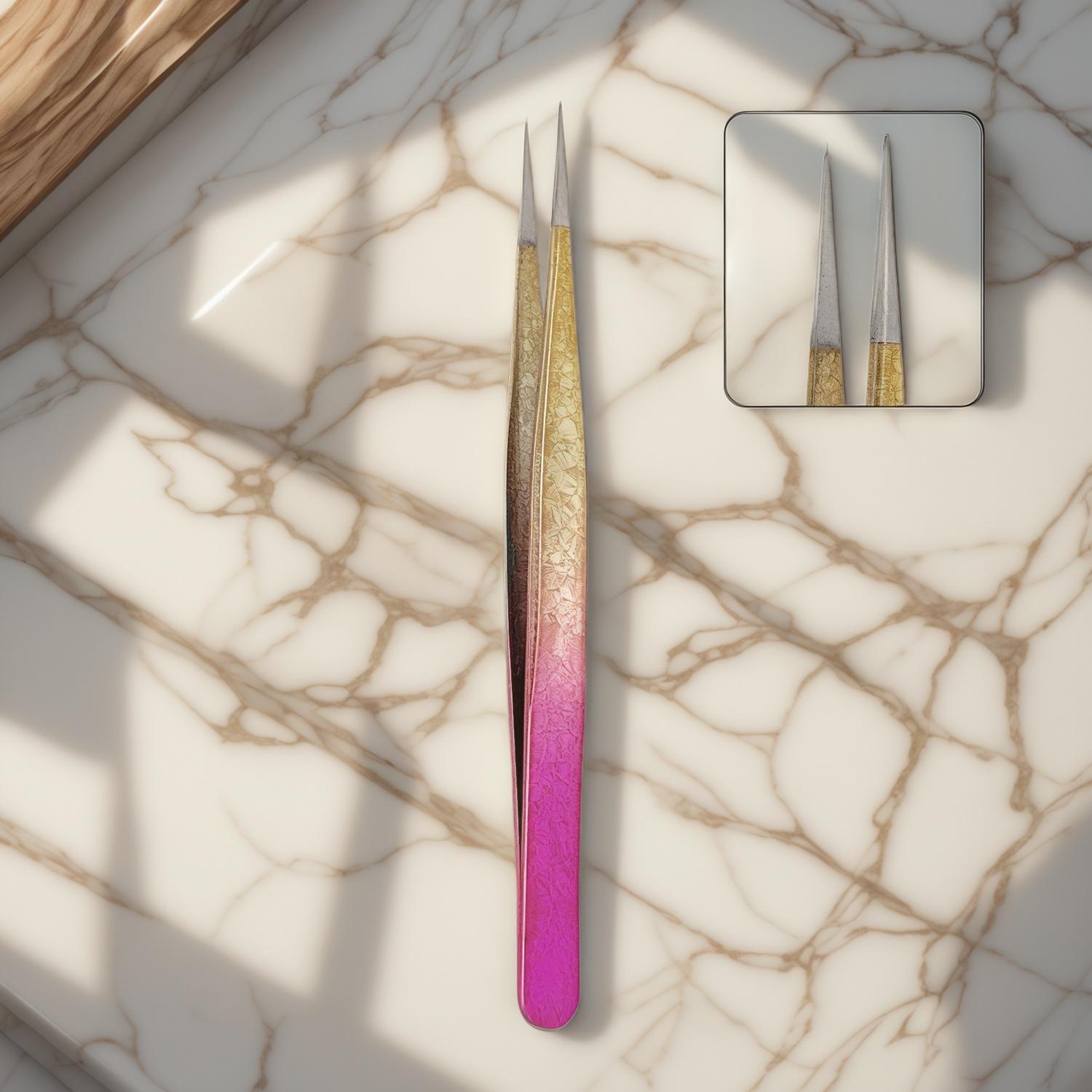
Olimor Beauty offers custom logo tweezers for buyers who need a professional-looking beauty tool with brand presentation. The product concept includes a gold-to-pink gradient finish, ultra-fine needle-point tips, corrosion-resistant performance, a textured grip and an ergonomic design for precise tasks such as brow sculpting and lash application. This guide explains how to evaluate those details, plan branding, compare options and ask the right sourcing questions before placing an order.
Who Should Source Custom Logo Tweezers?
Custom logo tweezers are most useful when the buyer has a clear commercial purpose. A salon may want a branded tool for daily professional use and client retail. A lash studio may need fine-point control for delicate work. A beauty brand may add tweezers to a grooming kit, promotional set or shelf-ready retail assortment. A distributor may need a flexible item that can be adapted for different customer accounts.
The strongest programs start with the user, not the logo. A brow specialist may prioritize precise closure and hand comfort. A retail customer may care about attractive color, easy handling and simple care instructions. A distributor may need repeatable quality and packaging that protects the finish during handling. If the base tweezer does not suit the end user, even attractive customization will not create long-term value.
Custom logo tweezers can also support brand recognition in practical ways. They can be used at treatment stations, included in brow maintenance kits, sold as add-on accessories, or paired with other tools from the Olimor beauty tool range. Because the tool is reusable and frequently handled, the logo can remain visible far longer than disposable promotional materials.
Start With the Tip: Needle-Point Tweezers Versus Other Styles
The tip is the working part of any tweezer. For this custom logo tweezer concept, the key functional detail is the ultra-fine needle-point tip. Needle-point tweezers are intended for high-precision contact, which can be helpful for refining brow edges, targeting individual hairs, assisting with lash-related placement tasks and handling small beauty details with control.
Needle-point tips are not the same as slant tips. Slant tips are often chosen for general brow maintenance because they provide a wider gripping edge and may feel more familiar to many consumers. Needle-point tips offer a more focused contact point, which can be useful for skilled users but may require more careful handling. For a professional brow or lash audience, that extra precision can be a selling point. For mass retail customers, clear usage guidance is important so buyers understand the tool’s purpose.
When comparing sample tweezers, do not evaluate the tip only by appearance. Close the tweezer slowly and check whether both points meet evenly. Look for crossing tips, gaps, rough edges or inconsistent contact. A tweezer that looks sharp but does not meet properly can slip, break hairs or feel unreliable during close work.
Quick tip selection guide
| Use case | Recommended priority | What to check in samples |
|---|---|---|
| Brow sculpting and detail work | Fine point accuracy and even tip meeting | Points close together cleanly without crossing or visible gaps |
| Lash studio support tasks | Controlled handling and comfortable tension | Tool opens and closes smoothly during repeated movements |
| Retail grooming kits | Balance of attractive finish and safe, clear instructions | Packaging explains intended use and protects the tips |
| Distributor assortment | Consistent finish, logo clarity and repeatable inspection criteria | Multiple samples show similar alignment, surface quality and branding position |
Evaluate Grip, Tension and Ergonomic Feel Before Branding
A branded tweezer should feel controlled in the hand. The Olimor product concept includes a textured grip and ergonomic design, both of which matter because tweezers are used in short, precise movements. A secure grip helps the user maintain control, especially during salon workflows where tools may be handled repeatedly throughout the day.
Tension is equally important. If the tweezer is too stiff, users may experience hand fatigue and reduced control. If it is too loose, the tool may feel weak or imprecise. The goal is a smooth closing action that allows the user to apply pressure accurately without fighting the tool. When reviewing samples, test the tweezer in the same position and angle that the final user would use it, not only by squeezing it once at a desk.
For salons and lash studios, comfort should be evaluated by the professionals who will actually use the tool. For beauty brands and retailers, comfort testing can help reduce customer complaints and returns. Ask testers to comment on grip security, closing force, point visibility, surface feel and whether the tool feels balanced in the hand.
Plan Logo Placement for Visibility Without Reducing Usability
Logo placement on tweezers requires restraint. The available branding area is narrow, and the tool must remain comfortable to hold, clean and use. A logo that is too large, too detailed or placed where fingers grip the tool can lose clarity or interfere with the user experience.
Simple artwork usually works best. A compact wordmark, short brand name or simplified symbol is often more effective than a complex logo lockup with small text. Vector artwork is generally the most practical file type for clean reproduction because it can be scaled without losing shape quality. Buyers should also prepare clear instructions for logo color, orientation and acceptable simplified versions.
The gold-to-pink gradient finish already gives the tweezer strong visual character. For that reason, understated branding may look more premium than a crowded design. Consider whether the logo should contrast against the finish, whether it must face outward in packaging, and whether the same branding style will be used across related tools in a kit.
Logo planning checklist
- Keep the artwork simple: Avoid tiny slogans, fine decorative lines or complex icons that may not reproduce clearly on a narrow tool.
- Confirm the viewing direction: Decide how the tweezer will sit in packaging or display and place the logo accordingly.
- Protect the grip area: Avoid logo placement that makes the tool uncomfortable or visually cluttered where the user holds it.
- Match the packaging: Coordinate logo color and position with box, pouch or card design so the final product looks intentional.
- Approve a physical sample: Review real logo clarity on the actual finish before confirming production.
Finish, Corrosion Resistance and Packaging Protection
The gold-to-pink gradient finish is a key part of the product’s retail appeal. It can help the tweezer stand out in grooming kits, salon retail displays or promotional beauty sets. However, finish quality should be assessed as both a visual and practical detail. Look for uneven color transition, visible scratches, rough areas, dull patches or marks that could reduce the perceived value of the branded tool.
The product concept includes corrosion-resistant performance. Buyers should still ask how the finish should be cared for, what cleaning methods are appropriate for the intended use, and how the supplier protects the tool during packing and transport. Corrosion resistance does not mean a tool can be stored wet, exposed to harsh conditions unnecessarily or handled without care.
Packaging matters because fine-point tweezers can be damaged by impact or rubbing. The tips should be protected so they do not bend or lose alignment in transit. The surface should also be protected from abrasion that could affect the gradient finish or logo. If the tweezer is sold directly to consumers, packaging should communicate both the brand and the purpose of the tool. If it is used in salons, packaging may be simpler but should still protect the tool before use.
Quality Checks for Custom Logo Tweezers
Quality inspection should turn product expectations into visible, repeatable checks. Olimor’s positioning includes attention to quality from raw materials through final packaging, and buyers can support that process by defining what they want reviewed at sample and order stages. The most useful checks combine function, appearance and packing condition.
For B2B buyers, a written inspection checklist is helpful because it creates a shared reference for your internal team and supplier. It also helps compare custom logo tweezers with other beauty tools from a broader Olimor product collection when building a private label range.
Practical inspection checklist
- Tip meeting: Close the tweezer slowly and confirm the needle points meet evenly without crossing.
- Tip condition: Check for burrs, blunt areas, bent points or rough edges that could affect precision.
- Tension: Open and close the tweezer several times to feel whether the movement is smooth and controlled.
- Grip comfort: Hold the textured area as a professional would during service and check for secure handling without sharpness.
- Surface finish: Inspect the gradient color for scratches, stains, rough areas or inconsistent appearance.
- Logo clarity: Confirm the logo is clean, correctly oriented, consistently positioned and not distorted.
- Packaging protection: Make sure tips and surfaces are protected from bending, rubbing or cosmetic damage.
- Carton and labeling review: Check that outer packaging and item identification match the order details and are suitable for receiving inspection.
If your products are sold into regulated consumer markets, verify the current requirements for your destination market. For example, buyers selling consumer products in the United States may need to consider guidance from the U.S. Consumer Product Safety Commission, while buyers selling into the European Union should review applicable product safety expectations such as those communicated by the European Commission. Requirements can change, and importers should verify current versions, product classification, labeling expectations and supplier documents rather than relying on assumptions.
Customization, Cost Factors and Supplier Evaluation
Cost for custom logo tweezers is influenced by several factors, but buyers should avoid choosing only by the lowest unit price. The final cost can depend on base tool design, finish complexity, logo method, packaging style, order quantity, inspection requirements and shipping arrangement. A tool with poor alignment, weak packaging or inconsistent logo placement can become expensive if it creates returns, complaints or rework.
When comparing suppliers, ask commercially practical questions. Can the supplier provide a sample with your logo before production? What artwork format is preferred? How will the gold-to-pink finish be protected during packing? What inspection points are used for tip alignment and logo consistency? Can the supplier help coordinate tweezers with other beauty tools or kit components? These questions reveal process reliability, not just product appearance.
It is also useful to define your target market before requesting a quote. A salon-use tweezer may need a different packaging approach than a retail gift set. A distributor may need neutral packaging options for multiple accounts, while a private label beauty brand may need consistent visual presentation across the full line. The more clearly you explain the intended user and sales channel, the easier it is to evaluate whether a supplier is a good fit.
How to Brief Olimor for a Custom Logo Tweezer Project
A clear brief helps avoid delays and mismatched expectations. Include the intended use, target customer, preferred finish, logo artwork, packaging needs and any market-specific documentation requirements you must review. If you are unsure which product option fits your range, you can contact Olimor Beauty to discuss the project scope before preparing final artwork.
Your brief should answer practical questions: Will the tweezer be used by professionals, sold to consumers or included in a kit? Should the logo be subtle or highly visible? Does the packaging need to support retail display? Are you matching a wider brand color story? Do you need samples for internal review, photography or buyer approval?
For active sourcing, prepare your artwork files, reference images, target use case and packaging preferences, then send a custom tweezer inquiry. Avoid relying only on a visual mockup; physical sample approval is important because logo clarity, grip comfort and tip alignment must be reviewed on the actual product.
Care Instructions to Include With Branded Tweezers
Maintenance guidance protects both the tool and the brand experience. Even a well-made tweezer can perform poorly if dropped, stored loose in a cosmetic bag, exposed to moisture for long periods or cleaned in a way that damages the surface. Simple care instructions are especially useful for retail packaging and salon resale.
Recommended care messaging can be concise: keep the tips protected when not in use, wipe the tool after use, store it dry, avoid dropping it on hard surfaces, and do not use the tweezer for tasks outside its intended beauty purpose. Professional users should follow their salon hygiene procedures and local requirements for tool cleaning and storage.
A small care card can improve perceived value because it shows the tweezer is intended to be used carefully and kept in good condition. It can also reduce avoidable complaints about bent tips or surface damage caused by storage and handling.
FAQ for B2B Buyers
Can I request a sample before ordering custom logo tweezers?
Sample review is strongly recommended. A sample allows you to check tip alignment, grip comfort, finish appearance, logo clarity and packaging protection before confirming a larger order.
Is there a minimum order quantity for custom logo tweezers?
MOQ can depend on customization details, packaging and production planning. Confirm the current requirement directly with Olimor when you submit your inquiry and include your target order volume.
Can the logo, finish or packaging be customized?
The product is positioned for custom logo branding, and packaging or presentation needs can be discussed based on your project. Provide vector artwork, intended use and packaging expectations so the supplier can review feasibility.
How should I evaluate quality before shipment?
Use a written checklist covering tip meeting, tension, textured grip feel, gradient finish, logo consistency and packaging protection. Confirm any additional inspection documents or market requirements with the supplier.
What affects lead time for a custom tweezer order?
Lead time can be affected by artwork approval, sample confirmation, customization complexity, packaging requirements and order quantity. Ask for the current schedule during quotation rather than assuming a fixed timeline.
Build a Custom Tweezer Program Around Performance and Brand Fit
The best custom logo tweezers combine practical precision with a clear brand presentation. Olimor’s gold-to-pink gradient tweezer concept offers visual appeal, while the ultra-fine needle-point tips, textured grip, ergonomic handling and corrosion-resistant performance support beauty-focused use. For salons, lash studios, beauty brands and distributors, the value comes from matching those features to the right customer and sales channel.
Start by defining the user and use case. Then evaluate the tip, tension, grip, finish, logo placement and packaging as a complete product. Approve samples carefully, ask practical supplier questions, and provide simple care guidance for end users. With a structured sourcing process, custom logo tweezers can become a reliable branded tool rather than a generic accessory with a printed mark.
Tag: