

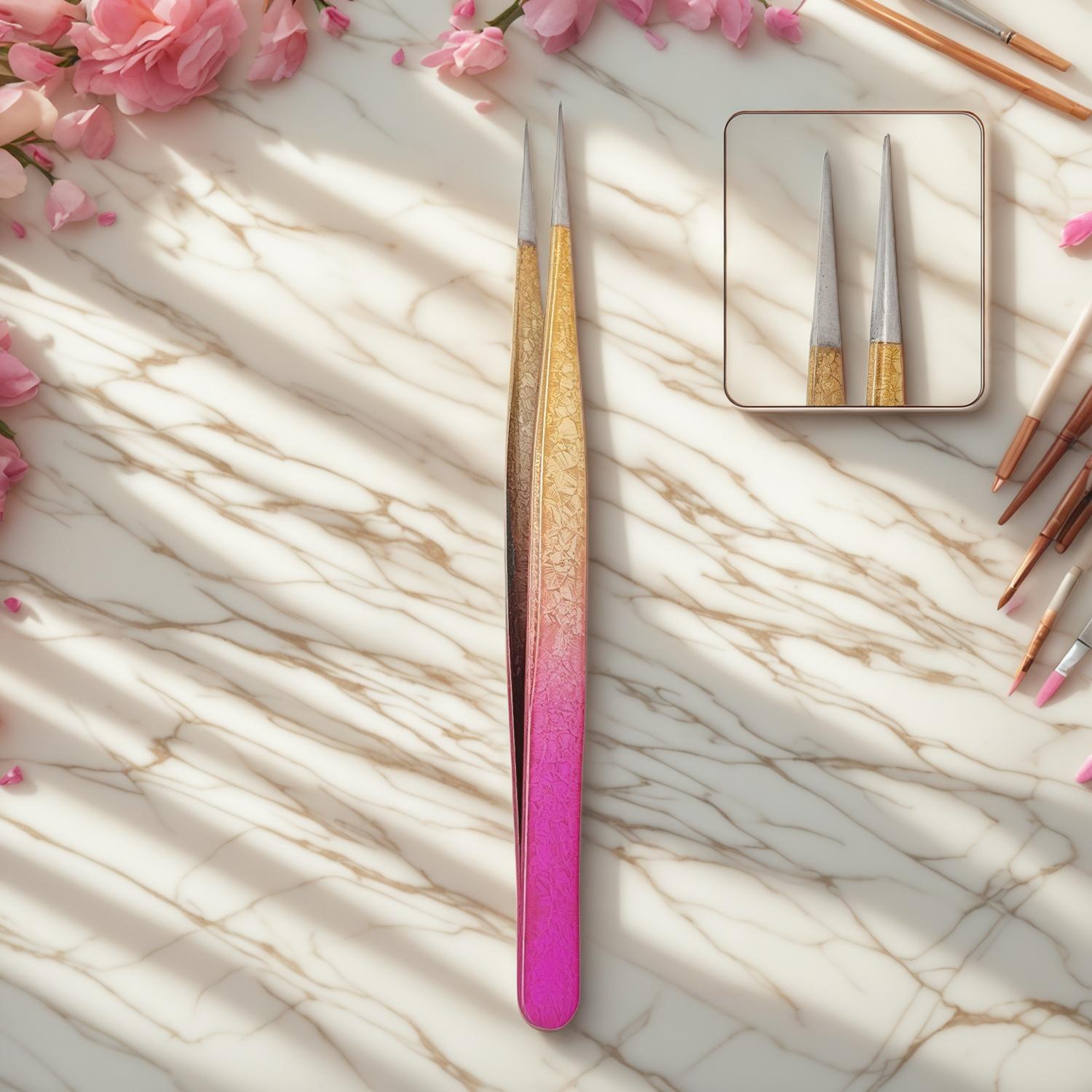
Custom Logo Tweezers: A B2B Buying Guide for Beauty Brands
Custom logo tweezers are practical beauty tools that can carry a brand far beyond the first purchase. They are used close to the face, judged immediately by how the tips close, and often kept in makeup bags, salon drawers or grooming kits when they perform well. For beauty brands, brow studios, salons, distributors and private-label grooming sets, the goal is not simply to add a logo to a metal tool. The goal is to choose a tweezer that grips accurately, feels controlled in the hand, protects the user experience and presents the brand clearly.
This guide focuses on how B2B buyers can select custom logo tweezers for retail, salon, promotional and kit-building use. It covers tip selection, material and finish review, logo placement, quality checks, packaging, cost factors and supplier questions. It is designed for buyers who need a useful, repeatable sourcing process rather than a generic promotional item.
Where Custom Logo Tweezers Fit in a Beauty Range
Tweezers work well in beauty assortments because they are compact, familiar and frequently used. A slant tweezer can support an eyebrow range. A pointed tweezer can serve detailed grooming needs. A branded tool can be included in lash kits, brow kits, manicure sets, travel grooming packs, salon retail displays and online beauty bundles.
For a cosmetics or grooming brand, a custom tweezer can increase the perceived completeness of a kit. For a salon, it can extend the service experience into retail. For a distributor, it can be a practical product with broad appeal across beauty, personal care and grooming channels. The commercial value depends on two factors working together: the tool must function well, and the branding must look intentional rather than added as an afterthought.
Buyers comparing related beauty tool products should treat tweezers as a performance item. End users may not know the manufacturing details, but they immediately notice uneven tips, uncomfortable tension, rough edges or a logo that rubs away quickly. A branded tweezer earns repeat visibility only when people continue to use it.
Choose the Tweezer Tip by Use Case First
The most important product decision is the tip style. Color, logo and packaging matter, but the end user’s task should decide the basic shape. A brow kit for everyday users usually needs a different tweezer than a detailed grooming tool for professional or precision-focused use.
| Tweezer type | Best-fit use | B2B buying notes |
|---|---|---|
| Slant tip | Everyday brow shaping and general hair removal | A versatile choice for retail kits, salon resale and broad consumer use. |
| Pointed tip | Fine detail work and removal of very small hairs | Needs secure tip protection because the point is more vulnerable to damage. |
| Flat tip | Gripping broader hairs or handling small beauty accessories | Useful in some grooming sets, but less precise for detailed brow shaping. |
| Point-slant hybrid | Detail work with some everyday flexibility | A balanced option when a kit needs more precision without being too specialized. |
When reviewing samples, do not rely only on the appearance of the tip. Test the closing action. The two ends should meet evenly and grip a fine hair or thin thread without requiring excessive force. If the tweezer slips, pinches unevenly or needs too much pressure, the customer will likely judge it as low quality even if the packaging looks premium.
For professional brow environments, control is especially important. A tweezer that is too stiff can tire the hand during repeated use, while one that is too loose may feel unstable. For mass retail or promotional beauty sets, a comfortable medium tension can suit a wider range of users. The best choice is the one that matches the user and channel, not necessarily the most specialized design.
Material, Finish and Hand Feel: What to Inspect
Olimor custom tweezers are presented as stainless steel beauty tools. Stainless steel is commonly selected for tweezers because it supports a clean appearance and daily grooming use, but buyers should still evaluate the complete product. Material wording alone does not guarantee a good user experience. Tip grinding, polishing, tension, coating consistency and edge comfort all influence the final result.
Start with the feel in the hand. The arms should be smooth where the fingers rest. There should be no sharp unintended edges, burrs, rough inner surfaces or visible finishing defects. The tweezer should close consistently from sample to sample. A polished or colored finish should look even under normal retail lighting as well as under closer inspection.
Surface finish also affects branding. A logo that looks clear on a matte surface may appear different on a mirror-like finish. A colored tweezer may need stronger contrast for readability. If the tweezer will be sold as part of a premium set, the finish should coordinate with other tools, cartons, sleeves or pouches in the assortment.
Buyers building a coordinated private-label line can review broader beauty tool collections to think about how tweezers will sit next to scissors, lash tools, nail tools or grooming accessories. Consistency across finish, logo placement and packaging often matters as much as the individual tool.
Logo Placement and Branding That Still Looks Professional
A tweezer gives limited space for branding, so the artwork must be simplified for the product size. A logo that works on a website header or outer carton may become unreadable on a narrow metal arm. Fine lines, small taglines, complex icons and long names often need adjustment before production.
Good custom branding is visible without interfering with use. Buyers should decide whether the logo should be subtle and premium or bold and promotional. The logo should not crowd the product, and it should not be placed where repeated finger contact will make it look worn too quickly. Placement should also respect the tweezer’s shape; a straight logo may appear visually misaligned on a curved or angled body if the mockup is not checked carefully.
Artwork questions to answer before sampling
- Is there a simplified logo version suitable for a narrow metal surface?
- Will the logo remain readable at actual tweezer size?
- Should the mark be placed on one arm or both arms?
- Does the logo position avoid the main finger pressure area where possible?
- Does the logo color or finish coordinate with retail packaging?
- Will the same branding system be used across other tools in the range?
Physical samples are essential. A digital mockup can confirm direction, but it cannot show the full effect of reflection, coating, hand feel or small-scale readability. Approve the artwork only after checking a real sample under conditions similar to the final selling environment.
Quality Checks from Raw Material Review to Final Packaging
For custom logo tweezers, quality control should not begin at final packing. Problems can appear during material preparation, forming, grinding, polishing, finishing, logo application and packing. A reliable inspection process helps protect both the tool performance and the brand presentation.
The most useful approach is to create a practical checklist that can be applied to samples, pre-production approval and incoming goods. This gives buyers an objective way to compare suppliers and avoid approving a product based only on appearance.
Custom tweezer inspection checklist
- Tip alignment: Confirm that the tips meet evenly and grip fine hair or a thin test fiber without slipping.
- Closing tension: Check that pressure feels controlled, not overly stiff or loose.
- Tip condition: Look for bent points, uneven grinding, gaps or rough gripping surfaces.
- Surface finish: Inspect for scratches, burrs, uneven polish, coating marks or discoloration.
- Logo clarity: Review placement, scale, readability, alignment and consistency across samples.
- Edge comfort: Hold and use the tweezer to ensure no rough area contacts the fingers.
- Packaging protection: Make sure the tips are protected and cannot be damaged by movement in transit.
- Retail presentation: Check barcode space, labeling area, instructions and brand consistency where applicable.
For markets with consumer product safety or labeling obligations, buyers should verify the current requirements with their own compliance team. Public bodies such as the U.S. Consumer Product Safety Commission and the European Commission’s product safety framework may be relevant depending on the market and sales channel. Requirements can change, so always verify current versions and request supplier documents that match the exact product and order.
Packaging for Retail, Salon and Kit Programs
Packaging should be chosen for the selling channel, not only for appearance. A tweezer sold on a retail peg display needs visibility, hanging strength and clear presentation. A tweezer included in a brow kit may need a compact insert that holds the tool securely. A salon-branded tweezer may be packed in a simple pouch or sleeve that feels clean and professional. An online bundle needs protection during shipping so the tips arrive intact.
Tip protection is especially important for pointed and point-slant tweezers. If a fine tip is bent in a makeup bag, carton or shipment, the tool may lose its precision. A cap, pouch, tray or secure insert can reduce movement and preserve alignment. Packaging should also prevent the tweezer from scratching other items in a set.
Useful packaging details include a clean front-facing logo, care guidance, storage instructions and any required retail labeling. Keep instructions simple: store dry after cleaning, protect the tips, avoid dropping the tool and use it only for appropriate grooming tasks. Clear care language can reduce avoidable complaints and extend the perceived value of the product.
Cost Factors Without Reducing the Tool to a Cheap Giveaway
Custom logo tweezer cost depends on multiple choices, and buyers should compare total value rather than only unit price. Tip type, finishing process, logo method, packaging format, inspection expectations and order complexity all affect the final commercial offer. A very low-cost option may be acceptable for a simple promotional set, but it can damage brand perception if the tips do not grip well.
Key cost drivers include the tweezer shape, surface finish, branding complexity, packaging materials, number of artwork versions, quality requirements and shipping method. A single logo on a standard finish is usually simpler to manage than several colors, multiple placements and custom packaging across many SKUs. Buyers should also consider the cost of poor quality: returns, complaints, replacement handling and lost trust can be more expensive than choosing a better-specified tool at the beginning.
To keep a project efficient, define the commercial role of the tweezer. Is it a hero tool in a brow kit, an add-on in a gift set, a salon resale item or a distributor’s private-label product? Once the role is clear, it becomes easier to decide where to invest: tip precision, finish, packaging, logo detail or assortment consistency.
How to Evaluate a Custom Tweezer Supplier
A good supplier should help translate a brand idea into a manufacturable product. For B2B buyers, the most useful conversations are specific: tip style, finish, logo artwork, packaging format, sales channel, inspection expectations and market requirements. A factory-direct approach can make these details easier to communicate because technical questions can be handled closer to production.
Before requesting a quotation or sample, prepare a short specification sheet. Include the intended tweezer type, finish direction, logo file, preferred logo position, packaging style, target sales channel and any labeling or compliance requirements for your market. If exact size, material grade, MOQ or lead time is not yet confirmed, ask the supplier to state available options rather than assuming.
Supplier questions worth asking
- Which tweezer tip styles are available for custom logo projects?
- How will logo placement be confirmed before production?
- What sample approval process is used before bulk manufacturing?
- How are tip alignment, tension, finish and packaging checked?
- Can packaging be adapted for retail, salon or kit use?
- What documents can be provided for the exact product and destination market?
If you are planning a custom beauty tool range, you can discuss the project with Olimor before finalizing the specification. For projects that already have artwork, packaging direction or channel requirements, an inquiry with product details can make the sampling conversation more efficient.
Maintenance Guidance to Include With Branded Tweezers
Simple maintenance guidance helps customers keep tweezers working properly. It also shows that the brand understands the product beyond decoration. Care instructions do not need to be long, but they should be practical and visible either on packaging, an insert or a product page.
Recommended care language can remind users to wipe the tweezer after use, keep it dry before storage, protect the tips and avoid dropping it on hard surfaces. Pointed tweezers should not be stored loose with heavy tools or cosmetics that can bend the tip. Users should also avoid using beauty tweezers for non-grooming tasks, such as prying or cutting, because that can damage alignment.
For salons or brow studios, storage hygiene and tool handling should follow the business’s own procedures and applicable local requirements. Buyers should verify any professional-use rules that apply in their market rather than relying only on supplier descriptions.
Final Buying Advice
The best custom logo tweezers combine accurate gripping, comfortable handling, clean finishing and branding that works at a small scale. Start with the end user and sales channel, then choose the tip style, finish, logo placement and packaging around that use case. Always approve a physical sample before production, and inspect both the tool and the packaging rather than judging only the artwork.
For beauty brands, salons and distributors, a well-made branded tweezer can become a daily-use product that keeps the brand visible. When the tool performs reliably, the logo becomes part of a useful routine instead of a short-lived promotional impression.
FAQ: Custom Logo Tweezers for B2B Buyers
Can I request samples before confirming a custom logo tweezer order?
Yes. Samples are the best way to check tip alignment, closing tension, finish, logo readability and packaging protection before approving production. Provide artwork and product preferences so the sample reflects the intended order as closely as possible.
Is there a fixed MOQ for custom logo tweezers?
MOQ depends on the selected tweezer style, finish, logo method and packaging requirements. Buyers should confirm the current MOQ for the exact specification instead of assuming one quantity applies to all custom projects.
What customization options should I prepare before contacting a supplier?
Prepare the tip style, logo file, preferred logo placement, finish direction, packaging type, intended sales channel and destination market. If you are unsure, provide the product purpose first so suitable options can be recommended.
How can I judge quality before bulk shipment?
Use an approved sample and a written checklist. Check tip alignment, grip, tension, surface finish, logo clarity, edge comfort and packaging protection. For regulated markets or retailer programs, verify current requirements and request documents for the exact product.
How is lead time determined for branded tweezers?
Lead time depends on sample approval, customization complexity, packaging, production scheduling and shipping arrangements. Confirm the timeline after the specification, artwork and packaging details are agreed.
Tag: