

Custom Logo Tweezers for Beauty Brands: A Practical Sourcing Guide
Custom logo tweezers are small products, but they carry a surprising amount of brand value. For beauty brands, brow studios, cosmetic gift sets, retailers, and private-label buyers, a pair of tweezers is often used repeatedly and kept for years. That makes it different from disposable packaging or one-time promotional items. When the tool feels precise, comfortable, and durable, the logo on it becomes associated with reliability.
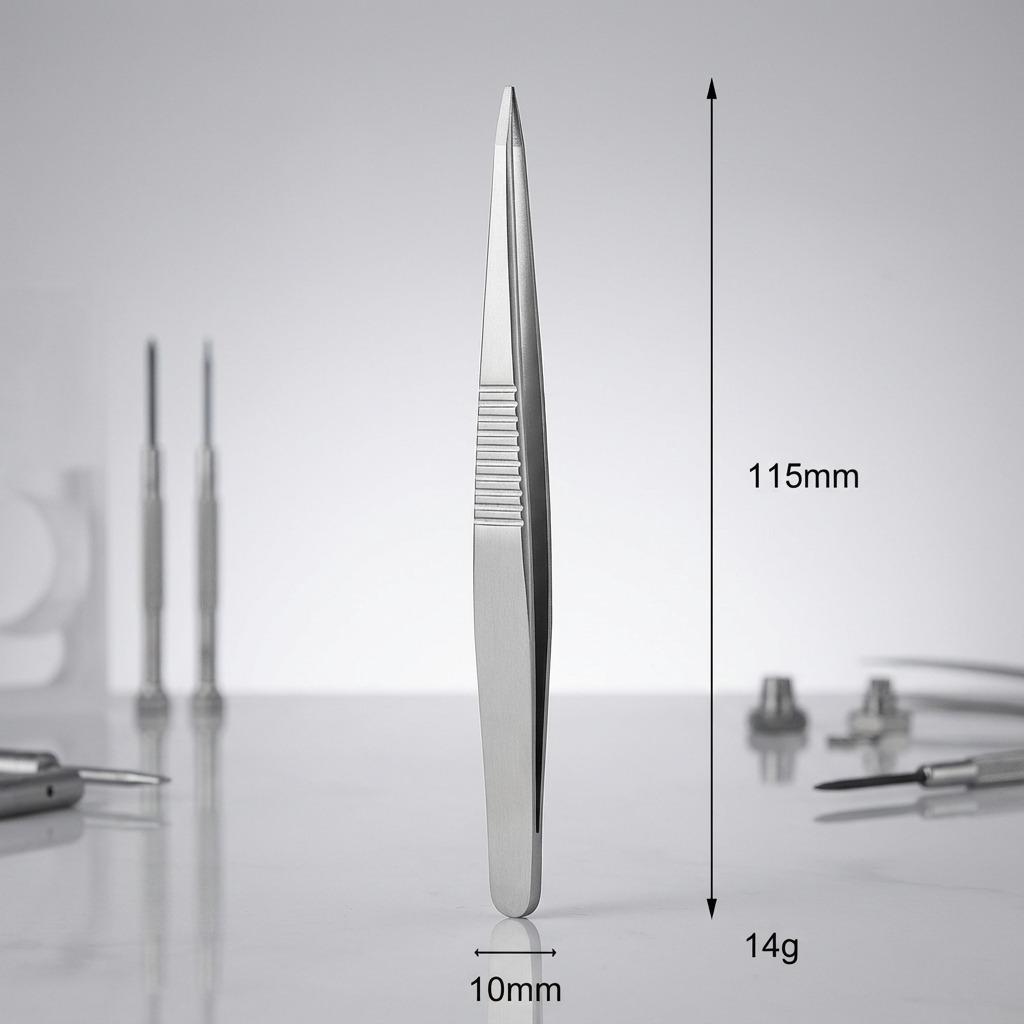
Olimor Beauty supplies stainless steel tweezers that can support brand customization for personal care and beauty markets. The original product details include a 115mm stainless steel tweezer design, a 14g weight, 10mm handles, anti-slip ridges, and fine tips with careful alignment. These are the kinds of details buyers should evaluate before treating tweezers as a simple logo item. A branded tweezer must still perform well in daily grooming, brow shaping, salon use, retail kits, or travel sets.
This guide explains how to select custom logo tweezers for commercial use, what to check before placing an order, and how to think about supplier reliability if you need consistent quality across repeated purchasing cycles.
Why Custom Logo Tweezers Work Well for Beauty Branding
A beauty tool is most effective as a branding item when it is genuinely useful. Tweezers meet that requirement because they are used for eyebrow shaping, removing small facial hairs, applying false lashes, handling nail art pieces, and other detail work. Unlike decorative merchandise, tweezers need to function every time the customer picks them up.
For a beauty brand, a logo on tweezers can serve several practical purposes:
- Retail differentiation: A branded tool helps a brow kit, lash kit, or grooming set feel more complete and commercially ready.
- Salon visibility: Tools used at beauty counters or brow bars keep the brand visible during service.
- Gift set value: A stainless steel tweezer can make cosmetic bundles feel more functional without requiring a large product footprint.
- Repeat exposure: Customers may keep tweezers in makeup bags, bathrooms, travel cases, or professional kits for long-term use.
- Private-label consistency: A custom logo helps unify tools with packaging, cartons, and other beauty tool products.
The key is to choose a tweezer that supports the brand rather than simply carrying a logo. If the tip alignment is poor, the tension feels unstable, or the surface finish wears quickly, the branding effect becomes negative. Good sourcing starts with the tool itself.
Product Details That Matter Before Adding a Logo
Custom logo work should come after the base tweezer has been assessed. For this product page, the useful known details are the 115mm length, stainless steel construction, 14g weight, 10mm handles, anti-slip ridges, and fine-tipped alignment. These factors influence how the tweezer feels in real use.
| Feature to Check | Why It Matters for Buyers |
|---|---|
| 115mm length | A medium length can be practical for daily grooming, retail kits, and professional handling without feeling too short or bulky. |
| Stainless steel body | Stainless steel is commonly chosen for beauty tools because it offers durability and a clean appearance suitable for personal care use. |
| 14g weight | A light tool can be comfortable for travel kits and repeated use, while still needing enough firmness for control. |
| 10mm handles | Handle width affects grip comfort, especially for users who need steady pressure during brow shaping or lash work. |
| Anti-slip ridges | Grip texture helps reduce slipping when hands are slightly damp or when the user is working quickly. |
| Fine, aligned tips | Tip contact is one of the most important performance points because it affects whether the tweezer can grasp fine hairs cleanly. |
When comparing samples, do not judge only by appearance. Open and close the tips several times, test grip on a fine hair or thread, and examine whether the tip ends meet evenly. A branded tweezer that looks attractive but fails to grip properly will not support customer trust.
Logo Placement and Finish: Keep Branding Clear but Practical
Logo customization should be visible, balanced, and appropriate for the surface area of the tweezer. Tweezers are narrow tools, so a complex logo may need simplification to remain legible. Buyers should prepare clean artwork and consider how it will look at a small scale before production.
Common logo planning questions include:
- Where should the logo sit? Handle areas are usually more practical than the tip area because the branding is easier to see and less likely to interfere with working surfaces.
- Is the logo too detailed? Fine lines, small slogans, and complicated icons can lose clarity on a narrow stainless steel body.
- Should the branding match packaging? The tweezer logo, pouch, backing card, box, and instruction insert should look like one coordinated product.
- Will the mark remain neat after repeated handling? Buyers should review logo samples for edge clarity, alignment, and resistance to ordinary handling.
- Does the logo support the retail price point? Minimal, precise branding can look more premium than a large mark that overcrowds the tool.
For brands building a full tool range, it is useful to standardize logo position across tweezers, scissors, nail tools, lash tools, and other items in the same line. You can browse Olimor’s product collections to think about how a consistent visual system may apply across related beauty tools.
Use Cases: Matching Custom Tweezers to the Right Channel
Not every buyer uses custom logo tweezers in the same way. The sourcing decision should reflect the sales channel and final user. A retail beauty brand may prioritize shelf appeal and packaging. A salon chain may focus on comfort and repeated use. A promotional buyer may need a clean, simple branded tool for kits or events.
For brow-focused brands, fine tip alignment and grip control are especially important. Users expect the tweezer to catch small hairs without repeated attempts. For lash-related kits, the tool may be used for handling false lashes or small accessories, so control and clean edges matter. For travel and grooming sets, the 115mm size and light 14g weight can be helpful because the product does not add much bulk.
For e-commerce sellers, photography also matters. Stainless steel tools can reflect light strongly, so product images should show the tip shape, side profile, grip ridges, and logo placement clearly. If the logo is part of the selling point, buyers should request samples that represent the intended finish and packaging style before preparing final listing images.
Quality Checks for Factory Direct Tweezers Orders
Working factory direct can help buyers control specifications and branding details, but quality checks still need to be specific. Tweezers are precision tools, and small variations can affect the user experience. A practical inspection plan should cover appearance, function, packaging, and brand consistency.
- Tip alignment: The two tips should meet cleanly and evenly. Uneven contact can make hair removal difficult.
- Grip tension: The tweezer should not feel too loose or too stiff. Consistent spring feel is important across the order.
- Surface finish: Check for scratches, stains, rough edges, and inconsistent polishing.
- Handle ridges: Anti-slip ridges should feel useful without being sharp or uncomfortable.
- Logo accuracy: Confirm size, position, orientation, spacing, and color or finish if applicable.
- Packaging fit: The tweezer should sit securely in its pouch, card, sleeve, or box without scratching the logo area.
- Carton labeling: For export orders, outer carton information should support warehouse handling and shipment identification.
These checks help protect the final brand experience. A tool that passes visual inspection but fails functional testing can create customer complaints. On the other hand, a precise stainless steel tweezer with clean logo placement can become a repeatable SKU for beauty retailers and private-label programs.
Choosing a Long-Term Tweezers Exporter
For global buyers, the supplier relationship matters as much as the first sample. A trusted tweezers exporter should be able to communicate clearly about product details, customization options, packing requirements, and repeat order consistency. The goal is not only to receive one acceptable shipment, but to build a tool program that can be reordered without unnecessary variation.
When evaluating a supplier for custom logo tweezers, prepare a structured checklist. Include the base product specification, logo artwork, packaging files, barcode or labeling needs, carton requirements, and inspection expectations. Keep approved samples and written specifications on record so future orders can be compared against the same reference.
It is also useful to think beyond one item. If your brand plans to expand into nail tools, brow tools, lash tools, or grooming accessories, choosing a supplier with broader beauty tool experience can simplify development. Olimor Beauty works with beauty tool buyers who need factory direct communication and branded product planning. To discuss a custom tweezer project, you can send an inquiry or contact Olimor with your artwork, target market, and packaging direction.
Final Buying Advice for Custom Logo Tweezers
Custom logo tweezers are most successful when branding and performance are treated as one decision. Start with the stainless steel tool structure, confirm length and handling comfort, test the fine tips, and then refine the logo placement. A clear, durable logo on a poorly performing tweezer will not help a beauty brand. A precise, comfortable tweezer with tasteful branding can support retail sales, salon use, gifting, and long-term customer recognition.
For buyers sourcing branded tweezers, the best approach is practical: compare samples, define inspection criteria, keep artwork simple enough for the product size, and coordinate packaging with the final use case. With the right planning, custom logo tweezers can become more than an accessory. They can be a small but reliable part of a beauty brand’s product experience.
Tag: