

Custom Logo Tweezers: How to Source a Precise, Branded Beauty Tool
Custom logo tweezers are small products, but they carry a surprising amount of responsibility. A retailer may use them as a private label beauty accessory, a salon may include them in a professional kit, and a promotional buyer may choose them because they are compact, useful and easy to brand. In every case, the value of the product depends on more than the logo. The tweezers must grip cleanly, feel balanced in the hand, resist everyday wear and present the brand in a polished way.
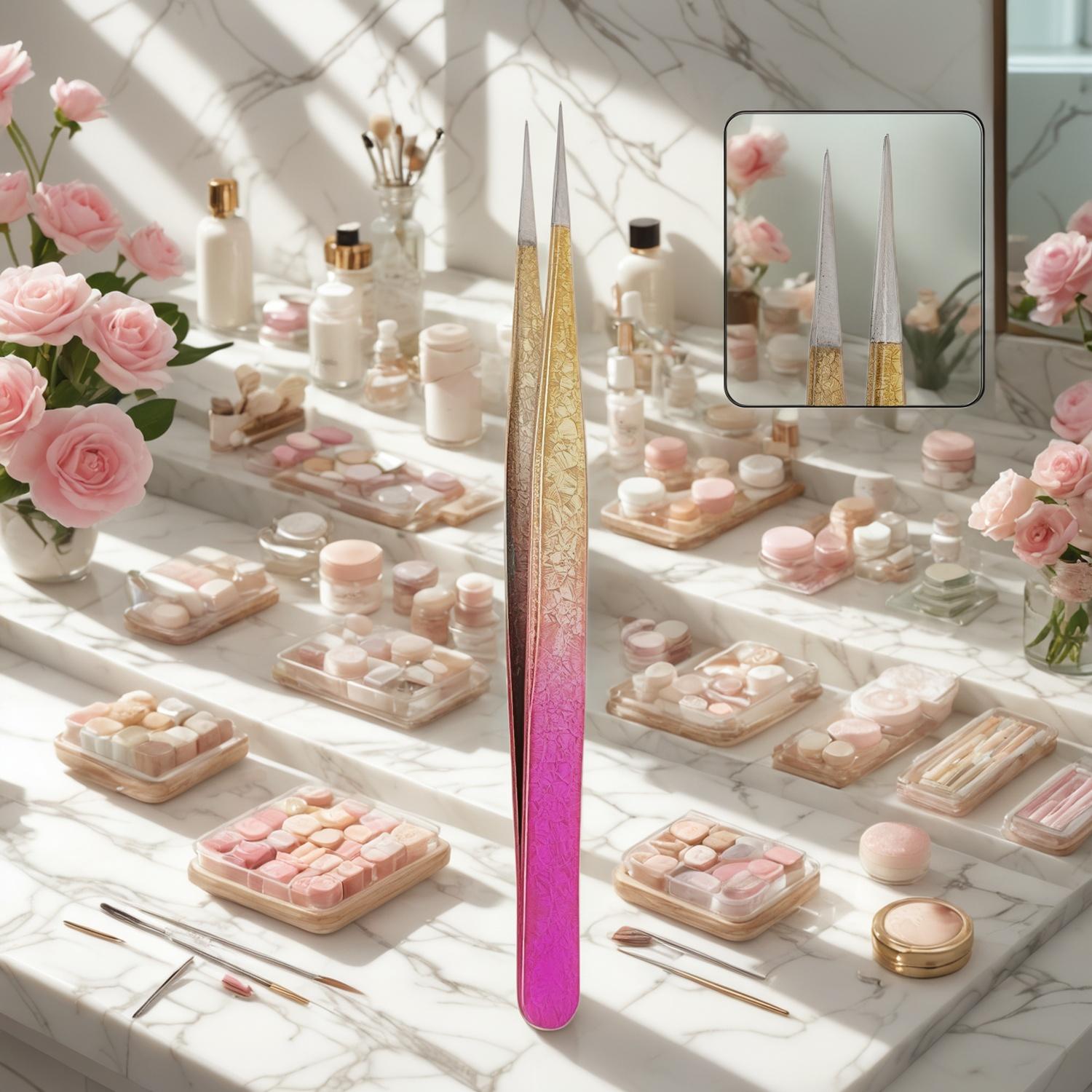
Olimor Beauty supplies beauty tools for buyers who need practical sourcing options and consistent presentation. For custom logo tweezers, important decisions include the base material, tip shape, surface finish, logo method, inspection standard and packaging plan. The original product concept highlights a gradient finish transitioning from vibrant pink to regal gold, stainless steel construction, finely pointed tips, ergonomic handling and custom engraved branding. These details give buyers a useful starting point when planning a branded tweezer order.
What Makes Custom Logo Tweezers Worth Branding?
Tweezers are handled closely and frequently. Unlike a disposable sample, a good pair may remain in a makeup pouch, salon drawer or retail kit for a long time. That makes them suitable for a logo when the product quality supports the brand promise. Poorly aligned tips, rough edges or weak tension can quickly create a negative impression, even if the logo looks attractive.
For beauty brands, custom logo tweezers can serve several purposes. They can be sold as a standalone accessory, bundled with brow products, added to a travel grooming set or used as a gift-with-purchase item. For distributors and chain retailers, a consistent logo and finish help the product fit a wider private label assortment. Buyers comparing options on beauty tool products should therefore evaluate both appearance and functional accuracy before focusing on decoration alone.
Core Product Features Buyers Should Evaluate
The supplied product description identifies several key features: stainless steel construction, pointed tips, ergonomic grip, a non-slip feel, quality checks and a gradient pink-to-gold finish. Each feature affects how the tweezers perform and how they are perceived by end users.
- Material feel: Stainless steel is commonly selected for tweezers because it can provide strength, a clean surface and everyday durability. Buyers should confirm that the finish is smooth, edges are safe to handle and the arms do not feel flimsy.
- Tip alignment: The two tips should meet evenly without visible gaps. Misalignment makes it difficult to grip fine hair or small objects.
- Tip sharpness and shape: Finely pointed tips are useful for precision work, including detailed beauty applications, crafting tasks or careful handling of small components. They should be accurate without feeling jagged.
- Tension: The arms should press together smoothly. If tension is too stiff, the user tires quickly; if too loose, grip control suffers.
- Surface finish: A gradient finish from pink to gold creates strong shelf appeal, but the color transition should look even and clean across the visible surfaces.
- Grip comfort: An ergonomic, non-slip design is helpful for professional and daily use, especially when precision is required.
These points are simple, but they separate a decorative item from a reliable beauty tool. A buyer who is building a long-term line should record acceptable limits for alignment, color consistency, surface marks and logo placement before confirming production.
Choosing the Right Tweezer Style for the Intended Use
The best custom logo tweezers depend on where and how the product will be used. The original description notes finely pointed tips, which are well suited to detail work. Pointed tweezers can help with precise beauty applications, but they may not be the right option for every retail audience. A brow-focused line might need a slanted tip, while a professional kit may include more than one shape.
When selecting a tweezer style, think in terms of user behavior rather than appearance alone. A customer shaping brows at home may value control and safety. A salon professional may prioritize alignment, easy cleaning and fatigue reduction during repeated use. A craft or electronics user may need a fine tip that can hold very small items securely.
| Buyer need | Feature to prioritize | Why it matters |
|---|---|---|
| Private label beauty accessory | Clean logo placement and consistent finish | The product must look retail-ready and match brand presentation. |
| Professional salon use | Tip alignment, tension and hand comfort | Repeated use requires reliable grip and reduced hand strain. |
| Promotional or gift set item | Attractive color, safe packaging and practical usability | The tool should feel useful, not merely decorative. |
| Detail work beyond beauty | Finely pointed tips and stable pressure | Small objects require accuracy and steady control. |
Logo Customization: Placement, Method and Brand Readability
Custom engraved branding is one of the main reasons buyers choose factory direct tweezers. A logo can be placed on the arm of the tweezers where it remains visible during display and use. The right decoration method should suit the surface finish, the logo complexity and the expected handling conditions.
For a gradient pink-to-gold finish, logo contrast is especially important. A mark that looks clear on the pink section may be less visible on the gold section, or the reverse may be true. Buyers should review logo size, orientation and color contrast against the actual finish rather than judging from a flat digital file only. Fine lines, small text and complex icons can lose clarity on narrow tweezer arms, so simplified artwork often performs better.
A useful branding review should include:
- Confirm the logo file is clean and suitable for small-scale application.
- Choose a placement that does not interfere with grip or tip performance.
- Check whether the logo remains readable under normal lighting.
- Review samples for scratches, uneven depth, blurred edges or poor alignment.
- Match the packaging design to the logo position so the brand is visible at retail.
For buyers developing a wider accessory range, it can be helpful to compare color and branding direction across product collections so the tweezers fit naturally with other beauty tools.
Factory Direct Sourcing: What to Clarify Before Production
Working with a tweezers factory direct can simplify communication around customization, inspection and packaging. It can also help buyers understand which requests are practical for production. However, factory direct sourcing works best when the buyer provides clear requirements. Vague requests such as “make it premium” are difficult to measure. Specific requirements such as “tips must meet evenly,” “logo centered on one arm,” or “gradient color approved against sample” are easier to inspect.
Before placing a custom order, prepare a buyer checklist that covers the visible and functional details:
- Product type: Confirm the tweezer shape, tip style and intended application.
- Material and finish: Record the requested stainless steel construction and surface appearance, including the pink-to-gold gradient if selected.
- Logo artwork: Provide usable artwork files and define size, position and orientation.
- Packaging: Decide whether the tweezers will be packed for retail sale, salon supply, promotional distribution or kit assembly.
- Inspection points: Include tip alignment, arm tension, surface marks, finish consistency, logo readability and packaging condition.
- Shipping preparation: Consider how the pointed tips will be protected during transport and handling.
If a project requires a specific finish, packaging style or private label presentation, buyers can send an inquiry with artwork and product expectations so the discussion starts with practical details.
Quality Checks That Matter for Export-Ready Tweezers
The original product information refers to quality checks from raw materials to final packaging. For tweezers, inspection should not be limited to appearance. A beautiful finish cannot compensate for tips that do not grip. Export-ready tweezers should be reviewed at several stages so defects are caught before goods are packed.
Functional checks often include opening and closing the arms repeatedly to feel the tension, checking the tip meeting point from several angles, and testing whether the tips can hold a fine object without slipping. Surface checks include looking for burrs, dents, uneven coating, discoloration or logo defects. Packaging checks verify that the product is clean, protected and correctly oriented for the buyer’s sales channel.
For pointed tweezers, tip protection is especially important. Even a well-made tool can arrive damaged if the tips rub against hard packaging or other metal items during shipment. Buyers should consider caps, sleeves or inserts where appropriate, especially for retail-ready or gift-set products.
Maintenance Guidance for End Users
Including simple care instructions can reduce complaints and help customers use the tweezers correctly. Stainless steel tweezers are durable, but they still benefit from routine cleaning and safe storage. This is particularly important for beauty use, where oils, makeup and skin residue can build up near the tips.
- Wipe the tips after use to remove residue.
- Keep the tweezers dry before storing them.
- Avoid dropping pointed tweezers, as impact can affect tip alignment.
- Store them in a pouch, sleeve or protected compartment to prevent scratches.
- Do not use precision beauty tweezers as general household tools, which can bend the tips.
These instructions are short enough for packaging inserts, product pages or retail listings. They also support the product’s perceived value by showing that the tool is designed for accurate use.
Building a Better Custom Tweezer Program
A successful custom logo tweezer project balances design, usability and production control. The gradient pink-to-gold finish gives the product visual appeal, while stainless steel construction, pointed tips and ergonomic handling support daily function. Engraved branding can turn the tool into a private label product, but the logo should be planned around readability, finish and user comfort.
Buyers who want dependable results should define the product use case first, then confirm the technical and visual details that support that use. Whether the tweezers are intended for retail shelves, salon kits, promotional sets or a broader beauty accessory range, the same principle applies: branding works best when the tool performs well. To discuss custom logo tweezers or related sourcing options, buyers can contact Olimor with their project requirements.
Tag: