

Custom Beauty Tools Manufacturer Guide for Manicure and Pedicure Kits
Choosing a custom beauty tools manufacturer is not only about placing nail tools into a case. For retailers, private-label beauty brands, salons, gift companies and distributors, the real value is a kit that looks appealing, feels controlled in the hand, performs consistently and arrives in packaging that suits the selling channel.
A manicure and pedicure kit may appear simple, but every component affects the customer experience. Nail clippers need clean alignment and comfortable leverage. Nail scissors should move smoothly and allow controlled trimming. Slanted tweezers need accurate tip closure. Cuticle tools should feel precise without rough edges. The storage case must protect the tools, present them clearly and support the buyer’s branding plan.
Olimor Beauty works in beauty tools and grooming accessories, including manicure and pedicure kits, precision nail clippers, cuticle pushers and related grooming products. Buyers comparing a compact personal nail kit, a Deluxe Manicure and Pedicure Kit style set, a gift-ready case or vegan-friendly manicure tools wholesale options can use the same sourcing principle: define the purpose of the kit first, then select only the tools, materials and packaging details that support that purpose.
What a Custom Beauty Tools Manufacturer Should Help You Decide
A capable supplier should make product decisions clearer, not more complicated. Before requesting samples or confirming artwork, define the intended use of the kit. A travel grooming kit, a salon retail set, a promotional gift and an online private-label product may all include clippers and tweezers, but they should not be specified in exactly the same way.
For home grooming, the priority is easy handling, safe storage and a practical mix of essentials. For salon resale, buyers usually focus on a polished appearance, dependable cutting performance and clean shelf presentation. For travel kits, compact size and low bulk matter. For gift programs, the first impression of the case, color, layout and packaging becomes especially important. For private-label ranges, consistent reproduction of the approved sample is critical.
- Target user: beginner home user, frequent traveler, salon customer, gift buyer, online shopper or professional grooming retailer.
- Tool mix: nail clippers, toenail clippers, nail scissors, slanted tweezers, cuticle tools, nail file and other grooming accessories only when they suit the kit’s position.
- Case format: compact folding case, larger organized case, gift-ready presentation case or custom outer packaging.
- Handling comfort: tool length, grip, opening tension and control during cutting, trimming or tweezing.
- Branding space: practical areas for logo placement on the case, insert card or outer package without making the product look cluttered.
Buyers building a broader grooming range can review Olimor’s beauty tool products to compare possible kit components before finalizing a custom assortment.
Why Many B2B Buyers Source Manicure and Pedicure Kits from China
China is an important sourcing location for beauty tools because buyers can often coordinate multiple parts of the finished product within one supply chain. A manicure and pedicure kit combines metal tools, surface finishing, case materials, inserts, logo application and outer packaging. Managing these elements separately can create delays and inconsistency, especially for private-label or gift programs.
Price is usually part of supplier evaluation, but it should not be the only reason to select a manufacturer. A low-cost kit that cuts poorly, feels rough, opens awkwardly or arrives with inconsistent finishing can damage customer trust and increase after-sales problems. The better B2B sourcing goal is stable value: tools that perform properly, cases that hold each item securely and packaging that matches the retail position.
When comparing a beauty tools supplier in China or any other sourcing location, look beyond general claims such as premium, professional or high quality. Ask to review physical samples and focus on visible, testable details. Do the clippers open and close smoothly? Do the scissor blades meet cleanly near the tip? Do the tweezers close evenly? Are the edges finished safely where the user holds the tool? Does the case keep every tool in place during handling?
Core Tools in a Practical Manicure and Pedicure Kit
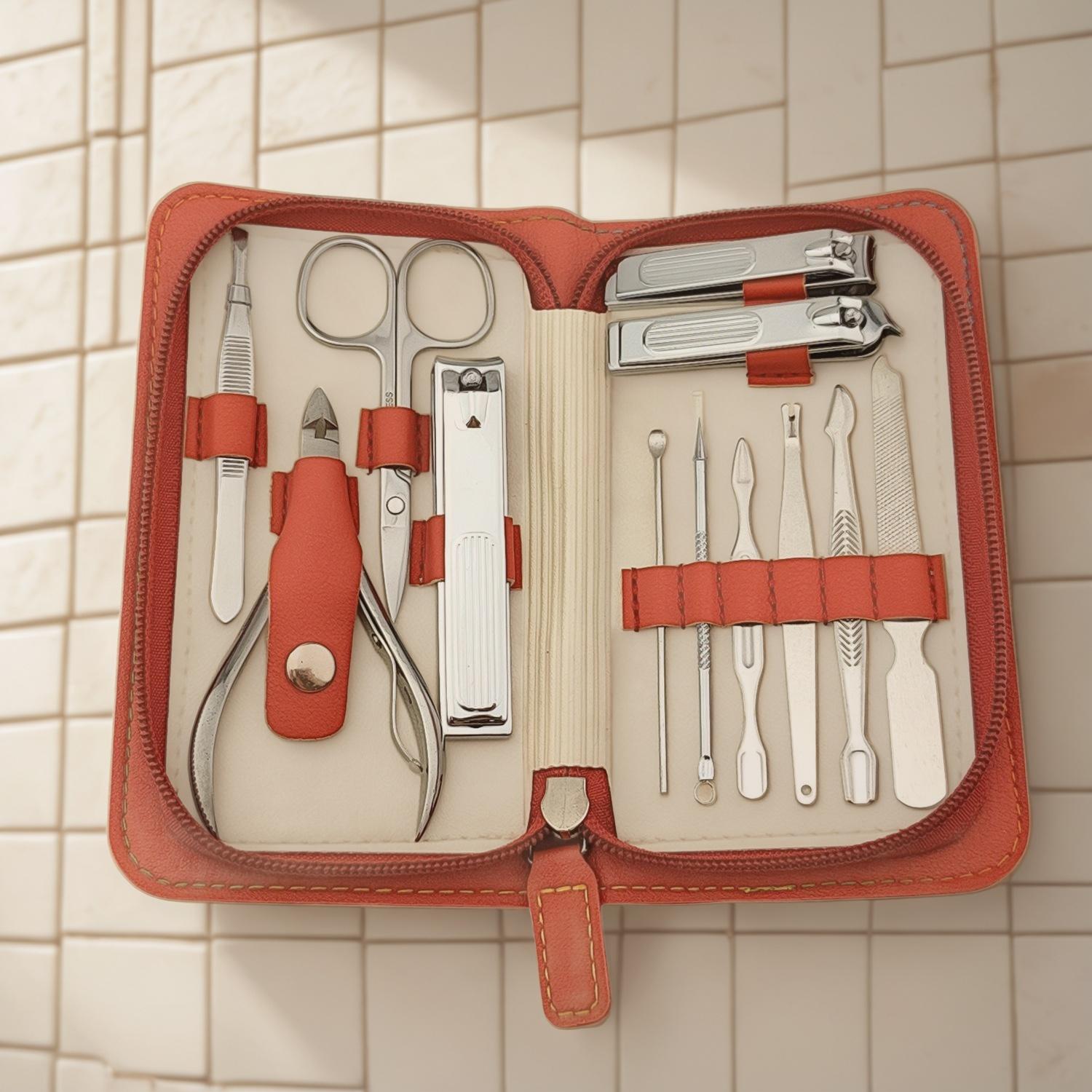
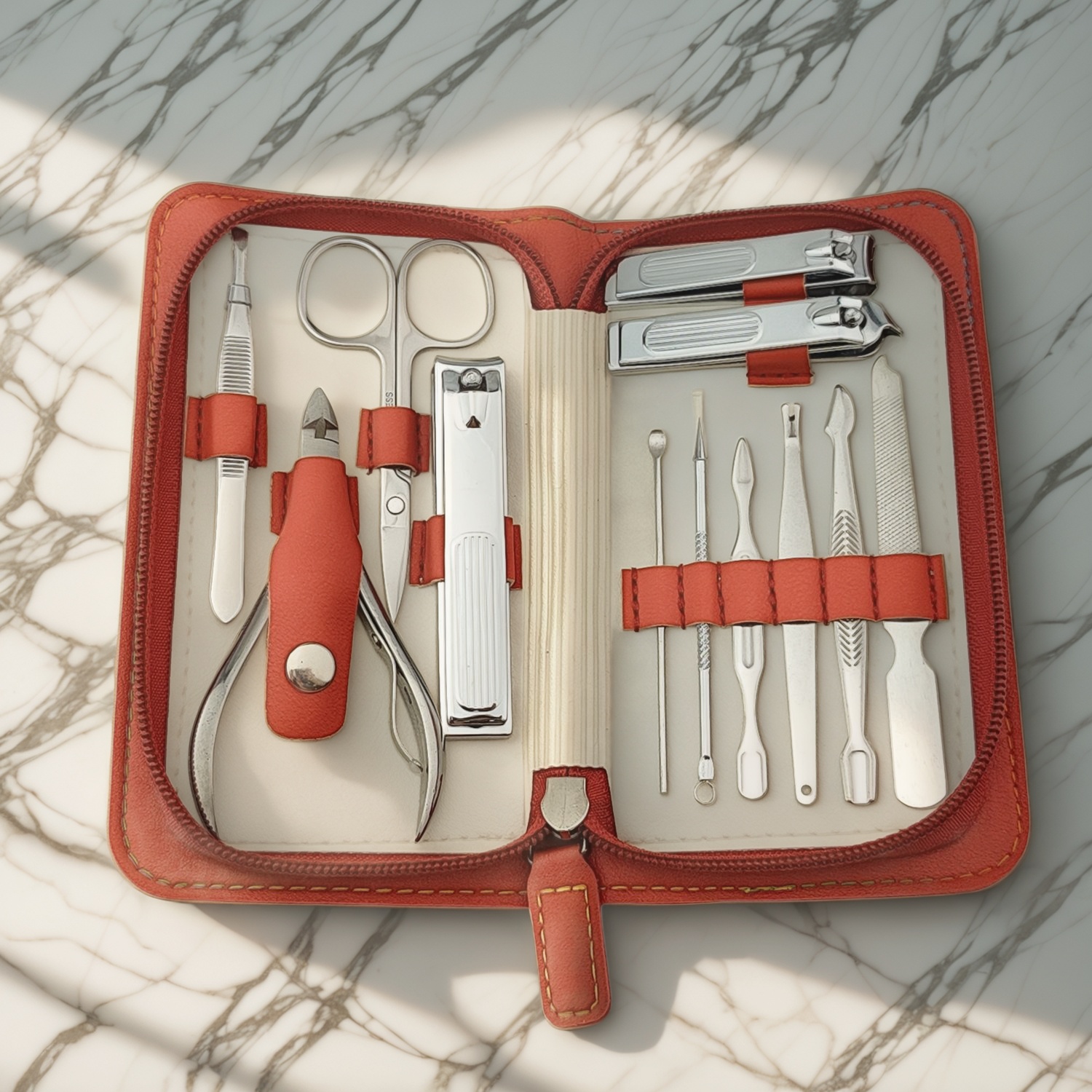
More pieces do not automatically create a better kit. A well-edited set with reliable essentials is often easier to explain, easier to price and easier for customers to use. The Deluxe Manicure and Pedicure Kit direction described by Olimor includes a red leather-style case, ergonomically designed nail scissors, nail clippers in various sizes, slanted tweezers and other grooming tools. Buyers can use this type of structure as a starting point, then adjust the assortment for their own sales channel.
| Component | Buyer evaluation point | Why it matters |
|---|---|---|
| Nail clipper | Check jaw alignment, opening tension, spring feel and comfortable leverage. | Clean trimming reduces repeated cuts and improves the everyday grooming experience. |
| Toenail clipper | Consider whether a larger size or stronger feel is needed for full pedicure use. | Toenails usually require more control and cutting strength than fingernails. |
| Nail scissors | Review blade meeting point, tip alignment, handle comfort and smooth opening. | Predictable blade movement supports careful shaping and trimming. |
| Slanted tweezers | Inspect tip closure, grip consistency and smoothness along the edges. | Accurate tips make tweezing easier and reduce frustration for the end user. |
| Cuticle tool | Evaluate shape, edge smoothness and control against the nail surface. | Cuticle care requires precision and should not feel rough or unsafe. |
| Nail file | Check size, surface texture and fit inside the case. | Filing completes the manicure and helps refine the nail edge. |
| Storage case | Review tool retention, closure stability, internal layout and appearance. | The case protects the set and strongly influences perceived retail value. |
Materials, Finish and Handling Details That Affect Perceived Quality
The original product direction highlights a polished stainless steel finish, a common visual cue in manicure and pedicure tools. A polished surface can make a kit look clean, bright and suitable for beauty retail presentation. However, finish should always be judged together with function. A tool can look attractive in a photograph but still feel uncomfortable, cut unevenly or sit poorly in the case.
During sample review, hold each tool as an end customer would. Nail clippers should not feel flimsy or overly stiff. Scissors should open and close smoothly without feeling loose. Tweezers should meet evenly at the tips. Cuticle tools should have controlled edges without rough burrs. If the kit is intended for repeat use, ergonomics matter as much as surface shine.
For buyers concerned about restricted substances, market access or consumer safety documentation, it may be relevant to discuss requirements connected with public frameworks such as EU REACH for chemical restrictions or applicable U.S. Consumer Product Safety Commission guidance for consumer products. The correct requirement depends on the destination market, product materials, claims and age group. Buyers should verify the applicable version of any regulation or standard and request supplier documentation that matches the actual product specification. Do not rely on a general statement when a specific case material, coating, adhesive, label or package component is part of the order.
Vegan-Friendly Manicure Tools and Ethical Packaging Choices
Demand for vegan-friendly manicure tools wholesale options continues to grow as consumers pay closer attention to material origin and product presentation. In a nail kit, the vegan question usually relates less to the metal tool and more to non-metal components, such as the case covering, lining, adhesives, trims, labels and packaging details.
A red leather-style case can create a premium visual effect, but buyers who need vegan positioning should confirm whether the material is genuine leather or a non-animal alternative. The claim should be specific and supportable. If a product is marketed as vegan-friendly, the buyer should define exactly what that means for every relevant component and keep documentation expectations consistent from sample approval through production.
Ethical packaging decisions can also include reducing unnecessary inserts, avoiding excessive plastic where possible and choosing a case the customer will keep rather than discard. A reusable, well-organized grooming case can support better perceived value while reducing the need for wasteful presentation layers.
Packaging and Case Design for Custom Beauty Tool Sets
A manicure and pedicure kit is judged twice: first when the customer sees the case, and again when the tools are used. The case is therefore not just packaging; it is part of the product. It should protect the tools, create an organized opening experience and support the brand’s price position.
Review how firmly each tool is held. Elastic loops, slots or molded positions should keep items secure during transport while still allowing easy removal. The closure should feel reliable. Sharp or pointed tools should be positioned to reduce accidental contact when the case is opened. For e-commerce, the kit must also maintain presentation quality through parcel handling.
Branding decisions should be made early. A buyer may need an unbranded set, a private-label logo on the case, a custom insert card, retail packaging or a coordinated gift box. Before approving artwork, confirm where branding can be applied, how it will look when displayed and whether the same placement can be reproduced consistently. To explore related grooming product directions, buyers can also review Olimor’s beauty tool collections.
Quality Checks Before Placing a Custom Order
Quality assurance for grooming tools should be practical, repeatable and tied to the customer’s actual use. Instead of relying only on descriptive words, create a sample checklist that can be used by your purchasing, product and quality teams. The approved sample should become the reference for production review.
Sample inspection checklist
- Cutting alignment: confirm that clippers cut cleanly and do not crush the nail edge.
- Scissor movement: check smooth opening, blade meeting point and trimming control near the tip.
- Tweezer closure: inspect whether the tips meet evenly and hold consistently.
- Surface finish: look for rough edges, burrs, visible marks or inconsistent polishing.
- Case retention: shake and open the case carefully to see whether tools remain secure.
- Branding accuracy: review logo position, color, legibility and packaging layout against approved artwork.
- Use comfort: hold each tool and simulate normal grooming movements.
- Documentation: request material, packaging or compliance documents relevant to the destination market and product claims.
For repeat orders, buyers should confirm how the supplier controls consistency between the approved sample and bulk production. Important questions include how incoming materials are checked, how tool finishing is reviewed, how packaging is inspected and how nonconforming items are handled. Avoid vague acceptance based only on appearance; the tools must also function properly.
How to Compare Custom Nail Care Suppliers
A good supplier evaluation process balances cost, capability and risk. The cheapest quotation may not be the best choice if the case feels weak, the tools vary from sample to sample or the supplier cannot explain customization limits. A higher quote may also be hard to justify if the extra cost does not improve handling, finish, packaging or brand value.
Use a structured comparison instead of reviewing quotations in isolation. Ask each supplier for the same information: available tool assortment, case options, branding methods, packaging choices, sample process, quality checks and documentation support. If you need private-label beauty tools, confirm how artwork is approved and how color, logo placement and packaging details are controlled.
Cost factors buyers should compare
- Tool assortment: more pieces can increase cost, but unnecessary tools may reduce usability.
- Material and finish: polished surfaces, edge finishing and tool feel influence perceived quality.
- Case construction: exterior material, lining, closure and internal retention affect presentation and durability.
- Customization: logo application, custom packaging and special colors may change sampling and production complexity.
- Inspection needs: stricter quality requirements may require clearer standards and more detailed checks.
- Shipping format: retail boxes, gift packaging and protective cartons influence logistics planning.
Buyers who already have a target kit concept can send specifications through Olimor’s custom beauty tool inquiry channel for discussion. If the project is still early, it is often better to share the selling channel, target user and desired positioning before locking the tool list.
Recommended Specification for a Private-Label Kit Brief
A clear product brief saves time and reduces misunderstandings. It also helps a manufacturer recommend realistic options rather than guessing your intent. The brief does not need to be complicated, but it should connect the product design to the market need.
- Define the sales channel: salon retail, online store, distributor catalog, hotel amenity, gift program or private-label beauty range.
- Describe the target user: everyday home grooming, travel use, premium gift buyer or professional retail customer.
- List required tools: clippers, scissors, tweezers, cuticle tools, nail file and any additional grooming accessories.
- State case expectations: compact, deluxe, leather-style, vegan-friendly, gift-ready, retail display or e-commerce protective.
- Provide branding needs: logo location, packaging artwork, color direction and label requirements.
- Identify documentation needs: material statements, packaging information or market-specific compliance support relevant to your product claim.
- Confirm quality priorities: cutting performance, edge smoothness, case retention, finish consistency and packaging appearance.
This approach keeps the sourcing conversation focused on the real search intent: finding a custom beauty tools manufacturer that can turn a manicure and pedicure kit idea into a practical, sellable product without unnecessary complexity.
When Olimor Is a Good Fit
Olimor is a practical option for buyers who need beauty tool and grooming accessory solutions with customization discussion around tool mix, case presentation and packaging. The best projects are those where the buyer can explain the target market, expected kit use and branding requirements clearly. Olimor can then help review relevant manicure and pedicure kit directions, from compact personal grooming sets to more complete gift-ready assortments.
For a restrained next step, prepare your desired tool list, case preference, logo needs and destination market information, then contact Olimor through the contact page. Clear specifications help both sides discuss samples, feasibility and quality expectations more efficiently.
FAQ
Can I request samples before confirming a custom manicure and pedicure kit?
Yes, sample review is an important step for custom beauty tools. Buyers should use samples to check cutting alignment, scissor movement, tweezer closure, case retention, finish and branding placement before confirming production details.
Does Olimor provide MOQ or lead time information?
MOQ and lead time depend on the tool assortment, case style, customization method, packaging requirements and current production planning. Buyers should share the product brief and request project-specific confirmation rather than relying on a general number.
Can the case and packaging be customized for private label?
Customization can include case presentation, logo placement and outer packaging discussions, depending on the selected product structure. Confirm branding areas, artwork requirements and sample approval steps before placing an order.
How should buyers verify vegan-friendly manicure tool claims?
Define which components must be non-animal in origin, including case covering, lining, adhesives, trims, labels and packaging. Request relevant supplier documentation for the exact materials used and keep the claim specific.
What quality checks matter most for nail care tools?
Focus on functional checks: clipper jaw alignment, scissor blade contact, tweezer tip closure, smooth edges, comfortable handling, stable case storage and packaging condition. These details are more useful than broad quality claims.
Tag: