

Custom Beauty Tools Manufacturer for Brand-Ready Grooming Sets
Choosing a custom beauty tools manufacturer is not only a purchasing decision. For a beauty brand, salon supplier, gift company or personal care retailer, the tools inside a manicure or grooming kit directly affect customer trust. A nail clipper that feels weak, a tweezer that does not align, or a case that looks careless can make the whole product feel lower value, even when the packaging design is attractive.
Olimor Beauty works with beauty tool buyers who need practical, well-presented grooming instruments for private label, wholesale and custom set projects. The goal is to help brands think clearly about tool selection, material choices, ethical positioning, packaging and inspection before placing a production order. Whether you are planning a compact nail care kit or a more complete manicure and pedicure set, the strongest projects usually begin with a clear product brief and realistic quality priorities.
What a Custom Beauty Tools Manufacturer Should Help You Decide
A reliable manufacturer should do more than place your logo on a ready-made kit. Custom beauty tools involve several choices that affect cost, appearance, user experience and long-term customer satisfaction. Before comparing samples, define what kind of buyer the set is meant for. A travel manicure kit, a professional grooming set and a retail gift item may share some tools, but they should not be planned in the same way.
For example, a travel kit may prioritize compact size, lightweight storage and essential tools. A salon-oriented set may focus more on grip, precision and repeat use. A gift set may need a balanced visual presentation, a coordinated case and a tool mix that feels complete without becoming confusing. These decisions shape the number of pieces, the finish of each tool, the case material and the level of customization required.
When reviewing beauty tool products, consider whether your project needs a standard selection, a modified set or a fully tailored arrangement. The more clearly you define the intended retail channel, price position and end user, the easier it is to avoid overbuilding the kit or choosing tools that do not match your audience.
Core Tools for Manicure, Pedicure and Grooming Sets
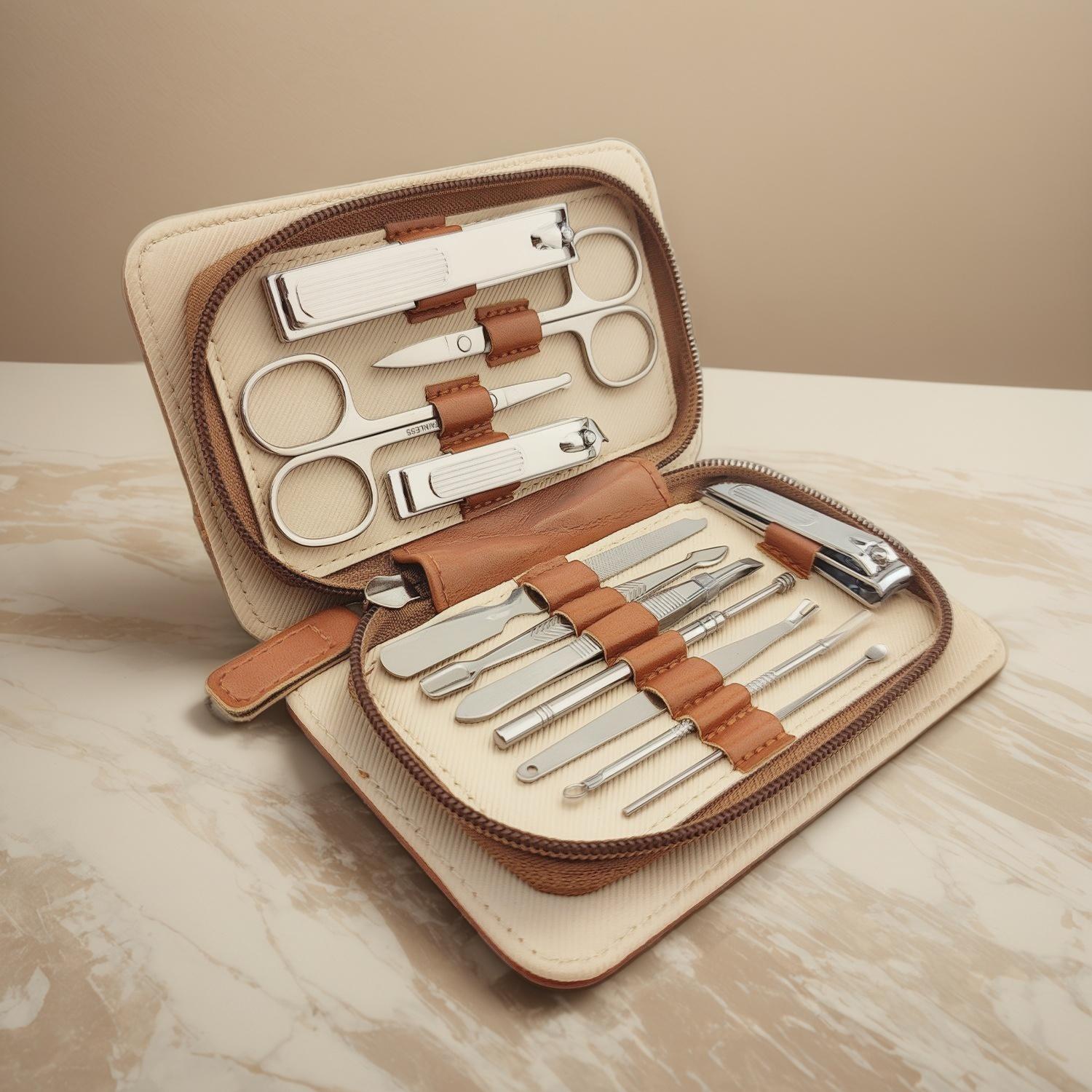
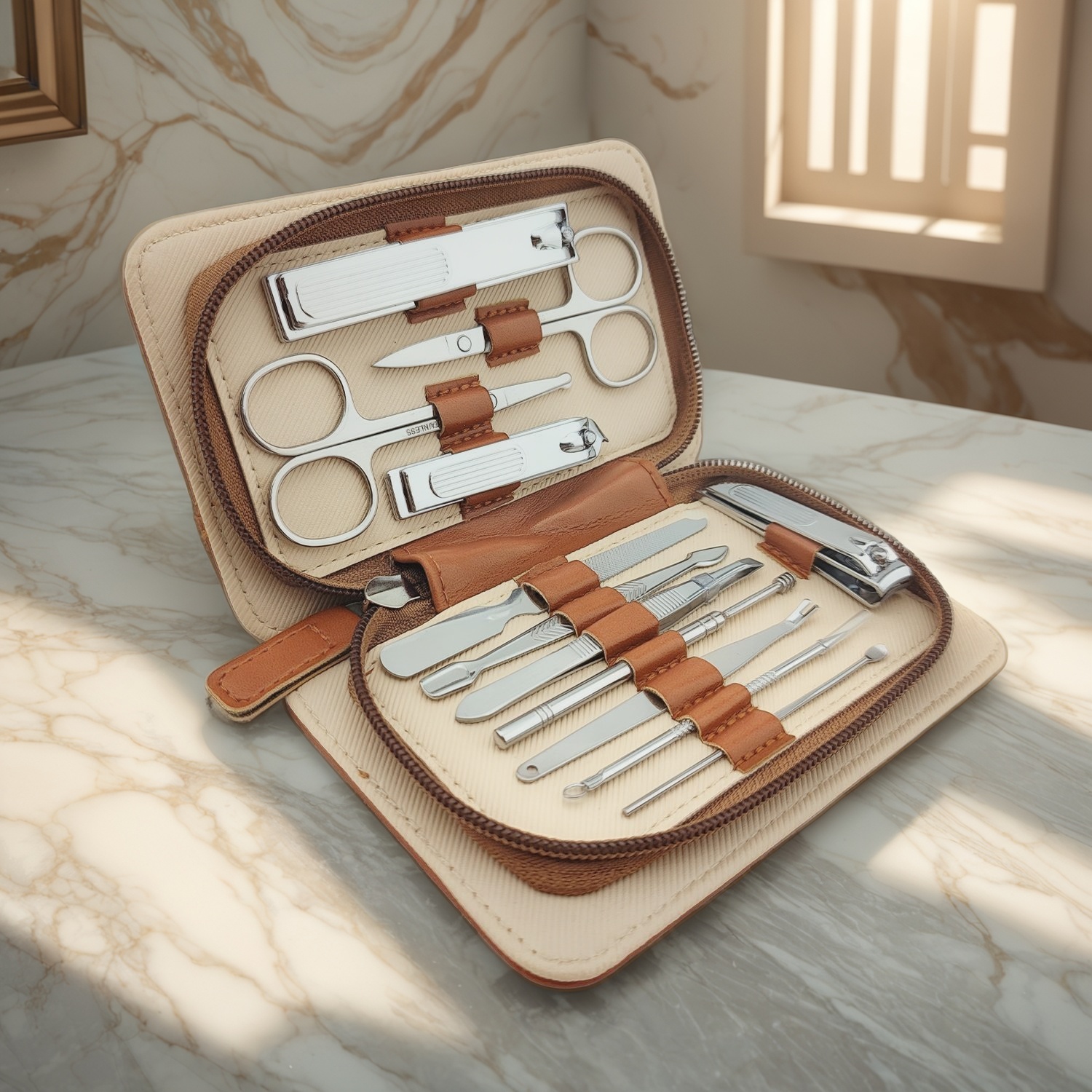
Many custom grooming kits are built around a familiar group of instruments: nail clippers, cuticle tools, tweezers, scissors, nail files and skin care accessories such as blackhead removers. A larger manicure and pedicure set may include both hand and foot care tools, while a smaller kit may focus only on everyday nail maintenance.
Instead of adding as many pieces as possible, evaluate each tool by function. A customer should immediately understand why the item is included. If two tools perform nearly the same task, one may be unnecessary unless the kit targets experienced users who appreciate specialized options.
- Nail clippers: Often the most frequently used tool in a kit. Check the cutting feel, alignment and edge finish.
- Cuticle trimmers or pushers: Useful for detailed nail care, but they require clean edges and comfortable handling.
- Tweezers: Tip alignment is critical. Poorly aligned tweezers can damage the perceived quality of the entire set.
- Scissors: Should open and close smoothly, with edges suited to the intended grooming use.
- Nail files: Dual-grit files can support shaping and smoothing, but the surface should feel consistent.
- Blackhead removers: Best suited for kits aimed at more complete personal grooming rather than simple nail care.
A 12-piece manicure and pedicure set can be a useful format when the target customer wants a complete at-home grooming solution. However, the piece count should never be the only selling point. The right combination of tools matters more than a high number printed on the package.
Material and Finish Choices That Affect User Trust
The original quality of a beauty tool starts with material selection and continues through shaping, polishing, sharpening and assembly. Stainless steel is widely used for grooming instruments because it supports durability and helps resist rust when properly made and maintained. For buyers sourcing high-quality grooming tools wholesale, it is important to review not only the material claim but also the finishing quality of the actual sample.
Look closely at the surfaces and edges. A tool may appear attractive in product photos but feel rough in the hand. Edges should be functional without unwanted burrs. Hinged tools should move cleanly. Matching finishes across a set can also make a private label product look more coherent, especially when the kit is sold as a premium gift or retail item.
Common finish considerations include polished, matte or coated appearances. Each choice has different visual and maintenance implications. A high-gloss finish may look elegant in a gift box, while a matte look can support a more modern brand presentation. The best option depends on your brand positioning, packaging style and customer expectations.
Vegan-Friendly and Ethical Sourcing Considerations
Demand for vegan manicure tools wholesale and cruelty-free personal care products continues to influence beauty retail. For tool sets, the conversation often centers on cases, pouches, adhesives, decorative materials and packaging components rather than metal instruments alone. If your brand promotes vegan-friendly products, clarify which materials must avoid animal origin and how that requirement applies to the full kit.
Animal-friendly choices may include synthetic case materials and non-animal decorative components. These choices should be evaluated for both appearance and durability. A vegan-positioned kit still needs to protect the tools, open and close reliably, and present the product well in retail or ecommerce photography.
Ethical positioning is strongest when it is specific and accurate. Avoid vague claims that cannot be supported. Instead, build your sourcing checklist around the components that matter most to your customer: case material, lining, packaging, labeling and any decorative trims. This allows marketing teams to communicate responsibly while giving product teams a clear standard to follow.
How to Build a Clear Customization Brief
A precise brief helps a manufacturer understand what you want and reduces unnecessary sampling cycles. Even if you are still exploring options, prepare a structured outline before you send an inquiry. This does not need to be complicated, but it should answer the practical questions that determine tool selection and presentation.
| Decision Area | What to Define | Why It Matters |
|---|---|---|
| Target user | Travel customer, salon user, gift buyer or everyday home user | Guides tool count, size, weight and feature choices |
| Tool mix | Essential nail care only or broader grooming functions | Prevents unnecessary items and improves customer clarity |
| Material priorities | Stainless steel tools, synthetic case materials or specific finish direction | Impacts durability, appearance and brand positioning |
| Branding method | Logo placement on tools, case, insert card or outer packaging | Creates a consistent private label presentation |
| Retail channel | Ecommerce, salon distribution, gift retail or promotional sales | Influences packaging protection and visual presentation |
Photos, reference samples and desired retail positioning can also be helpful. However, avoid asking a manufacturer to copy another brand’s product exactly. A better approach is to explain what you like about a reference: the compact layout, the tool count, the case opening style or the finish direction. That gives room to create a product suitable for your own market.
Quality Checks Before Approving Production
Quality control for beauty tools should focus on the way each item performs in real use. Appearance is important, but it is not enough. Before approving a sample, handle every tool in the set. Open and close clippers and scissors several times. Check tweezer tips under good light. Run a finger carefully near non-cutting surfaces to identify rough areas. Examine how tools sit in the case and whether they remain secure during transport.
A practical sample review checklist should include:
- Confirm that the tool assortment matches the approved product plan.
- Check cutting, gripping and alignment performance for each functional item.
- Review surface finish, polishing consistency and visible marks.
- Test the case opening, closure and tool retention.
- Confirm logo placement, packaging artwork and labeling details.
- Evaluate whether the set photographs well for ecommerce or catalog use.
For larger wholesale projects, keep an approved reference sample and written specifications. This makes it easier to compare production goods against the agreed standard and helps prevent subjective disagreements later.
Packaging and Presentation for Wholesale Beauty Tools
Packaging is part of the product experience, especially for manicure and pedicure sets sold online or as gifts. A case should protect the tools, organize them clearly and support the brand’s visual identity. The outer packaging should also be planned for the sales channel. Ecommerce packaging may require additional protection, while shelf retail may need strong front-facing presentation and clear product information.
Private label buyers often focus on the logo first, but layout is just as important. If the tools appear crowded or difficult to remove, the set may feel less refined. If there is too much empty space, the kit can look underfilled. A balanced arrangement helps customers understand the value of the set at a glance.
You can explore broader product collections to compare formats and identify which type of set best suits your brand direction. If you are unsure whether a compact kit or a fuller grooming set is more appropriate, contact Olimor with your intended market, sales channel and preferred product style.
Choosing a Manufacturer for Long-Term Product Development
The best custom beauty tools manufacturer is not simply the one that offers the largest catalog. For long-term cooperation, look for a partner that can discuss tool function, material selection, ethical requirements, packaging structure and inspection points in practical terms. A good supplier should help you balance appearance, usability and sourcing needs without pushing unnecessary complexity.
For brands entering the grooming tools category, start with a focused set that clearly serves the customer. For established buyers, customization can help separate your line from generic wholesale products through better tool selection, improved presentation and a more consistent brand experience. With a clear brief and careful sample review, custom beauty tools can become a dependable product category rather than a one-time purchase.
Tag: