

Beauty Tools Wholesale Buying Guide for Salons, Retailers and Distributors
Beauty tools wholesale sourcing is not only about finding a lower unit cost. For salons, nail studios, beauty retailers, training academies and distributors, the right tool selection affects service consistency, hygiene routines, customer trust, shelf presentation and repeat purchasing. A poorly made eyelash curler can pinch or bend lashes unevenly. A weak nail file can wear down too quickly. A pedicure tool that feels uncomfortable in the hand can slow down daily service and create avoidable complaints.
This guide explains how to choose wholesale beauty tools with a practical buyer mindset. It focuses on common B2B categories such as eyelash curlers in bulk, nail files, pedicure supplies and everyday personal care tools. It also covers quality checks, assortment planning, packaging questions, maintenance expectations and supplier evaluation. If you are reviewing possible categories, you can browse Olimor beauty tool products while using the checklist below to compare your options.
Start With the Buying Purpose Before Comparing Products
A beauty tool that works well in one setting may not be the right choice for another. Before requesting a wholesale quotation, define where the tools will be used, who will handle them and how often they will be cleaned, displayed or resold.
For professional salon use, comfort, repeat performance and cleaning practicality usually matter most. Technicians may use the same type of tool many times per day, so hand feel, grip control and consistent movement are more important than a decorative feature. For retail, packaging, clear function and perceived value often influence sell-through. For training schools, tools should be durable, easy to understand and consistent enough for repeated practice. For distributors, the assortment must usually cover multiple price points and customer types without creating excessive slow-moving stock.
Useful buyer questions include:
- Who is the end user? Salon technicians, beauty students, retail customers, travel-kit buyers and at-home users may all have different expectations.
- How often will the tool be used? Daily professional use requires closer attention to durability, surface finish and ergonomic comfort.
- Will the tool be cleaned frequently? Smooth surfaces, simple shapes and replaceable contact parts can make maintenance easier.
- Is the product sold individually or in a kit? Kit tools should feel coherent in size, finish, function and packaging style.
- Does the range need one core item or several price levels? Retailers may prefer a basic, mid-range and more refined option instead of one large order of a single design.
Core Categories in a Practical Wholesale Beauty Tool Range
A strong beauty tools wholesale assortment usually combines frequently replaced items with longer-use tools. Frequently replaced items help drive repeat orders, while durable tools support professional service quality and customer loyalty. Olimor works with beauty tool categories such as eyelash curlers, pedicure supplies, personal care tools and nail files, allowing buyers to evaluate several related product needs in one sourcing process.
Eyelash Curlers in Bulk
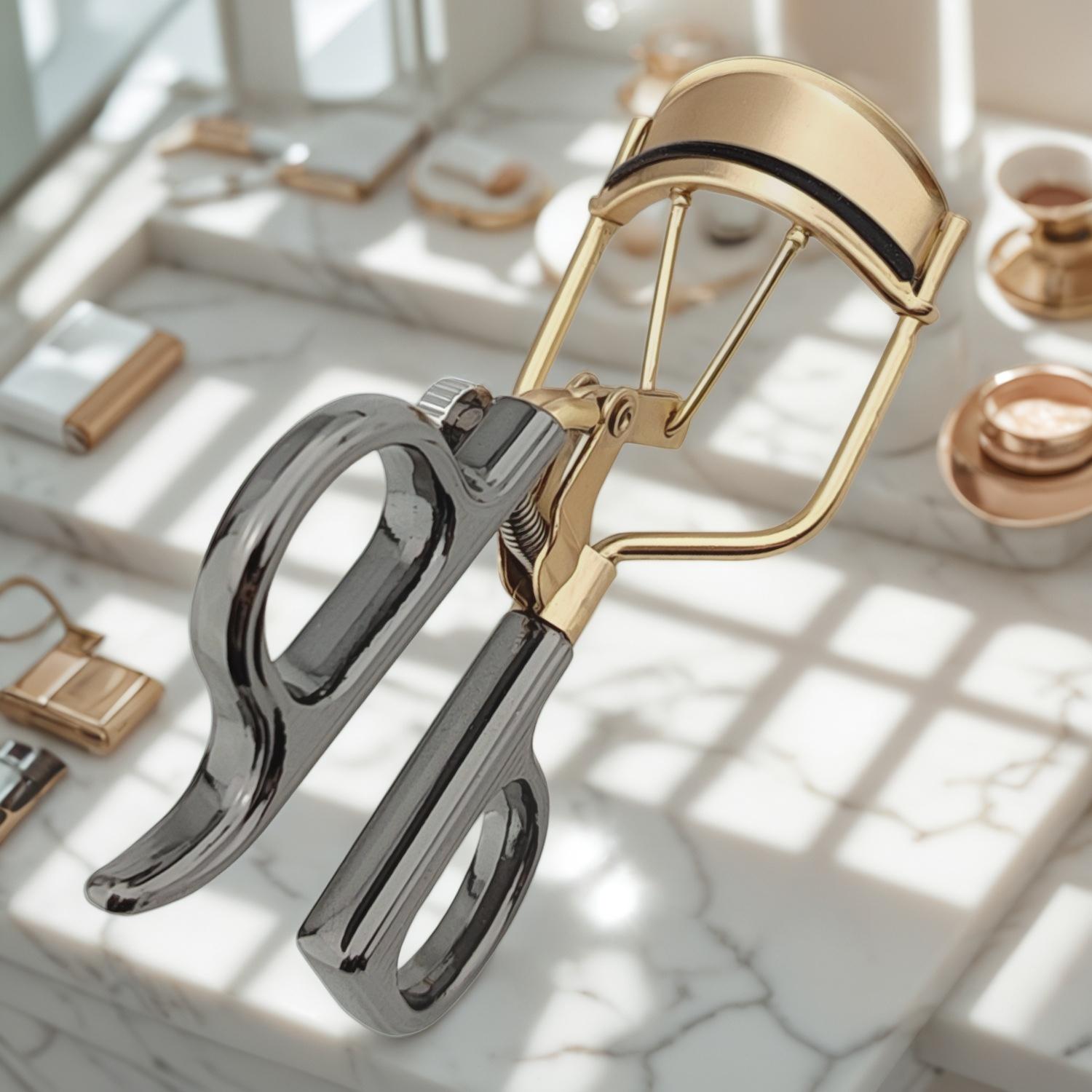
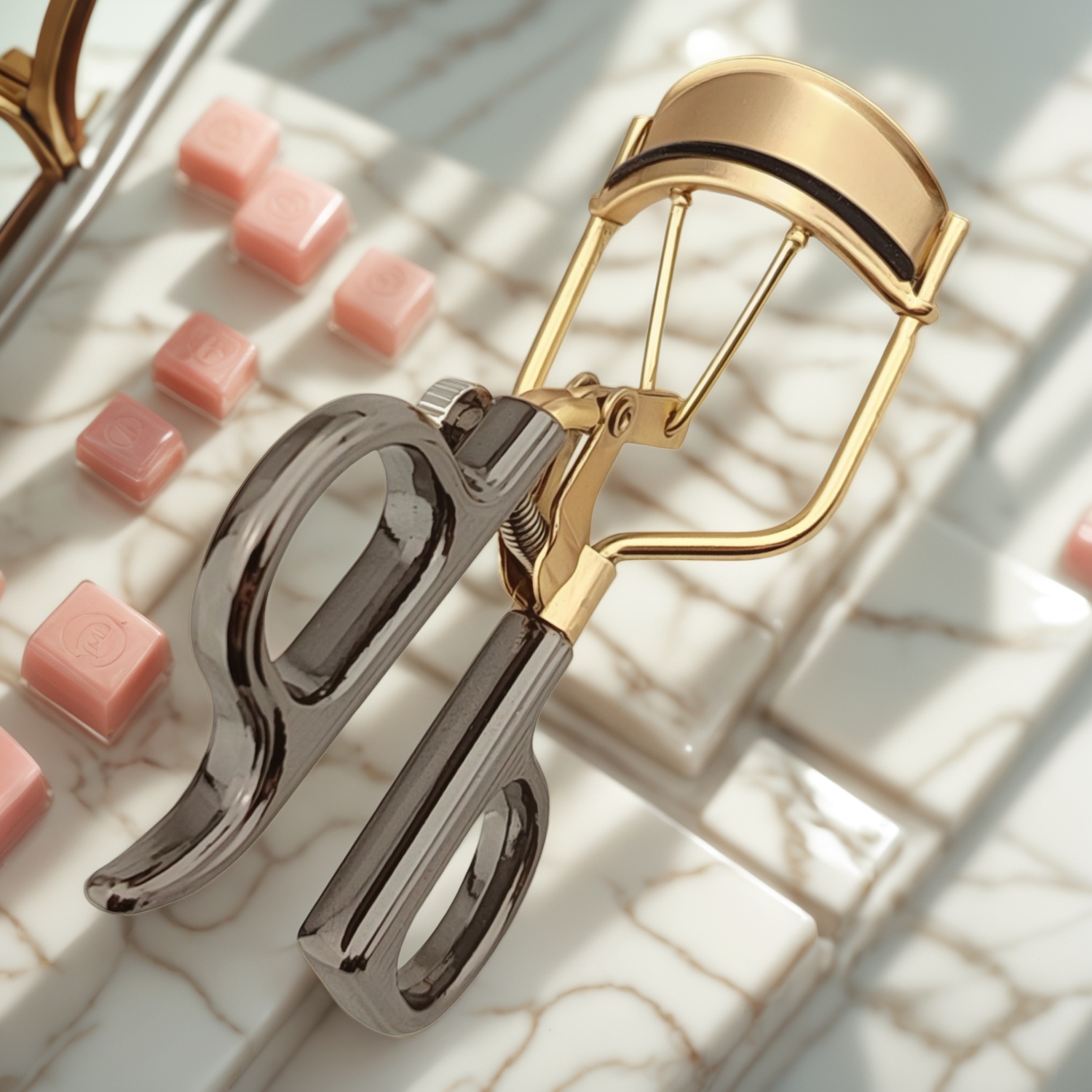
Eyelash curlers are small tools, but they are highly sensitive to fit and feel. Buyers should compare frame alignment, pad contact, handle comfort and the smoothness of the curling motion. A curler should close evenly without pulling lashes, pinching the eyelid or creating an overly sharp bend.
Stainless steel is commonly valued for this type of tool because it supports a clean appearance and a firm structure. Soft silicone pads can cushion the lashes during pressure, while a spring-loaded mechanism can make the closing action feel smoother and more controlled. Ergonomic design matters especially for technicians who repeat the same movement throughout the day.
When evaluating eyelash curlers wholesale, check the frame curve, upper and lower bar alignment, pad softness, pad fit, opening width, finger-loop finish and overall hand control. For retail buyers, replacement pads are also worth discussing because pads wear over time even when the frame remains usable.
Nail Files and Buffers
Nail files are high-turnover products for salons, nail bars and retail beauty displays. A buyer should consider grit feel, surface consistency, edge finish, shape, durability and hygiene expectations. Some files are purchased for professional service, some for home use and some for kits or promotional bundles. The intended use should guide the finish, packaging and quantity.
Inspect whether the abrasive surface is even from edge to edge and whether the file maintains its structure under normal pressure. Edges should not feel unexpectedly sharp unless the design requires a defined working edge. For retail, the packaging should help customers understand the intended use, such as shaping, smoothing or finishing.
Pedicure Supplies Wholesale
Pedicure supplies can include files, buffers, foot-care implements and kit components. Because these items are used on feet, buyers should pay close attention to hygiene planning, grip, durability and surface consistency. A pedicure tool should feel stable in the hand and should not have rough edges where they are not intended.
For salons and spas, easy cleaning is especially important. Tools with simple shapes and fewer unnecessary grooves are often easier to wipe, wash or sanitize according to the operation’s own procedures and local rules. For retail, clear usage guidance and comfortable handling may be as important as professional durability because home users need tools that are intuitive and not overly aggressive.
Personal Care Tools Wholesale
Personal care tools wholesale may include tweezers, mirrors, brushes, grooming accessories and small beauty implements used in daily routines. The challenge is not finding enough products; it is choosing the right ones. Too many similar tools can tie up inventory, while too few options may make the range feel incomplete.
A practical personal care range should cover common needs: precision, grooming, shaping, cleaning and finishing. A beauty retailer may pair eyelash curlers with tweezers and small grooming tools. A salon supply buyer may focus on service preparation and aftercare. A gift or travel-kit buyer may prioritize compact size, simple functions and consistent presentation.
Quality Checks Before Scaling a Bulk Order
Wholesale success depends on repeatable quality, not just a good first impression. Product photos show appearance, but they do not prove hand feel, closing action, surface consistency or packaging strength. Before confirming a larger order, handle samples in the same way a technician or end customer would use them.
Create a simple inspection routine and apply it to several pieces, not only one sample. For eyelash curlers, check whether the handles open and close smoothly, whether the frame feels balanced and whether the pressing surface aligns evenly. For nail files, inspect abrasive consistency and edge finish. For pedicure tools, review grip comfort, control and cleanability. For personal care tools, check moving parts, contact points, edges and finishes across multiple samples.
| Buying factor | What to evaluate | Why it matters |
|---|---|---|
| Tool function | Alignment, grip, smooth movement and useful shape | Supports reliable results in salon service or home use |
| Material and finish | Surface smoothness, visible wear resistance and easy-to-clean areas | Affects hygiene routines, appearance and product lifespan |
| Ergonomics | Handle comfort, pressure control and weight balance | Reduces fatigue for professionals using tools repeatedly |
| Packaging | Protection, labeling area, barcode readiness and display fit | Improves storage, shipping and retail presentation |
| Assortment planning | Core items, replenishment needs and seasonal additions | Prevents overstocking slow-moving beauty tools |
Assortment Planning: Balance Variety With Inventory Control
Variety is useful in beauty tools wholesale, but too much variety can create slow-moving stock. The goal is to offer enough choice to meet customer needs without dividing your budget across too many similar items. A salon may need fewer styles with stronger daily-use reliability. A retailer may need a broader visual assortment, but every item should have a clear reason to be on the shelf.
One practical approach is to divide products into three roles. Essentials include items used or sold consistently, such as nail files, buffers and basic grooming tools. Service enhancers include products that support higher-value services, such as eyelash curlers, tweezers or pedicure tools. Seasonal or promotional items can be used for gift sets, campaigns or trial assortments, but they should not absorb too much inventory budget until demand is proven.
| Assortment role | Typical tool types | Buying focus |
|---|---|---|
| Daily essentials | Nail files, buffers and basic personal care tools | Consistency, replenishment and practical packaging |
| Service enhancers | Eyelash curlers, pedicure tools and precision grooming tools | Comfort, control and professional usability |
| Retail add-ons | Small grooming accessories, mirrors and compact tools | Clear function, shelf appeal and easy customer explanation |
| Promotional or kit items | Travel tools, gift sets and bundled accessories | Coherent finish, compact size and packaging compatibility |
If your project involves multiple tool categories, reviewing Olimor product collections can help you compare related options together instead of evaluating each item in isolation.
Packaging, Labeling and Retail Presentation
Packaging is part of the wholesale decision, not an afterthought. For salons, bulk packing may be acceptable if tools are stored cleanly and distributed to service stations according to internal procedures. For retailers, packaging must protect the tool, explain the purpose and fit the display environment. For distributors, carton handling, labeling space and reorder identification can affect warehouse efficiency.
Before placing a larger order, clarify whether you need retail packaging, bulk packing, kit-ready presentation or display-friendly units. Ask what information can be included on labels or inserts, and make sure usage descriptions do not overstate the product’s function. If you are selling into regulated retail channels, check the labeling expectations in your market with your compliance adviser or local authority.
Cleaning, Maintenance and Hygiene Considerations
Beauty tools often come into close contact with skin, nails, lashes or feet, so maintenance planning matters. The correct process depends on the tool type, material, local salon rules and the intended user. Buyers should not assume that every tool can be cleaned in the same way. Some items may be single-client, replaceable or separated by service protocol. Others may be wiped, washed or sanitized according to the buyer’s own operating procedures.
When evaluating tools, look for smooth surfaces, simple shapes, secure joints and contact parts that can be inspected easily. Avoid designs with unnecessary grooves if they will be used in a professional setting where cleaning time matters. Storage is also important: clean tools should be protected from dust, moisture and pressure that may damage pads, edges, abrasive surfaces or finishes.
For quality-management discussions, buyers may refer to the principles of ISO 9001 when asking suppliers about process control, inspection records and traceability. This does not mean every supplier or product is certified. Buyers should verify the applicable version of any standard and request supplier documentation where it is relevant to their purchasing policy. Salons should also follow local health authority requirements for tool cleaning and service hygiene.
How to Evaluate a Wholesale Beauty Tool Supplier
A reliable supplier should help you make a better buying decision, not only send a price list. When comparing beauty tools wholesale suppliers, consider communication clarity, sample handling, category knowledge, packaging options and the ability to support repeat orders. A good supplier conversation should help you confirm materials, finish expectations, product function, packing style and customization possibilities before you commit to scale.
Use the following supplier-evaluation checklist:
- Category fit: Does the supplier offer the tool types you need, such as eyelash curlers, nail files, pedicure supplies and personal care tools?
- Sample process: Can you review samples before placing a larger order, and can you test them in the intended environment?
- Practical product details: Can the supplier discuss materials, dimensions, finish, cleaning guidance, replacement parts if relevant and carton information when available?
- Inspection expectations: Can you agree on visible finish checks, functional checks, packaging checks and batch consistency expectations?
- Customization discussion: Can packaging, color, tool finish or set composition be reviewed without assuming that every option is available for every product?
- Reorder planning: Can the supplier help you identify core items that may need future replenishment?
For B2B buyers comparing samples or planning a new retail range, Olimor offers a restrained way to start the conversation: send your target categories, packaging needs and intended sales channel through the wholesale inquiry page.
Common Cost Factors in Beauty Tools Wholesale
Unit price matters, but it should be weighed against total handling cost and product suitability. A cheaper tool that bends, scratches, pinches, rusts, arrives in unsuitable packaging or creates returns may be more expensive over time. A more practical comparison looks at material, construction, finish, packaging, customization, order complexity and inspection expectations together.
Cost may be affected by the tool type, number of components, surface finish, pad or accessory inclusion, packaging style, carton requirements and whether the order involves a standard item or customization. Buyers should also consider internal costs such as staff time for repacking, damaged-stock handling, customer service and slow-moving inventory. The best value is usually the tool that meets the intended use consistently at a sustainable landed cost, not simply the lowest quoted unit price.
Recommended Buying Process for Salons and Retailers
A structured process reduces waste and makes supplier comparisons easier. Start with demand, not a catalog. Review your service menu, retail sales history or launch plan. If you are a new buyer, begin with a practical assortment rather than a very wide selection. It is easier to reorder proven tools than to manage large quantities of products that do not match customer demand.
- Define the user: Decide whether the tools are for professional service, retail resale, kits, training or promotional use.
- List essential categories: Separate eyelash curlers, nail files, pedicure supplies and general personal care tools so quantities are easier to manage.
- Set quality priorities: Identify which details are critical, such as alignment, grip, surface finish, cleaning practicality or retail packaging.
- Request samples: Test tools in the setting where they will actually be used, not only at a desk.
- Compare several pieces: Check consistency across samples rather than judging a single item.
- Confirm packaging needs: Decide whether you need retail packaging, bulk packing, barcode space, kit-ready presentation or display-friendly units.
- Document decisions: Keep notes on approved samples, finishes, packaging and inspection points for future reorders.
FAQ: Wholesale Beauty Tool Purchasing
Can I request samples before placing a larger beauty tools wholesale order?
For B2B sourcing, sample review is a practical step. Samples help you check hand feel, finish, packaging, alignment and suitability for salon or retail use before scaling a purchase. Contact Olimor through the contact page to discuss your target categories and sample needs.
Is there a fixed MOQ for all beauty tools?
MOQ can vary by product type, packaging style, customization requirement and current production arrangement. Buyers should confirm the applicable MOQ during inquiry instead of assuming one number applies to eyelash curlers, nail files, pedicure supplies and personal care tools.
Can beauty tools be customized for retail or private-label projects?
Customization may involve packaging, color, finish, set composition or branding details, depending on the product and order requirements. Buyers should share the sales channel, target user and packaging expectations early so feasibility can be reviewed accurately.
What quality checks should buyers request?
Useful checks include visual finish, edge smoothness, functional movement, alignment, grip comfort, packaging condition and consistency across multiple pieces. For tools used in professional settings, buyers should also review cleaning practicality and storage requirements.
How should lead time be discussed with a supplier?
Lead time should be confirmed for the specific product, quantity, packaging and customization scope. Buyers should ask when samples, production confirmation, packaging approval and shipment preparation are expected, without relying on generic timing assumptions.
Tag: