

How to Choose a Reliable Tweezers Supplier for Importing Beauty Tools
For beauty brands, distributors, salons, and online retailers, tweezers are small products with a large impact on customer satisfaction. A pair that feels balanced, grips hair cleanly, and arrives in sale-ready packaging can support repeat purchases. A pair with uneven tips, weak finishing, or inconsistent packaging can create returns and damage trust quickly. Choosing a reliable tweezers supplier is therefore not only a purchasing task; it is a quality-control decision, a brand decision, and a logistics decision.
This guide focuses on practical import criteria for sourcing tweezers, including manufacturer evaluation, sample inspection, wholesale comparison, customization planning, and exporter communication. It is written for buyers who need dependable beauty tools rather than generic sourcing promises. If you are comparing product categories before finalizing your purchase plan, you can also review Olimor’s beauty tool products and product collections to understand how different tools may fit into one retail or professional assortment.
Start With the Buyer’s Use Case, Not the Supplier List
Before contacting a tweezers manufacturer or exporter, define how the tweezers will be sold and used. A professional brow studio may prioritize tip alignment, grip strength, and comfort during repeated use. A retail beauty kit may place more emphasis on visual finish, compact packaging, and perceived value. A private-label brand may need logo placement, color consistency, and packaging space for compliance text.
Clarifying the use case prevents a common sourcing mistake: comparing suppliers only by unit price. Tweezers are precision tools, so small differences in tip finishing, tension, edge smoothness, and surface treatment can affect the user experience. Even if two quotations look similar, the better supplier is the one that can maintain the required feel and appearance across a full order, not just one attractive sample.
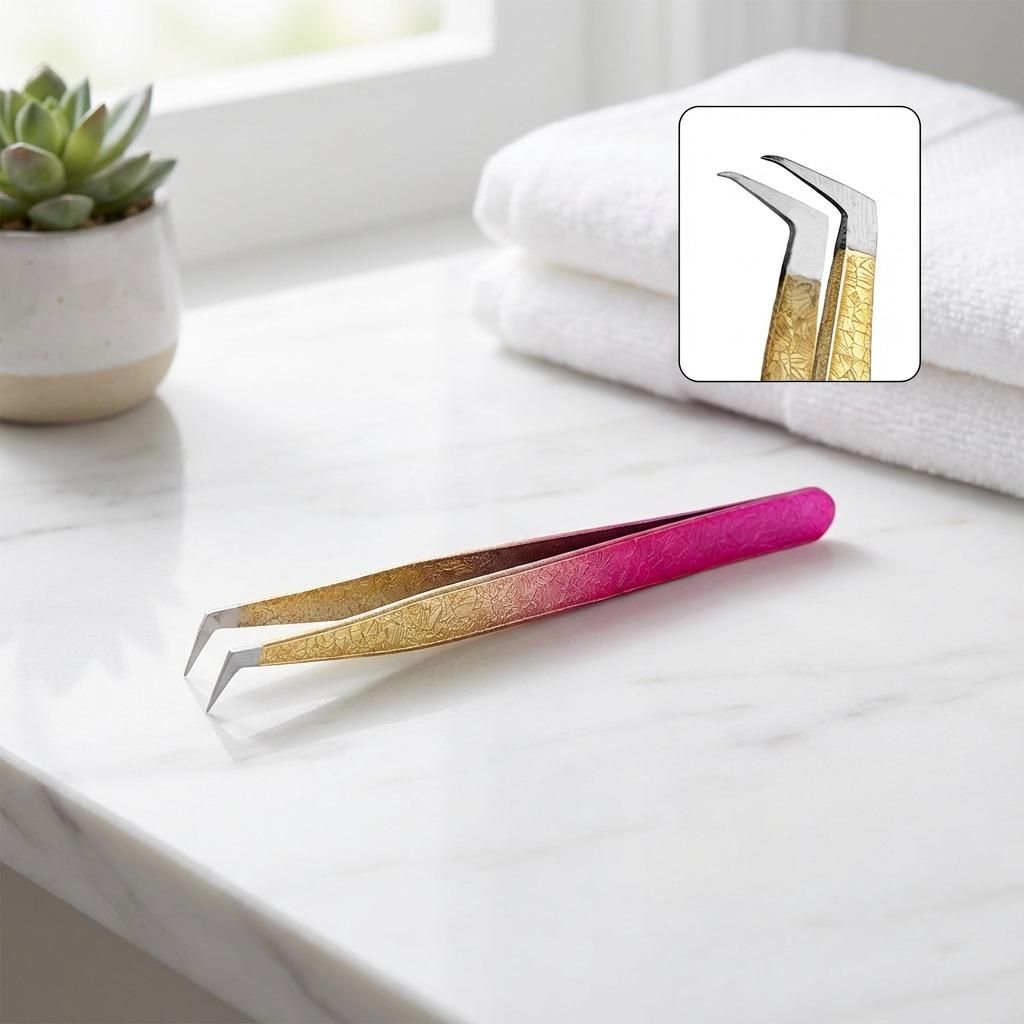
The Gradient Elegance Tweezers mentioned by Olimor Beauty are an example of a product where both function and appearance matter. The original product description highlights a gradient gold-to-pink finish and finely honed tips for precise plucking. For buyers, that combination points to two inspection tracks: cosmetic finish consistency and working-tip performance.
Quality Checks That Matter When Importing Tweezers
When importing tweezers from China or any manufacturing region, it is important to translate “good quality” into specific, checkable standards. A reliable tweezers supplier should be able to discuss product details clearly and support your sample evaluation with consistent production follow-through.
During sample review, inspect more than the overall appearance. Open and close the tweezers repeatedly to feel the tension. Check whether the tips meet evenly without visible gaps. Use the tool on fine hair or a suitable test material to assess grip. Look closely at edges and corners to confirm they are smooth enough for normal handling. For finished designs, compare several samples side by side under good light to identify color variation, scratches, coating flaws, or inconsistent polishing.
- Tip alignment: The two tips should meet evenly and hold fine hair without slipping.
- Tension: Pressure should feel controlled, not too stiff for repeated use and not too loose for accuracy.
- Surface finish: Coatings, gradients, polishing, or color treatments should look consistent across samples.
- Edge comfort: Handles and shoulders should not have sharp burrs or rough areas.
- Packaging fit: The tool should sit securely in its pouch, card, box, or tray without damaging the tips.
- Batch consistency: Multiple pieces should be checked, not only one “best” sample.
If the supplier claims a particular material, finish, or production standard, request written confirmation in the quotation or specification sheet. Avoid relying on casual chat messages for critical details. A clean specification helps both sides confirm the same expectations before production begins.
How to Compare Tweezers Manufacturers and Wholesale Offers
The tweezers wholesale market can be difficult to compare because quotations may include different assumptions. One offer may include simple packaging, while another may include printed cards, logo application, or additional inspection. Shipping terms, carton details, sample costs, and payment stages may also vary. To make a fair comparison, create a standard request format and ask every supplier to respond to the same points.
| Comparison Point | Why It Matters | What to Confirm |
|---|---|---|
| Product specification | Prevents confusion between similar-looking tweezers | Shape, finish, tip type, packaging, and any confirmed material details |
| Sample process | Shows how closely production can match your needs | Sample availability, customization sample timing, and approval steps |
| Quality control | Reduces risk of uneven tips or cosmetic defects | Inspection points before packing and how defects are handled |
| Customization scope | Affects branding, cost, and lead time | Logo method, placement area, artwork format, and packaging options |
| Export support | Helps avoid delivery and document problems | Shipping terms, carton information, export documents, and communication process |
Do not assume the lowest price is the best wholesale choice. A small saving per unit can disappear if the shipment has a high defect rate, poor packaging, or unclear documentation. A dependable supplier should be able to explain what is included and what is not included, especially for private-label tweezers or mixed beauty tool orders.
Custom Logo Tweezers: Branding Without Hurting Function
Custom logo tweezers can help a beauty brand look more professional, especially when sold as part of brow kits, lash tools, or retail beauty accessories. However, logo placement should never interfere with the grip, balance, or tip performance of the tool. The most effective customization plan protects both branding and usability.
Discuss logo size, placement, color, and method before approving artwork. On a decorative finish such as a gradient gold-to-pink surface, contrast and readability should be checked carefully. A logo that looks clear on a digital mockup may be less visible on a reflective or color-shifting surface. If packaging is also customized, ensure the tweezer color, brand mark, and retail presentation work together rather than competing visually.
For importers, it is helpful to prepare artwork files, brand color references, and packaging text early. This reduces back-and-forth and lowers the chance of production delays. If you need to discuss whether a logo or packaging concept is practical for your order, you can send an inquiry with your intended design requirements.
Import Planning: Samples, Documentation, and Shipping Questions
A reliable tweezers exporter should communicate clearly about export steps, but buyers also benefit from having their own import checklist. Confirm who is responsible for shipping arrangements, which trade terms apply, what documents will be provided, and whether the packaging is suitable for the destination sales channel. If you sell online, packaging durability may be as important as shelf appearance. If you sell through retailers, barcode placement, label space, and carton organization may need closer attention.
Before mass production, keep an approved sample or detailed approval record. This becomes the reference point for evaluating the finished order. For decorative tweezers, include photographs of accepted color, finish, and logo placement. For precision performance, document how the tips should align and how the tool should feel. The goal is not to create unnecessary paperwork; it is to make the final inspection objective.
- Approve the physical sample or a clearly documented pre-production sample.
- Confirm written specifications, packaging details, and logo artwork.
- Clarify inspection expectations before the order is packed.
- Review carton marks, shipping terms, and required export documents.
- Plan a receiving inspection when the goods arrive at your warehouse or fulfillment center.
Signs of a Supplier Worth Building Around
A strong supplier relationship is built on more than one shipment. Look for consistent communication, realistic answers, and a willingness to clarify details before production. Be cautious if a supplier avoids specification questions, refuses to provide clear sample expectations, or changes key details without written confirmation. Reliable sourcing depends on predictability.
For beauty tool buyers, the best tweezers supplier is usually the one that understands both the product and the market. They should recognize that tweezers are judged by precision, comfort, appearance, and packaging quality. They should also understand that importers need repeatable results, not just attractive catalog images. Olimor Beauty presents tweezers as part of a wider beauty tool offering, which can be useful for buyers building coordinated assortments across multiple accessories.
If you are preparing a new tweezers order, compare suppliers with a structured checklist, inspect samples carefully, and make branding decisions early. For questions about available beauty tools, customization direction, or sourcing next steps, you can contact Olimor to begin a practical discussion based on your target market and product requirements.
Tag: