

Tweezers OEM Buying Guide for Beauty Brands and Wholesale Buyers
For beauty brands, retailers, distributors, and private label buyers, tweezers look simple from the outside. In practice, they are precision tools. A small difference in tip alignment, tension, edge finishing, grip texture, or inspection consistency can decide whether a customer gets clean hair removal or a frustrating product experience. That is why choosing the right tweezers OEM partner matters for both product quality and long-term brand trust.
Olimor Beauty supports buyers looking for tweezers OEM, supplier, and international wholesale solutions. The focus is on stainless steel grooming tools, precise manufacturing steps, and quality checks from raw material selection through packaging. This guide explains how to evaluate tweezers for real market use, what to consider when planning OEM projects, and how to compare a supplier before moving forward with a purchase or custom program.
Why Tweezers Are a High-Detail Beauty Tool
Tweezers are often small add-on products in a beauty assortment, but customers judge them immediately. If the tips do not meet evenly, fine hairs slip. If the tension is too stiff, the tool feels uncomfortable. If the arms are too loose, precision drops. If the finish is slippery, the user may struggle during eyebrow shaping or delicate hair removal.
A reliable tweezer must balance several details at once: tip geometry, spring tension, material feel, surface finish, and repeatable production quality. For a brand buyer, this means the lowest unit cost should not be the only decision point. A low-quality tweezer can increase complaints, returns, and negative reviews, especially when sold as part of a professional or salon-inspired beauty range.
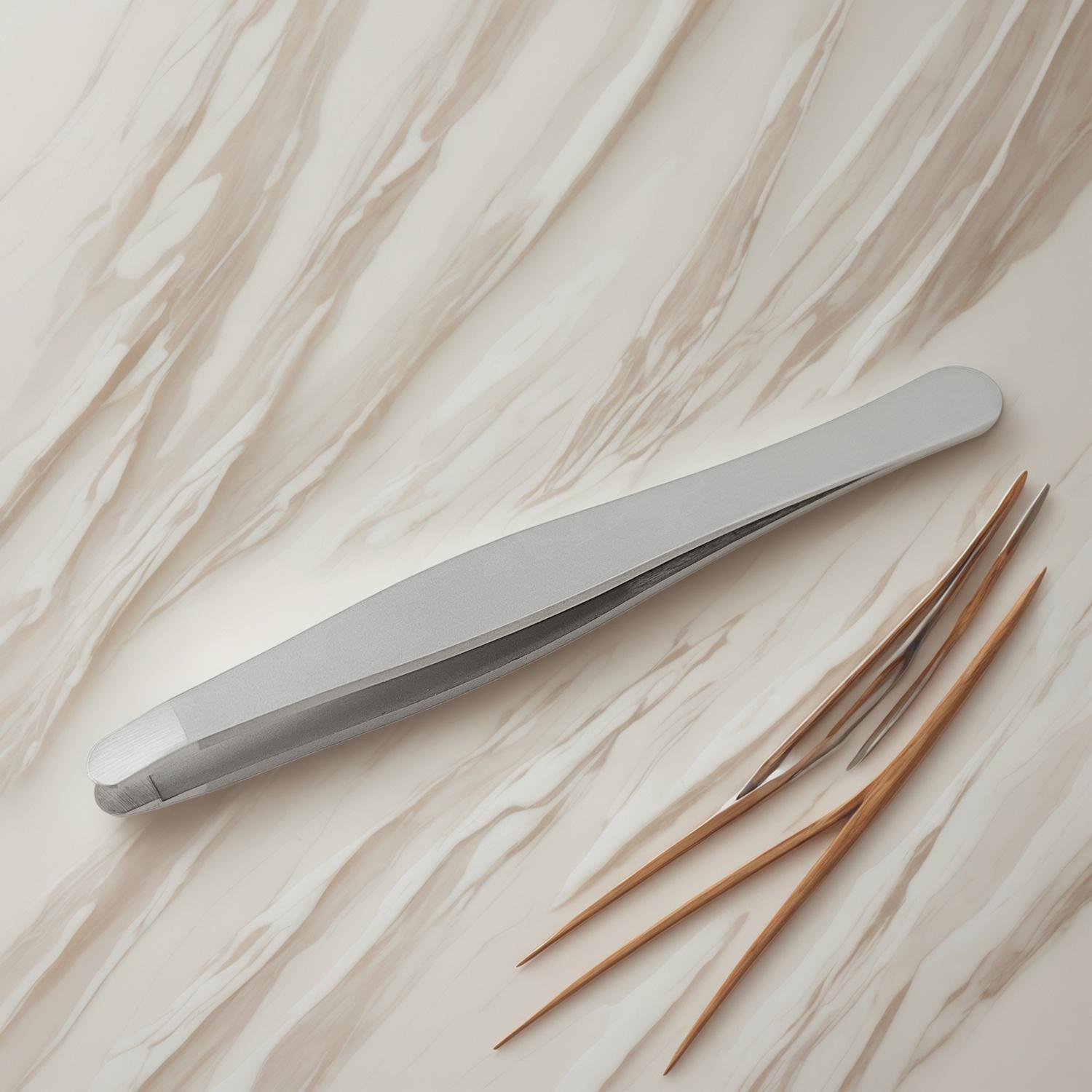
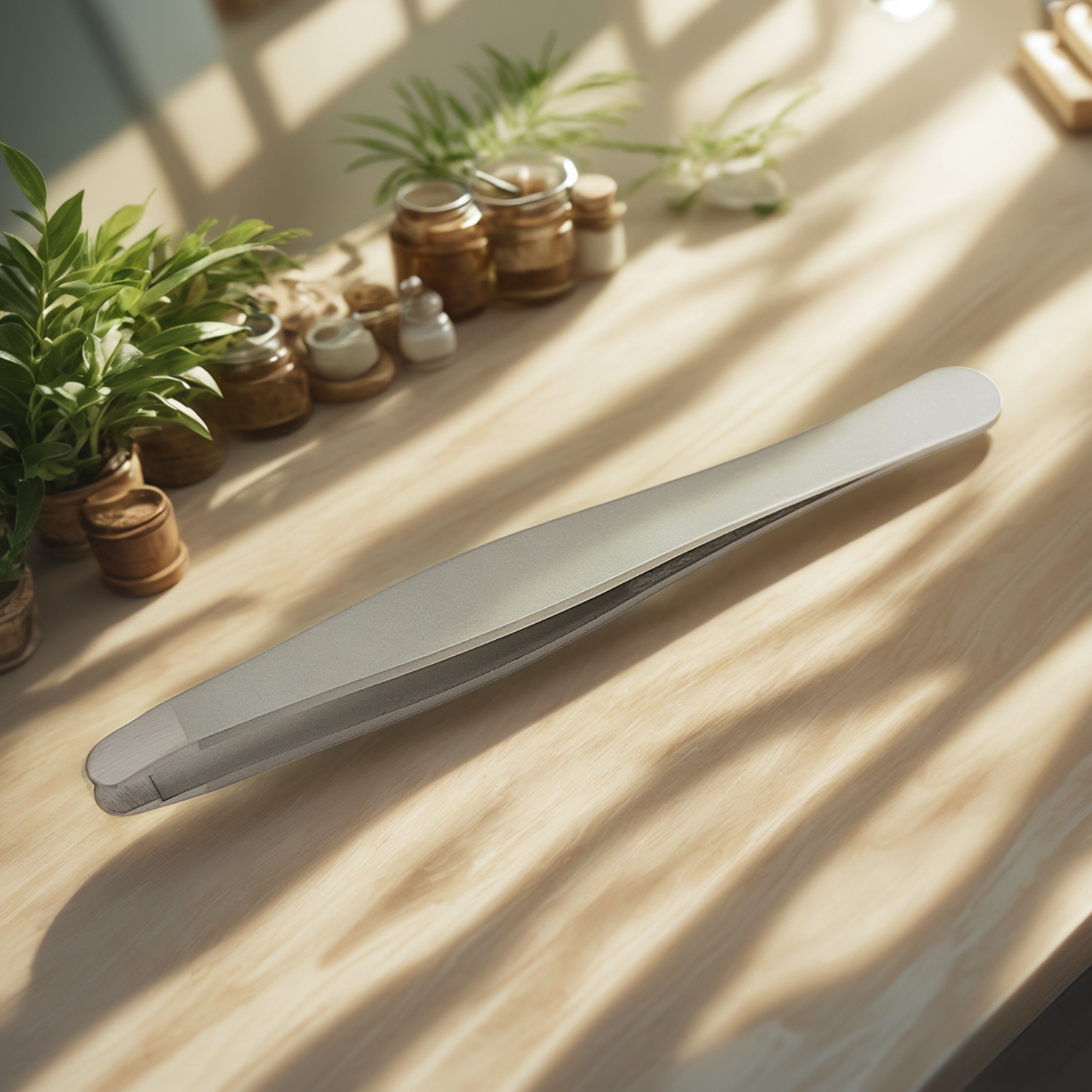
The Steel Slanted Tweezer referenced in Olimor Beauty’s product approach shows the type of practical design buyers often seek: a slanted tip for more controlled hair grasping, stainless steel construction, an ergonomic shape, and a matte finish that supports grip. These features are useful because they connect directly to how the tool performs in daily grooming, not just how it looks in packaging.
Key Product Criteria for Tweezers OEM Projects
When planning a tweezers OEM order, buyers should define the performance standard before discussing packaging or branding. A clear product brief reduces misunderstanding and helps both sides evaluate samples consistently. The following criteria are especially important for eyebrow tweezers, facial hair tweezers, and grooming kits.
- Tip alignment: The tweezer tips should meet evenly so they can grip fine hairs without excessive pressure.
- Tip shape: A slanted tip is common for eyebrow shaping because it gives users both a broad gripping edge and a more precise corner.
- Tension: The arms should close smoothly without feeling weak or overly stiff.
- Material choice: Stainless steel is widely used for durable beauty tools and is suitable for repeated grooming use.
- Surface finish: A matte finish can improve handling by reducing a slippery feel during use.
- Comfort: Ergonomic proportions help customers use the tool with better control.
- Edge finishing: Edges should feel clean and safe, without rough areas that affect handling.
- Packaging condition: Final goods should be checked before shipment so the tool and retail presentation are both protected.
These points are also useful for comparing suppliers. Instead of reviewing a sample only by appearance, test it with realistic use cases: short brow hairs, fine facial hairs, and repeated opening and closing. A good OEM discussion should translate those observations into measurable acceptance standards wherever possible.
How Olimor Beauty Approaches Tweezers OEM and Supply
Olimor Beauty positions its tweezers service around precision production, stainless steel beauty tools, and internal quality control. For buyers, the value of this approach is consistency. A product may look acceptable in one sample, but wholesale success depends on maintaining the same feel and function across production batches.
The manufacturing process described by Olimor Beauty includes attention from raw material selection to final assembly, followed by inspection through production and packaging. This matters because tweezers are sensitive to small variations. If raw material quality is inconsistent, the feel and durability of the tool may vary. If tip finishing is not controlled, grip performance may be unreliable. If packaging inspection is skipped, retail-ready goods may arrive with avoidable cosmetic or presentation issues.
For brands building a beauty tools category, a dependable tweezers supplier can also simplify range planning. Tweezers may be sold alone, included in brow sets, paired with scissors or mirrors, or offered in travel kits. Buyers can review Olimor’s broader beauty tool products to understand how tweezers may fit into a wider assortment, and they can compare related options through product collections when planning seasonal, retail, or private label programs.
What Wholesale Buyers Should Check Before Ordering
International wholesale tweezers buyers have different priorities from small local buyers. They must think about repeatability, packaging durability, carton handling, inspection expectations, labeling requirements, and how the product will be positioned in the target market. A tweezer sold through a value channel may need a different presentation from one sold in a boutique brow care range, even if the core tool must still grip accurately.
The table below gives a practical review framework for buyers comparing tweezers OEM or wholesale options.
| Review Area | What to Check | Why It Matters |
|---|---|---|
| Grip performance | Test the slanted tip on fine and short hairs | Confirms the tool works for common grooming needs |
| Tip consistency | Compare multiple samples, not just one piece | Shows whether production is repeatable |
| Hand feel | Open and close the tweezer repeatedly | Reveals comfort, tension, and control |
| Finish | Check the matte surface and edges by sight and touch | Affects grip, appearance, and perceived quality |
| Inspection process | Confirm checks from material stage to packaging | Reduces risk of inconsistent or damaged goods |
| Retail fit | Review packaging, assortment role, and customer use case | Helps match the product to the sales channel |
For importers and distributors, it is also useful to define the target customer clearly. A professional brow customer may prioritize very precise tips and controlled tension. A general retail customer may care about easy handling, attractive finish, and reliable everyday use. A travel kit buyer may focus on compactness and packaging protection. The same product type can serve different markets, but the product brief should identify the primary use case first.
Design Decisions That Affect Customer Satisfaction
Many tweezer complaints come from details that could have been reviewed early. For example, a tool may look elegant but fail to grasp fine hair if the tips are not aligned. Another tweezer may grip strongly but feel uncomfortable if the tension is too high. A polished finish may look bright but feel slippery for some users, while a matte finish can support steadier handling.
For slanted tweezers, the angle of the tip is important because customers use the edge in different ways. The wider slanted surface helps grasp hair, while the pointed end of the slant can assist with more targeted work. This is why a slanted tweezer is commonly selected for eyebrow shaping and delicate hair removal. Buyers should test both functions rather than only checking whether the tips touch.
Ergonomics should also be reviewed with real hand positions. A tweezer that feels acceptable for one quick squeeze may feel tiring after repeated use. Since brow grooming often involves several small, careful movements, comfort and control are part of product quality. The goal is not simply to make the tool heavier or more decorative; the goal is to make it easy to position and close accurately.
Building a Clear OEM Brief for Olimor Beauty
A strong OEM brief helps the supplier understand what the brand wants to achieve. It does not need to be complicated, but it should be specific. Instead of asking only for a “high-quality tweezer,” buyers can describe the sales channel, target user, preferred finish, packaging concept, and performance expectations.
- Define the market: State whether the tweezers are for retail, salon supply, gifting, travel kits, or beauty sets.
- Confirm the use case: Identify whether the main purpose is eyebrow shaping, facial hair removal, general grooming, or a mixed-use kit.
- Review the sample standard: Test tip alignment, tension, grip, and comfort before approving production direction.
- Clarify packaging expectations: Decide how the tweezer should be protected, displayed, and presented to the customer.
- Set inspection priorities: Focus on the details most likely to affect customer satisfaction, including tips, finish, and packaging condition.
Buyers who already have drawings, packaging artwork, or benchmark samples can prepare them for review. Buyers who are still developing a category can start with functional requirements and market positioning. To discuss a project, use the Olimor send an inquiry page or contact Olimor for sourcing support.
Maintenance Guidance to Include for End Customers
Good product quality should be supported by clear use and care guidance. Simple instructions can reduce misuse and improve the customer experience. For stainless steel tweezers, customers should keep the tips clean, dry the tool after cleaning, avoid dropping it on hard surfaces, and store it so the tips are protected. If the tips become bent or damaged, gripping performance can decline even if the rest of the tool looks fine.
For brands, care guidance can be printed on packaging inserts, product pages, or online listings. This is especially helpful for wholesale tweezers sold across different markets, where customers may have different levels of familiarity with brow tools. A short, practical care note supports satisfaction without overcomplicating the sale.
Choosing a Tweezers Supplier for Long-Term Range Growth
The right tweezers OEM supplier should help a buyer move beyond a one-time order. As the beauty tools range grows, consistency, communication, inspection discipline, and product knowledge become increasingly important. A well-made tweezer can support repeat purchase, positive reviews, and stronger confidence in the broader grooming category.
Olimor Beauty’s focus on stainless steel tweezers, slanted-tip precision, ergonomic usability, matte grip finish, and quality checks from raw materials to packaging gives buyers a practical foundation for OEM and wholesale planning. By evaluating samples carefully and building a clear product brief, brands can source tweezers that meet real grooming needs and fit their market position.
Tag: