

China Tweezers Exporter Guide for Stainless Steel Tweezer Sourcing
Choosing a China tweezers exporter is not only about finding a low unit cost. For beauty brands, salon distributors, craft retailers, electronics accessory sellers, and private-label buyers, the more important question is whether the tweezers will perform consistently in real hands. A tweezer that looks acceptable in a product photo can still fail because the tips do not meet evenly, the grip feels tiring, or the finish is not suitable for daily use.
Olimor Beauty supplies stainless steel tweezers for global buyers who need practical precision tools for beauty care, crafting, small repairs, model making, and detail work. This guide explains how to evaluate stainless steel tweezer sets, how to compare straight, angled, and curved tips, and what to confirm before placing an export order or developing a customized tweezer design.
What Buyers Should Expect from a China Tweezers Exporter
A dependable exporter should help you make decisions before production, not only ship finished goods after the order is placed. Tweezers are small products, but they require accurate shaping, stable alignment, controlled polishing, and appropriate packaging. The exporter should understand how the tool will be used and what level of finishing is expected for your sales channel.
For example, a salon supplier may focus on smooth handling and reliable grip for eyebrow work or eyelash placement. A craft brand may need tweezers that can pick up beads, stickers, vinyl pieces, or miniature parts without slipping. A distributor selling into electronics or repair categories may care more about tip reach, controlled pressure, and access to tight spaces. These needs affect the best tip style, surface finish, handle feel, and packing format.
When reviewing beauty tool products, buyers should consider the whole sourcing process: sample evaluation, production consistency, inspection standards, packing protection, export documents, and after-sales communication. A good exporter makes these steps clear so buyers can compare options with less risk.
Understanding Straight, Angled, and Curved Tweezer Tips
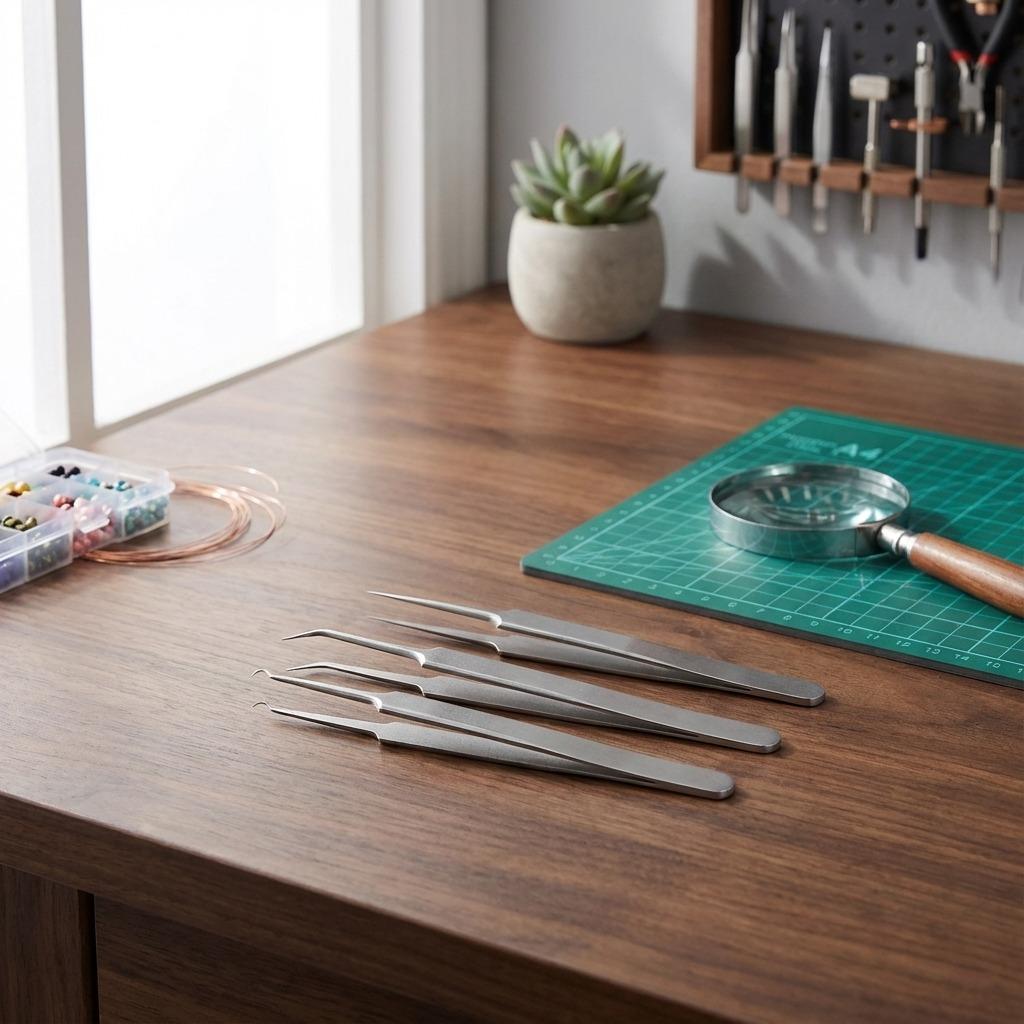
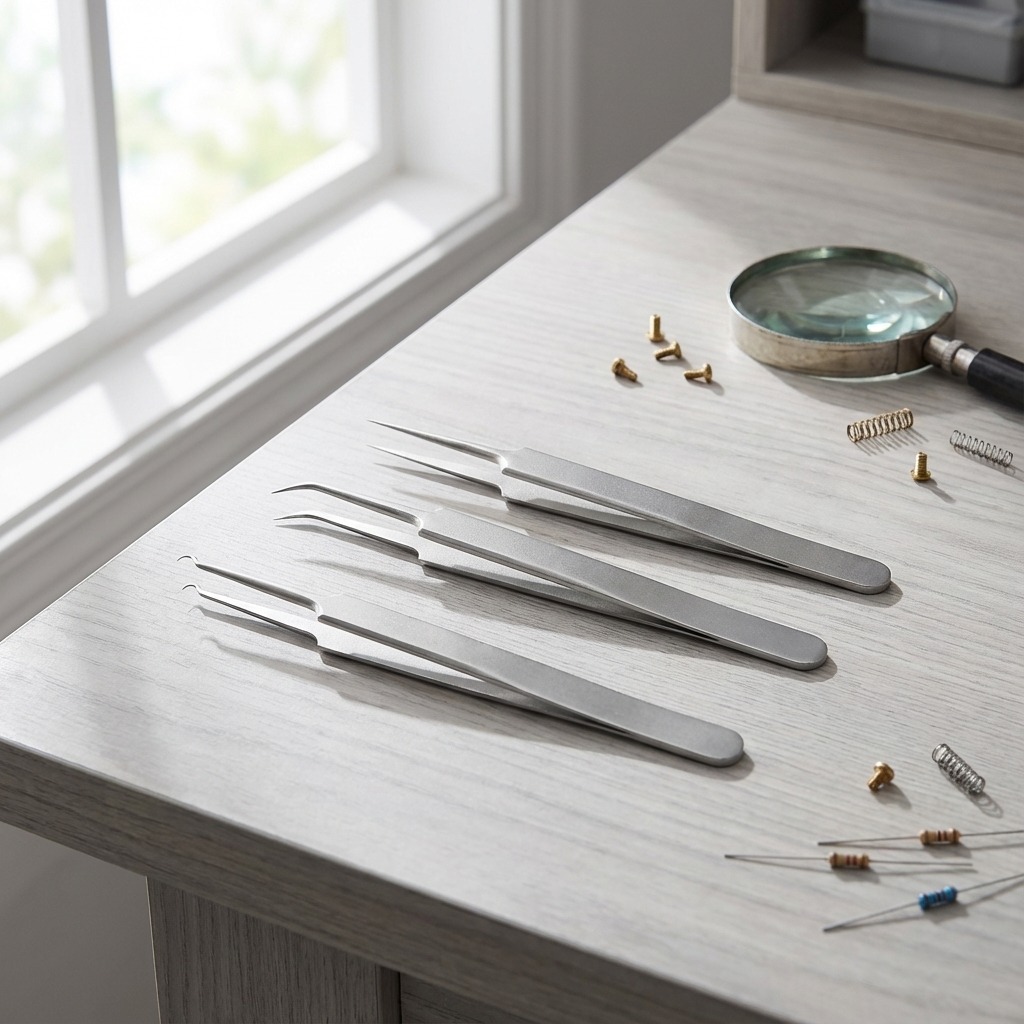
The original purpose of a tweezer set is to give users more than one way to control small items. Olimor Beauty stainless steel tweezer sets feature three versatile styles: straight-tip, angled, and curved. Each one suits different tasks, so buyers should not choose only by appearance.
| Tip style | Best suited for | Buyer evaluation point |
|---|---|---|
| Straight-tip tweezers | Precise handling of delicate components, individual hairs, small gems, and flat items | Check whether the tips meet evenly from both sides and whether the grip pressure feels balanced. |
| Angled tweezers | Comfortable access in tight spaces, eyebrow shaping, lash placement, nail art, and small decorative work | Check the angle, visibility around the working area, and whether the user can hold the tool without wrist strain. |
| Curved tweezers | Navigating complex contours, applying items around curves, model work, and reaching around obstacles | Check whether the curve gives access without reducing control at the tip. |
A mixed set is useful for retailers because it gives end users a reason to purchase one kit instead of a single tool. For professional buyers, the set format can also reduce SKU complexity while serving multiple user groups. If your customers include both beauty users and hobby users, the combination of straight, angled, and curved tools may be more attractive than a single-purpose pack.
Material, Finish, and Alignment Checks That Matter
Stainless steel is widely used for tweezers because it supports durability, repeated handling, and corrosion resistance when properly processed and cared for. However, buyers should not treat the words “stainless steel” as the only quality indicator. The performance of a tweezer depends on the relationship between material, tip shaping, spring tension, edge finishing, and surface treatment.
During sample review, use a simple inspection routine. First, look at the tips under bright light. The two sides should meet evenly without a visible gap or crossing too much. Second, close the tweezer slowly and feel whether the pressure increases smoothly. A tool that is too soft may not grip well, while one that is too stiff can cause hand fatigue. Third, run a fingertip carefully along the outer edges, avoiding the sharp working tips. Edges should feel finished rather than rough.
For beauty channels, appearance also matters. A clean finish supports customer confidence, especially when the tweezers are sold in sets or used in a salon environment. For crafting and repair categories, users may be more tolerant of simple packaging but less tolerant of poor tip accuracy. In both cases, consistent production is more important than one excellent sample.
Customization: How to Design Your Own Tweezers Responsibly
Designing your own tweezers can be a useful option for brands, distributors, and promotional buyers, but customization should start from the user’s task rather than from decoration alone. A logo or color may help branding, yet the tool still has to grip reliably and feel comfortable during repeated use.
Before starting a custom project, define the practical requirements. Will the tweezers be sold for eyebrow grooming, eyelash work, nail art, crafting, repair, or a multi-purpose kit? Should the pack contain all three tip styles or focus on one high-demand style? Will the product be used by professionals, beginners, or general consumers? The answers will guide decisions on tip style, handle shape, finish, packaging, and instruction content.
- Tip choice: Select straight, angled, curved, or a set combination based on the main task.
- Grip comfort: Review handle width, pressure, and whether the tool causes fatigue during longer use.
- Surface finish: Choose a finish that fits the sales channel and is practical for handling and cleaning.
- Branding area: Confirm where a logo or mark can be placed without interfering with grip.
- Packaging: Decide whether the product needs retail-ready display packaging, simple protective packing, or set packaging.
- Inspection standard: Define how alignment, appearance, quantity, and packing will be checked before shipment.
If you are planning a customized stainless steel tweezer order, you can send an inquiry with your target use, preferred tip styles, packing idea, and any existing sample reference. Clear early information helps avoid mismatched expectations later.
Export Sourcing Questions to Clarify Before Ordering
International buyers often compare several suppliers at the same time. To make the comparison fair, prepare the same checklist for each exporter. This helps you avoid choosing only by the lowest quote while missing important differences in quality control or packing.
- What styles are available? Confirm whether straight, angled, and curved tweezers can be supplied as singles or as a set.
- How is alignment inspected? Tip meeting accuracy is one of the main performance points for tweezers.
- What material and finish options are offered? Keep the question practical and request clear descriptions rather than vague claims.
- Can production match the approved sample? A good sample is useful only if bulk production follows the same standard.
- How will the tweezers be protected in packing? Tips can be affected by poor packing, so protection matters during export transport.
- What information is needed for custom branding? Prepare logo files, placement requirements, color expectations, and packaging layout ideas.
- What inspection steps are used before shipment? Raw material review, in-process checks, and final packaging inspection all reduce risk.
These questions do not require the buyer to know every manufacturing detail. They simply create a more transparent discussion and make it easier to judge whether the exporter understands precision tool requirements.
Why Olimor Beauty Is a Practical Partner for Tweezer Buyers
Olimor Beauty focuses on precision beauty tools and stainless steel tweezer sets that serve both professional and general-purpose applications. The available tweezer styles include straight-tip for precise handling, angled for comfortable access in tight spaces, and curved for working around complex contours. These features make the tools relevant for beauty care, model making, crafting, hardware repairs, and other detailed work.
Quality control is especially important for a small hand tool. Olimor Beauty emphasizes inspection from raw materials to final packaging, helping buyers reduce the risk of inconsistent grip, poor finishing, or packing problems. For exporters, this process is not just an internal factory step; it affects how confidently distributors, retailers, and brand owners can sell the product in their own markets.
Buyers who are building a broader assortment can also browse product collections to consider how tweezers may fit with other beauty tools. If your business needs export support, custom discussion, or sample planning, you can contact Olimor with your intended market and product requirements.
Care and Handling Tips for End Users
Good sourcing is only part of the product experience. Clear care instructions can reduce returns and help customers get better performance from the tweezers. Retail brands may include short instructions on packaging inserts or product pages.
After use, tweezers should be wiped clean and stored in a dry place. The tips should be protected from impact because even a small bend can affect alignment. Users should avoid dropping the tool, forcing it onto hard objects, or using beauty tweezers as a substitute for pliers or cutting tools. For salon environments, cleaning procedures should follow the applicable hygiene practices for that workplace and region.
For buyers, including basic care guidance is a simple way to improve the perceived value of the product. It also helps customers understand that precision tips need protection, especially in a set that may be carried in a makeup bag, salon drawer, repair kit, or craft box.
Making a Better Tweezer Sourcing Decision
The best China tweezers exporter for your business is the one that can connect product design, consistent manufacturing, realistic customization, and export-ready packing. Stainless steel tweezers may be compact, but the details determine whether users trust them for close, precise work.
When evaluating options, focus on tip alignment, grip comfort, finish quality, set configuration, packaging protection, and inspection communication. If you plan to design your own tweezers, begin with the user’s task and then build branding around a practical tool. With the right sourcing approach, a stainless steel tweezer set can serve beauty professionals, hobby users, repair technicians, and everyday consumers with reliable performance across many detailed applications.
Tag: