

China Tweezers Exporter Guide for OEM Beauty Brands
Choosing a China tweezers exporter is not only a purchasing decision. For beauty brands, retailers, salon suppliers, and private label buyers, tweezers are small tools that carry a large share of customer trust. A pair of tweezers must grip accurately, feel balanced in the hand, align with the brand’s visual identity, and remain consistent from one production batch to the next. When the product is sold under your name, every detail matters.
Olimor Beauty works with beauty tool buyers who need professional grooming tools, including existing tweezers and OEM custom tweezers. The goal is to help brands create practical, market-ready tools without turning the sourcing process into guesswork. Whether you are comparing suppliers, preparing a custom design, or refining an existing tweezer line, this guide explains the key points to review before production.

What Makes a Reliable China Tweezers Exporter?
A reliable exporter should understand both product performance and the expectations of international beauty markets. Tweezers may look simple, but their quality depends on small manufacturing decisions: tip alignment, tension, edge finishing, surface treatment, handle shape, and final inspection. If one of these areas is inconsistent, the end user notices quickly.
When evaluating a China tweezers exporter, start with the basics. Does the supplier clearly discuss materials, finishing options, and inspection steps? Can the team explain how different tip shapes affect use? Are they comfortable working from a reference sample, drawing, or brand brief? Strong communication at the early stage helps reduce misunderstandings later.
Olimor Beauty focuses on professional-grade grooming tools and supports brands that need either standard product sourcing or custom development. Buyers can review broader beauty tool products to understand available categories, then narrow the discussion to tweezers that match their audience and retail channel.
Key Tweezer Design Choices That Affect Performance
Before you design your own tweezers, define the use case. A general brow grooming tool, a precision hair removal tweezer, and a salon retail tweezer do not need the same feel. The most successful OEM projects usually begin with a clear product position rather than a surface-level design request.
Several design choices deserve attention:
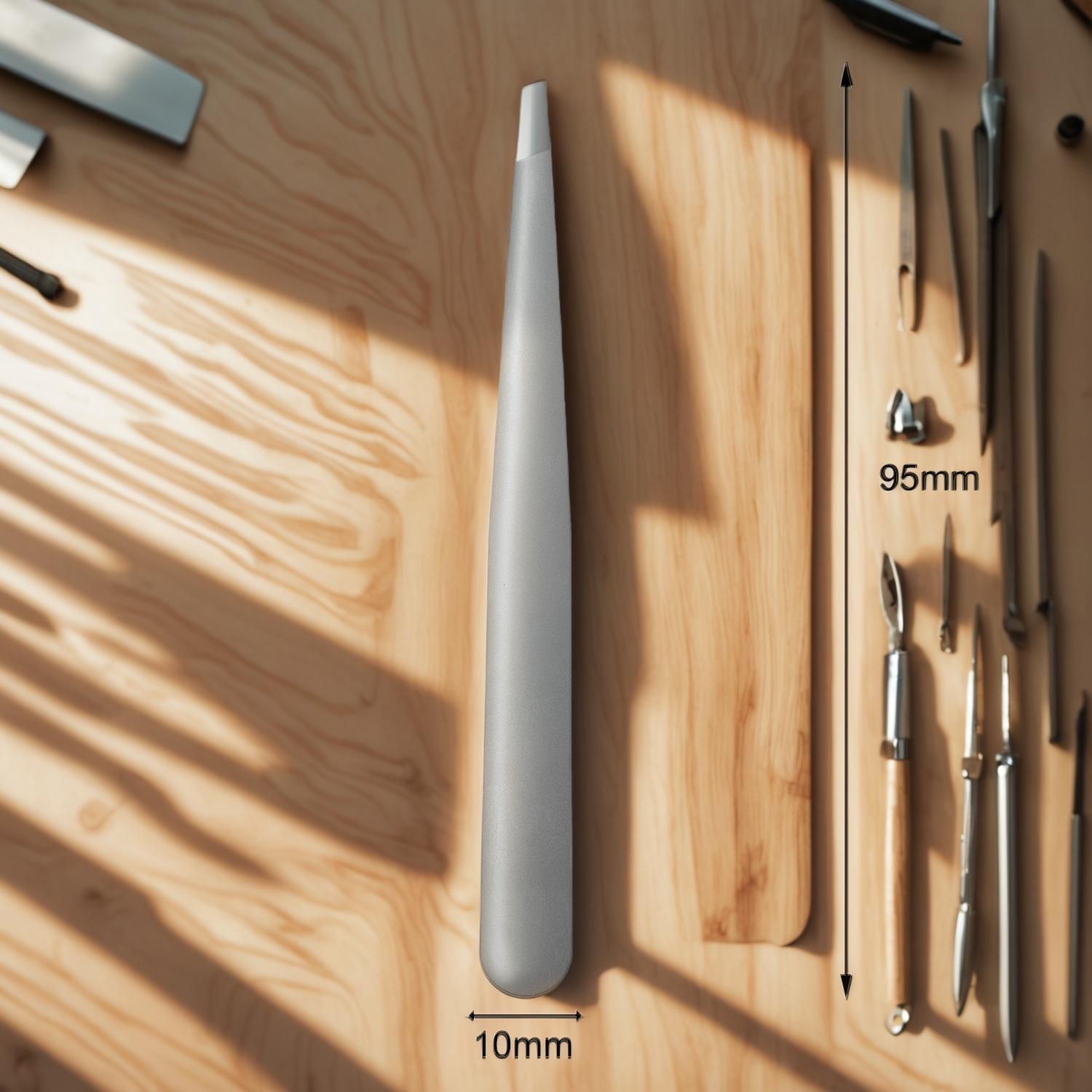
- Tip shape: Slant tips are widely used for eyebrow grooming because the angle helps users approach fine hairs with control. Pointed or specialty tips may suit more precise applications, but they require careful alignment.
- Grip tension: Tweezers should close smoothly without feeling too stiff or too loose. Tension influences comfort, control, and perceived quality.
- Handle width and length: A wider handle can feel stable, while a slimmer profile may appeal to compact kits or travel packaging. The best choice depends on the target customer.
- Surface finish: Matte, polished, coated, or textured finishes can change both appearance and grip. The finish should also fit the brand’s packaging and price positioning.
- Tip finishing: The gripping surfaces must meet cleanly. Even attractive tweezers will disappoint users if the tips do not capture hair effectively.
The Slant Tip Tweezers mentioned in Olimor Beauty’s product work show why a familiar shape still requires careful engineering. The value is not simply the slant angle; it is the combination of alignment, tension, control, and finishing.
OEM Custom Tweezers: From Brand Concept to Production Brief
OEM custom tweezers give beauty brands the ability to move beyond generic tools. Customization can support a new product launch, a private label retail program, a salon accessory range, or a giftable grooming set. However, a good custom project needs more than a color request. It needs a complete brief that connects design, use, packaging, and quality expectations.
A practical OEM brief may include the following details:
- Target user: Define whether the product is for everyday consumers, brow professionals, salon resale, travel kits, or promotional beauty sets.
- Preferred tip style: Confirm whether you need slant tip tweezers or another shape based on the grooming task.
- Reference sample: If you have a sample you like, note what should be kept and what should be changed, such as tension, finish, or handle feel.
- Visual direction: Provide brand colors, logo placement ideas, and packaging references if available.
- Retail environment: A product sold online may need strong photography appeal, while a retail shelf product may need packaging that explains function quickly.
- Quality priorities: Identify the most important acceptance points, such as tip alignment, surface consistency, or packaging presentation.
Clear briefs save time because they allow the manufacturer to evaluate feasibility early. If a finish, shape, or logo position creates a practical challenge, it can be discussed before sampling instead of after production planning.
Quality Control Points Buyers Should Review
Quality control for tweezers should not be limited to a final visual check. A beauty tool can look acceptable while still failing in daily use. For this reason, buyers should understand which inspection points matter most and build them into the purchasing conversation.
Important quality control areas include tip contact, symmetry, surface finish, opening and closing tension, cleanliness, and packaging accuracy. For OEM orders, branding details should also be checked carefully: logo position, color consistency, printed information, barcode placement if used, and any retailer-specific labeling requirements.
| Inspection Area | Why It Matters | What Buyers Can Review |
|---|---|---|
| Tip alignment | Determines whether the tweezers can grip fine hair cleanly. | Check that both tips meet evenly without visible gaps. |
| Tension | Affects comfort, control, and long-term user satisfaction. | Compare samples for consistent opening and closing feel. |
| Surface finish | Influences appearance, grip, and perceived value. | Look for scratches, uneven coating, stains, or rough edges. |
| Branding | Represents your company directly in the customer’s hand. | Confirm logo clarity, placement, and color before approval. |
| Packaging | Protects the tool and communicates product purpose. | Review fit, print quality, instructions, and retail presentation. |
Olimor Beauty emphasizes internal quality control from raw material review through final packaging. For buyers, the most useful approach is to turn quality expectations into measurable sample approval criteria before bulk production begins.
Sourcing Questions to Ask Before You Commit
The best sourcing conversations are specific. Instead of asking only for a catalog and quote, ask questions that reveal how the exporter manages product development, communication, and consistency. This is especially important when your brand plans to sell the product repeatedly rather than place a one-time order.
Useful questions include: What customization options are practical for this tweezer type? Which details can be changed without affecting performance? How should artwork be prepared for logo application? What sample approval steps are recommended? How are finished tweezers protected during packing? What product details should be confirmed before final production?
If you are still comparing categories, Olimor Beauty’s product collections can help you consider whether tweezers should be sold alone or paired with other grooming tools. For a specific project brief, you can also send an inquiry with your desired tip type, finish, packaging direction, and target market.
Packaging and Brand Presentation for Custom Tweezers
Packaging is not an afterthought for tweezers. It protects the tip, supports hygiene perception, and helps customers understand the tool’s purpose. For online sales, packaging must arrive in good condition and photograph well. For retail sales, it needs to communicate function quickly and fit the display environment. For salon resale, it should look professional without adding unnecessary complexity.
When planning packaging, consider whether the tweezer needs a tip guard, sleeve, pouch, card, box, or set packaging. The right choice depends on the selling price, shipping method, and customer expectations. A premium-looking package that does not protect the tips is not useful; a protective package that hides the product too much may reduce shelf appeal. Balance is important.
Brand copy should also be practical. Avoid exaggerated claims. Instead, explain the tip type, intended use, and care instructions clearly. Simple care guidance, such as keeping tips clean and dry and storing the tool with protection, can reduce customer complaints and extend the product’s useful life.
Working With Olimor Beauty on Tweezer Development
For beauty brands, the right China tweezers exporter should act as a manufacturing partner, not only a product seller. Olimor Beauty supports buyers with professional grooming tools and OEM custom tweezers, helping translate brand ideas into practical product details. The process works best when buyers provide a clear design direction, define the intended user, and approve samples based on both appearance and performance.
If you want to design your own tweezers, begin by deciding what your product must do better for your customer: offer more control, match a brand color story, fit a compact kit, support a professional brow range, or create a consistent private label accessory line. From there, details such as tip style, handle feel, finish, logo placement, and packaging become easier to evaluate.
To discuss an OEM tweezer project or compare product options, you can contact Olimor with your brand brief. A focused sourcing plan helps you avoid generic products and develop tweezers that look, feel, and perform in line with your market expectations.
Tag: