

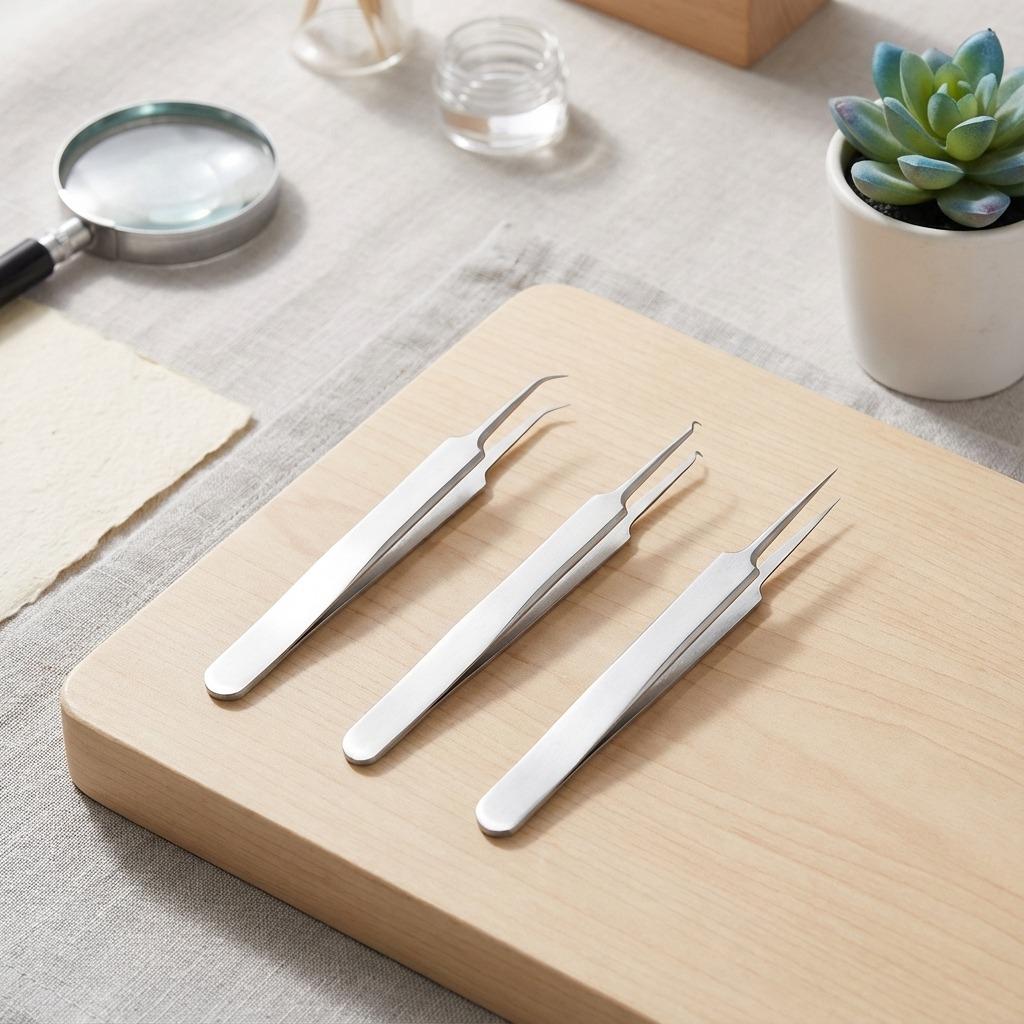
China Tweezers Exporter Guide for Precision Beauty Tools
Choosing a China tweezers exporter is not only about unit cost. For beauty brands, salon suppliers, private label programs, and retail kits, the real value is repeatable precision, comfortable handling, clean finishing, and packaging that protects fine tips during storage and shipping.
Tweezers look simple, but buyers usually notice quality immediately. If the tips do not meet cleanly, the tool feels frustrating no matter how polished the handle looks. A practical sourcing process should therefore focus on function first, then appearance, customization, and export support.
Olimor works with stainless steel beauty tools for buyers who need practical tweezers for grooming, brow shaping, lash handling, and detailed beauty tasks. If you are comparing supplier options, you can review current precision tweezer options, browse the wider beauty tool collection, or send a project note through the inquiry page.
What matters most when evaluating a tweezers exporter
The best exporter is the one that can repeat the same working performance across batches. A good sample matters, but a dependable production run matters more. Start with the features that affect the end user’s hand feel and control.
- Tip alignment: both sides should meet evenly without visible gaps, twisting, or sideways offset.
- Tip finish: the working edge should grip fine hairs or small objects without unnecessary scratching.
- Spring tension: the tweezer should open and close smoothly without excessive hand fatigue.
- Material choice: stainless steel is widely used because it is durable, cleanable, and suitable for beauty tools.
- Grip comfort: the body should feel controlled in the hand during detailed work.
- Surface consistency: polishing, coating, plating, or matte treatment should look uniform across the batch.
- Packaging fit: sleeves, pouches, backing cards, or boxes should protect the tips and suit the sales channel.
These checks are more useful than judging a supplier only by a product photo. A polished surface can look attractive online, but the working end decides whether the tweezer is suitable for real beauty use.
How to compare exporters without relying on rankings
Searches for the “top” exporter can help you build a shortlist, but rankings rarely tell you whether the factory or trading partner is right for your product. A stronger approach is to compare how each supplier handles sample confirmation, customization, inspection, and export communication.
| Comparison area | What to confirm | Why it matters |
|---|---|---|
| Sample quality | Ask for samples that reflect the intended tip style, finish, and grip feel. | A true sample helps you judge usability instead of only appearance. |
| Batch consistency | Check several units, not just one approved sample. | Small variations can affect user satisfaction and retail returns. |
| Customization support | Confirm what can change: tip shape, surface finish, logo placement, packaging. | Not every feature can be adjusted in the same way or with the same tooling impact. |
| Communication | Review how clearly the supplier answers questions about artwork, approval, and inspection. | Clear communication reduces delays and misunderstanding during production. |
| Export readiness | Ask how shipping details, carton labeling, and document support are handled. | Export coordination affects lead-time planning and receiving accuracy. |
This style of comparison is more reliable than asking only for the lowest quotation. A cheaper tweezer can become expensive if it needs rework, arrives with bent tips, or does not match your packaging plan.
Core precision tweezer formats you can build from
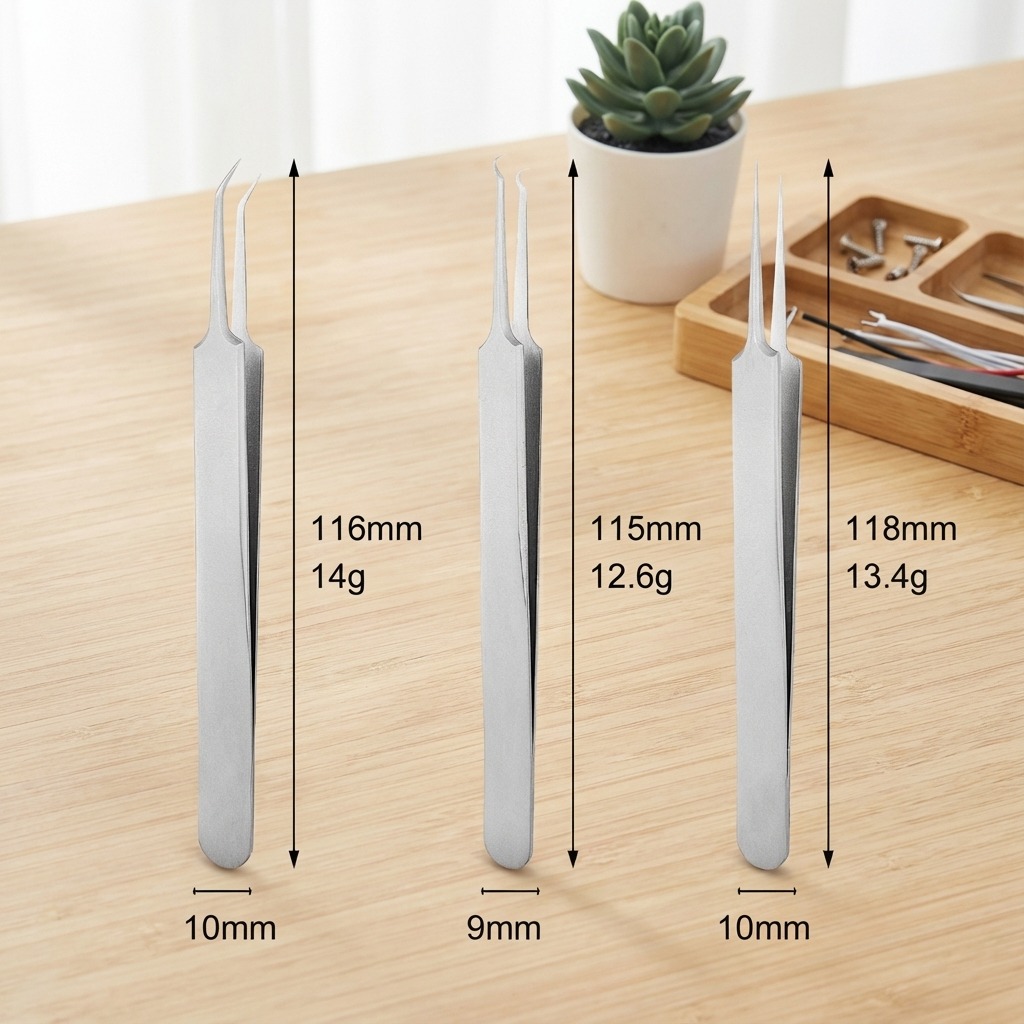
For buyers developing a private label line or a coordinated beauty set, starting from an existing model can reduce uncertainty. Olimor currently offers three core tweezer formats that can serve as design foundations.
| Model | Length | Weight | Typical use case |
|---|---|---|---|
| Precision Curved Tweezer | 116mm | 14g | Useful when a curved working angle is preferred for controlled placement and detailed beauty work. |
| Standard Precision Tweezer | 115mm | 12.6g | A balanced option for brands that want a familiar general precision tweezer format. |
| Precision Straight Tweezer | 118mm | 13.4g | Suitable when a straight profile is preferred for direct visibility and simple handling. |
Those small differences in length and weight can affect hand feel, packaging dimensions, and how the tool sits in a consumer kit. If you are building a complete set, check whether the tweezer style matches your scissors, nail tools, lash tools, or brow accessories so the assortment feels coherent.
Customization choices that preserve performance
Customization works best when it supports the intended use instead of distracting from it. A professional brow tool may need a different grip and finish from a low-cost promotional item, while a premium retail kit may prioritize coordinated visual styling and stronger package presentation.
When you design your own tweezers, define the function first. Ask whether the product is meant for eyebrow shaping, lash handling, general grooming, or inclusion in a beauty set. That answer should guide tip shape, body form, surface treatment, and branding placement.
Common customization decisions
- Tip profile: curved, straight, or other precision-style tips should match the user task.
- Grip feel: smooth, textured, or shaped grip areas affect comfort and control.
- Visual finish: polished, matte, coated, or colored directions should fit the brand look.
- Branding placement: logo size and location should stay readable without affecting hand comfort.
- Retail presentation: backing cards, sleeves, pouches, or boxes should protect the tips in transit.
Engraving or printing should never create an uncomfortable contact point for the fingers. Decorative changes also should not interfere with the spring action or the accuracy of the working end. If you are building a broader line, keep the look and packaging direction consistent across related beauty tools.
For project discussions, a direct note through Olimor’s contact page can help you review the starting model, the intended finish, and the packaging format before sample approval.
Inspection points that help prevent complaints
Small tools can still create large problems if inspection is weak. Tweezers may show issues such as uneven polishing, burrs near the tip, weak tension, over-sharp edges, tip deformation, or inconsistent logo placement. A simple but disciplined inspection plan can prevent many of those issues.
| Inspection area | What to check | Why it matters |
|---|---|---|
| Tip closure | Confirm that both tips meet evenly under light pressure. | Accurate closure supports grip on fine hairs or small objects. |
| Tip shape | Look for symmetry and freedom from visible damage. | Uneven points can cause slipping, pulling, or reduced control. |
| Grip tension | Open and close the tool several times to feel consistency. | Balanced tension improves comfort during repeated use. |
| Surface finish | Check for rough edges, stains, scratches, or polishing marks. | A clean finish supports a professional retail appearance. |
| Logo or engraving | Verify placement, depth, and readability against the approved sample. | Branding should look clean without affecting handling. |
| Packaging | Make sure tips are protected and labels are correct. | Packaging quality helps avoid transit damage and receiving delays. |
Keep an approved sample and compare new goods against that reference during repeat orders. Photos are useful, but they do not replace hands-on review. For brands building long-term programs, that comparison discipline is one of the most practical supplier-evaluation habits.
Packaging and export support buyers should ask about
Export-ready tweezers need packaging that protects the working end and presents the product clearly. Fine tips can bend if they are packed loosely or pressed against hard surfaces. Even a small bend can make the tool unsuitable for precision use.
Depending on your channel, the supplier may use protective caps, sleeves, backing cards, hang cards, pouches, or retail boxes. The exact format should match the buyer’s sales plan, storage conditions, and shipping method. The main goal is the same in every case: keep the tips aligned and the surface finish clean until the customer opens the package.
It is also sensible to ask how documentation and shipment coordination are handled. If your market requires product or quality documentation, confirm the applicable version and request the supplier records your market expects. In some cases buyers review references to ISO 9001 for quality-management systems or REACH considerations for materials and finishes where relevant. Verify the current applicable version and supplier documentation for your own market rather than assuming a brochure claim is enough.
When a supplier becomes the right fit
A practical tweezers exporter should be able to support more than one order. The real test is whether the supplier can keep the same standard across repeat production while answering questions clearly about sample approval, customization, packaging, and shipment preparation.
If you are sourcing for retail beauty lines, salon kits, or private label programs, Olimor can be a sensible starting point when you want stainless steel beauty tools built around real use rather than display-only appearance. Use the model options, compare sample feel, and define your quality checks before production begins.
If you are ready to review a project, you can request sample guidance or contact Olimor directly to discuss the product direction, branding needs, and packaging format.
FAQ
Can I request samples before placing an order?
Yes. Samples are the best way to confirm tip alignment, spring tension, finish, and packaging fit before committing to production.
What should I ask about MOQ and lead time?
Ask the supplier to confirm the MOQ and lead time for your chosen model, finish, branding, and packaging. Those details can vary by specification, so it is better to confirm them for the exact project rather than assume a standard answer.
What customization is usually available for tweezers?
Common options include tip style, grip feel, finish, logo placement, and retail packaging. The best choices depend on your target user and sales channel.
How do I check quality before shipment?
Use an approved sample, inspect several units from the batch, and verify tip closure, surface finish, branding, and packaging protection before release.
Can Olimor help with branded beauty-tool packaging?
Yes, packaging can be discussed as part of the project. Share your preferred format and protection needs so the supplier can review what fits your order.
Tag: