

China Tweezers Exporter: How to Source Custom Precision Tweezers for Your Beauty Brand
For beauty brands, grooming kits, brow studios and private-label buyers, tweezers are small products with a large impact on customer trust. A tweezer that grips cleanly, feels balanced in the hand and keeps its tip alignment after repeated use can become a reliable everyday tool. A poorly made one can quickly lead to returns, negative reviews and damage to a brand’s reputation. That is why choosing the right China tweezers exporter is not only a purchasing decision; it is a product quality decision.
Custom tweezers are often used in eyebrow shaping, facial hair removal, lash work, splinter removal kits and compact beauty sets. The sourcing process should therefore focus on precision, comfort, consistency and presentation. The right partner should be able to discuss practical details such as tip style, edge finishing, handle grip, surface treatment, logo placement and packaging compatibility. If you are comparing options for beauty tool products, this guide will help you define clearer requirements before moving into sampling or production discussions.

Why Precision Matters More Than Appearance Alone
At first glance, tweezers can look similar across suppliers. The real difference appears when the tool is used. The two arms must close evenly, the tips must meet accurately, and the gripping edge must catch fine hairs without cutting them or slipping. For eyebrow and facial grooming, this level of control determines whether the user can remove one hair at a time without unnecessary pulling.
Appearance still matters, especially for retail shelves and online product photography, but it should not replace performance. A matte finish, polished surface or colored coating can support your brand identity, while the core value remains the quality of the tip geometry and tension. A good custom tweezer should feel controlled rather than stiff, stable rather than heavy, and refined rather than fragile.
When reviewing samples, test them with different hair thicknesses, not only with paper or packaging materials. Fine eyebrow hairs, short regrowth and stubborn coarse hairs each reveal different aspects of the tweezer’s performance. A sample that performs well across these use cases is more likely to satisfy a wider customer base.
Choosing the Right Tweezer Tip for the Intended Use
The first product decision is tip shape. Different tip styles are suited to different grooming habits, so the choice should be based on audience and use case rather than appearance alone. A brow-focused beauty brand may prioritize slanted tips, while a kit for detailed work may require pointed or fine-tipped edges. If your assortment includes several grooming items, review how the tweezer fits alongside your broader product collections.
- Slant tip: Common for eyebrow shaping because it offers a practical balance between visibility, grip and control.
- Point tip: Useful for very precise work, but it requires careful finishing and clear user guidance because the point is sharper.
- Flat tip: Can grip a wider area, though it may be less precise for individual fine hairs.
- Pointed slant tip: Combines a slanted edge with a narrower end, offering flexibility for detail and general grooming.
For OEM custom tweezers, the tip decision should be made early because it affects tooling, finishing, inspection standards and packaging claims. Avoid vague descriptions such as “high quality tip” in your specification sheet. Instead, describe the exact use case: eyebrow shaping, fine hair removal, lash application support, travel grooming or professional brow service retail.
Design Your Own Tweezers Without Overcomplicating the Product
The ability to design your own tweezers gives brands valuable control, but too many decorative changes can make a simple tool harder to manufacture consistently. Start with the product elements that affect user experience, then move to visual branding. Length, grip width, tension, tip style and finish should come before secondary decoration.
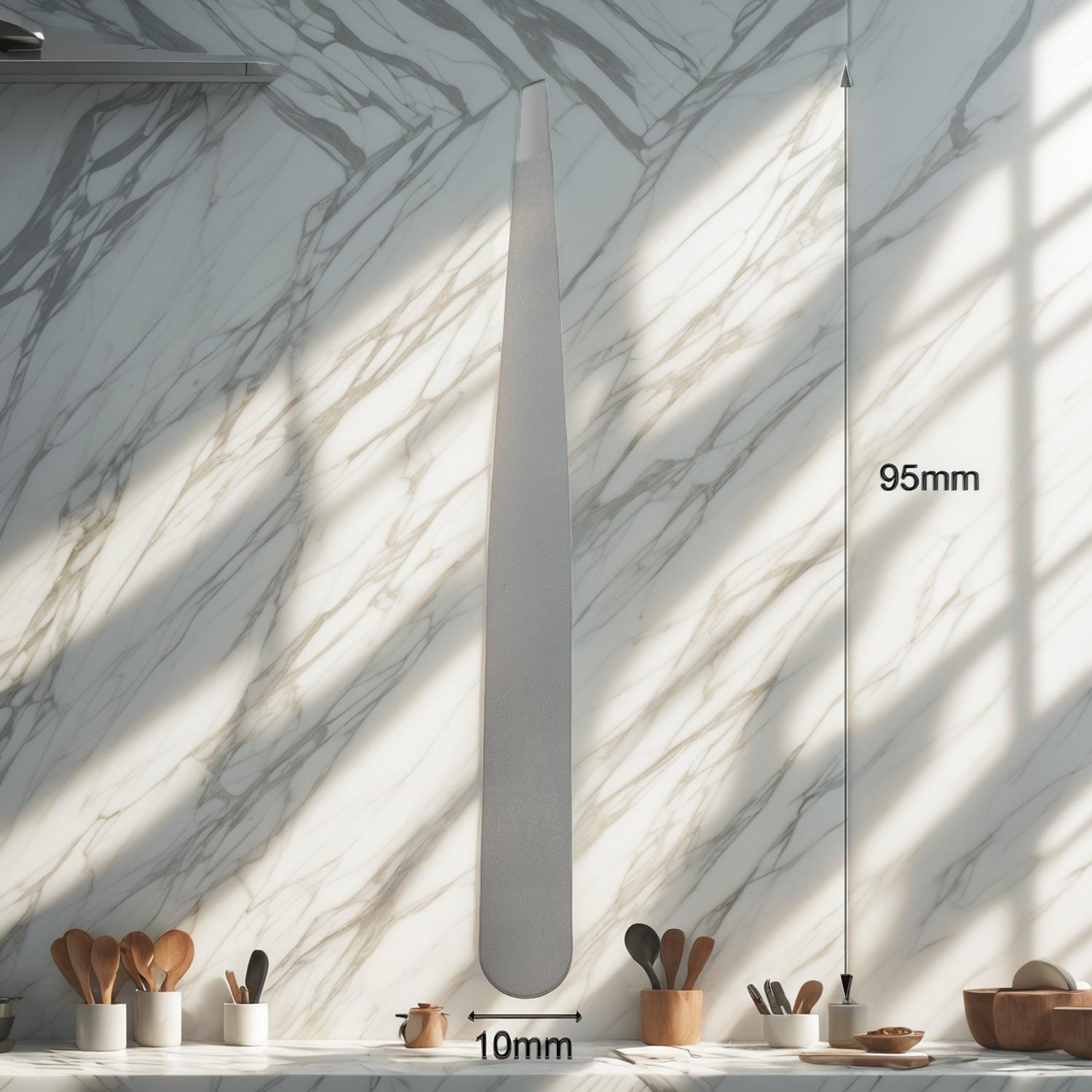
The original product direction may include a balanced tweezer length such as 95 mm. If that length suits your target user and packaging format, it can be a practical reference point. Shorter tweezers may fit compact kits, while longer tweezers may feel more stable for some users. The best choice depends on who will use the product and where it will be sold.
Key custom decisions typically include:
- Overall length: Consider hand comfort, packaging size and retail positioning.
- Grip area: A wider or textured grip can improve control, especially for users handling the tool after applying skincare.
- Surface finish: Matte, polished or coated looks can change both the appearance and perceived value.
- Logo placement: Branding should remain readable without interfering with grip or cleaning.
- Packaging format: Sleeves, cards, pouches or boxed sets should protect the tips during shipping and display.
For a premium look, keep the design disciplined. A clean shape, accurate tips and durable finish usually communicate quality more effectively than excessive decoration. If the product will be part of a set, align color, logo scale and packaging language with the other tools in the range.
How to Evaluate an OEM Custom Tweezers Supplier
A capable China tweezers exporter should be able to discuss both design and production control. The supplier does not need to overwhelm you with technical language, but they should respond clearly to practical questions. You want to understand how samples are reviewed, how tip alignment is checked, how finish consistency is maintained and how products are protected during packing.
Before confirming an order, prepare a written specification that separates required features from preferred features. Required features may include tip type, finish color, logo method and packaging style. Preferred features may include a certain hand feel, presentation detail or accessory format. This distinction helps prevent confusion when cost, lead time or manufacturing feasibility is discussed.
| Evaluation Area | What to Check | Why It Matters |
|---|---|---|
| Tip alignment | Tips meet evenly with no visible gap during closure. | Directly affects the ability to grip fine hairs. |
| Tension | Arms close smoothly without feeling too loose or too stiff. | Controls comfort during repeated use. |
| Finish | Surface is consistent, clean and suitable for the brand look. | Supports retail appeal and perceived quality. |
| Edges | No rough burrs or uncomfortable areas on the handle. | Improves safety, comfort and customer satisfaction. |
| Packaging protection | Tips are covered or secured to avoid damage in transit. | Prevents performance issues before the customer opens the product. |
Quality Control Points That Should Be Defined Early
Quality control for tweezers is not only a final inspection step. It should be considered from raw material selection through shaping, finishing, branding and packing. Because tweezers depend on precise contact between two tips, even small inconsistencies can affect performance. A final product may look acceptable in a photograph but still fail during actual grooming if the tips do not meet properly.
Define your acceptable quality expectations before production begins. For example, clarify how samples will be approved, what finish differences are acceptable, how logo placement should be judged and how packaging defects will be handled. If your product is sold online, also consider how the tweezer will appear in close-up images. Surface flaws, uneven branding or poorly protected tips can become more visible in customer photos and reviews.
Useful inspection checkpoints include tip closure, gripping performance, handle symmetry, finish consistency, logo clarity, cleanliness and packaging condition. For custom colors or coatings, review color consistency under normal lighting rather than relying only on edited product images. For matte finishes, check whether fingerprints, scratches or handling marks are likely to affect presentation.
Packaging and Branding for Retail-Ready Tweezers
Packaging has two jobs: it must protect the precision tip and communicate the product’s value quickly. A tweezer thrown loosely into a pouch or carton can arrive with damaged tips, which defeats the purpose of careful manufacturing. Tip guards, fitted trays, backing cards or secure sleeves can help preserve alignment through shipping and handling.
Branding should be clear but not exaggerated. Use packaging space to state the tip style, intended use and basic care instructions. For example, if the tweezer is designed for brow shaping, say so plainly. If it has a matte finish, describe it accurately. Avoid claims that cannot be supported or that may create unrealistic expectations.
For private-label buyers, packaging also affects inventory management. Barcode placement, case packing, language requirements and display orientation should be reviewed before mass production. A visually attractive package that is difficult to scan, stack or ship may create downstream costs. If you need help narrowing options for a branded project, you can contact Olimor with your target market and product direction.
Care Instructions That Improve Customer Satisfaction
Even well-made tweezers need proper care. Including simple care guidance in the package can reduce misuse and extend the product’s useful life. Customers should understand that dropping the tweezer can affect tip alignment, and that the tips should be kept clean and protected between uses.
- Wipe the tips after use to remove oil, skincare residue or hair fragments.
- Store the tweezer with a tip cover when possible.
- Avoid using precision beauty tweezers as general household tools.
- Do not force the arms sideways, as this may affect alignment.
- Keep pointed or fine-tipped tweezers away from children.
These instructions are simple, but they help customers understand that a precision beauty tool should be treated differently from a disposable accessory. Better care can lead to better performance and fewer complaints.
Building a Clear Sourcing Brief
A strong sourcing brief makes the OEM process more efficient. Instead of beginning with a broad request for custom tweezers, prepare a concise document that explains your target customer, sales channel, desired tip type, finish, branding, packaging and quality expectations. Include reference images only to communicate direction, not to copy another brand’s product.
Your brief should also identify the business purpose of the product. Is it a standalone retail item, an add-on in a brow kit, a salon resale tool or a gift set component? Each purpose may lead to a different balance of cost, packaging and finish. A salon resale tool may prioritize feel and performance, while a travel kit tweezer may require compact packaging and secure protection.
When you are ready to compare options, prepare sample evaluation notes and test each sample in the same way. This keeps the decision objective and helps your team avoid choosing only by appearance. To start a custom discussion, you can send an inquiry with your tweezer style, finish preference and packaging needs.
Final Thoughts for Buyers Comparing China Tweezers Exporters
The best custom tweezers are the result of clear requirements, careful sampling and consistent inspection. A reliable China tweezers exporter should understand that beauty tools are judged by how they perform in the customer’s hand, not only by how they look in a catalog. Tip alignment, grip comfort, surface finish and protective packaging all contribute to the final user experience.
For brands developing OEM custom tweezers, start with the intended use and work outward. Choose the tip style, define the hand feel, confirm the finish, protect the tips and keep branding practical. With a focused brief and a disciplined review process, you can create a tweezer that supports your brand’s quality promise and meets the expectations of customers who depend on precision grooming tools every day.
Tag: