

Buy Tweezers in Bulk: A Practical Wholesaler Guide for Beauty and Precision Buyers
Buying tweezers in bulk is not only a price decision. For salons, lash technicians, retailers, training schools, craft workshops and beauty-tool distributors, the right tweezer affects daily comfort, precision, hygiene handling and customer satisfaction. A bulk order that looks attractive at first can become expensive if the tips do not align, the finish feels rough, or the shapes do not match the work your customers actually perform.
Olimor Beauty supplies beauty tools for professional and retail buyers, including stainless steel tweezers designed for detailed handling tasks. This guide explains how to evaluate bulk tweezers before ordering, which shapes to consider, what quality checkpoints matter, and how to prepare a clear sourcing request. If you are comparing suppliers or planning a reorder, you can also browse Olimor beauty tool products or review related product collections to understand available tool categories.
Who Should Buy Tweezers in Bulk?
Bulk tweezer purchasing is common across several buyer types, but each has different priorities. A lash studio may care most about grip, curved access and fatigue reduction during repeated appointments. A beauty retailer may need consistent appearance, attractive packaging and reliable repeatability across batches. A workshop, jewelry bench or model-making buyer may focus on tip accuracy and the ability to pick up very small components.
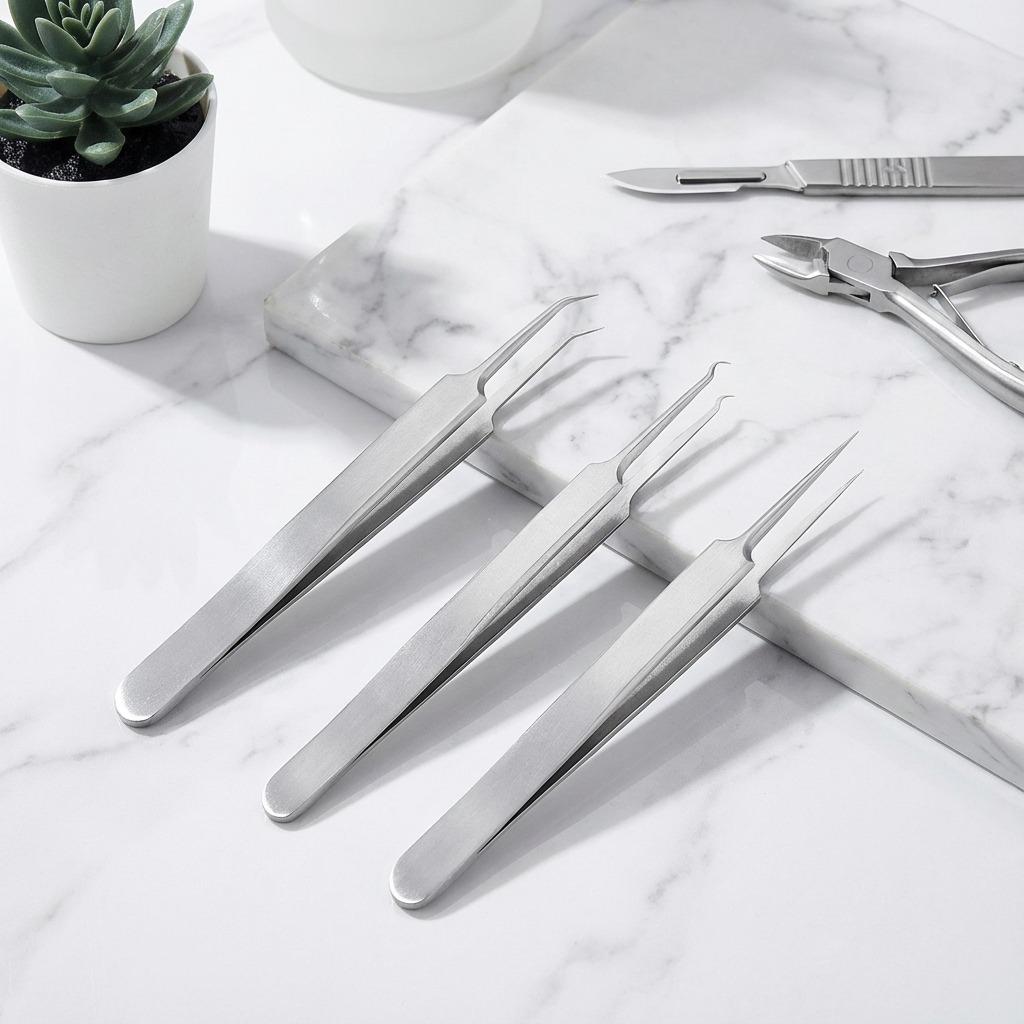
Before comparing quotes, define the main use case. Tweezers for eyelash extension work may require curved or angled tips that allow the technician to isolate lashes and work in tight spaces. Straight-point tweezers are better for grabbing minute components, checking details or performing delicate non-beauty tasks. Some buyers want one universal tweezer, but bulk orders often perform better when the assortment is matched to actual work scenarios.
A useful buying plan should answer three questions: who will use the tweezers, what tasks will they perform, and how will the tools be sold or distributed? A professional salon pack, a retail blister pack and a training-school kit may all require different selections even when the tool material is similar.
Understanding Tweezer Types and Use Cases
The original Olimor Beauty tweezer range described for this product page includes stainless steel tweezers with straight-point, curved and angled varieties. It also mentions specific sizes: a 116 mm tweezer weighing 14 g with a 10 mm width and curved tip, a 115 mm model weighing 12.6 g with a 9 mm width, and a 118 mm version weighing 13.4 g with a 10 mm width. These measurements show that small changes in length, weight and width can influence control and hand feel.
When selecting a bulk assortment, treat tip shape as the first decision point. The table below can help buyers match common tweezer styles to practical applications.
| Tweezer type | Best suited for | Buyer considerations |
|---|---|---|
| Straight-point tweezers | Minute components, precise picking, beauty detail work, craft tasks | Check tip alignment and whether the point is fine enough for the intended job. |
| Curved tweezers | Eyelash extensions, tight spaces, work requiring visibility around the tip | Look for comfortable hand positioning and consistent curvature across pieces. |
| Angled tweezers | Versatile beauty use, controlled placement, general precision handling | Confirm the angle supports the way users hold the tool during repeated tasks. |
| Extended-reach styles | Model building, lab-style handling, detailed access in narrow areas | Balance reach against control; longer tools should still feel stable at the tips. |
Beauty buyers should also consider whether the same tweezer will be used by beginners or experienced technicians. Newer users may prefer a shape that feels forgiving and easy to control, while experienced lash artists often have stronger preferences about tip contact, balance and spring tension.
Material, Finish and Tip Precision: What to Inspect
Stainless steel is widely used for professional tweezers because it can provide durability and corrosion resistance when properly manufactured and maintained. However, the phrase “stainless steel” alone is not enough to judge quality. Bulk buyers should look at finishing, edge smoothness, tip contact and consistency from piece to piece.
For beauty and personal-care use, the surface should be smooth enough to wipe clean and comfortable enough for repeated handling. A sleek metallic finish can look professional in salon kits and retail displays, but the finish should not distract from functional checks. The most important part of a tweezer is the tip: if the two ends do not meet evenly, the tool will struggle to grip fine hairs, lashes or tiny parts.
- Tip alignment: The points or edges should meet cleanly without crossing, twisting or leaving a visible gap.
- Grip consistency: The tool should hold fine items without requiring excessive pressure.
- Spring feel: Opening and closing should feel controlled, not too stiff and not too loose.
- Surface finish: Edges should feel smooth to the hand, with no burrs that could scratch skin or packaging.
- Batch uniformity: Pieces in the same order should match in shape, finish and basic hand feel.
- Packaging protection: Tips should be protected during transport so they do not bend or become misaligned.
These checks are especially important when buying for resale. A customer may forgive minor cosmetic differences in some tools, but a tweezer that cannot grip accurately is immediately noticeable.
How to Compare Tweezers Wholesalers
When searching where to buy tweezers in bulk, compare suppliers on more than unit price. A good wholesaler should help you select a practical range, provide clear product information and support stable repeat orders. For many buyers, the risk is not simply receiving a low-quality product; it is receiving a product that does not match the intended market.
Start by reviewing the supplier’s product focus. A beauty-tool supplier such as Olimor Beauty is relevant for buyers who need tweezers for salons, lash work, grooming, retail beauty kits or professional tool sets. If your business also sources related tools, it may be more efficient to work with a supplier that offers a broader beauty-tool range rather than sourcing each item from a separate vendor.
Next, evaluate communication. A strong inquiry should specify the intended use, preferred tip style, finish expectations, packaging needs and any labeling requirements. You do not need to know every technical detail at the beginning, but you should be clear about the customer and selling channel. For example, “curved tweezers for lash technicians” is more useful than “metal tweezers.”
Buyers preparing an order can send an inquiry with their target application and quantity plan. If you need help narrowing down options for your market, you can also contact Olimor before finalizing a bulk purchase.
Packaging and Assortment Planning for Bulk Orders
Packaging affects both product protection and customer perception. For bulk professional use, simple protective packaging may be enough if the tweezers are distributed internally to salons or training classes. For retail, packaging needs to communicate the shape, use case and basic care instructions clearly. Tip protection is important in both cases because the finest part of the tool is also the easiest to damage during shipping or storage.
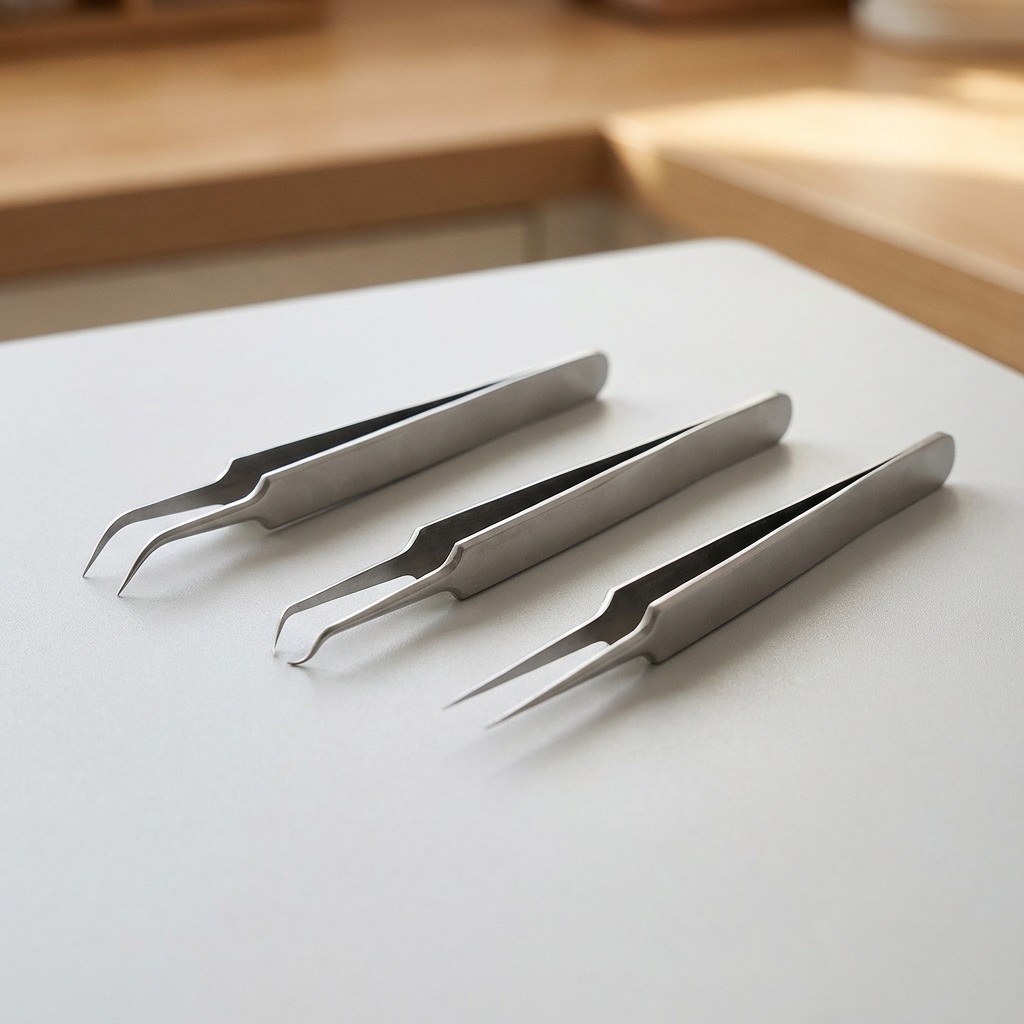
If you are building a retail assortment, avoid offering too many similar tweezer types without a clear reason. Customers often choose faster when the differences are easy to understand: straight for precision picking, curved for lash and tight-space work, angled for versatile control. A three-style assortment can be easier to merchandise than a large range of nearly identical tools.
For salon or academy purchasing, assortment planning should reflect training needs. Students may benefit from trying straight, curved and angled tweezers so they can understand how tool geometry changes technique. Professional studios may prefer to reorder the shape their technicians use most and keep secondary styles for specialized work.
Maintenance Guidance to Reduce Returns and Complaints
Even a well-made tweezer can perform poorly if it is stored or handled incorrectly. Bulk buyers should provide basic care guidance to staff or customers, especially when selling to beauty users who rely on precise tip contact. Simple instructions can reduce complaints and extend useful life.
- Keep tips protected when the tool is not in use, especially during transport.
- Do not drop tweezers onto hard surfaces; impact can bend or misalign fine tips.
- Clean according to the user’s hygiene requirements and dry thoroughly before storage.
- Avoid using precision beauty tweezers as general prying or scraping tools.
- Store separate tweezer types in a way that makes selection easy and prevents tip damage.
Retailers can include these care points in product descriptions or packaging inserts. Salons can add them to staff tool-care procedures. Small maintenance reminders are inexpensive but help preserve the precision that buyers expect.
A Smarter Way to Buy Tweezers in Bulk
The best bulk tweezer order is the one that matches real user needs, not simply the one with the lowest initial cost. Look closely at tip shape, alignment, hand feel, finish, packaging protection and assortment logic. If your buyers include lash artists, salons, retailers, training schools or precision-work users, choose styles that clearly support their tasks.
Olimor Beauty offers stainless steel tweezer options including straight-point, curved and angled varieties, with compact lengths and weights suited to detailed work. Whether you are building a salon supply order, a retail beauty-tool line or a mixed precision-tool assortment, a clear buying checklist will help you source more confidently and reduce avoidable quality issues.
To plan your next order, review Olimor beauty tool products, explore related product collections, or send an inquiry with your intended use and sourcing requirements.
Tag: